Summary: Amelia, an AI‑generated schoolgirl created for a Home Office‑funded educational game, was repurposed into a viral far‑right meme after critical media coverage. AI edits placed her in extremist, sexualised and violent roles while amplifiers on social platforms spread the imagery rapidly. Experts warn AI makes it easier to fabricate believable personas and call for better platform labelling, stronger media literacy in schools, and careful contextualisation of educational tools.
How an AI‑Generated Schoolgirl Named Amelia Became a Viral Far‑Right Meme

AI-generated videos of Amelia have gone viral on social media. - Amelia the Patriot/X
At first glance Amelia — a purple‑haired, pixie‑faced schoolgirl created for an educational game — seems an unlikely mascot for the online far right. Yet in recent weeks AI‑generated images and short videos of this fictional British teenager have spread rapidly across social platforms, especially X, where she is routinely depicted reciting right‑wing and often racist talking points that link nostalgic British cultural imagery with anti‑migrant and Islamophobic themes.

This video portrays Amelia traveling back in time to the 1960s, the color saturation becoming brighter to portray how some far-right supporters perceive Britain was then. - Amelia the Patriot/X
Origins: An Educational Tool Repurposed
Amelia was originally developed two years ago for a simple interactive learning game called Pathways: Navigating Gaming, the Internet & Extremism. The resource was produced by civic education nonprofit Shout Out UK (SOUK) and funded by the UK Home Office as part of the Prevent strategy. In the game, players assume the role of a cartoon character named Charlie who meets Amelia, who shares anti‑migrant disinformation across six scenarios to illustrate how online manipulation and recruitment can operate.
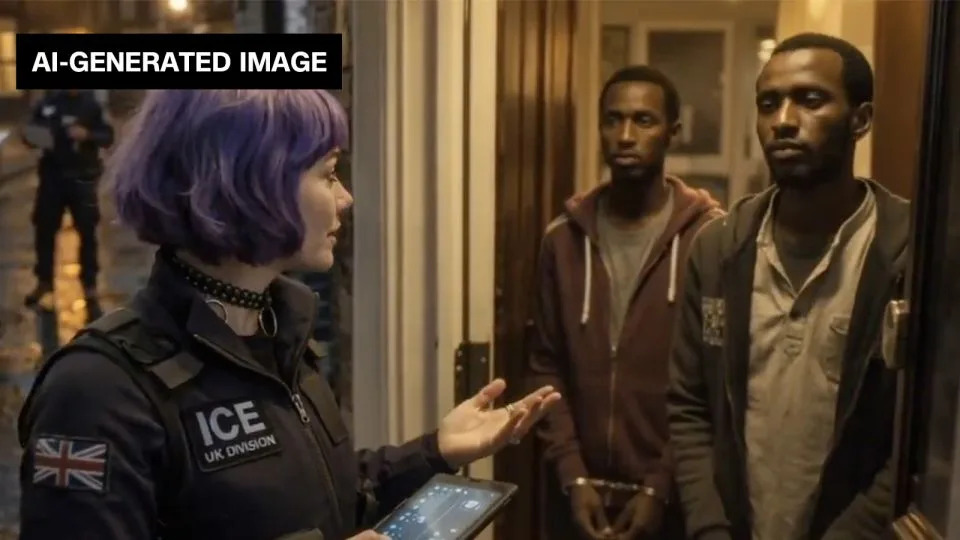
The videos play into anti-migrant and racist tropes. - Amelia the Patriot/X
From Classroom Resource to Online Meme
The game was intended to be part of a broader teaching package so that educators could lead nuanced discussions about safe behaviour online and the difference between opinion and illegal activity. SOUK chief executive Matteo Bergamini told reporters the tool was "not supposed to be played in isolation." Critics, however, picked apart some of the game logic and presentation, and media coverage amplified those criticisms. A January 9 article in The Telegraph and subsequent commentary on outlets such as GB News framed the resource as a government attempt to police teenagers' views — a framing that helped propel Amelia into the mainstream meme ecosystem.

The "red pill" is a popular incel meme. - Amelia the Patriot/X
How the Far Right Co‑Opted Amelia
Analysts say several features made Amelia especially "memeable": her visual design as a young, white, attractive girl with purple hair; the game scenario that cast her as someone who spreads anti‑migrant views; and the online right's tendency to repurpose images with ironic or sarcastic tones. AI tools have since produced thousands of edits, placing Amelia in pubs, historical battle scenes, or in graphic and sexualized roles she was never intended to occupy. Prominent far‑right figures and accounts have reposted or edited the images; social amplification included an Elon Musk retweet and the appearance of at least two Amelia meme coins reported by CoinGecko.
Analyst Siddharth Venkataramakrishnan observed that Amelia 'ticks a lot of boxes' for communities that thrive on ironic online culture and that many edits are unsettlingly sexualized while simultaneously accusing migrants of sexual deviance.
The Role of AI, Platforms and Media
Experts warn that AI drastically lowers the barrier to producing believable personas and scalable disinformation. Callum Hood of the Centre for Countering Digital Hate explains that fabricating empathetic, trustworthy‑looking British characters helps embed narratives and create the impression of grassroots support. Without robust labelling or provenance from platforms, many viewers may struggle to distinguish AI‑generated content from real people, and some treat these images as credible.
Official Responses and Broader Implications
A Home Office spokesperson defended Prevent, saying it has diverted nearly 6,000 people away from violent ideologies. SOUK emphasises the educational context of Pathways. Still, the episode highlights how an intended classroom resource can be repurposed in ways its creators never anticipated and underscores urgent questions for platforms, educators and policymakers about AI labelling, media literacy and how to counter online radicalization without curbing legitimate debate.
What To Watch
- Whether the game remains in active use in schools and how educators contextualise it.
- How platforms detect and label AI‑generated political content and whether enforcement improves.
- Ongoing debate over Prevent, its reach and public perception after media amplification.
Help us improve.