President Gustavo Petro said in a speech that Jesus 'made love' and suggested it 'perhaps' involved Mary Magdalene, drawing immediate condemnation from church leaders. The Evangelical Confederation and the Catholic Episcopal Conference called the remarks disrespectful and urged politicians to avoid theological claims. Colombia is constitutionally secular but predominantly Christian, where Jesus is commonly viewed as unmarried and chaste. Petro, a non-practicing Catholic, has praised liberation theology in the past.
Colombian President Gustavo Petro Sparks Church Outrage After Saying Jesus 'Made Love' — Mary Magdalene Remark Draws Backlash
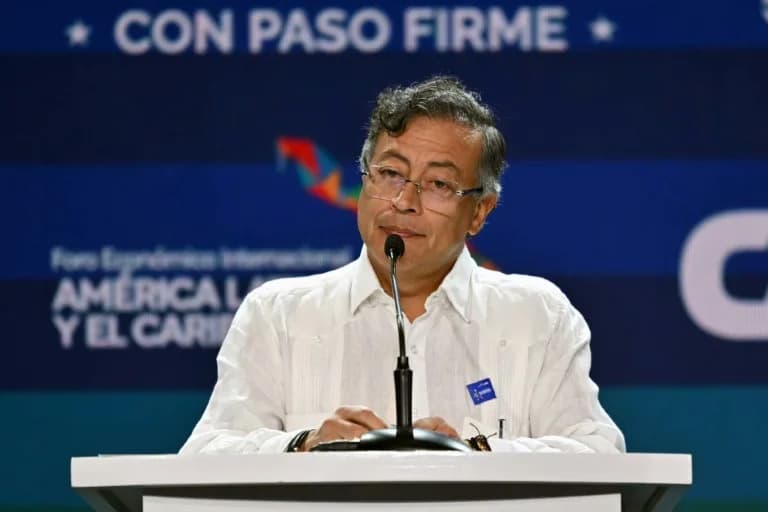
Colombian President Gustavo Petro has angered Christians in his country with comments about Jesus having been sexually active (Martin BERNETTI)(Martin BERNETTI/AFP/AFP)
Church leaders across deeply Christian Colombia have reacted strongly after President Gustavo Petro suggested in a public address that Jesus Christ had sexual relations, possibly with Mary Magdalene.
Speaking on Tuesday, Petro said Jesus 'made love' and added that it may have been 'perhaps with Mary Magdalene,' whom he described as one of Jesus' followers. He argued that 'a man like that could not exist without love' and noted that Jesus 'died surrounded by women who loved him, and there were many.'
Petro: 'A man like that could not exist without love ... he died surrounded by women who loved him.'
The remarks provoked sharp criticism from religious organizations. The Evangelical Confederation of Colombia, which represents evangelical and Protestant churches, said the comments 'distort historical, biblical and theological truth' and accused the president of showing a 'lack of respect.'
The Catholic Church's Episcopal Conference called for 'respect, non-interference, and the protection of people in their beliefs,' urging politicians to avoid making 'theological' pronouncements.
Although Colombia is officially a secular state under its constitution, a large majority of Colombians identify as Catholic or Christian. In many religious traditions, Jesus is widely believed to have been unmarried and to have led a chaste life — views that many church leaders say Petro's comments contradict.
Petro, who identifies as a non-practicing Catholic and attended Catholic schools, has previously expressed admiration for liberation theology, a strand of Christian thought that emphasizes social justice and support for the poor and marginalized.
Religious leaders' responses underscore the sensitivity of theological questions in Colombia's public life and the political risks when politicians speak on matters of faith. It remains unclear whether the episode will have broader political consequences for Petro.
Help us improve.