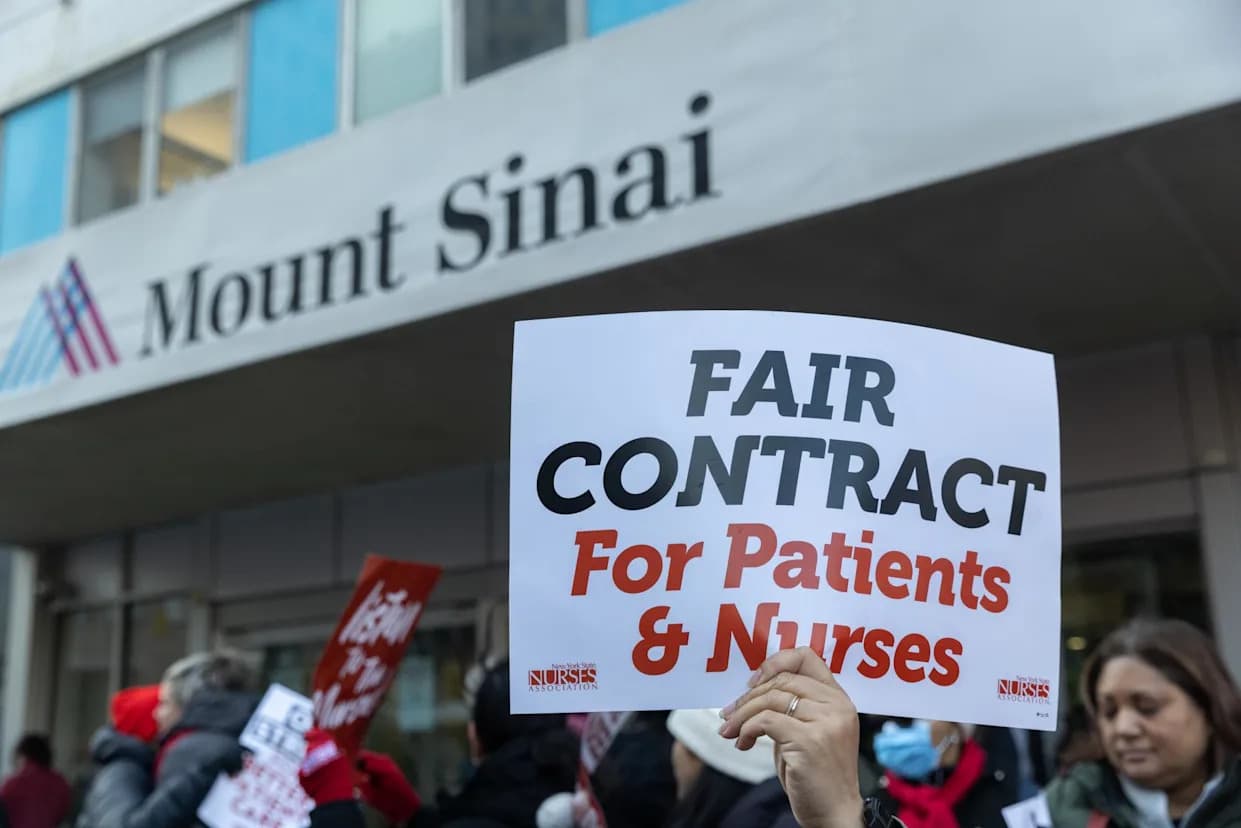
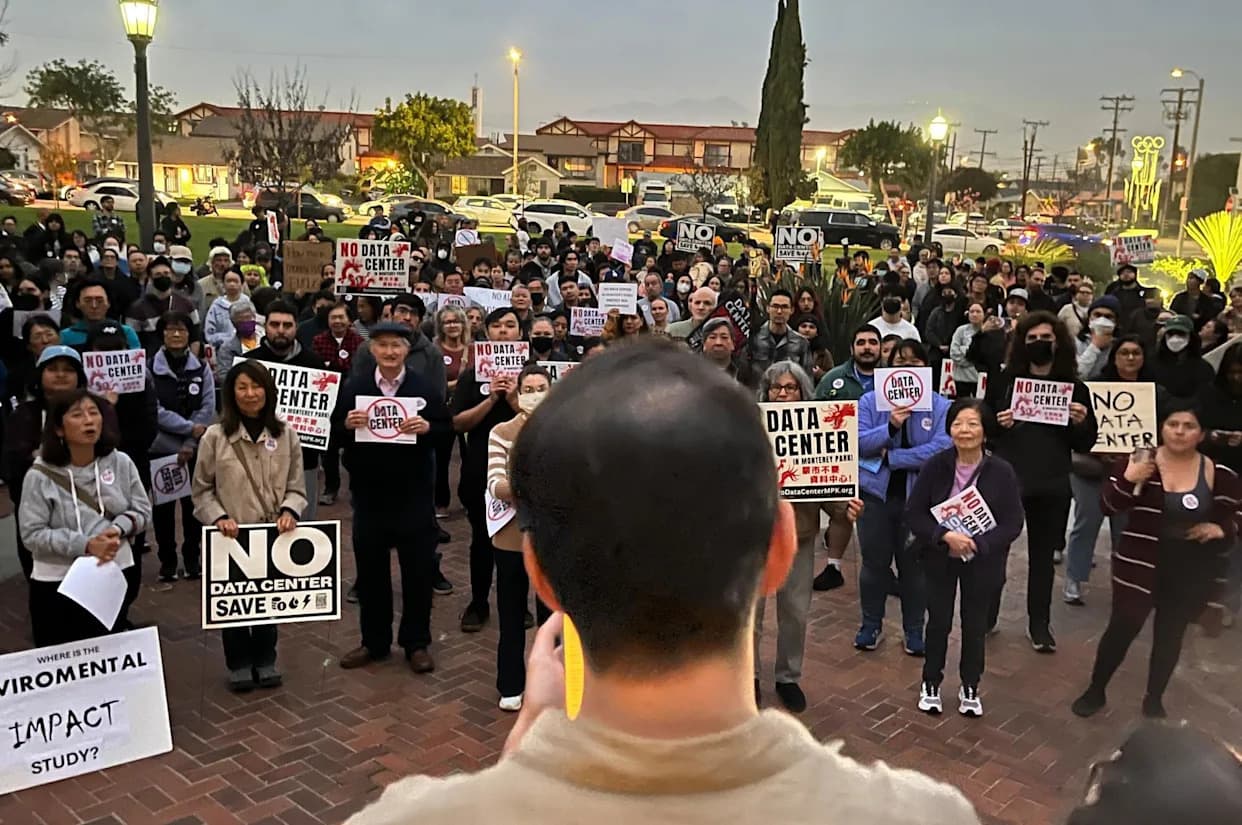
Labor leaders in Los Angeles are timing contracts and building coalitions to use the 2028 Olympics as leverage for higher wages, better benefits and housing. Unions point to successful actions around the Paris and Rio Games as models, while economists warn most Olympic-driven economic gains are short-term. Local campaigns include a $30 minimum wage for large hotels, ballot measures on CEO pay and development votes, and a push to build 50,000 housing units amid business pushback over taxes.
How the 2028 Los Angeles Olympics Could Supercharge Union Gains — And Spark a Citywide Fight Over Wages, Housing and Taxes
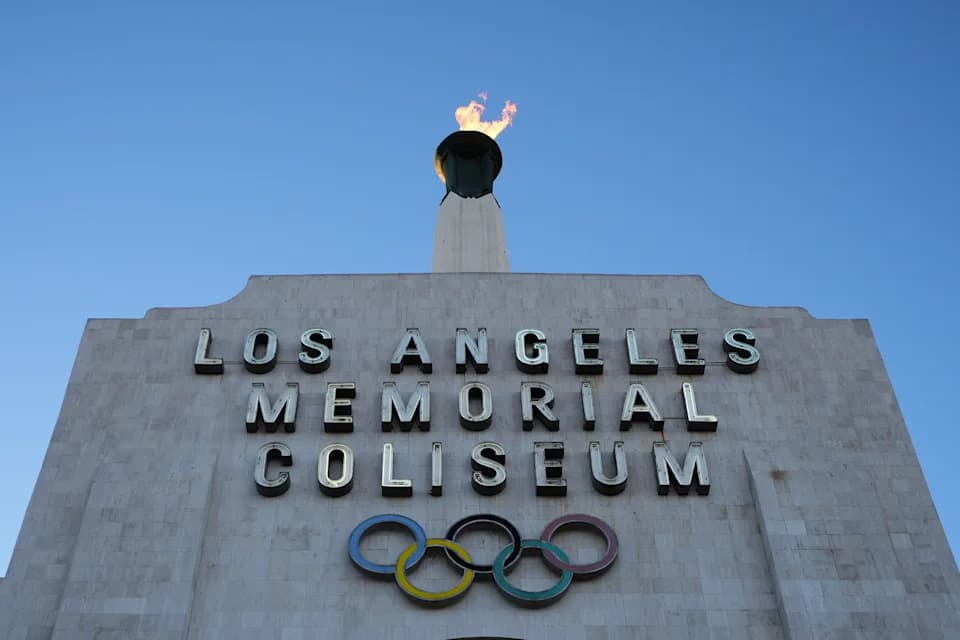
The Olympic cauldron is lit at the Los Angeles Memorial Coliseum ahead of the launch for ticket registration to the 2028 Summer Olympic Games Tuesday, Jan. 13, 2026, in Los Angeles. (AP Photo/Damian Dovarganes)(ASSOCIATED PRESS)
As Los Angeles prepares to host the 2028 Summer Olympics, local labor leaders are using the Games as leverage to press for long-term improvements in pay, benefits and housing. Drawing lessons from the labor actions that surrounded the 2024 Paris Olympics, unions in Southern California are coordinating contract timing and public campaigns to maximize bargaining power during the global spotlight.
Strategic Contract Timing
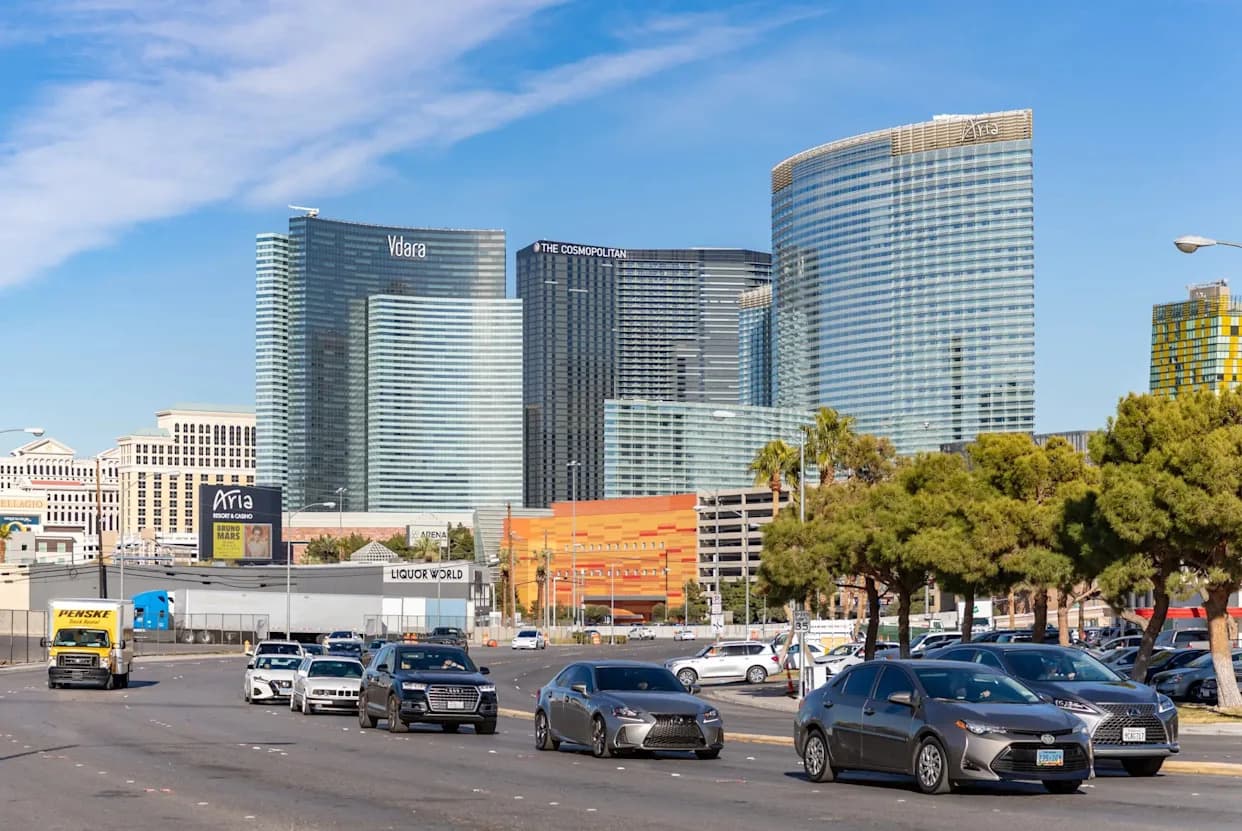
Unite Here Local 11 co-President Kurt Petersen said the union has aligned more than 100 contracts — covering roughly 25,000 workers at hotels, airports, sports arenas and convention centers — to expire in January 2028, just months before the opening ceremony. The goal is to create concentrated negotiating leverage when the city and Games organizers are most dependent on frontline workers.
Other major unions, including United Food and Commercial Workers Local 770 (health care, grocery and packing industries) and Service Employees International Union Local 721 (county employees), plan to use contracts that lapse in the first half of 2028 as similar leverage points.
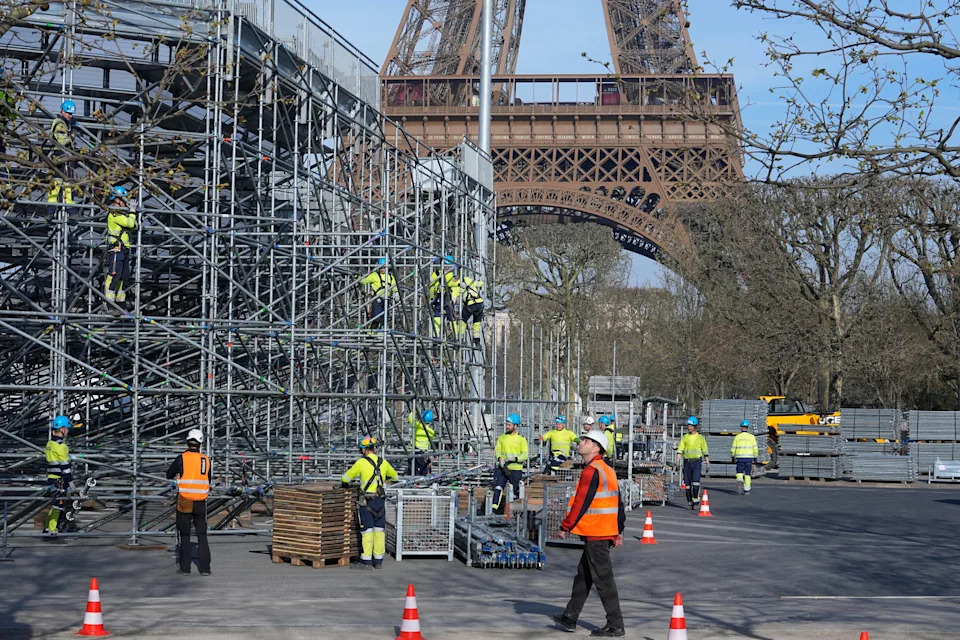
FILE - Workers build the stands for the 2024 summer Olympic Games on the Champ-de-Mars, just beside the Eiffel Tower, March 22, 2024, in Paris. (AP Photo/Michel Euler, File)(ASSOCIATED PRESS)
Demands Beyond Pay: Housing, Short-Term Rentals and Immigrant Protections
A broad coalition of labor groups, community organizations and faith institutions is pressing LA28 (the Los Angeles Olympics organizing committee) and city officials to fund construction of 50,000 housing units, impose a moratorium on short-term rentals like Airbnb, and strengthen protections for immigrant workers.
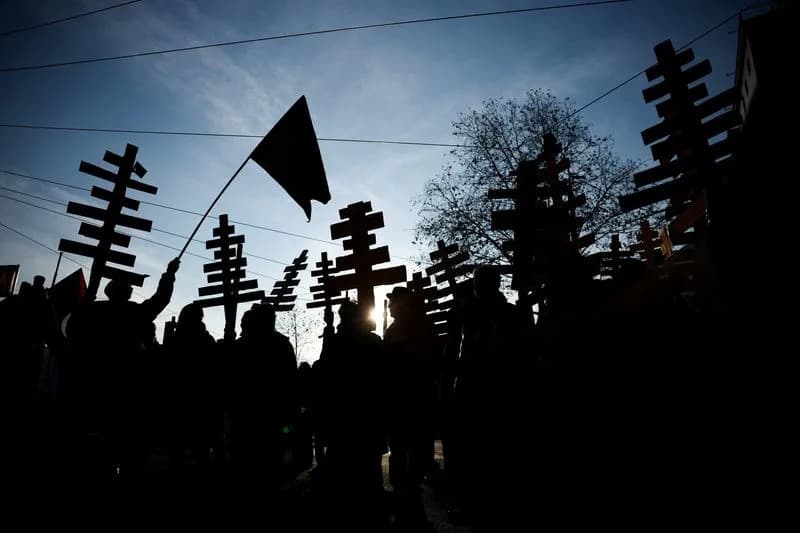
'We are going to have a force of working people to do whatever it takes, including striking if we have to during the Olympics in 2028. The Olympics can’t happen without the workers,'
Lessons From Past Games
Experts note that major sporting events offer unions a rare bargaining moment. Jules Boykoff, a professor at Pacific University, called the Games a 'once-in-a-generation opportunity' to spotlight essential workers and secure concessions.
There are concrete precedents: ahead of the 2024 Paris Olympics, transportation unions won earlier retirement with full pension benefits and doubled pay for workers during the Games, according to Axel Persson, general secretary of France's CGT Rail Workers Union. In Rio, more than 2,000 construction-site workers struck two years before the 2016 Olympics and ultimately won higher wages and larger meal vouchers.
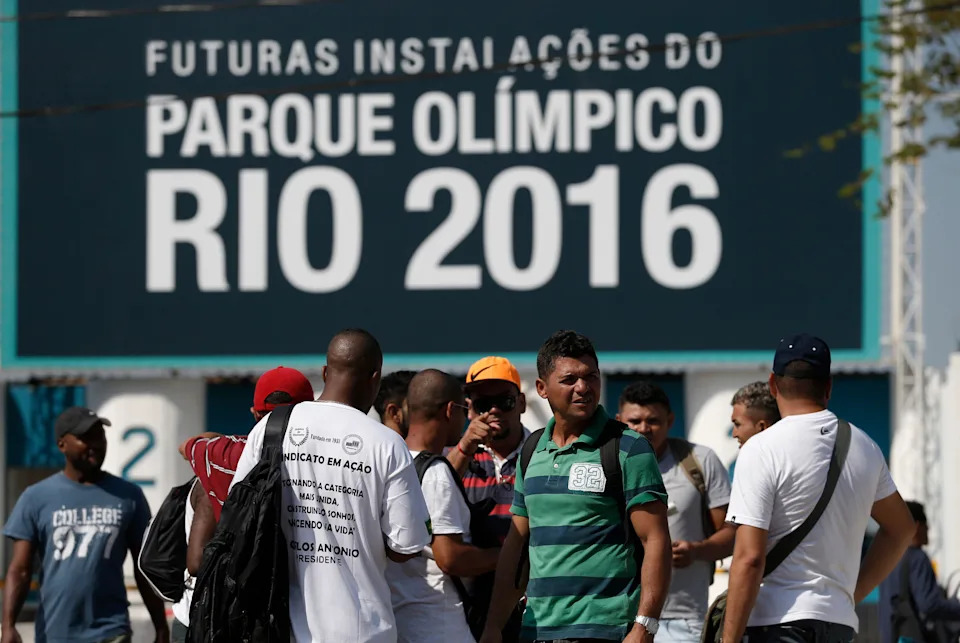
FILE - Striking workers stand in front the entrance of the Olympic Park, the main cluster of venues under construction for the 2016 Summer Olympic Games, in Rio de Janeiro, Brazil, April 8, 2014. (AP Photo/Silvia Izquierdo, File)(ASSOCIATED PRESS)
At the same time, economists caution that most economic boosts from hosting the Olympics are temporary. Robert Baumann, a professor at the College of the Holy Cross, says tourism and hospitality typically enjoy short-term gains while many other local industries face disruption.
Local Policy Battles
Unions point to a recent policy win: the Los Angeles City Council approved a $30-per-hour minimum wage for employees at hotels with 60 or more rooms, to take effect by July 2028 and phased in over several years (the current minimum for those workers is $22.50). Business groups warn this increase will strain an industry still recovering from the COVID-19 pandemic and are seeking to delay the raise until after the Games.
Labor organizations are also gathering signatures for ballot proposals that would: penalize corporations whose CEOs earn more than 100 times the company's median worker, require public votes on major event and hotel developments, and expand the $30 minimum to more workers.
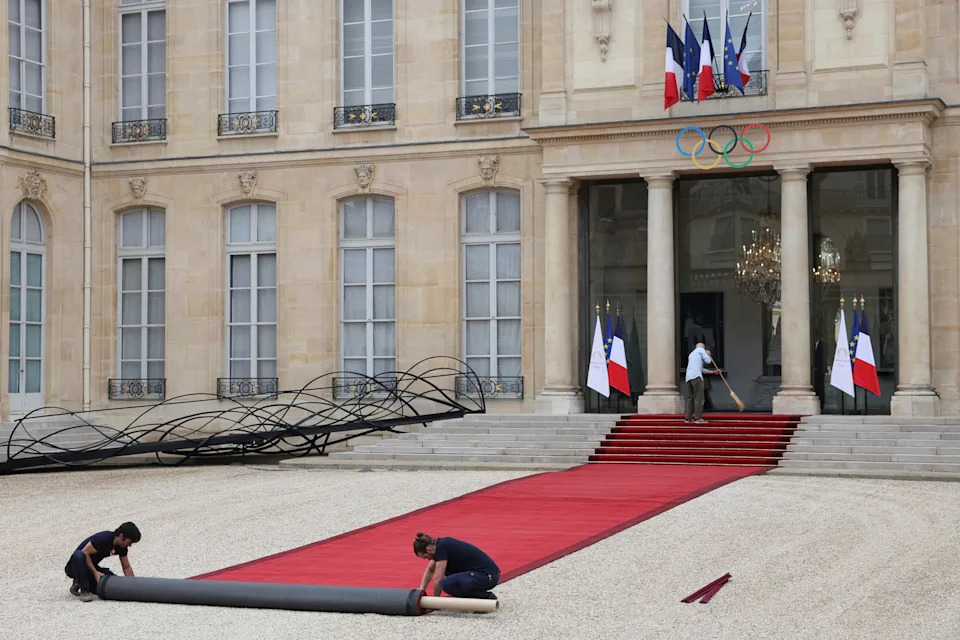
FILE - Workers prepare the red carpet before the heads of States' arrivals ahead of an opening ceremony in which thousands of Olympic athletes are due to sail down the Seine past iconic Parisian monuments, at the 2024 Summer Olympics, July 26, 2024, at the Elysee Palace in Paris. (AP Photo/Aurelien Morissard, File)(ASSOCIATED PRESS)
Business Pushback And The Gross Receipts Tax
In response to the wage fight, Los Angeles-area business groups have targeted the city's gross receipts tax — a levy on businesses' total revenue before operating costs that generates more than $700 million annually. Chambers of commerce and business coalitions have launched an effort to repeal the tax, arguing it burdens local business and investment.
'Businesses continue to get hammered in this city,'
Human Impact
Workers on the ground say rising costs are squeezing household budgets. Thelma Cortez, a cook for airline caterer Flying Food Group, says her primary paycheck goes to rent for her and her three daughters, forcing her to work overtime and take side jobs. She says she was hopeful the Olympics might bring more work and better pay for airport and hotel employees.
Whether the Games produce lasting gains or only short-lived boosts will depend on how effectively unions convert public attention and bargaining leverage into enforceable contracts, city policy, and voter-backed measures.
Help us improve.