The uncrewed Shenzhou 20 capsule landed safely at Dongfeng on Jan. 19 after 270 days in orbit. Return plans were altered after tiny cracks were found in the capsule's viewport, believed to be from space debris, prompting an emergency uncrewed launch of Shenzhou 22. Recovery teams protected the damaged window for analysis, used drones and unmanned ground vehicles in cold-weather operations, and reported that the capsule's interior was in good condition. CNSA described the mission's emergency tasks as successfully completed.
Uncrewed Shenzhou 20 Capsule Returns Safely After Suspected Space-Debris Strike
Credit: CCTV
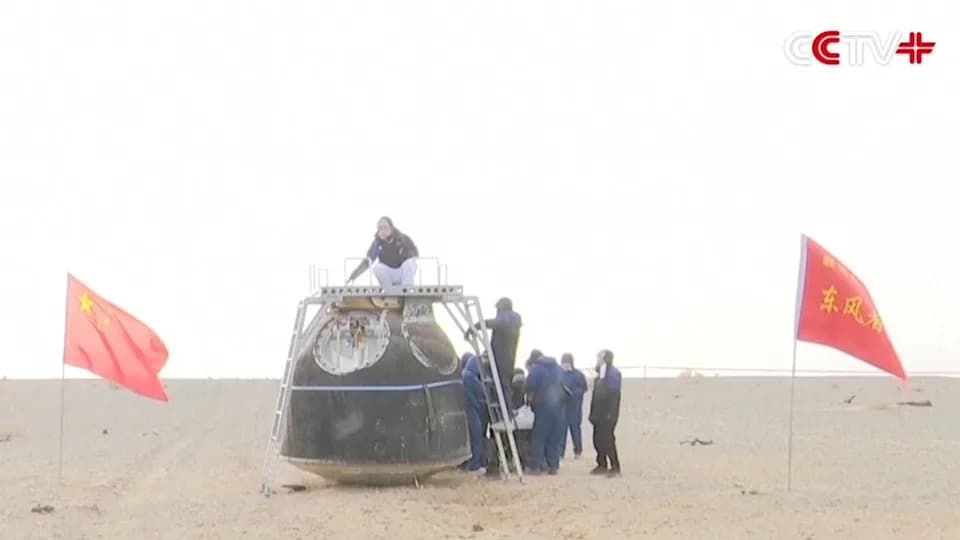
The unprecedented emergency operation in China's human spaceflight program concluded on Jan. 19 when the uncrewed Shenzhou 20 capsule parachuted to a safe touchdown at the Dongfeng landing site in Inner Mongolia after 270 days in orbit.
Shenzhou 20 had spent roughly nine months docked to the Tiangong space station, but its planned return was delayed after ground teams discovered tiny cracks in the viewport window. Officials believe the damage was caused by a strike from orbital debris.
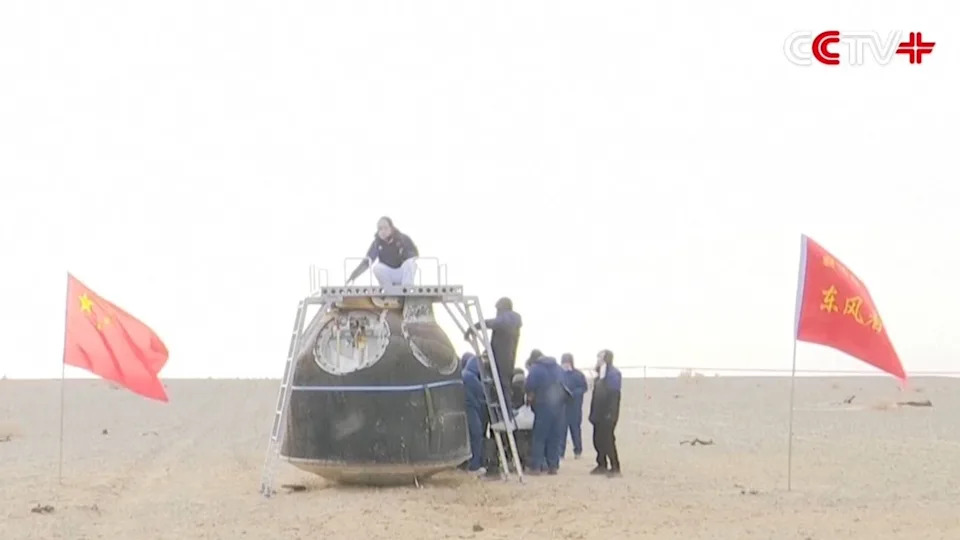
Landing site team members inspect the empty Shenzhou 20 capsule on Jan. 19, 2026. | Credit: CCTV
On-site inspections after landing found the capsule's exterior to be "generally normal," and items stowed inside were intact, the China National Space Administration (CNSA) reported. Recovery crews took immediate steps to protect the damaged porthole to preserve evidence and enable a thorough post-landing assessment.
Rapid Emergency Response
The suspected damage prompted an expedited, uncrewed launch of Shenzhou 22 on Nov. 24 to ensure a reliable return vehicle remained docked at Tiangong. Because engineers judged the damaged Shenzhou 20 too risky for crewed reentry, the Shenzhou 20 crew returned earlier on Nov. 14 aboard the Shenzhou 21 capsule.
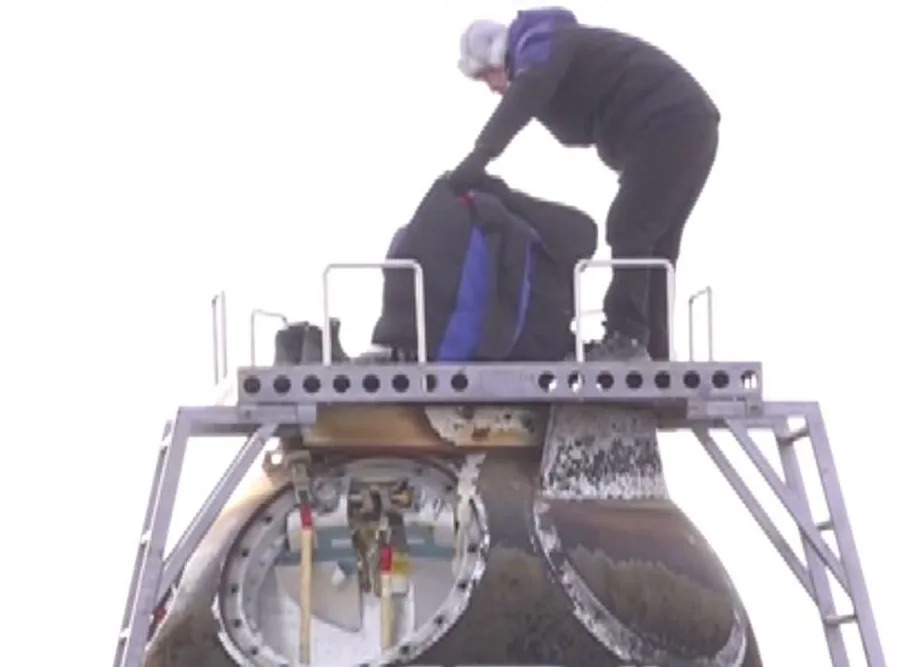
The Shenzhou 20 capsule was recovered on Jan. 19, 2026. It spent 270 days in orbit, longer than planned, due to a cracked window. | Credit: CCTV
CNSA said technicians also rushed a porthole repair device to the site and installed it inside Shenzhou 20, enhancing the capsule's heat protection and sealing performance before reentry. A laboratory-based "Problem Analysis and Safety Assessment Report" evaluated whether the cracked heat-resistant outer layer could survive reentry; the assessment prioritized crew safety and conservative decision-making.
New Recovery Methods and Cold-Weather Challenges
Recovery operations at Dongfeng were notable for several reasons. According to state media, this was the first capsule recovery at Dongfeng during the coldest season, which required extra protective measures for personnel and equipment. Helicopters were not used; instead, teams deployed drones and unmanned ground vehicles alongside ground crews — a new mixed unmanned/manned recovery model for Shenzhou operations.
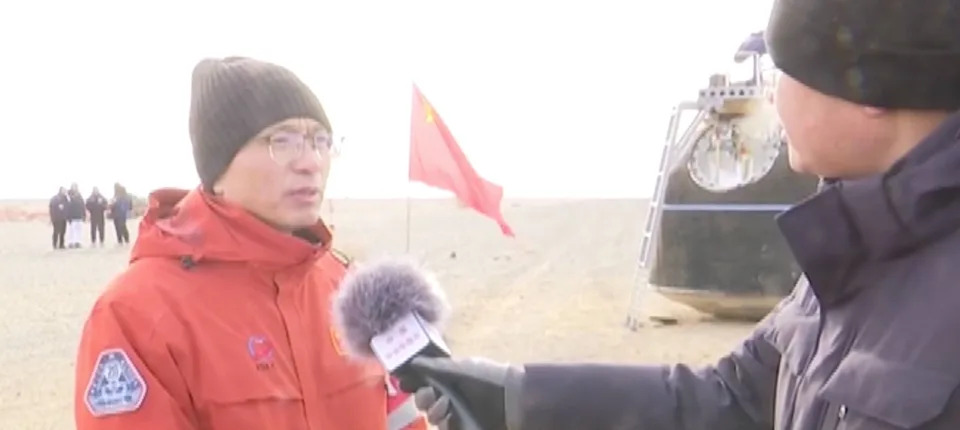
Xu Peng, the on-site commander at the Shenzhou 20 capsule touchdown site, reports on frigid landing conditions and new spacecraft recovery techniques. | Credit: CCTV
Because the capsule was uncrewed, there was no one onboard to manually jettison the main parachute after touchdown. Teams therefore prioritized quickly reaching the capsule to cut the canopy and prevent wind-driven dragging of the vehicle across the ground.
Cargo and Technical Details
Among the items returned in the uncrewed Shenzhou 20 was a retired spacesuit that had supported 11 Chinese astronauts across eight missions and enabled 20 spacewalks — a service life the suit exceeded by operating in orbit for more than four years.
Chinese state media reported that the crew had observed an unexpected triangular mark, about two centimeters long, on the edge of the outermost layer of the porthole glass while still in orbit. The Shenzhou viewport consists of three glass layers: an outer heat-resistant layer designed to withstand intense ablation during reentry, a middle pressure-bearing layer, and an inner protective pane that maintains cabin airtightness.
Outcome and Next Steps
CNSA said the emergency sequence — from the crew report and ground assessment to the launch of Shenzhou 22 — was completed in 16 days. Meanwhile, Shenzhou 23 is already at the Jiuquan Satellite Launch Center and its Long March 2F Y23 booster is preparing for shipment.
CNSA Statement: "With the return of the Shenzhou 20 spacecraft, the main tasks of this emergency space operation for the Chinese space station have been successfully completed."
Investigations into the viewport damage and continued analysis of recovered hardware will inform future mitigation against orbital debris and planned operations for the Tiangong program.
Help us improve.