
The defense in the trial of former Uvalde school officer Adrian Gonzales rested after calling two witnesses, following prosecutors’ presentation of 35 witnesses over eight days. Gonzales faces 29 counts of child endangerment or abandonment for his actions during the 2022 Robb Elementary shooting. Testimony included eyewitness accounts, medical experts, law-enforcement witnesses and a recorded interview in which Gonzales said, "I made a mistake." Jury instructions and closing arguments are scheduled for Wednesday amid emotionally charged courtroom scenes.
Defense Rests in Trial of Former Uvalde School Officer; Closing Arguments Set Wednesday
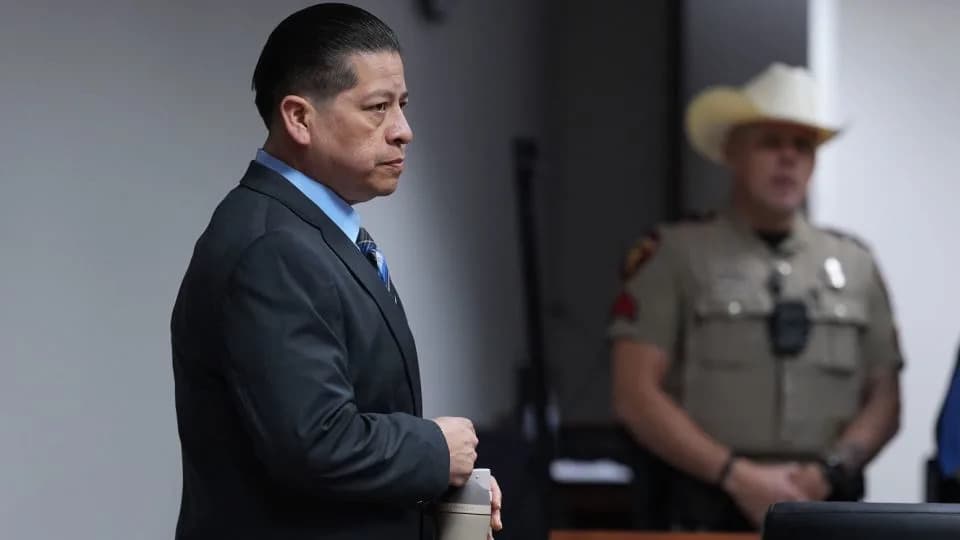
Former Uvalde school district police officer Adrian Gonzales arrives in the courtroom at the Nueces County Courthouse in Corpus Christi, Texas, on January 6. - Eric Gay/Pool/AP
Attorneys for Adrian Gonzales, the former Uvalde school police officer who was the first law-enforcement responder on the scene of the 2022 Robb Elementary mass shooting, rested their case Tuesday afternoon. Prosecutors allege Gonzales failed to delay or stop the shooter; the defense called only two witnesses after the state presented a lengthy, often emotional case.
Case Timeline and Next Steps
Prosecutors presented 35 witnesses over eight days before resting their case Tuesday morning. The defense’s two witnesses testified over roughly two hours. Jurors are scheduled to receive jury instructions Wednesday morning, followed by closing arguments.
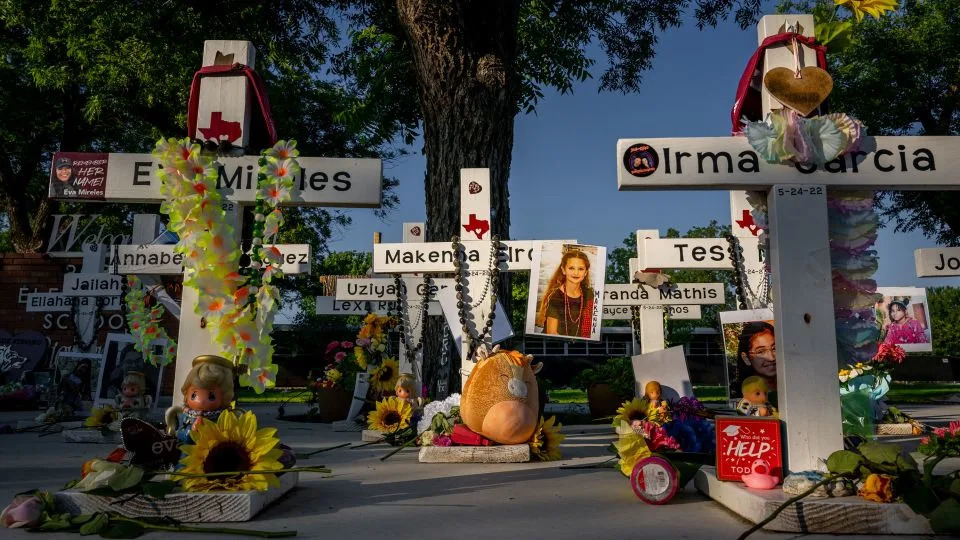
A memorial dedicated to the 19 children and two adults murdered on May 24, 2022, during the mass shooting at Robb Elementary School is seen on May 24, 2023, in Uvalde, Texas. - Brandon Bell/Getty Images
Charges
Gonzales has pleaded not guilty to 29 counts of child endangerment or abandonment — one count corresponding to each of the 19 children killed and the 10 who survived. Prosecutors say this is only the second criminal case against a school police officer for allegedly failing to act during an active-shooter event.
Key Witnesses and Testimony
The defense’s first witness, Claudia Rodriguez, testified she saw the gunman approach the school after crashing a truck and said a patrol vehicle drove past the shooter in the school parking lot when Gonzales arrived. Rodriguez also said she saw the shooter duck between cars to avoid being seen.
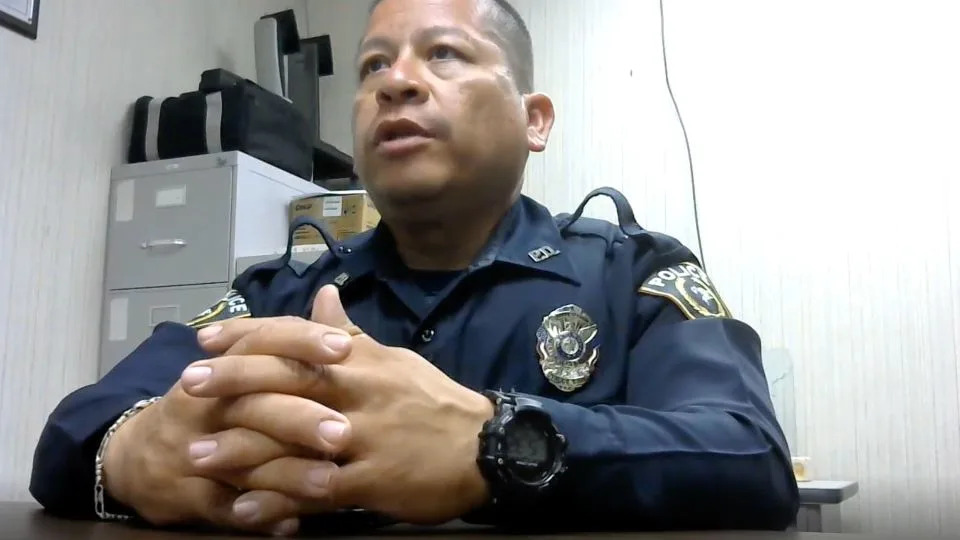
Adrian Gonzales speaks during an interview with investigators. - Obtained by CNN
Retired San Antonio SWAT officer Willie Cantu testified for the defense as an expert, describing the intense stress of active-shooter responses and invoking the concept of "inattentional blindness." Cantu argued that without full context of what Gonzales saw and heard, it is difficult to fairly judge his decisions. Special prosecutor Bill Turner pressed Cantu on whether an officer hearing hundreds of shots fired inside a school would be justified in calling for cover and waiting for other officers.
Prosecutors called teachers, parents and medical experts to describe the scene’s human cost. The only surviving teacher from inside the room that was attacked showed her scars to the jury. Medical witnesses testified about the devastating injuries caused by the shooter’s high-powered rifle, and a therapist described the long-term psychological harm to survivors and families.
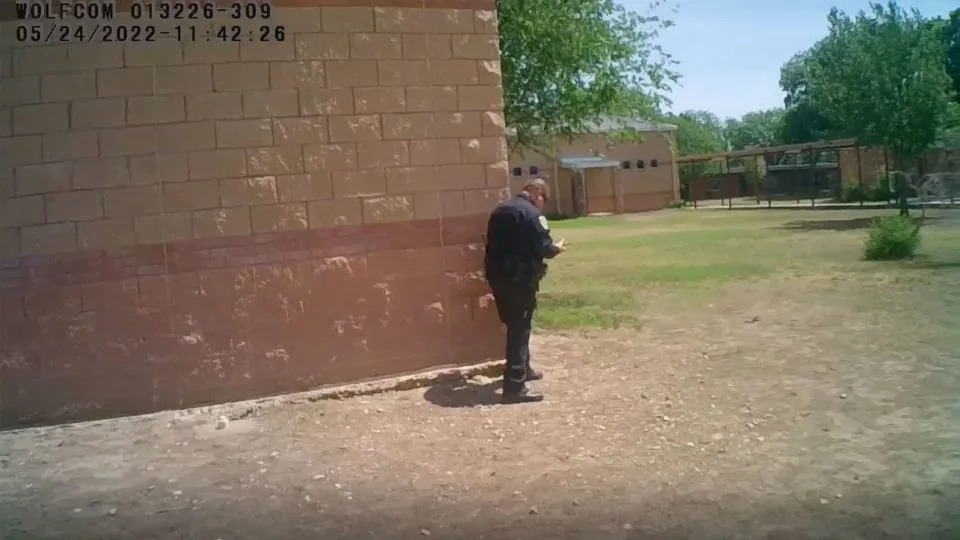
In this still from body camera footage, Adrian Gonzales stands against an exterior corner and uses his radio. - Uvalde Police Department
The state also presented law-enforcement witnesses who responded to the scene, some offering body-camera footage that captured Gonzales. The prosecution’s final witness — a former Texas Ranger who produced an animation of the first arriving officer’s movements — faced more than four hours of intense cross-examination from the defense.
Recorded Interview And Key Evidence
A pivotal exhibit was a recorded interview Gonzales gave to a Texas Ranger and an FBI agent the day after the shooting. In that roughly hour-long interview, Gonzales said, "I made a mistake," describing how he later recognized he experienced "tunnel vision" after encountering a teacher’s aide who warned that the shooter, dressed in black, was attempting to enter the fourth-grade building. Gonzales also told investigators he waited for cover from arriving officers and said that influenced his decision not to immediately enter the school.
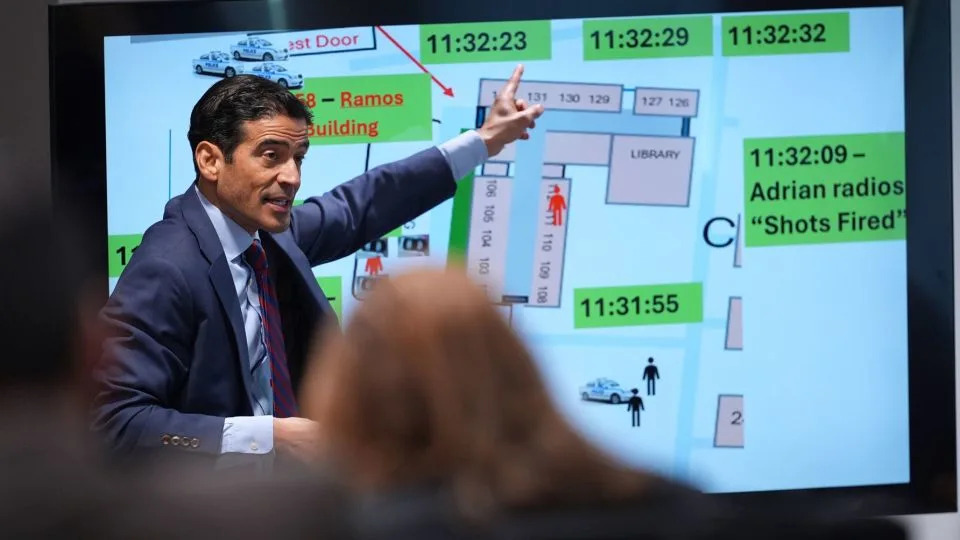
Attorney Nico LaHood makes opening statements during the trial for former Uvalde school district police officer Adrian Gonzales at the Nueces County Courthouse in Corpus Christi, Texas, on January 6. - Eric Gay/Pool/AP
Teacher’s Aide Testimony
Teacher’s aide Melodye Flores, a key witness for the state, testified that she fell after seeing the gunman and, as she got up, a police vehicle pulled up nearby. She said she repeatedly told the officer that the shooter was headed toward the fourth-grade building: "I just kept pointing. 'He's going in there. He's going into the fourth-grade building.'" Flores testified the officer did not go in; she said she heard shots as she pointed.
Defense counsel challenged Flores on inconsistencies between her descriptions and other evidence, suggesting her memory could have been affected by trauma and later media exposure; Flores acknowledged she first spoke with investigators a week after the attack and had watched news reports since then. She may be recalled if the defense decides to call her back.
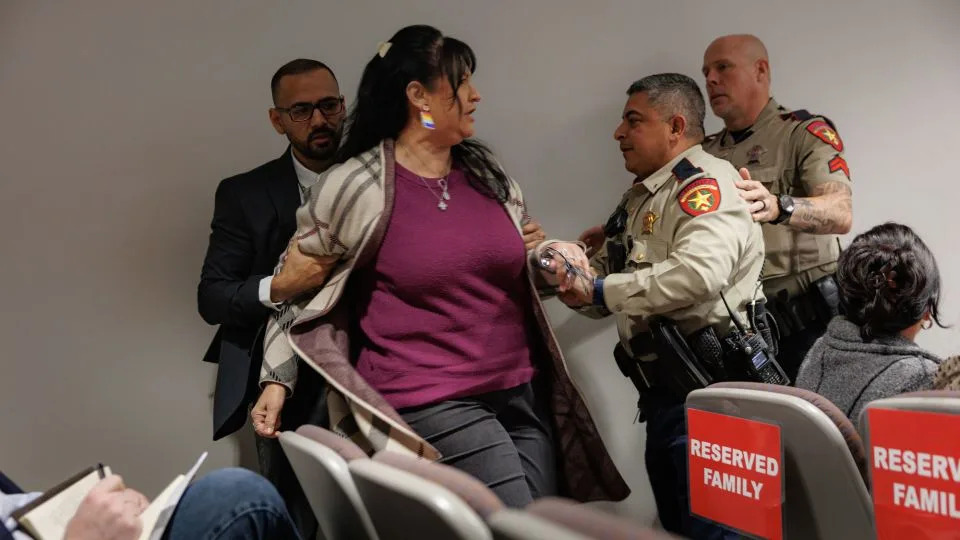
Officers escort Velma Duran from the courtroom as she yells during Adrian Gonzales's trial on January 13. Duran's sister Irma Garcia was one of two teachers killed in the Robb Elementary mass shooting. - Sam Owens/Pool/The San Antonio Express-News/AP
Courtroom Atmosphere
The trial has been emotionally charged, with family members of Robb Elementary victims present throughout. At one point, a grieving relative shouted at the defense table and was removed from the gallery. Judge Sid Harle admonished the gallery and warned that further outbursts could jeopardize the trial and potentially lead to a mistrial.
Gonzales has remained mostly stoic at the defense table, though he appeared emotional at times when graphic medical testimony was read in court.
Jury instructions and closing arguments are expected Wednesday, after which jurors will begin deliberations. The case continues to draw national attention given its legal and emotional implications for school policing and active-shooter protocols.
Reporting note: CNN’s Amanda Jackson contributed to this report.
Help us improve.





















