
As Hanukkah began, a shooting at Bondi Beach in Sydney — declared a terrorist incident — left at least 15 dead and about 40 injured after the attacker targeted Jewish worshippers. The assault has intensified global fears following a recent rise in antisemitic incidents, prompting increased security across the U.S., U.K. and Europe. Community leaders urged resilience and public celebration of traditions while calling on governments to strengthen protections for Jewish communities.
Hanukkah Shadowed by Bondi Beach Terror Attack: Jewish Communities Urged to Stay Vigilant and United

A police officer walks along cordon tapeline at the scene of a mass shooting at Bondi Beach in Sydney, Australia, on Sunday. - Darrian Traynor/Getty Images
Jewish communities worldwide awoke on Sunday to news of a deadly attack at Bondi Beach in Sydney that authorities have declared a terrorist incident. The shooting, which occurred as hundreds were gathered to celebrate the first night of Hanukkah, killed at least 15 people and left about 40 hospitalized. Police say the assailant targeted Jewish people.
Hanukkah’s meaning resonates. Hanukkah — the eight-night festival commemorating the Maccabees’ victory and the rededication of the Second Temple around 165 BC — marks the triumph of light over darkness. For many Jewish communities, that symbolism has taken on urgent meaning amid a recent surge in antisemitic incidents around the globe.
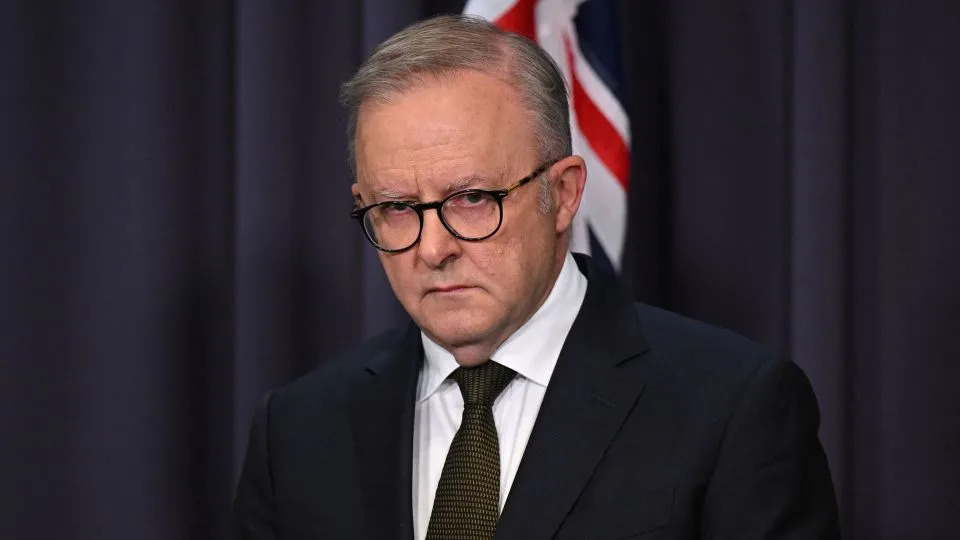
Australian Prime Minister Anthony Albanese attends a news conference in Canberra, Australia, after a shooting at Bondi Beach in Sydney on Sunday. - Lukas Coch/AAP/Reuters
Warnings, Rising Incidents and Global Reactions
Community leaders in Australia say the attack followed months of escalating antisemitic incidents, including arson at a synagogue door and protesters storming an Israeli restaurant in Melbourne. In August, Australia expelled Iran’s ambassador after intelligence pointed to Tehran’s involvement in at least two antisemitic attacks on Australian soil.
Former President Donald Trump called the Bondi Beach shooting “a terrible attack.” Authorities in New York, Washington, D.C., and New Jersey said they would deploy additional security to Hanukkah events and synagogues. London’s Metropolitan Police and Berlin police announced stepped-up patrols and community engagement, even as officials said there was no specific intelligence linking the Bondi attack to local plots in those cities.
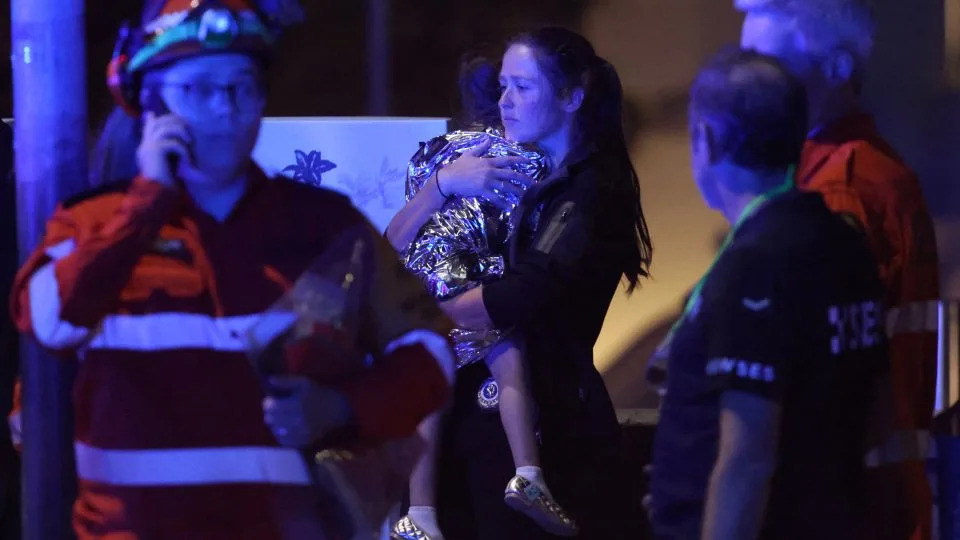
A woman holds a child in a blanket after a shooting incident at Bondi Beach in Sydney on Sunday. - David Gray/AFP/Getty Images
Community Response: Fear, Resolve and Resilience
Jewish organizations urged governments to prioritize public safety. The Jewish Federations of North America said protection for worshippers and communities is primarily a government responsibility. Rabbi Noah Farkas, CEO of the Jewish Federation of Greater Los Angeles, warned of a global “ripple effect” of fear that can make people reluctant to practice their faith publicly.
Yet many communities answered fear with resolve. At the Skirball Cultural Center in Los Angeles, organizers reported determined crowds at a Hanukkah festival. At the National Menorah Lighting in Washington, D.C., families said they attended to show unity and not be intimidated into hiding.

People in New York gather during a vigil in support of the Australian Jewish community after a terrorist attack on Bondi Beach on Sunday. - Alexi Rosenfeld/Getty Images
Broader Pattern Of Violence
Data from the Anti-Defamation League (ADL) provided to news outlets showed that threats against Jews in the United States tripled in the year after the October 7 attack in Israel. ADL CEO Jonathan Greenblatt said incidents in Australia have risen nearly 500% since that date.
The Bondi attack follows several other high-profile anti-Jewish incidents this year: an arson and assault against Jewish people at a community event in Boulder, Colorado; the killing of two Israeli embassy workers outside the Capital Jewish Museum in Washington, D.C.; an arson attack on Pennsylvania’s governor’s mansion after Passover; and a deadly car-ramming and stabbing outside a synagogue in Manchester, U.K., on Yom Kippur.
Leaders Call For Action And For Celebrations To Continue
Australian Jewish leaders called the tragedy “entirely foreseeable” and criticized authorities for not acting sooner on warnings. Prime Minister Anthony Albanese urged Australians not to let division or hatred define the nation.
Despite fear and grief, community leaders encouraged Jewish families to continue public observance — to light menorahs, gather with loved ones and not allow terror to silence traditions. “Antisemitism is not a Jewish problem — it’s an everyone problem,” Rabbi Farkas said, urging resilience and solidarity.
Reporting contributions from multiple correspondents were acknowledged in the original report.


