Gavin Newsom used his State of the State address to recast California as a national model rather than a political liability, pitching his gubernatorial record as an asset for a likely 2028 bid. He touted achievements such as UC system patents and a 9% drop in unsheltered homelessness while confronting critics he labeled victims of "California Derangement Syndrome." PPIC polling shows sentiment improving (39% in June 2025 to 48% recently; likely voters 51%), but long-running narratives of decline remain a major hurdle. Newsom defended contested projects like high-speed rail and framed California’s progressive tax system as fairer to low- and middle-income residents.
Newsom’s Bigger Test: Can He Turn California From Liability Into A National Asset?
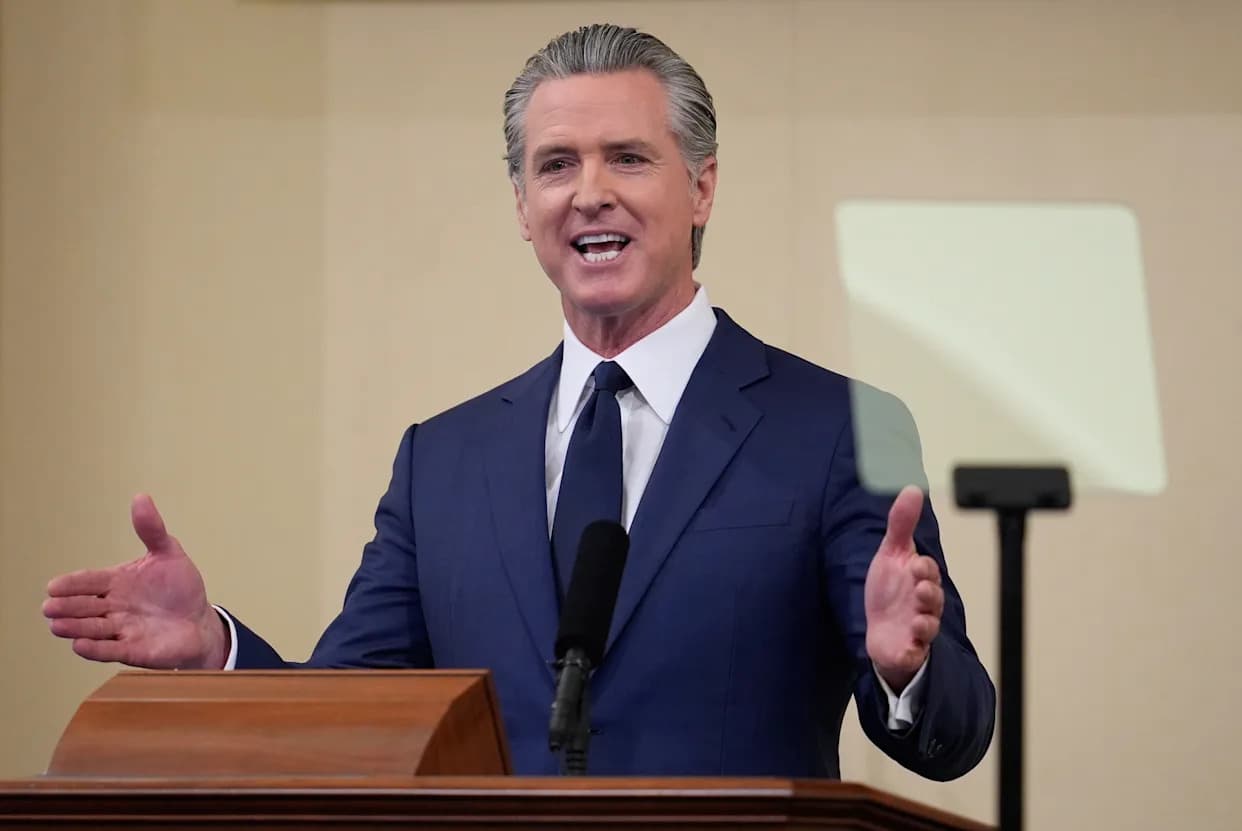
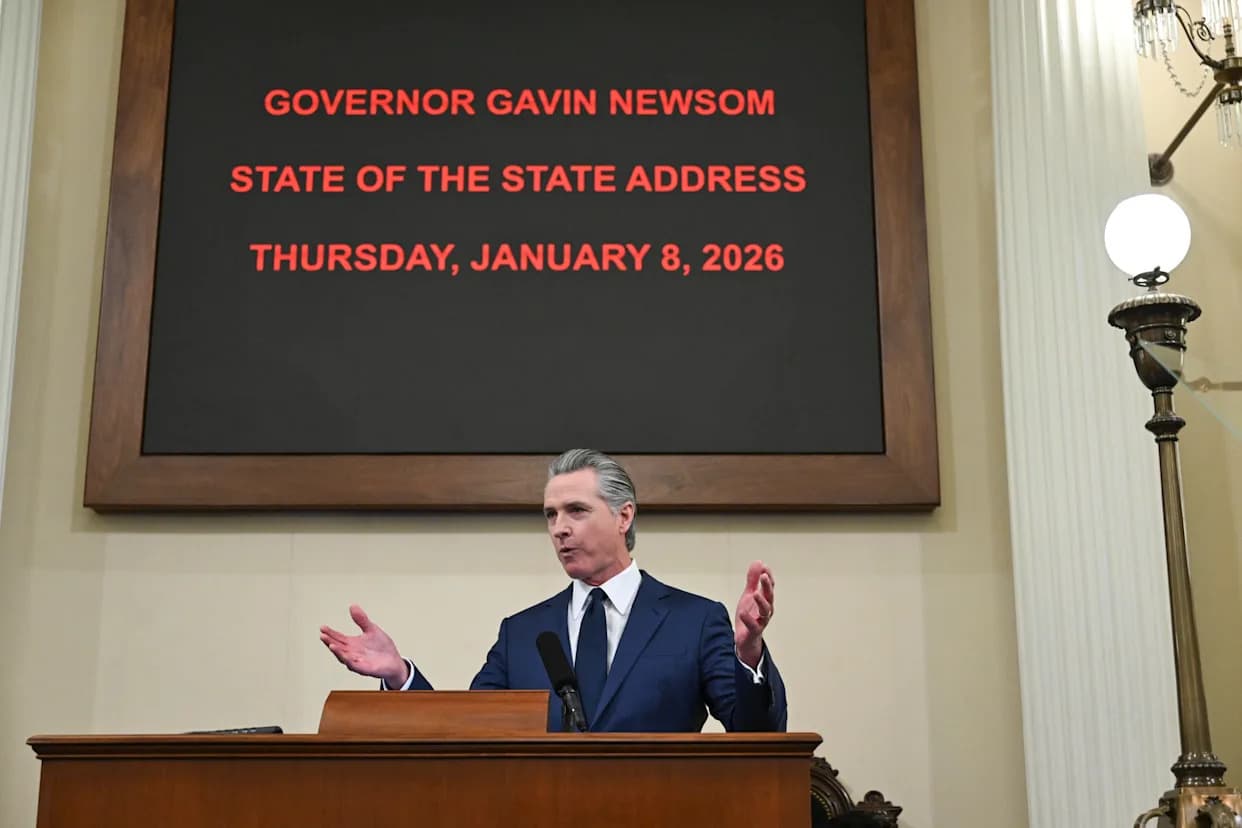
Gavin Newsom used his State of the State address to make a bold argument: California should be seen not as a political handicap but as a policy blueprint for the nation. The speech previewed a likely 2028 strategy — sell his gubernatorial record as an asset rather than apologize for it — while directly confronting long-standing narratives of decline.
Framing California As A Model
In a forceful tone aimed at national audiences, Newsom declared, "We are a beacon," urging lawmakers and the public to view California’s experience as an "operational model, a policy blueprint for others to follow." He repeatedly challenged critics he labeled as suffering from "California Derangement Syndrome," an echo of partisan dismissals like "Trump Derangement Syndrome."
Directly Addressing Critics And Vulnerabilities
Rather than sidestepping vulnerabilities, Newsom confronted them. He highlighted wins—from patents at the University of California system to recent academic honors—and acknowledged lingering problems such as homelessness, housing shortages, public safety concerns and wildfire-related insurance gaps. On homelessness, he cited early data showing a 9% decline in unsheltered homelessness statewide last year—the first decrease in more than a decade—but was quick to call that progress "not good enough."
"They want to tear down, to try to attack all of our progress," he said of critics he described as "the declinists."
Policy Defenses And Political Calculus
Newsom defended controversial projects and policies head-on. He embraced high-speed rail as an investment in the Central Valley, asserting, "I'm proud of Fresno, I'm proud of Madera. I'm proud of Bakersfield," and insisting those communities should not be dismissed. He also positioned California’s progressive tax system as intentionally structured to ease burdens on middle- and low-income families while contrasting it with the more regressive tax regimes of states such as Texas and Florida.
Polling, Perception, And The Road Ahead
Changing perceptions remains the central challenge. The Public Policy Institute of California found that the share of residents saying the state is headed in the right direction rose from 39% in June 2025 to 48% in a recent survey; among likely voters that figure was 51%. Those gains have tracked with modest improvements in Newsom’s own favorability, but the durable narrative of California decline—reinforced by viral negative headlines—still shapes national impressions.
Former Gov. Gray Davis captured the tension: "The statistics will tell you it's an uphill battle," he said, while praising Newsom as "a remarkable speaker" who has "earned the right to run." If Newsom ultimately mounts a 2028 presidential bid, his campaign will hinge on whether he can persuade voters beyond California that his state’s policies and results are transferable and electorally appealing.
Bottom Line
Newsom’s address combined boosterism with blunt admissions of unfinished work. His challenge is political and rhetorical: convert concrete policy gains and improving public sentiment into a compelling, believable narrative that resonates outside the state’s liberal strongholds.
Help us improve.