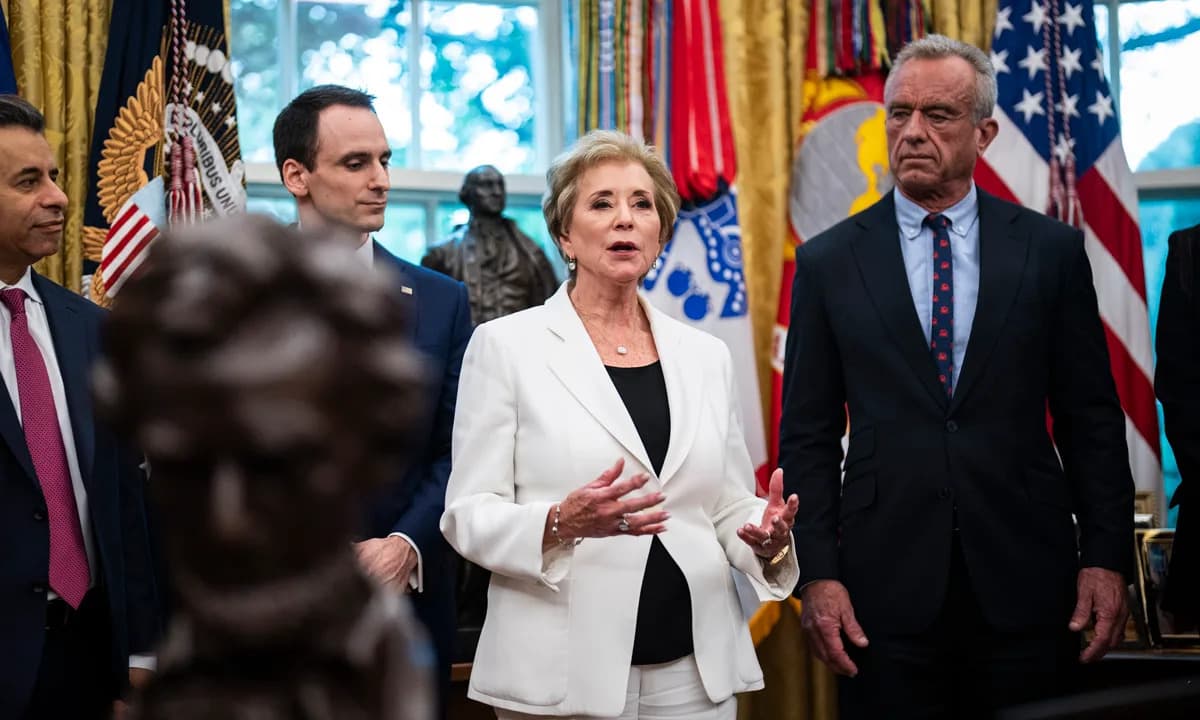
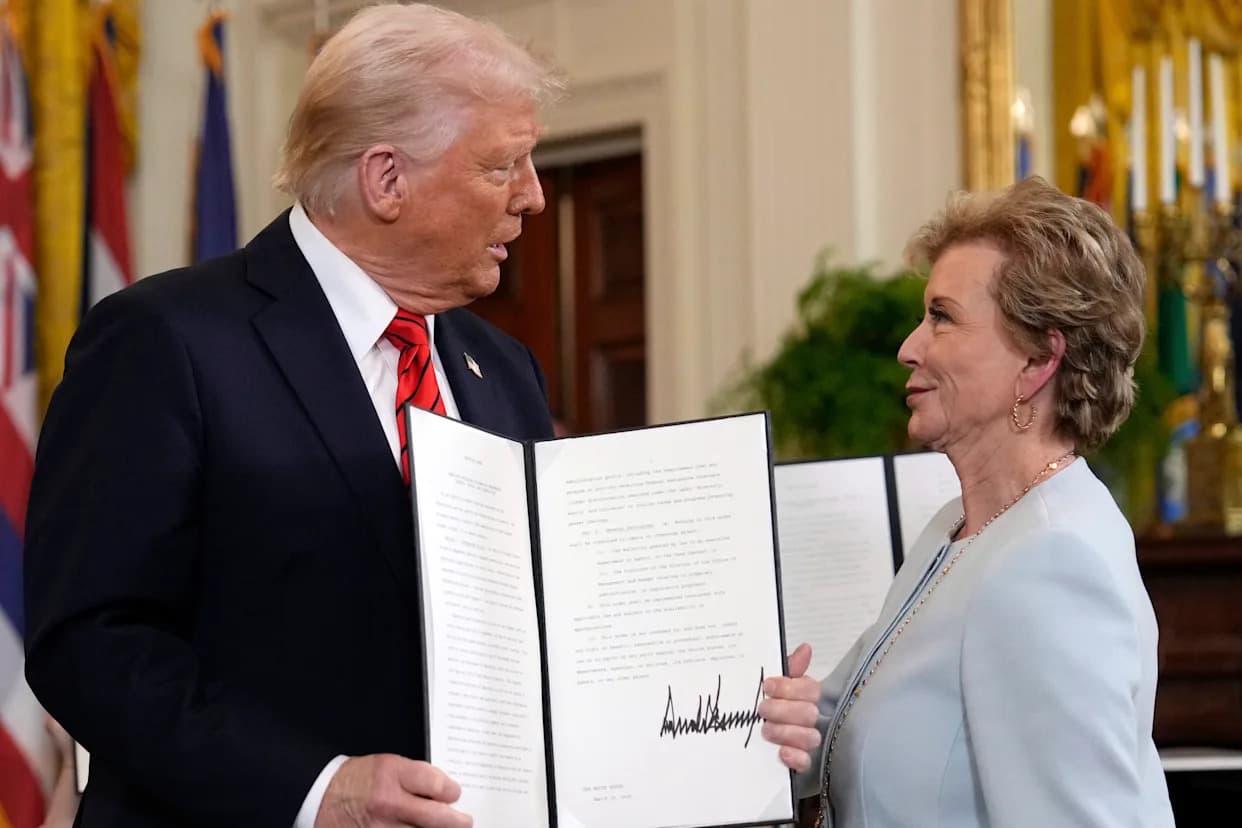
The U.S. Department of Education approved Iowa’s waiver to combine about $9 million in state-administered federal education funds into a single block grant, a change officials say will free nearly $8 million and reduce administrative time. The waiver applies only to state-managed dollars and excludes district-directed funds like Title I, while data-reporting requirements remain in place. Supporters tout reduced bureaucracy and more local control; critics warn the move could dilute services for vulnerable student groups. Similar waiver requests from other states are pending, and reduced federal staffing may complicate oversight.
U.S. Ed Department Approves Iowa’s Plan To Consolidate $9M In Federal Education Funds
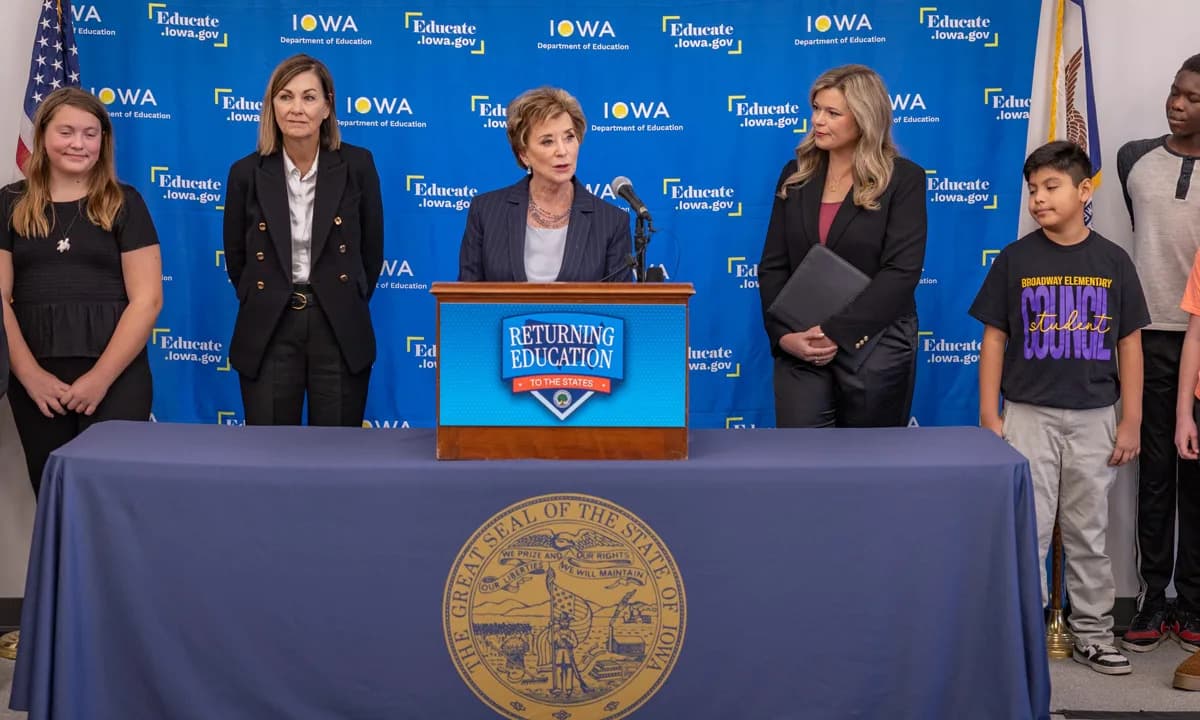
The U.S. Department of Education has approved Iowa’s request to consolidate roughly $9 million in state-administered federal education funds into a single block grant, a move state officials say will free up nearly $8 million and reduce administrative burden.
What the Waiver Allows
The approved waiver lets Iowa blend funds that previously supported teacher-quality programs, services for English learners, student enrichment and afterschool programming into one pot for state-run activities. Education Secretary Linda McMahon called the decision a “groundbreaking first step that gives state leaders more control over federal education dollars.”
Limits and Exclusions
The flexibility is narrower than the state’s original proposal. It applies only to federal dollars the state manages and does not include funds that flow directly to districts, such as Title I for high-poverty schools or some other targeted grants. The Department did not waive data-collection and reporting requirements.
Supporters’ Arguments
Gov. Kim Reynolds said the change will redirect "nearly $8 million and thousands of hours of staff time from bureaucracy to actually putting that expertise and those resources in the classroom." Proponents say consolidating streams reduces paperwork and gives state and local leaders more discretion to address local needs.
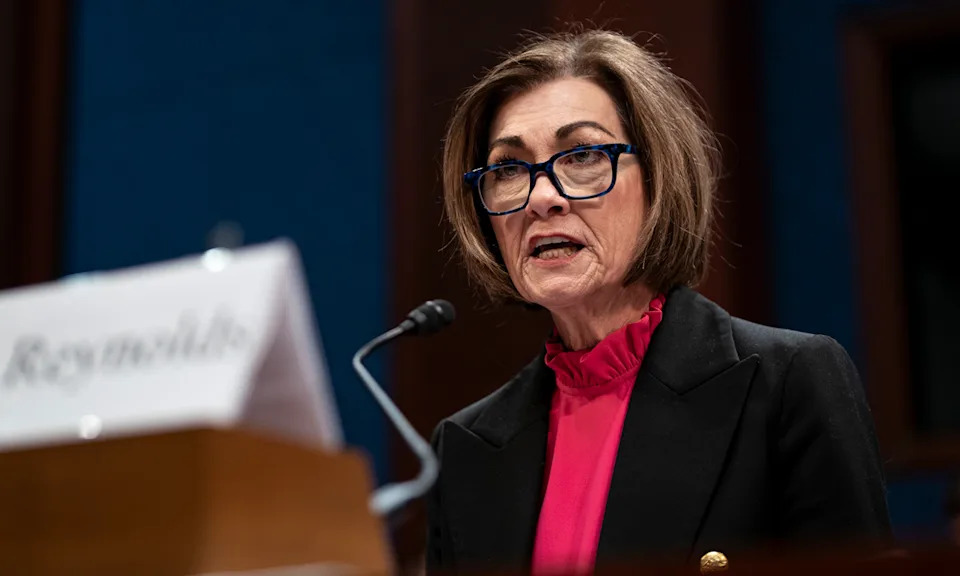
Iowa Gov. Kim Reynolds testified during a House hearing in February on reducing the size of the federal government. (Al Drago/Getty Images)
Critics’ Concerns
Education advocates and union leaders warned that combining dedicated funding streams risks shortchanging the student groups Congress intended to help. Melissa Peterson, legislative and policy director for the Iowa State Education Association, said the union has “grave concerns that some of the various student populations may, quite frankly, not receive the services as intended.”
“One person’s compliance is another person’s accountability, transparency and general prudent treatment of funds,” said Adam Schott, former acting assistant secretary for elementary and secondary education during the Biden administration.
Ed Flex and Other States
The Education Department also approved Iowa’s participation in the Education Flexibility (Ed Flex) program, which can release districts from certain federal program requirements and extend the time they have to obligate funds. Eleven states already participate in Ed Flex. Iowa’s waiver is one of six the Department is considering; Indiana, Kansas and other states have filed similar requests or accountability changes.
Implementation, Oversight and History
Iowa officials say they will use the flexibility, in part, to expand teacher training for a growing population of English learners — a group Iowa’s education director McKenzie Snow said has grown about 40% over the past decade. But some analysts say the state has not yet demonstrated how consolidation will improve outcomes for those students.
Block-grant efforts have a long history in U.S. education policy, including the Reagan-era Chapter 2 consolidation and later proposals. Critics also warn that the Department’s smaller workforce will make monitoring the impact of waivers more difficult.
What Comes Next
Observers expect more waiver requests now that one has been approved, and Department officials will likely face pressure to treat similar proposals consistently. Advocates on both sides urge careful evaluation and independent review to ensure any changes safeguard services for marginalized students while reducing unnecessary administrative burdens.
Help us improve.