
GloSAT is a new global temperature reconstruction that extends instrumental records back to 1781 and shows the late 1700s were cooler than the widely used 1850–1900 baseline. Follow-up attribution work estimates about 0.09 °C of human-driven warming from 1750–1850, consistent with the IPCC’s 0–0.2 °C range. Large volcanic eruptions in the early 1800s and sparse observations increase uncertainty, but the findings refine — rather than overturn — assessments tied to the 1850 baseline.
GloSAT Extends Global Temperature Record to 1781 and Reveals Early Human Warming

Dead mangroves are seen partly submerged in seawater amid rising tides on August 12, 2025 in Hagonoy, Philippines. In the Philippines’ coastal communities, the water has been rising for years—a slow, relentless encroachment fueled by melting ice sheets in Antarctica, the sinking of land from decades of man-made coastal development, unchecked groundwater extraction and the swelling seas of a warming planet. - Ezra Acayan/Getty Images
Researchers have released a new global temperature reconstruction, GloSAT, that extends instrumental records back to 1781 and refines our picture of early industrial-era warming. The analysis — published in Earth System Science Data by a 16-author team led by Colin Morice of the Met Office Hadley Centre — finds the late 1700s and early 1800s were notably cooler than the 1850–1900 period conventionally used as a “preindustrial” baseline.
Why the extension matters. Most widely used global temperature series begin in 1850 for practical reasons tied to the availability of observations. GloSAT shows that greenhouse gases rose by roughly 2.5% between 1750 and 1850, a change large enough to have produced some measurable warming that datasets starting in 1850 may miss.
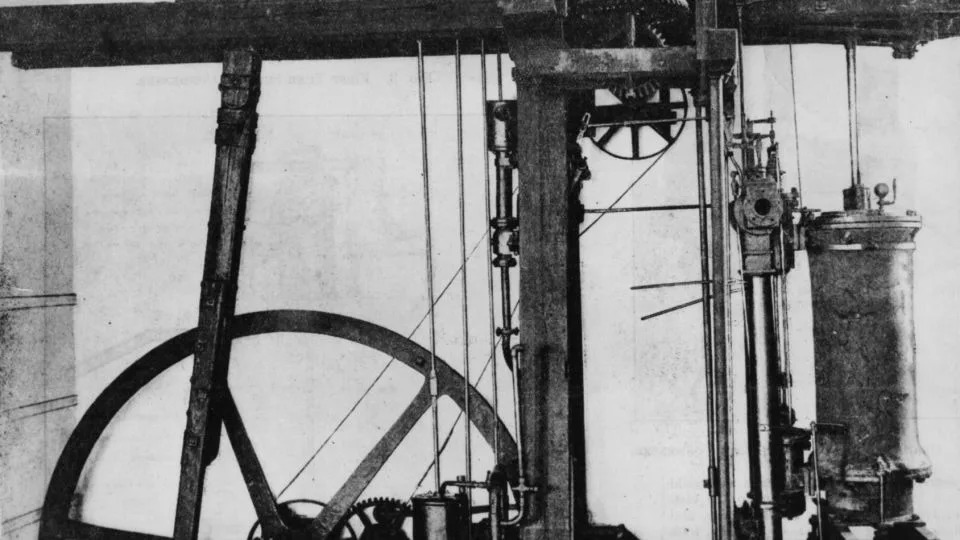
Circa 1899: James Watt's "Sun and Planet" steam engine, patented in 1781. The action of the beam engine, which operated cogs, meant that the steam engine could be applied to factory machinery. - Hulton Archive/Hulton Archive/Getty Images
Natural factors complicate attribution. The early 1800s feature two very large volcanic eruptions — the well-documented 1815 Tambora event and a nearly as large but currently unidentified 1808 eruption — whose aerosol clouds cooled the planet for years by reflecting sunlight. Some of the temperature increase seen later in the 19th century therefore represents a natural rebound from volcanic cooling rather than only a human-driven rise.
How much early warming was human-caused? The U.N. Intergovernmental Panel on Climate Change (IPCC) assessed in 2021 that human influence between 1750 and 1850 was likely between 0 and 0.2 °C. A follow-up study by many of the same researchers (accepted in Environmental Research Letters and led by Andrew Ballinger) used GloSAT plus climate models to attribute roughly 0.09 °C of warming to human activities during 1750–1850, a result that sits near the middle of the IPCC range. Independent work by Piers Forster using CO2–temperature relationships found a broadly similar additional early contribution of about 0.1–0.2 °C.
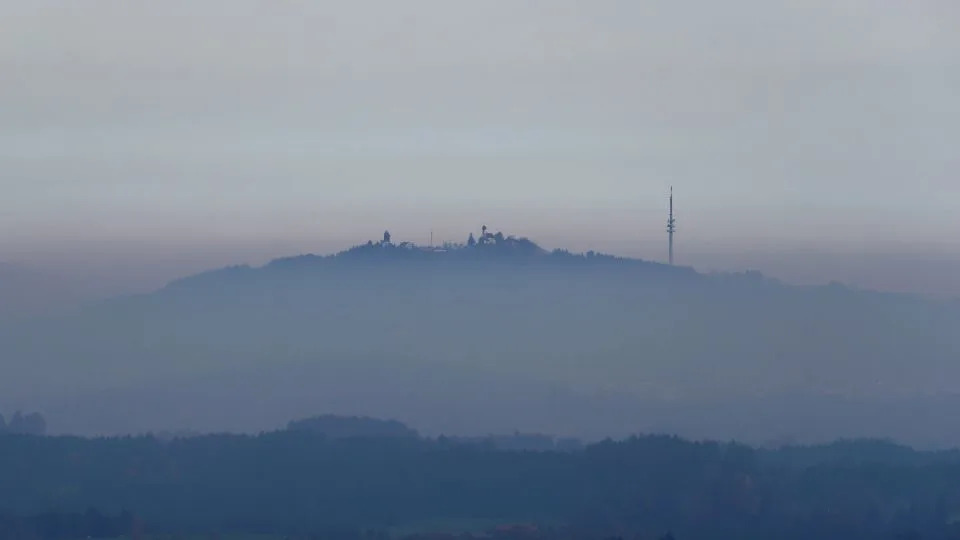
Hohenpeißenberg weather station with the pilgrimage church of the Assumption of the Virgin rises out of the fog on November 9, 2018. - Karl-Josef Hildenbrand/Picture Alliance/Getty Images
Data sources and regional records. GloSAT combines long-running land records (some dating to the 17th and 18th centuries) with ship-based marine air temperature readings. Early land series include the Central England Temperature (from 1659) and Uppsala (from 1722). The Hohenpeissenberg observatory in the Bavarian Alps, with continuous records starting in 1781, registers nearly 3 °C of regional warming when recent decades are compared with 1781–1849.
Marine observations and methods. Because ships more often recorded the temperature of the air above the sea surface in the 18th century, GloSAT uses marine air temperatures (rather than sea-surface temperatures) and adjusts extensively for known biases in early ship logs. Important historical sources include East India Company records and whaling-ship logs compiled in earlier centuries.

A view of Funafuti, Tuvalu, from satellite shows one of the most climate-threatened places on Earth. This low-lying island faces rising sea levels, coastal erosion and freshwater shortages, with tidal flooding now common during high tides. Most of Funafuti sits barely a meter — 3.3 feet — above sea level. - Gallo Images/Orbital Horizon/Copernicus Sentinel Data 2025/Getty Images
Uncertainty and coverage. Observations become sparser further back in time, especially over the oceans, so GloSAT assigns larger uncertainties to estimates before 1850 and presents maps with substantial spatial gaps for the 1781–1800 interval. Reviewers note the earlier period is undoubtedly cooler, but also that uncertainty is larger.
Implications
GloSAT does not overturn existing climate targets tied to the 1850–1900 baseline, but it refines our understanding of how much warming occurred before 1850 and shows that some early industrial-era emissions likely contributed a small, measurable amount of the warming we see today. For policymakers and scientists the key takeaway is nuance: the total anthropogenic contribution to historical warming is slightly larger than previously estimated, but most impact projections and targets remain framed around later reference periods.
“1850 is not the start of industrialization,” said Colin Morice. The new record helps place early emissions and natural variability in clearer context while acknowledging larger uncertainties before mid-19th-century observations became widespread.
Bottom line: GloSAT strengthens evidence that human activity before 1850 contributed modestly to global warming, while confirming important natural influences (notably volcanism) and higher uncertainty in the earliest instrumental years.


