
Minnesota residents reacted with anger after allegations that roughly $250 million was diverted from a COVID-era child nutrition program run through Feeding Our Future. State audit data show reimbursements climbed from $1.4 million in 2019 to $140.3 million in 2021, and the Minnesota Office of the Legislative Auditor found Department of Education oversight to be "inadequate." The case — in which many charged suspects are Somali — has heightened political tensions, drawn comments from figures like Rep. Ilhan Omar and former President Trump, and sparked calls for stronger oversight and reforms.
Minnesota Outrage Over $250M 'Feeding Our Future' Fraud Puts Walz and Somali Community in Spotlight

"I want my money back," Peter, a lifelong Minnesota resident, told Fox News Digital he doesn't believe the current state government cares about "the little people."
Minneapolis residents interviewed by Fox News Digital expressed anger and frustration after revelations that roughly $250 million was allegedly diverted from a state-run children's nutrition program through the nonprofit Feeding Our Future. The scandal has shaken public trust in state oversight, put Gov. Tim Walz's leadership under scrutiny and intensified debate around Minnesota's Somali community because many charged suspects are Somali.
What Happened
Investigators say Feeding Our Future worked with local businesses that registered as meal sites and submitted reimbursement claims stating they had fed thousands of children. In many cases, authorities allege, no meals were provided and reimbursements were spent on personal and luxury items. State audit data show payments to Feeding Our Future rose from $1.4 million in 2019 to $4.8 million in 2020 and then surged to $140.3 million in 2021 — a 2,818% increase.

A photo taken during the Oct. 9 snowstorm in downtown Minneapolis, Minnesota just days before Gov. Tim Waltz criticized President Trump's characterization of the local Somali community.
Oversight Failures
Data from the Minnesota Office of the Legislative Auditor cited the Department of Education's oversight as "inadequate," finding that those shortcomings "created opportunities for fraud." The abrupt spike in payments and the rapid expansion of reimbursements have prompted calls for tighter financial controls and more rigorous auditing of pandemic-era relief programs.
Voices From the Community
"No disrespect to the people who are running it. Well, a little bit, but I feel like they just don't care about the little people,"
said Peter, a lifelong Minnesota resident, reflecting widespread anger among taxpayers who feel their dollars were mishandled. Another anonymous resident criticized the state's financial controls bluntly:
"You have the worst accountants in the entire world, or you just don't care."
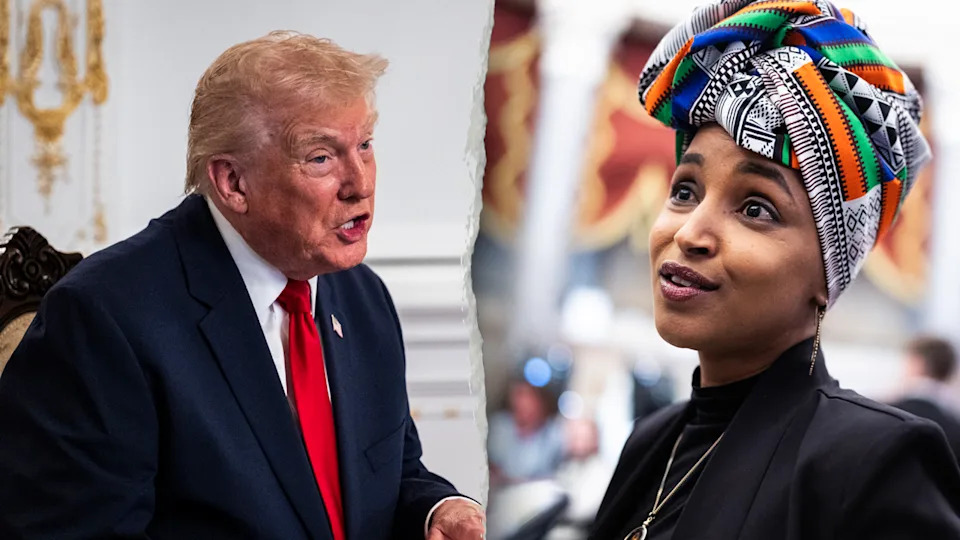
President Donald Trump, left; Rep. Ilhan A. Omar, right.
Some residents connected the scandal to broader political tensions. Minneapolis resident Luis complained that some members of the Somali community receive state benefits and suggested resentment toward perceived unfairness. By contrast, Maya warned that political rhetoric — including recent attacks by former President Donald Trump on Rep. Ilhan Omar and her supporters — risks stigmatizing an entire community.
Political Responses
Rep. Ilhan Omar, a Somali American, defended Somali residents as hard-working and noted that members of her community were also victims who could have benefited from the program. Gov. Tim Walz has defended his record but acknowledged that fraud under his watch is unacceptable and said restoring public trust will require work.
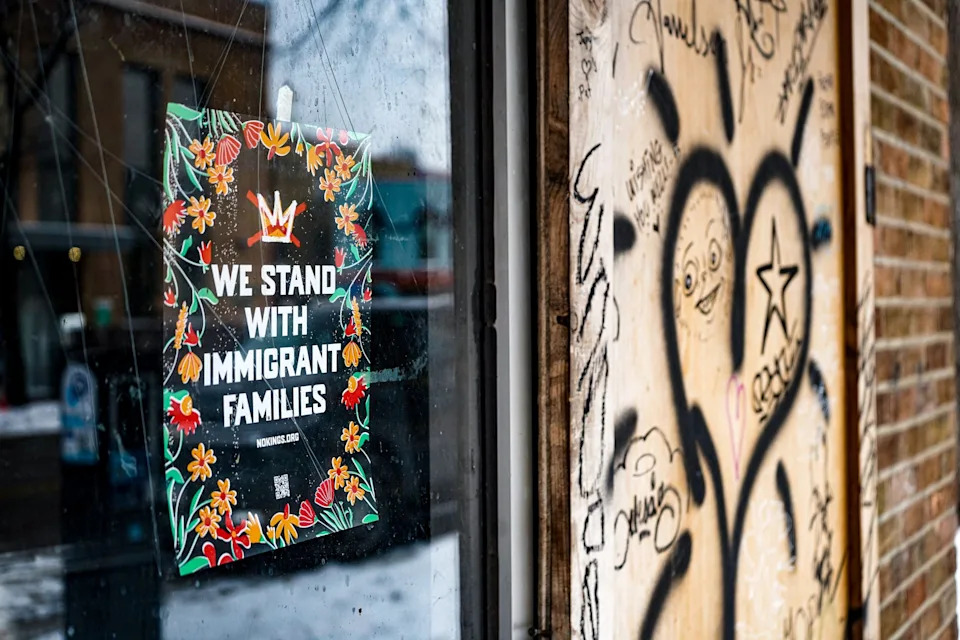
Residents like Maya have expressed support for the Somali community amid controversy related to widespread Minnesota fraud.
"Minnesotans deserve to know that their tax dollars are being put to good use, and they deserve to know that they can trust our public institutions," Walz said at a recent press conference. Investigations and audits are continuing, and state lawmakers and auditors have signaled they will pursue reforms to prevent similar failures.
What Comes Next
Prosecutors are pursuing charges against multiple individuals, and lawmakers are promising reforms to tighten oversight of state reimbursements and pandemic-era relief programs. The scandal has renewed calls for greater transparency, improved auditing practices and stronger controls on nonprofit reimbursement claims.


