Five major U.S. immigration policy changes taking effect in 2025 include a proposed H-1B selection overhaul paired with a $100,000 fee, expanded facial-recognition collection for noncitizens at ports of entry and exit, and a new ESTA requirement to provide five years of social media identifiers. The administration also announced a fee-based "Trump Gold Card" program marketed as an expedited route to EB-1/EB-2 permanent residency, and USCIS updated the naturalization civics test to 20 oral questions with a 60% pass threshold.
Five Major U.S. Immigration Policy Changes Taking Effect in 2025

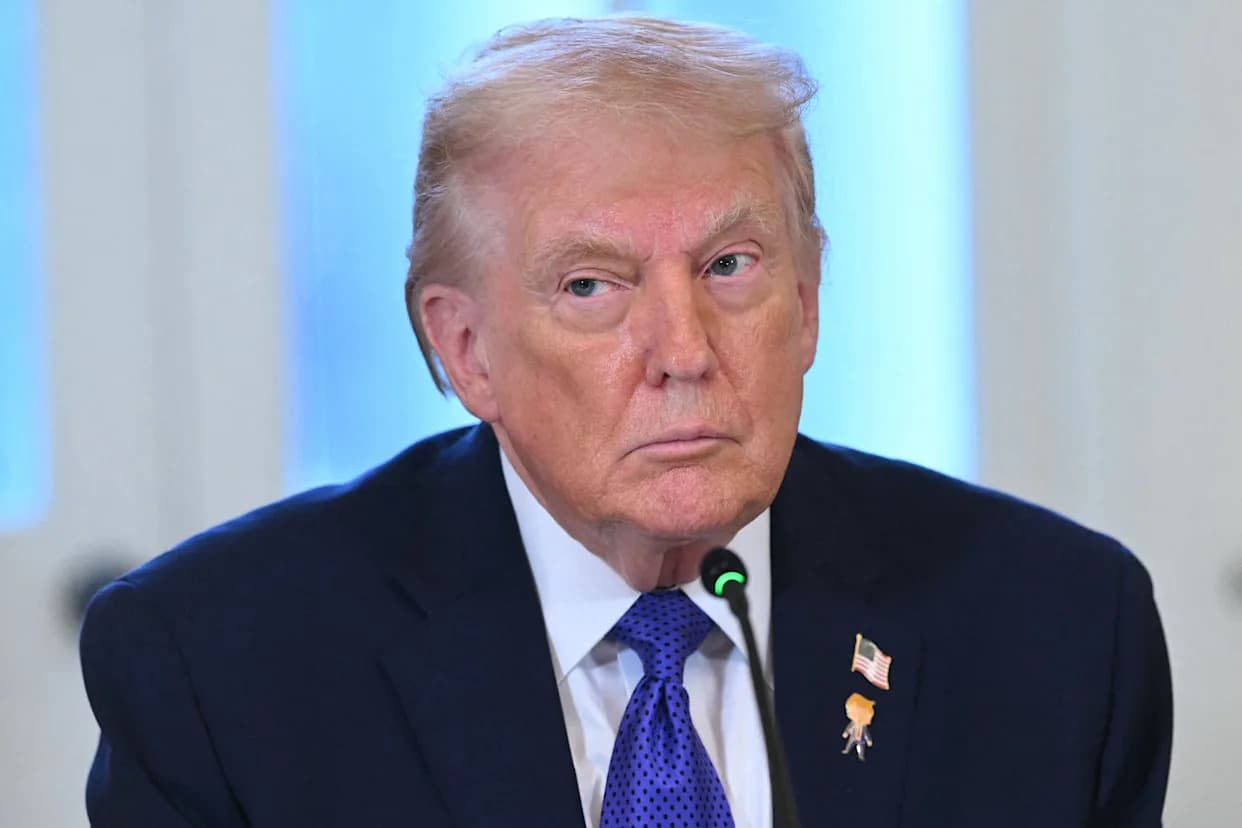
Trump signs an executive order in the Oval Office at the White House on Sept. 19, 2025, in Washington, D.C. Trump signed two executive orders, establishing the "Trump Gold Card" and introducing a $100,000 fee for H-1B visas. The "Trump Gold Card" is a visa program that allows foreign nationals permanent residency and a pathway to U.S. citizenship for a $1 million investment in the United States.
Numerous immigration policy changes introduced in 2025 are reshaping how people travel to, work in, and pursue citizenship in the United States. Below are five of the most consequential changes that travelers, employers and prospective citizens should know.
1. Proposed H-1B Selection And Fee Changes
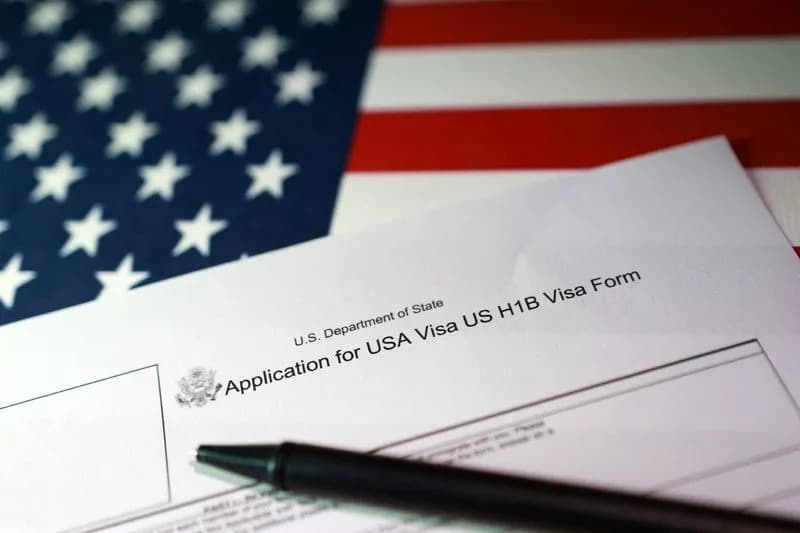
In September 2025, the administration proposed a revision to how H-1B visas are awarded. The H-1B program, administered by the Department of Homeland Security (DHS) and U.S. Citizenship and Immigration Services (USCIS), provides temporary work authorization widely used by U.S. technology and other industries to hire highly skilled foreign professionals.
The proposal is intended to encourage employers to offer higher salaries or reserve H-1B petitions for roles requiring advanced expertise. It follows a presidential proclamation that introduced a new $100,000 fee for certain H-1B applications. DHS said the changes — scheduled to take effect in February — are meant to "better protect the wages, working conditions, and job opportunities for American workers." USCIS spokesman Matthew Tragesser said the prior random-selection system "was exploited and abused by U.S. employers who were primarily seeking to import foreign workers at lower wages than they would pay American workers."
2. Expanded Facial Biometrics For Noncitizens
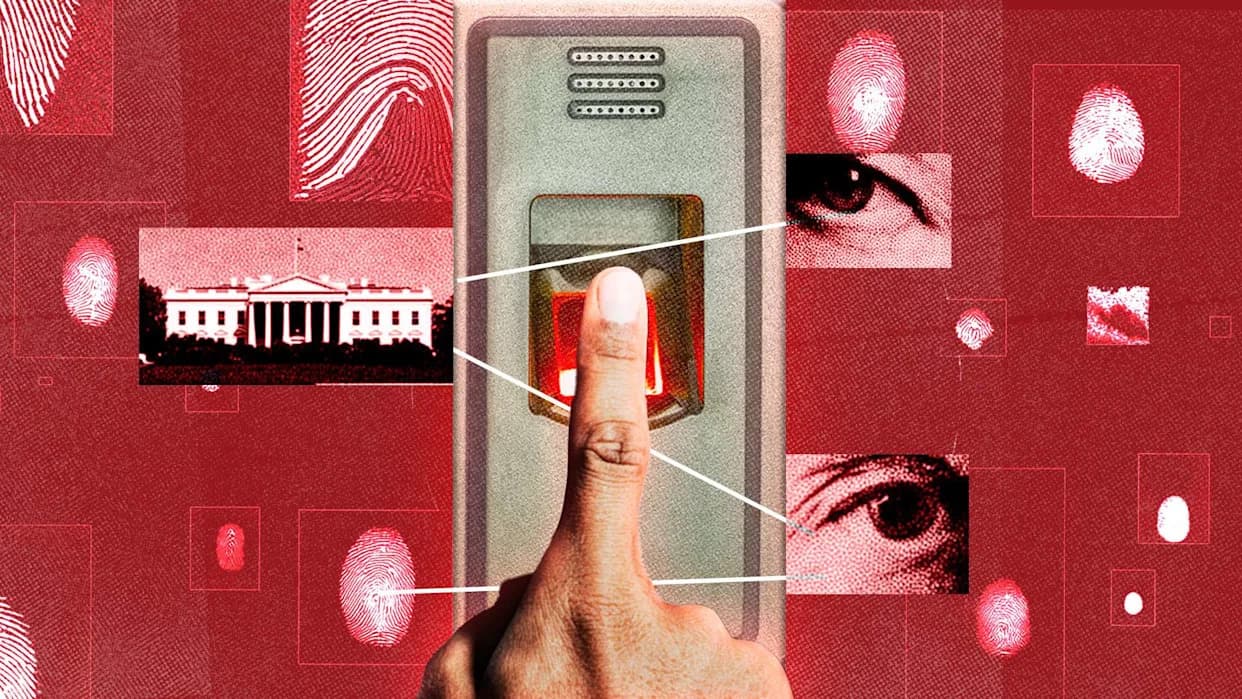
On Dec. 26, 2025, DHS adopted a rule expanding the collection of facial-recognition biometrics for noncitizens at U.S. ports of entry and exit. According to DHS, the rule "amends existing DHS regulations to authorize U.S. Customs and Border Protection (CBP) to collect facial biometrics from all noncitizens upon entry and exit at airports, land ports, seaports, and other authorized points of departure."
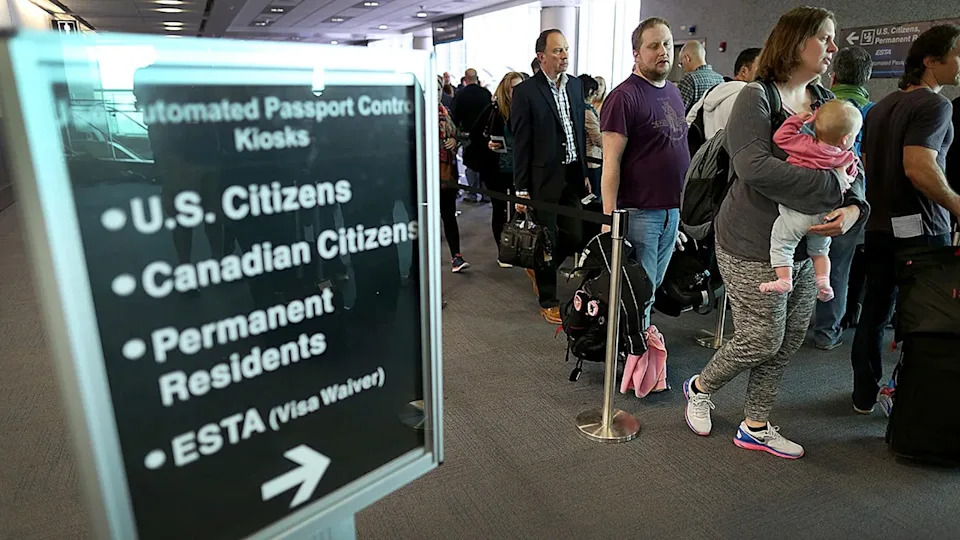
Passengers wait in line to use the Automated Passport Control Kiosks set up for international travelers arriving at Miami International Airport on March 4, 2015, in Miami.
The policy covers lawful permanent residents (green card holders) and other non-U.S. citizens who legally reside in the country. DHS noted that U.S. citizens are not subject to the rule but may voluntarily participate in the facial biometrics process.
3. Social Media Required For ESTA Applications
CBP filed a notice in the Federal Register in December 2025 adding social media identifiers to the mandatory data elements for Electronic System for Travel Authorization (ESTA) applications. The agency said the change implements Executive Order 14161 (signed January 2025), "Protecting the United States From Foreign Terrorists and Other National Security and Public Safety Threats."
Under the updated requirement, ESTA applicants must provide social media identifiers covering the prior five years. DHS describes ESTA as "an automated system used to determine the eligibility of visitors to travel to the United States under the Visa Waiver Program and whether such travel poses any law enforcement or security risk."
4. "Trump Gold Card" Fee-Based Program Announced
Former President Donald Trump announced a privately promoted program called the "Trump Gold Card," described by campaign materials as a fee-based, expedited path to lawful permanent residency and eventual citizenship. The program's public materials say the card has a starting price of $1 million, requires submission of documents and a nonrefundable processing fee, and triggers an accelerated review by USCIS. If approved, cardholders are described as receiving lawful permanent resident status in categories like EB-1 or EB-2 and being able to use the card across all 50 states and territories.
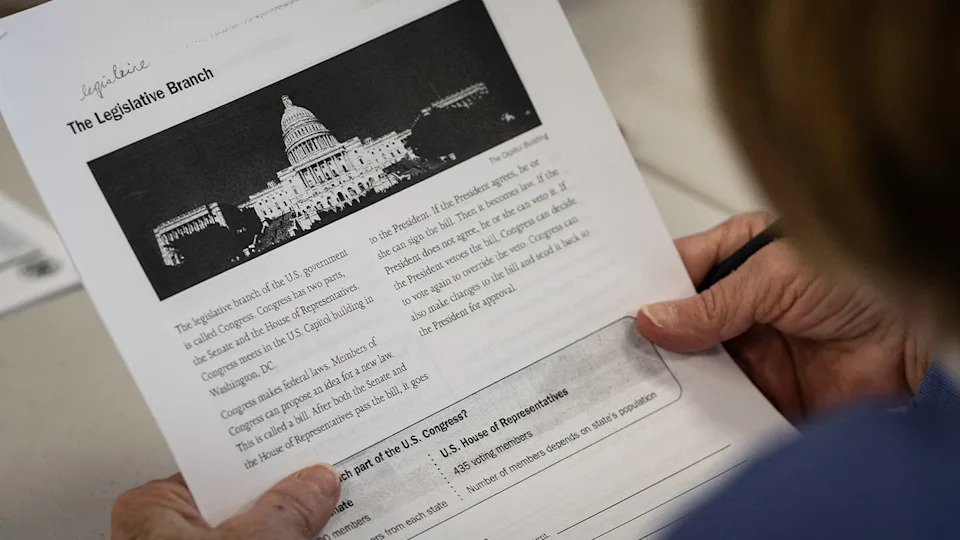
An image of a U.S. citizenship test.
The campaign stated proceeds would be used for tax reduction, pro-growth projects and reducing federal debt. The program and its legal and administrative details have been presented by campaign-affiliated sources; immigrant advocates, legal experts and government officials may view and evaluate the plan differently.
5. Revised Naturalization Civics Test
USCIS has revised the naturalization civics test for 2025. The new oral exam consists of 20 questions drawn from a pool of 128 civics questions. Applicants must answer at least 12 correctly (60%) to pass; answering nine or more incorrectly results in failure. The updated test removes certain geography questions and requires test-takers to name all three branches of government rather than just one.
USCIS said the updated test and other requirements reflect its aim to ensure naturalized citizens can read, write and speak English and understand U.S. government and civics. USCIS spokesperson Matthew Tragesser said these changes are intended to ensure new citizens "fully embrace our values and principles as a nation."
Reporting note: This summary is based on reporting from Fox News Digital and The Associated Press and on official DHS and USCIS notices and statements.
Help us improve.