NASA will carry out two ISS spacewalks on Jan. 8 and Jan. 15 — the 278th and 279th EVAs supporting the station. Commander Mike Fincke and flight engineer Zena Cardman will perform the Jan. 8 EVA to ready the 2A power channel and collect microbial swabs; the Jan. 15 EVA will include camera replacement, installation of a planar reflector and relocation of ammonia jumper lines. Both EVAs are expected to last about six hours and 30 minutes and will be livestreamed on NASA platforms and Amazon Prime.
NASA Readies First Two ISS Spacewalks of 2026 — Jan. 8 & Jan. 15: Crews, Tasks and How to Watch
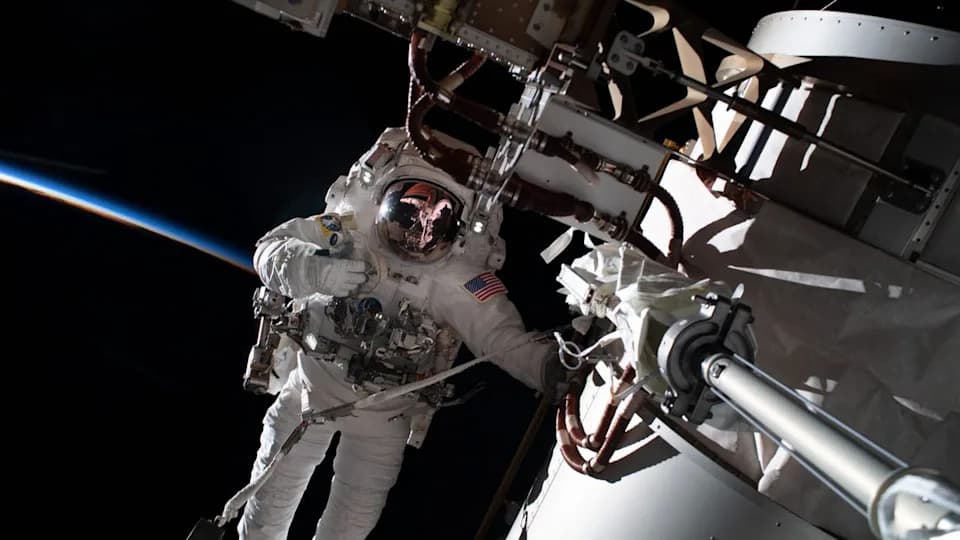
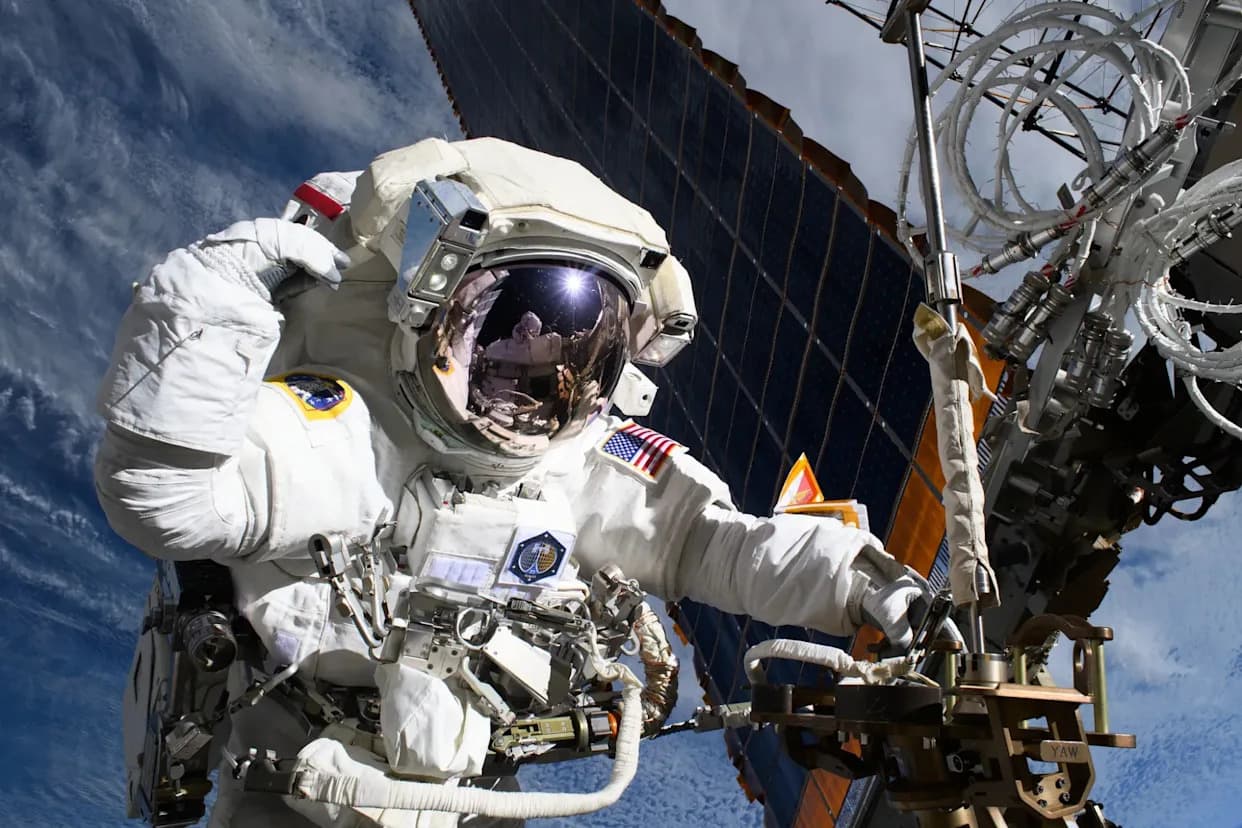
NASA astronaut and Expedition 68 Flight Engineer Frank Rubio is pictured during a spacewalk tethered to the International Space Station's starboard truss structure. Behind Rubio, the last rays of an orbital sunset penetrate Earth's thin atmosphere as the space station flew 258 miles above the African nation of Algeria. (Source: NASA)
NASA astronauts will perform the agency’s first two International Space Station (ISS) spacewalks of 2026, with excursions scheduled for Jan. 8 and Jan. 15. These EVAs will support station maintenance, power upgrades and preparations for future hardware.
What’s Planned
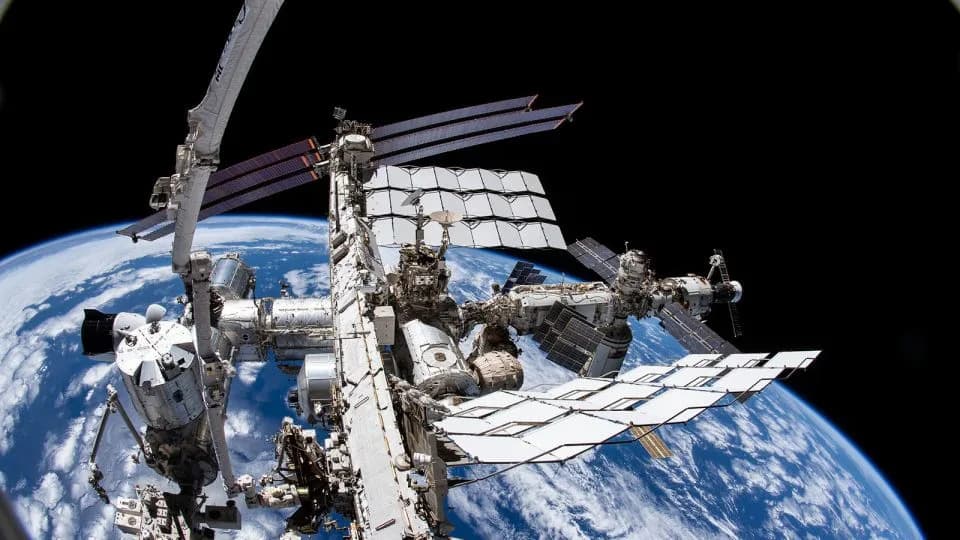
The two January spacewalks are catalogued as the 278th and 279th EVAs in support of the ISS assembly, maintenance and upgrade campaign. NASA will livestream both operations about an hour before each start on its YouTube channel, on NASA+ and on Amazon Prime; local station coverage is expected on FOX 35 for portions of the activity.
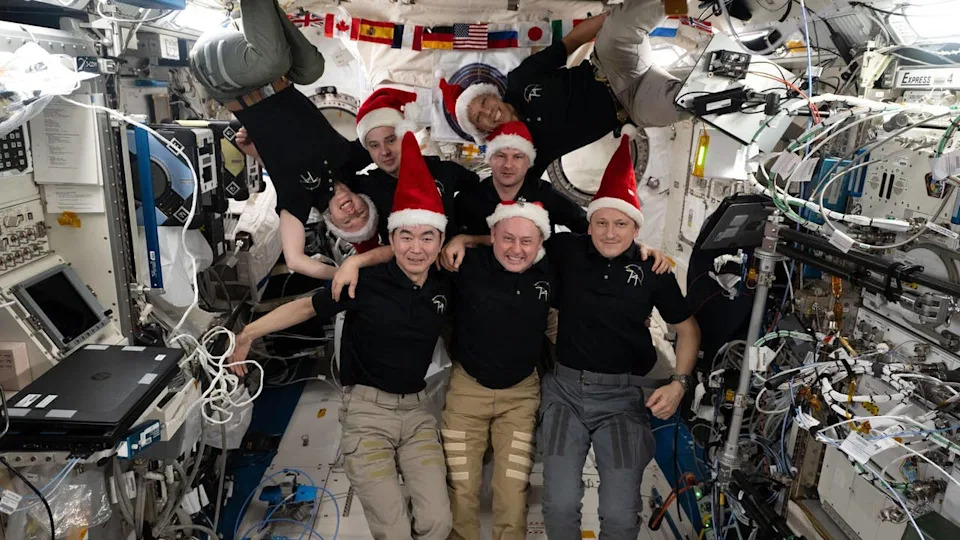
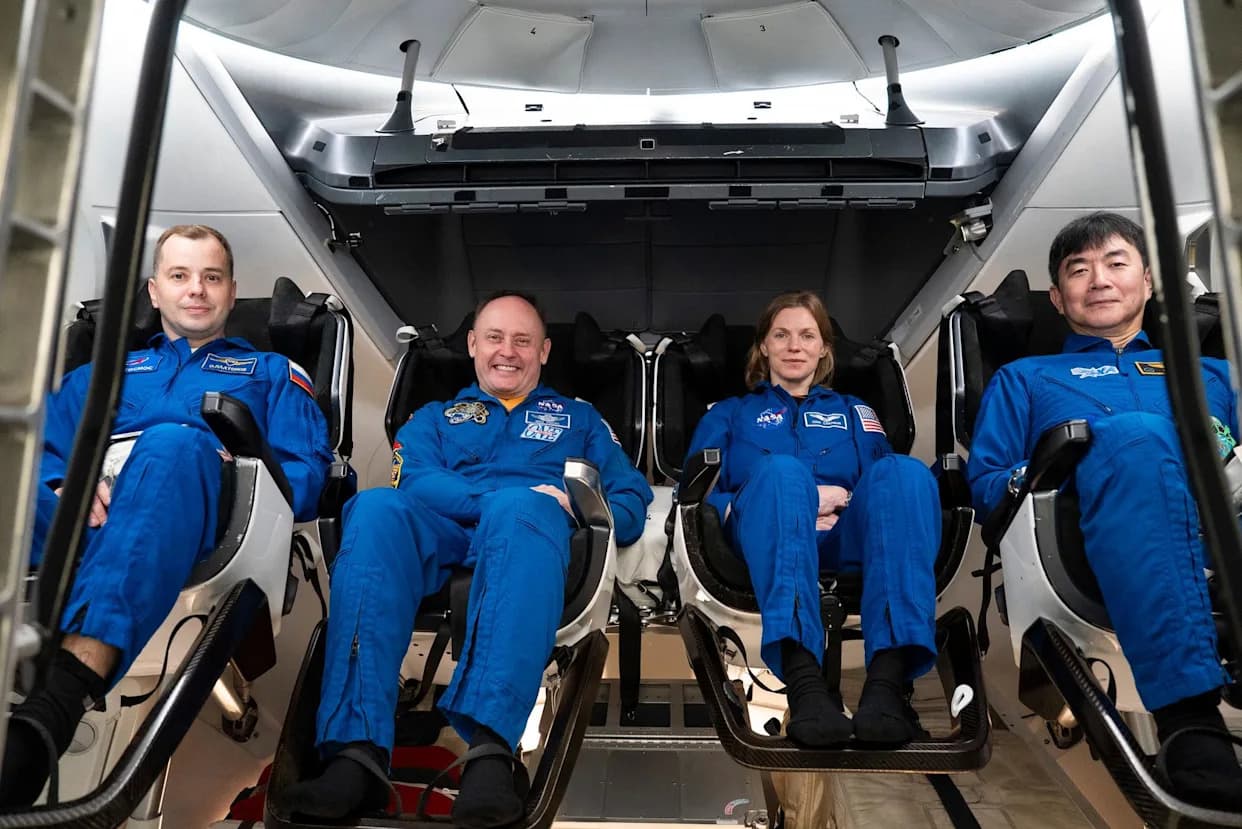
The seven-member Expedition 74 crew poses for a festive portrait aboard the International Space Station's Kibo laboratory module. In the front row, from left, are Kimiya Yui of JAXA (Japan Aerospace Exploration Agency), Mike Fincke of NASA, and Sergey Kud-Sverchkov of Roscosmos. In the back are, Zena Cardman of NASA, Oleg Platonov of Roscosmos, Chris Williams of NASA, and Sergei Mikaev of Roscosmos. (Source: NASA)
Spacewalk 94 — Jan. 8
Expedition 74 commander Mike Fincke and flight engineer Zena Cardman will perform Spacewalk 94, exiting the station’s airlock to complete preparations of the 2A power channel ahead of a future Roll-Out Solar Array installation. The array will add electrical capacity to the orbital laboratory and help support long-term operations, including safe de-orbit planning.
During the Jan. 8 EVA the pair will also take microbial surface swabs at five locations near the airlock door to help scientists monitor microbial presence on exterior surfaces. NASA expects the spacewalk to begin at 8:00 a.m. EST and to last about six hours and 30 minutes.
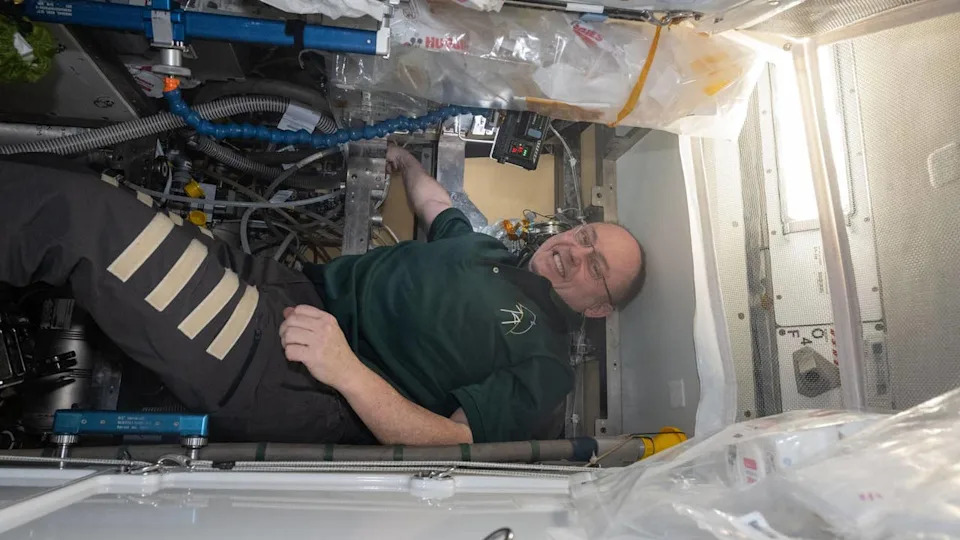
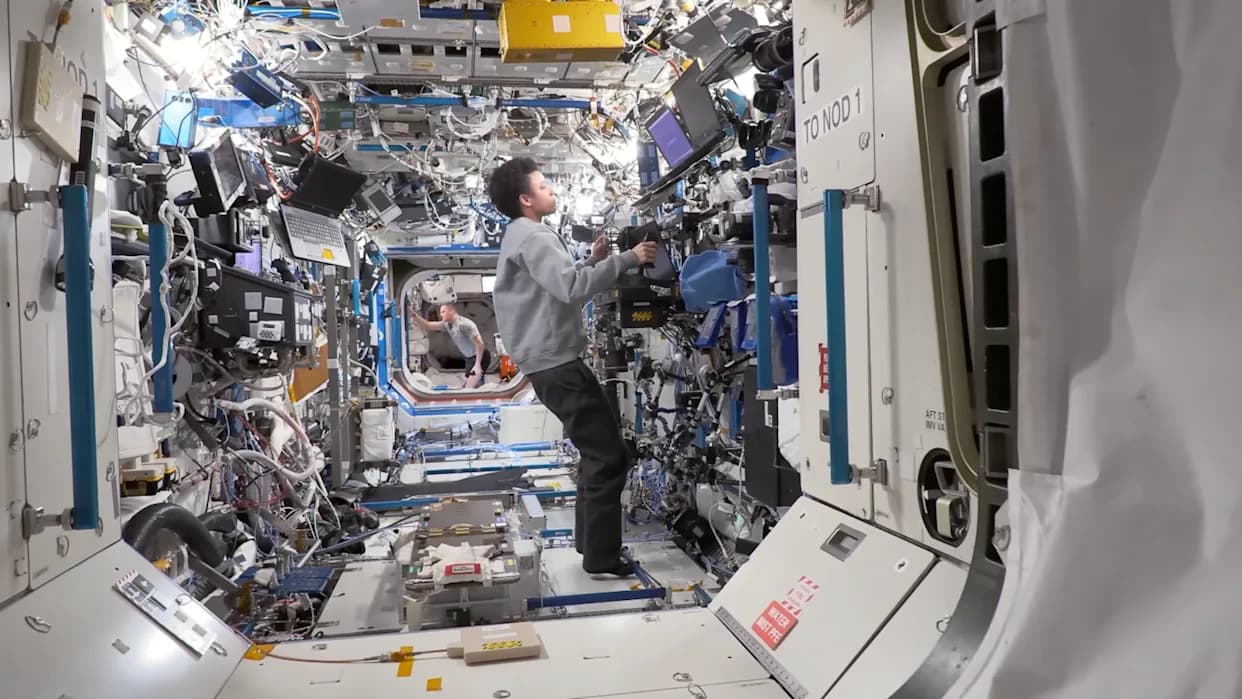
NASA astronaut and Expedition 74 Commander Mike Fincke works inside the Tranquility module replacing orbital plumbing components on the waste and hygiene compartment, the International Space Station’s restroom. (Source: NASA)
Spacewalk 95 — Jan. 15
Spacewalk 95 is scheduled for Jan. 15 with an expected start time of 7:10 a.m. EST and a planned duration of about six hours and 30 minutes. NASA has not yet named the crew for this EVA; officials said the team for Jan. 15 will be announced following the Jan. 8 spacewalk.
Planned tasks for the Jan. 15 excursion include replacing a high-definition camera on Camera Port 3, installing a planar reflector (a new navigational aid for visiting spacecraft) on the Harmony module’s forward port, and relocating an early ammonia servicer jumper and other jumper assemblies along the station’s S6 and S4 truss segments. Bill Spetch, operations and integration manager for NASA’s ISS program, said relocating the jumper will allow NASA to refill some outboard thermal system ammonia at a later date.
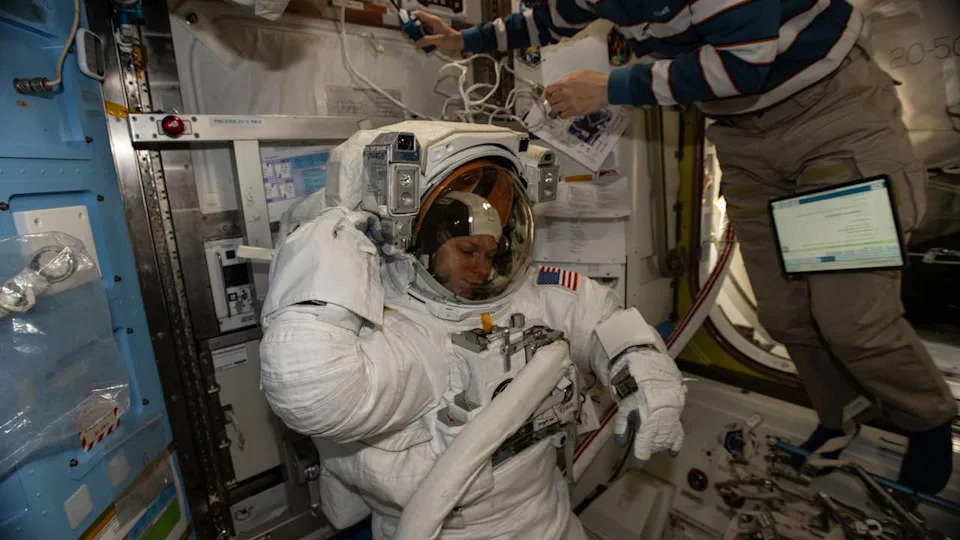
NASA astronaut and Expedition 74 Flight Engineer Zena Cardman is pictured in her pressurized spacesuit, checking its communication and power systems ahead of a spacewalk planned for Thursday, Jan. 8, 2025. At upper right, JAXA (Japan Aerospace Exploration Agency) astronaut and Flight Engineer Kimiya Yui assists Cardman as she tests the operations of her spacesuit inside the International Space Station’s Quest airlock. (Source: NASA).
Who’s Involved
Expedition 74 is a seven-person crew that began its mission in December 2025 and will remain aboard the station through summer 2026. The Jan. 8 EVA will be Zena Cardman’s first spacewalk; it will be Mike Fincke’s 10th EVA, tying him with five other NASA astronauts for the agency record for most spacewalks. Fincke will wear a suit marked by red stripes; Cardman will wear an unmarked suit during the excursion.
Related Operations and Next Steps
After the two January EVAs, NASA plans a station reboost on Jan. 16 using the SpaceX CRS-33 Cargo Dragon — the agency said this will be the final reboost performed using that Dragon vehicle. The CRS-33 Dragon delivered more than 5,000 pounds of cargo and research to the ISS and is scheduled to undock Jan. 21.
The HTV-X cargo vehicle currently berthed to the station will be packed and unberthed for release in late January after delivering about 4.4 tons of experiments and supplies. Additional crew rotations are scheduled for February when SpaceX Crew-12 astronauts are expected to launch to the station.
Why It Matters
The Jan. 8 and Jan. 15 EVAs help ensure the ISS continues to support scientific research, international crews and visiting vehicles. Over its 25 years in orbit the ISS has hosted hundreds of experiments and more than 250 spacewalks; these two operations mark the first EVAs of 2026 and the first conducted by Expedition 74.
How to Watch: NASA will stream the EVAs on NASA’s YouTube channel, on NASA+ and on Amazon Prime; streams begin about one hour before each spacewalk.
Help us improve.