
The US carried out a Christmas Day strike in northwest Nigeria targeting Islamic State–affiliated fighters after President Trump warned of action over attacks on Christians. Nigeria confirmed coordination with the United States, but experts say the violence affects both Christians and Muslims and has complex drivers including extremist groups, communal tensions and resource disputes. Monitoring data show thousands of civilian deaths from 2020–2025, with recorded attacks targeting both religious groups. Analysts warn a single strike cannot address the deep-rooted political, economic and security causes of the violence.
US Carries Out Christmas-Day Strike in Northwest Nigeria — Context Behind Claims That Christians Are Being Targeted

An image taken from video released by the US Department of Defense showing the strike on alleged Islamic State targets in northwest Nigeria on December 25. - Dept. of Defense
On Christmas Day, the United States carried out a strike in northwest Nigeria against fighters linked to the Islamic State, a move President Donald Trump said was intended to halt violence targeting Christians. Nigeria's foreign ministry confirmed that the two countries coordinated the action, but officials and analysts say the situation on the ground is more complex than a single narrative suggests.
What Happened
Details about the mission remain limited. The White House framed the strike within a response to mounting attacks on Christian communities, and Mr. Trump had previously threatened to suspend aid to Nigeria and ordered the US defense secretary to "prepare for possible action." A presidential adviser said Washington and Abuja were "on the same page in the fight against terrorism."
Who Was Likely Targeted
Security analysts have pointed to Lakurawa — a relatively obscure but increasingly violent armed group active in northwestern states — as a possible target. Lakurawa has reportedly escalated attacks this year, striking remote villages, ambushing security forces and using forested borderlands as hideouts. Local and international reporting has also linked Islamic State affiliates and other extremist networks to violence in the region.
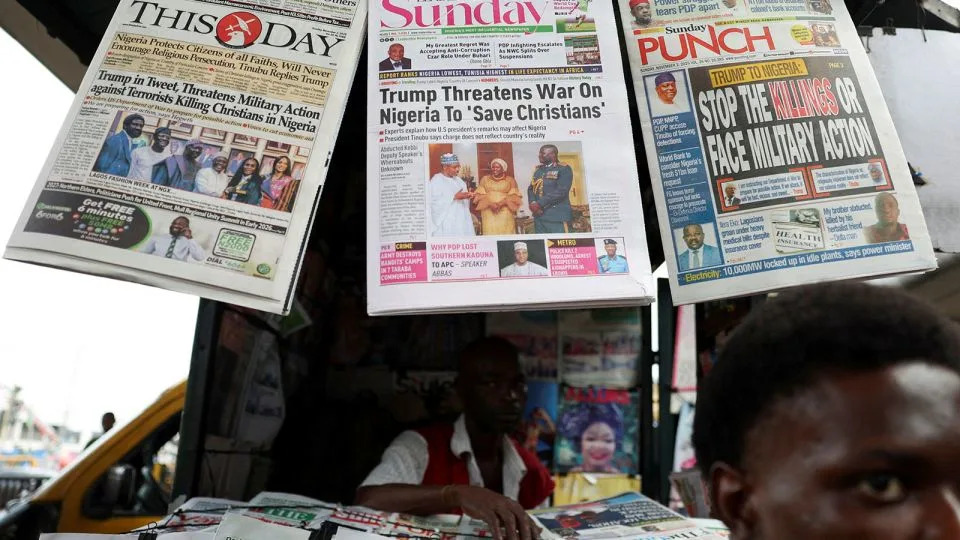
Newspapers with articles reporting US President Donald Trump's message to Nigeria over the treatment of Christians hang at a newspaper stand in Ojuelegba, Lagos, Nigeria on November 2. - Sodiq Adelakun/Reuters/File
Why The Violence Is Complicated
Nigeria faces long-standing, multi-faceted security challenges driven by extremist ideologies, communal and ethnic tensions, and resource disputes between farmers and herders. The country is roughly evenly split between Christians, who predominate in the south, and Muslims, who are concentrated in the north. Analysts stress that both communities have been victims of lethal attacks.
"A single strike can disrupt ISIS operations in the short term, but the long-term issues that surround violence in Nigeria are extremely complex," said retired US Air Force Col. Cedric Leighton, a CNN military analyst, noting the need for a broader campaign that addresses governance and economic drivers of violence.
Evidence And Local Perspectives
Leaders and advocates offer differing emphases. John Joseph Hayab, who leads the Christian Association of Nigeria (CAN) in the north, contends there have been "systematic killings of Christians" in parts of the region, noting several high-profile attacks this year. Bulama Bukarti, a Nigerian human rights and security analyst, points out that extremist groups have also massacred large numbers of Muslim civilians, and that many attacks occur in predominantly Muslim states.
Available monitoring data do not clearly support a narrative that Christians are disproportionately targeted. Crisis-monitoring organization Armed Conflict Location & Event Data reported that between January 2020 and September 2025 more than 20,400 civilians were killed in attacks; of those deaths, 317 were attributed to attacks specifically targeting Christians and 417 to attacks targeting Muslims, while the religious affiliation of most victims was not recorded.
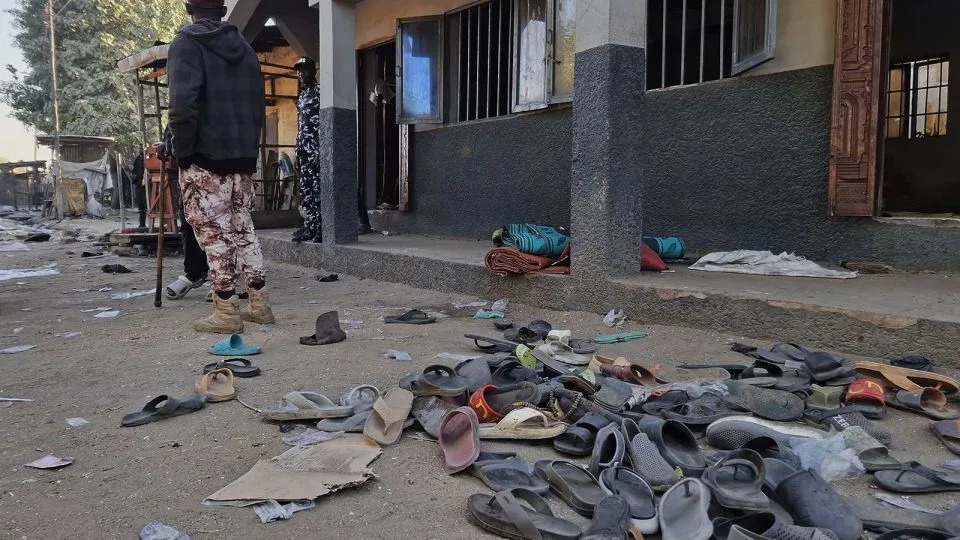
Flip-flops belonging to worshippers are seen following a deadly bomb explosion at a mosque in Maiduguri, Nigeria, on December 25. - Jossy Ola/AP
Political Fallout
In November, the Trump administration designated Nigeria a "Country of Particular Concern" under the US International Religious Freedom Act, a label indicating findings of "systematic, ongoing, [and] egregious" violations of religious freedom. The Nigerian government rejected that characterization. President Bola Tinubu said the label "does not reflect our national reality" and reiterated a commitment to protect all Nigerians; he has not publicly commented on the recent strike.
What Comes Next
Experts say the strike may disrupt militant activity in the short term but will not resolve the root causes of violence. Lasting stability, they argue, will require a comprehensive approach that combines security operations with improvements in governance, economic opportunity, conflict resolution mechanisms and protection for all communities.
Reporting Note: Details about the strike and those targeted remain limited and may change as more information becomes available from both Nigerian and international sources.


