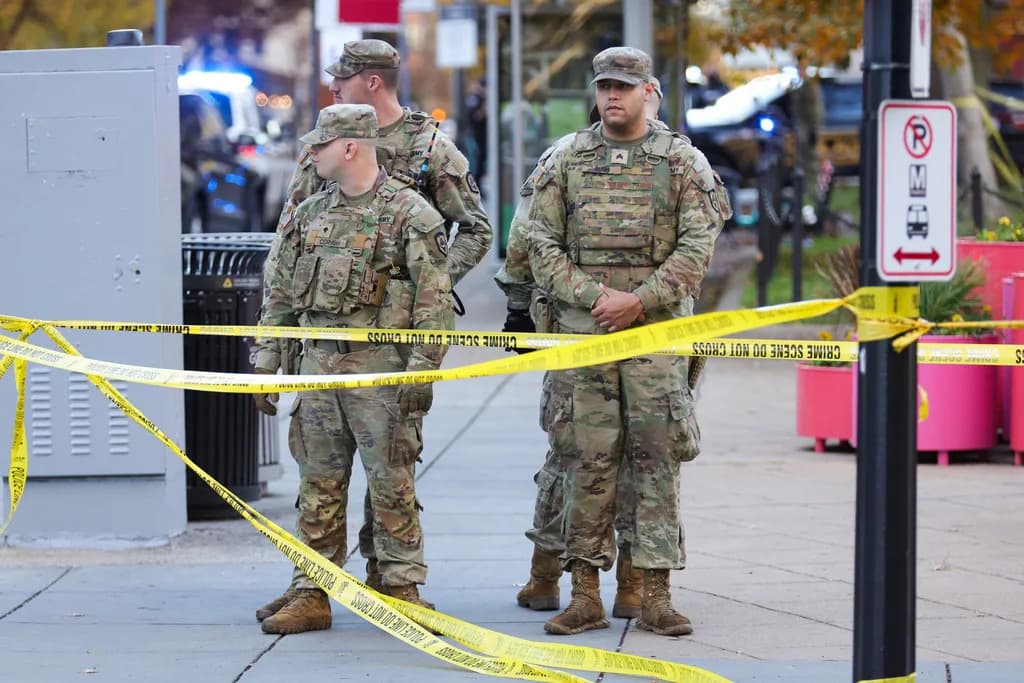
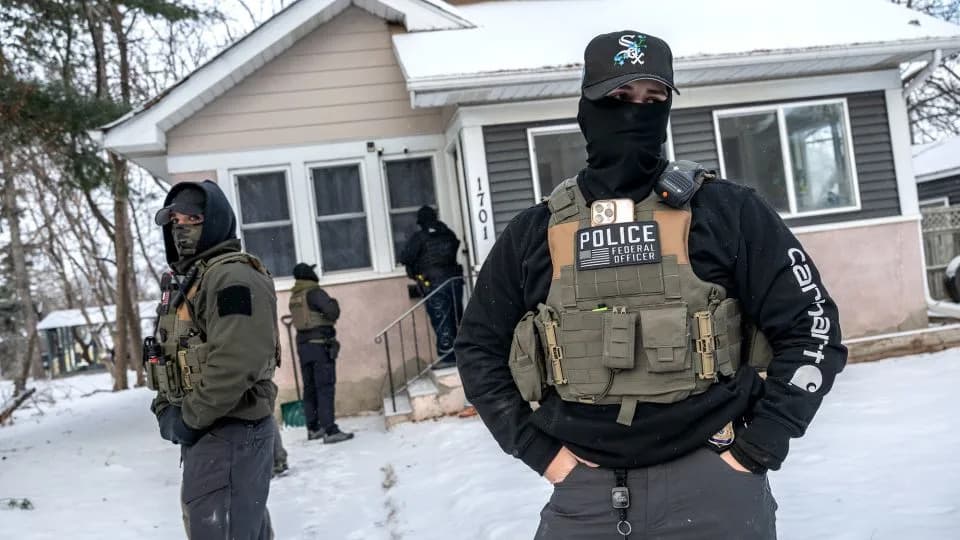
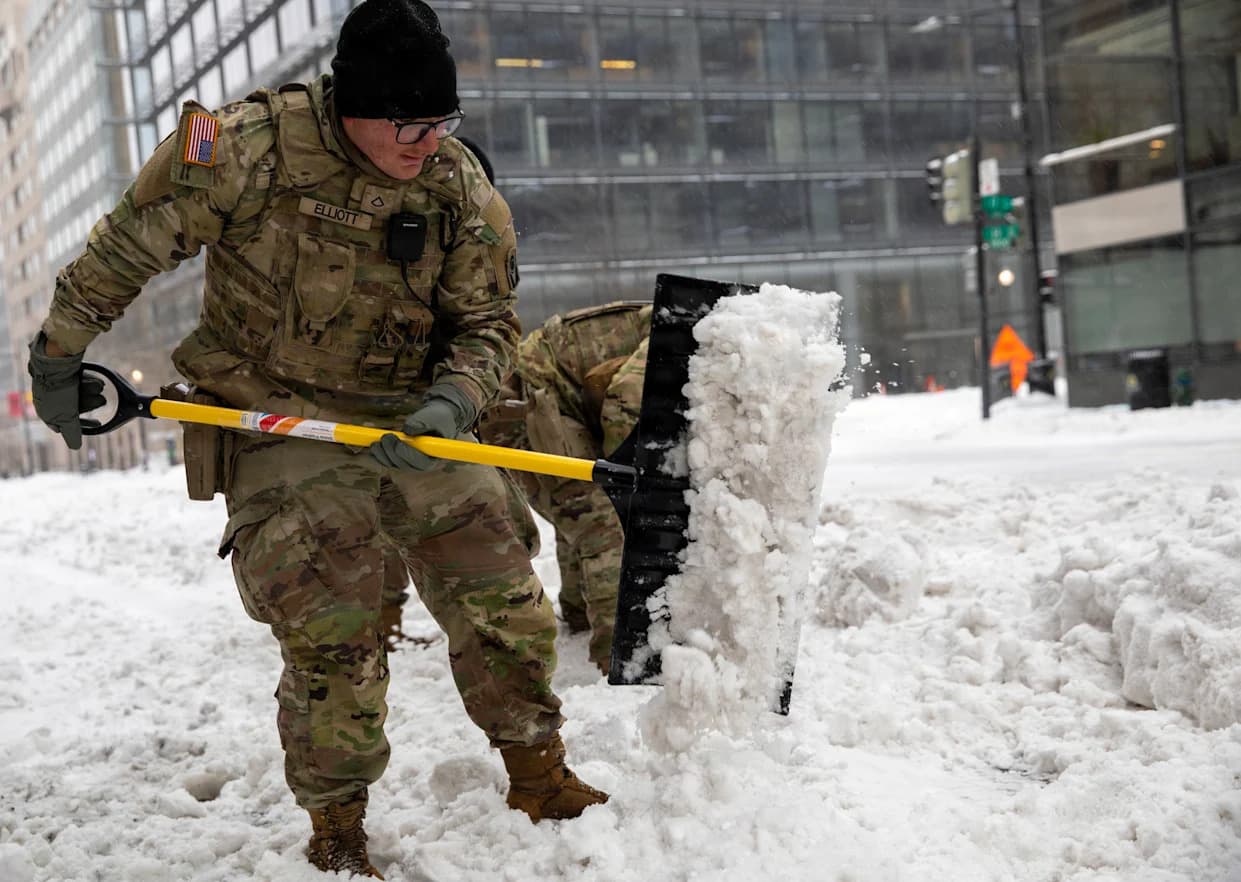
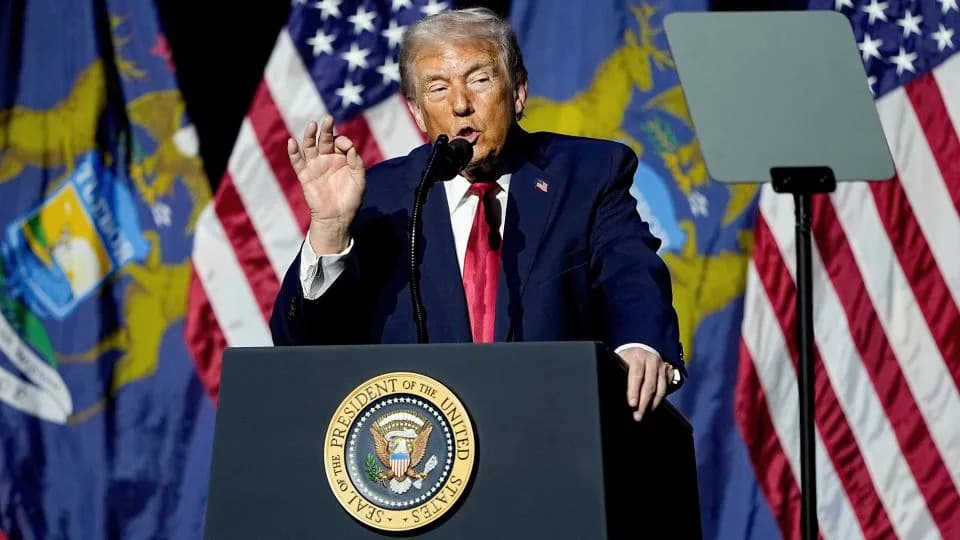
The U.S. Supreme Court on Dec. 23 declined to lift a federal judge's order blocking President Trump's plan to deploy National Guard troops to the Chicago area. The decision preserves a ban on sending hundreds of Guard personnel while Illinois officials and local leaders pursue litigation. Critics say the administration's broader domestic deployments into Democratic-led jurisdictions are politically motivated; the court's ruling is temporary and procedural.
Supreme Court Keeps Block On Trump's Plan To Deploy National Guard To Chicago

National Guard members walk at the U.S. Immigration and Customs Enforcement (ICE) Broadview facility in Chicago, Illinois, U.S., October 9, 2025. REUTERS/Jeenah Moon
WASHINGTON, Dec. 23 (Reuters) — The U.S. Supreme Court on Tuesday declined to allow President Donald Trump to send National Guard troops into the Chicago area, refusing a Justice Department request to lift a federal judge's order that has barred the planned deployment.
What the Court Did
The justices denied the Justice Department's emergency request to stay a lower-court injunction that blocks the movement of hundreds of National Guard personnel into the Chicago region. The decision preserves the judge's order while litigation brought by Illinois state officials and local leaders proceeds.
Background
The deployment was challenged in federal court by state and local authorities who argued the planned domestic use of the military exceeded legal limits and threatened local governance. The Justice Department sought permission to proceed with the troop movement during the appeal, but the Supreme Court declined that request.
Reactions and Context
Critics of the broader policy say the expansion of domestic military deployments into Democratic-led jurisdictions appears aimed at punishing political opponents and suppressing dissent. Supporters of the administration argue such deployments can help respond to public-safety concerns. The court's action is procedural — it leaves intact the lower-court block for now and does not resolve the underlying legal dispute.
Reporting: Jan Wolfe in Washington
Help us improve.