
The Minnesota fraud investigation has escalated, with federal prosecutors warning the cost could reach $9 billion. Critics say local newsrooms — especially the Minnesota Star Tribune — were reluctant to probe allegations tied to the Somali community for fear of racial backlash and because of perceived political ties. The Star Tribune defends its record, citing extensive reporting and public-record work dating back to 2014. The situation has intensified scrutiny of media practices, political accountability and ongoing federal probes.
Feds Warn Minnesota Fraud Could Reach $9B — Critics Say Local Media Enabled Scandal

Media ‘complicity’ blamed as feds say Minnesota fraud crisis could reach $9B: 'Shown their true colors'
Minnesota’s expanding fraud scandal — which federal prosecutors now say could ultimately cost taxpayers as much as $9 billion — has sparked a broader fight over media coverage, political ties and community sensitivities.
Federal Findings
At a recent press conference, federal investigators said the full scope of the fraud tied to social service funding in Minnesota may be far larger than first estimated, with potential losses approaching $9 billion. The announcement renewed questions about how the scheme grew and whether earlier warning signs were missed.

Minnesota Gov. Tim Walz sits for an interview with Star Tribune journalists in his office at the state Capitol in St. Paul on Dec. 12, 2024.
Criticism of Local Newsrooms
Several commentators and local critics argue that Minnesota news organizations, including the state’s largest paper, the Minnesota Star Tribune, did not aggressively investigate or highlight the problem for years. Townhall columnist Dustin Grage told Fox News Digital that reporters and editors he’s spoken with often decline to run sensitive stories for fear of being accused of racial bias when allegations involve Minnesota’s Somali community.
“In newsrooms, they’re told, ‘We can’t run that because we’re going to be accused of being racist,’” said Grage, who says that caution suppressed reporting on apparent taxpayer waste concentrated in particular communities.
Controversial Headlines and Political Links
Critics pointed to Star Tribune headlines — including pieces headlined on Nov. 26 and Dec. 11 — as examples of coverage they say downplayed the magnitude of the problem. The paper’s CEO, Steve Grove, formerly served as Gov. Tim Walz’s commissioner of employment and economic development, which some observers say creates at least the appearance of a political connection that could affect editorial choices.
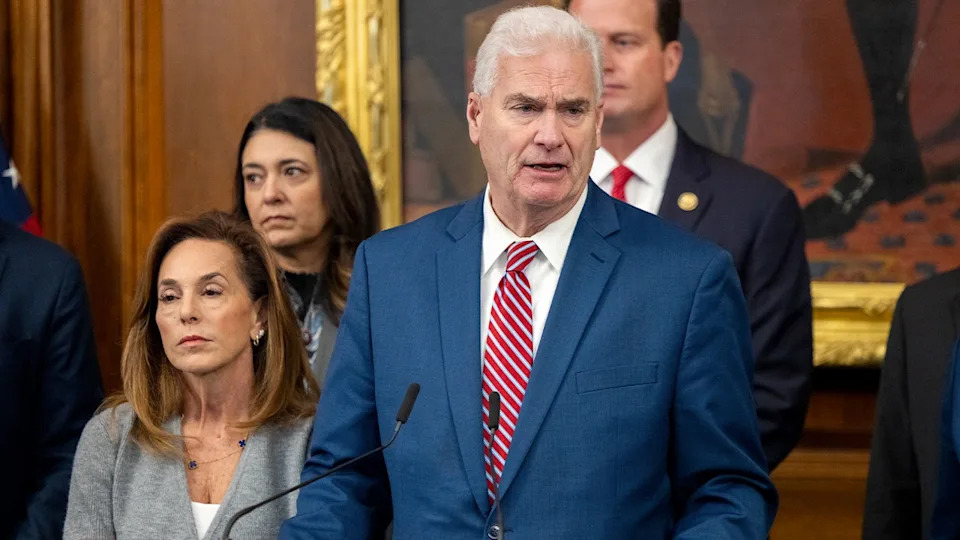
House Majority Whip Tom Emmer speaks during a press conference on the 28th day of the government shutdown in Washington, D.C., on Oct. 28, 2025.
Political Reaction
Republican Rep. Tom Emmer called the Star Tribune’s reporting inadequate and accused state leaders of failing to protect taxpayer funds. Conservative commentators and outlets such as NewsBusters also criticized national broadcast networks for emphasizing political rhetoric — particularly around former President Donald Trump’s comments — rather than the details of the fraud itself.
Star Tribune’s Response
The Star Tribune pushed back on accusations that it downplayed the crisis, noting it has published hundreds of articles, filed numerous public-record requests, and produced original investigative reporting about oversight failures tied to the Feeding Our Future program and broader Medicaid fraud issues dating back to at least 2014.
Context and Next Steps
The dispute highlights tensions among investigative priorities, community sensitivities, and political scrutiny. Federal investigations are ongoing, and the evolving inquiry may reveal more about how the alleged fraud was organized and why it persisted. Meanwhile, debate continues over whether local newsrooms struck the right balance between careful reporting and vigorous accountability journalism.
What to watch next: federal updates on estimated losses, further indictments or civil actions, and follow-up reporting by local and national outlets clarifying oversight lapses and policy responses.


