
Judge Sarah West overturned a unanimous jury verdict that had found Abdifatah Yusuf guilty in a $7.2 million Medicaid fraud case, citing Minnesota’s strict circumstantial-evidence standard. Legal experts called the move rare in white-collar prosecutions, while critics said insufficient-evidence rulings ordinarily occur before a jury hears the case. The attorney general has appealed, and lawmakers are demanding the unsealing of court exhibits as broader state-level scrutiny of welfare fraud continues.
Minn. Judge Vacates Unanimous $7.2M Medicaid Fraud Verdict, Drawing Legal and Political Backlash

A bicyclist rides through downtown Minneapolis during an evening snowstorm as traffic moves along N. 1st Avenue.
Hennepin County Judge Sarah West shocked observers late last month by vacating a unanimous jury verdict that had convicted Abdifatah Yusuf in a $7.2 million Medicaid fraud case. The decision — grounded in Minnesota’s stringent circumstantial-evidence standard — has prompted an immediate appeal by the state attorney general and sharp criticism from lawmakers and former prosecutors.
Case Background
Yusuf had been convicted on six counts of aiding and abetting theft after a jury found that he and his wife diverted millions from the state’s Medicaid program while operating a home-healthcare business. Prosecutors portrayed the business as a sham that operated "for years out of a mailbox" and said Yusuf used proceeds to finance an ostentatious lifestyle, citing purchases at luxury retailers.
Judge's Rationale
Judge West vacated the verdict on the ground that the prosecution relied heavily on circumstantial evidence and failed to exclude all reasonable alternative explanations for Yusuf’s conduct. In her written ruling, she said there was a "reasonable, rational inference" that Yusuf owned the business, but that it was also plausible his brother, Mohamed Yusuf, could have committed the fraud "without Mr. Yusuf’s knowledge or involvement." West acknowledged the "scale and nature" of the alleged scheme were "of great concern" but concluded the record did not prove Yusuf knowingly participated.
"There is a reasonable, rational inference that Mr. Yusuf was the owner … but that his brother, Mohamed Yusuf, was committing the fraud … without Mr. Yusuf’s knowledge or involvement," West wrote.
Reactions
Legal scholars and former prosecutors described the decision as unusual. University of Minnesota law professor JaneAnne Murray — who studies criminal procedure — said she was surprised but noted that Minnesota’s circumstantial-evidence rule requires prosecutors to "exclude any reasonable hypothesis of innocence." Former federal prosecutor Andy McCarthy argued judges typically should dismiss legally insufficient cases before they reach juries, and that circumstantial cases frequently sustain convictions.
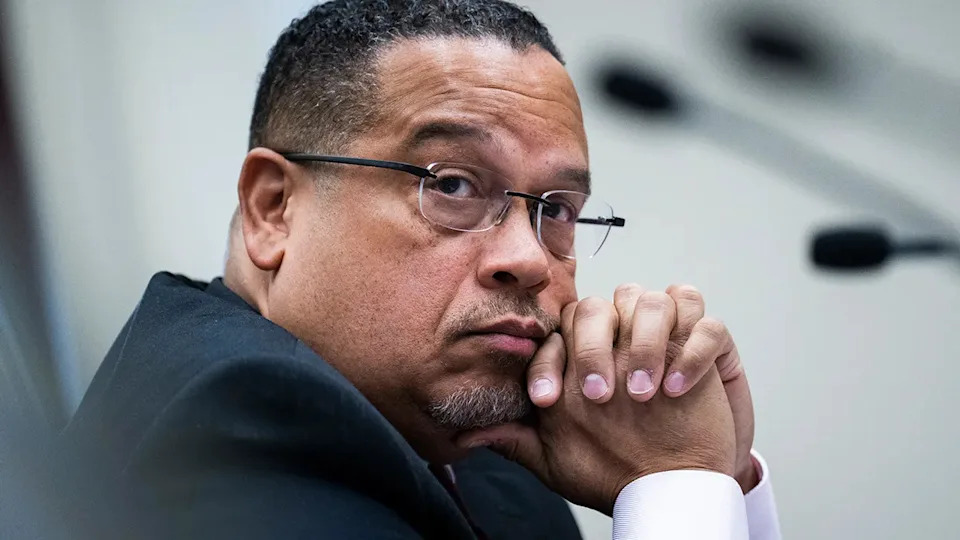
Minnesota Attorney General Keith Ellison has filed an appeal.
Ben Walfoort, the jury foreperson, told local media he was "shocked" by the ruling and said the jury’s conclusion "was not a difficult decision whatsoever." Minnesota Attorney General Keith Ellison has appealed West’s decision.
Republican state Sen. Michael Holmstrom sent a formal letter demanding that Judge West unseal key exhibits and the full case record, calling the sealing of documents presented in open court a violation of Minnesota’s transparency traditions.
Context And Next Steps
The ruling comes amid heightened scrutiny of welfare and human-services fraud in Minnesota, where multiple investigations and congressional interest have spotlighted alleged schemes involving large sums of taxpayer money. Because West vacated the verdict after jury deliberations, the state retains a likely path to appeal; the Minnesota Supreme Court is also considering the broader issue of the state's circumstantial-evidence standard.
Judge West, a former public defender appointed to the bench in 2018, had previously handled juvenile and child-protection matters and served in leadership roles at the Hennepin County Bar Foundation. The case underscores tensions between judicial gatekeeping under a strict legal standard and public concerns about accountability in large-scale fraud matters.


