
The investigation into a Minnesota fraud scheme has exposed dozens of bogus addresses and shell companies that helped siphon at least $1 billion from federal and state programs. Twenty‑two businesses tied to the HSS program were registered at a single St. Paul building and billed Medicaid roughly $8 million from January 2024 to May 2025; one provider allegedly billed more than $2.3 million. Prosecutors have charged four men and state and federal agencies continue investigations amid criticisms of oversight failures.
Inside Minnesota’s $1B Fraud: How Fake Offices and Shell Companies Hid a Massive Scandal

The Griggs-Midway building has become a focal point of the Minnesota HSS fraud scandal.
Federal and state investigators are unraveling a fraud scheme in Minnesota that has cost taxpayers at least $1 billion. On-the-ground reporting and official filings show how sham addresses, shell companies and lax oversight helped conceal a sprawling network of allegedly fraudulent providers tied to education and social‑service programs.
Griggs‑Midway Building: A Central Node
The Griggs‑Midway Building in St. Paul emerged as a central node in the allegations. Acting U.S. Attorney Joseph H. Thompson said the building hosted an "unusual concentration" of entities tied to the HSS program. Prosecutors reported that 22 businesses were registered at that single address and collectively billed Medicaid about $8 million between January 2024 and May 2025. Thompson described those entities as "purely fictitious companies solely created to defraud the system."
One firm, Brilliant Minds Services, is accused of submitting more than $2.3 million of those claims, making it among the highest‑billing HSS providers in the state last year. The Minnesota Department of Human Services opened roughly 40 investigations into providers connected to the Griggs‑Midway address after FBI searches.
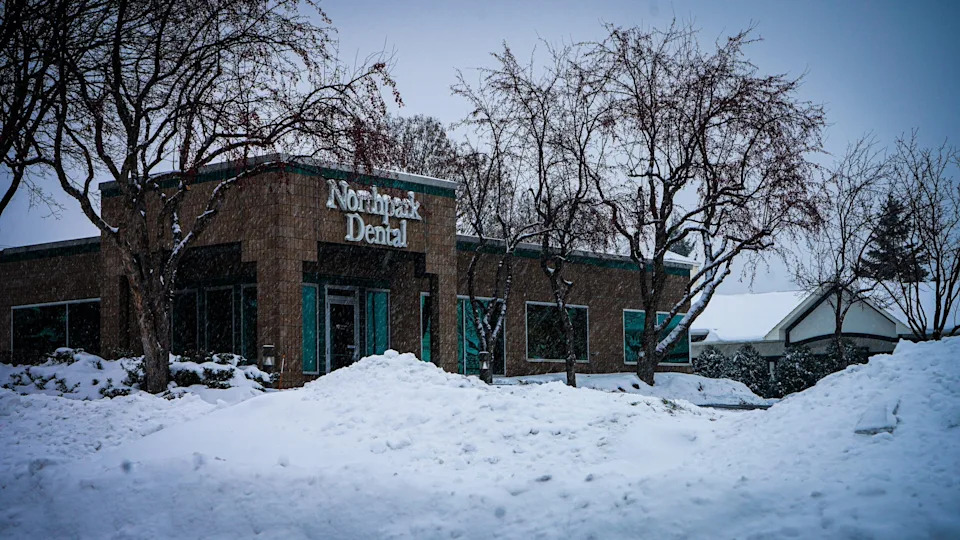
NorthPark Dental in Blaine, Minnesota, appears to be a legitimate, operational business. There is no Unit 100 at this location, suggesting that the alleged fraud entity gave a fake address.
Who Has Been Charged
Federal prosecutors have charged four defendants in connection with the scheme: Moktar Hassan Aden (30), Mustafa Dayib Ali (29), Khalid Ahmed Dayib (26) and Abdifitah Mohamud Mohamed (27). Mohamed is identified as the owner of Foundation First Services LLC, another company implicated in the allegations.
On‑the‑Ground Reporting Finds Widespread Irregularities
Reporters visiting addresses listed on claims found numerous inconsistencies:
- A second‑floor walkup above a sushi shop that was locked and showed little evidence of use.
- Units listed in large complexes—such as Winsor Plaza—where the cited suite number (Unit 150) did not exist in the current building configuration.
- A listed address at 9120 Baltimore St. N. that is a single dental office with no numbered suites, contrary to the claims report.
- Commercial properties like 2756 Douglas Dr. N. that house legitimate tenants, but where the company named on a claim did not appear to operate.
- A small, rusted garage behind a church at 1541 Como Ave that locals said once hosted a pop‑up gym but showed no signs of office operations.
- Addresses with clear numbering errors—e.g., a claim listing a 400s address on a street that only has 500s—and boarded‑up buildings such as 2720 E. Lake St.
Oversight Concerns and Political Reaction
Republican state Sen. Mark Koran told reporters that large public payouts never reached intended services. "Most of that $500 million hasn't served a single meal," he said, arguing that simple facility checks would have revealed many of the false claims. A legislative auditor report found that owners of roughly 30 properties notified the Department of Education that businesses claiming to operate there did not exist; Koran said payments continued despite those notices and that complaints were routed to the nonprofit Feeding Our Future.
What Happens Next
Federal and state investigations are ongoing as prosecutors pursue charges and auditors and lawmakers press for reforms in how providers are vetted and payments are verified. The case has prompted calls to strengthen on‑site verification, documentation checks and interagency coordination to prevent similar fraud in the future.
Note: Allegations in this story are based on official filings and reporting. Defendants are presumed innocent until proven guilty in court.


