Congress adjourned for the year without extending enhanced Affordable Care Act premium subsidies, a move that will raise premiums for an estimated 22 million Americans next month. Four Republican swing-district members joined 214 Democrats to force a House vote on a three-year extension, expected the week of Jan. 5, but the measure faces skepticism in the Senate. Key sticking points include the length of any extension, proposed reforms such as an income cap or phased reduction, and disputes over Hyde abortion-related language. Democrats say they will use the issue politically if lawmakers fail to reach a deal.
Congress Adjourns Without ACA Subsidy Deal — 22 Million Face Higher Premiums; House Vote Expected Jan. 5

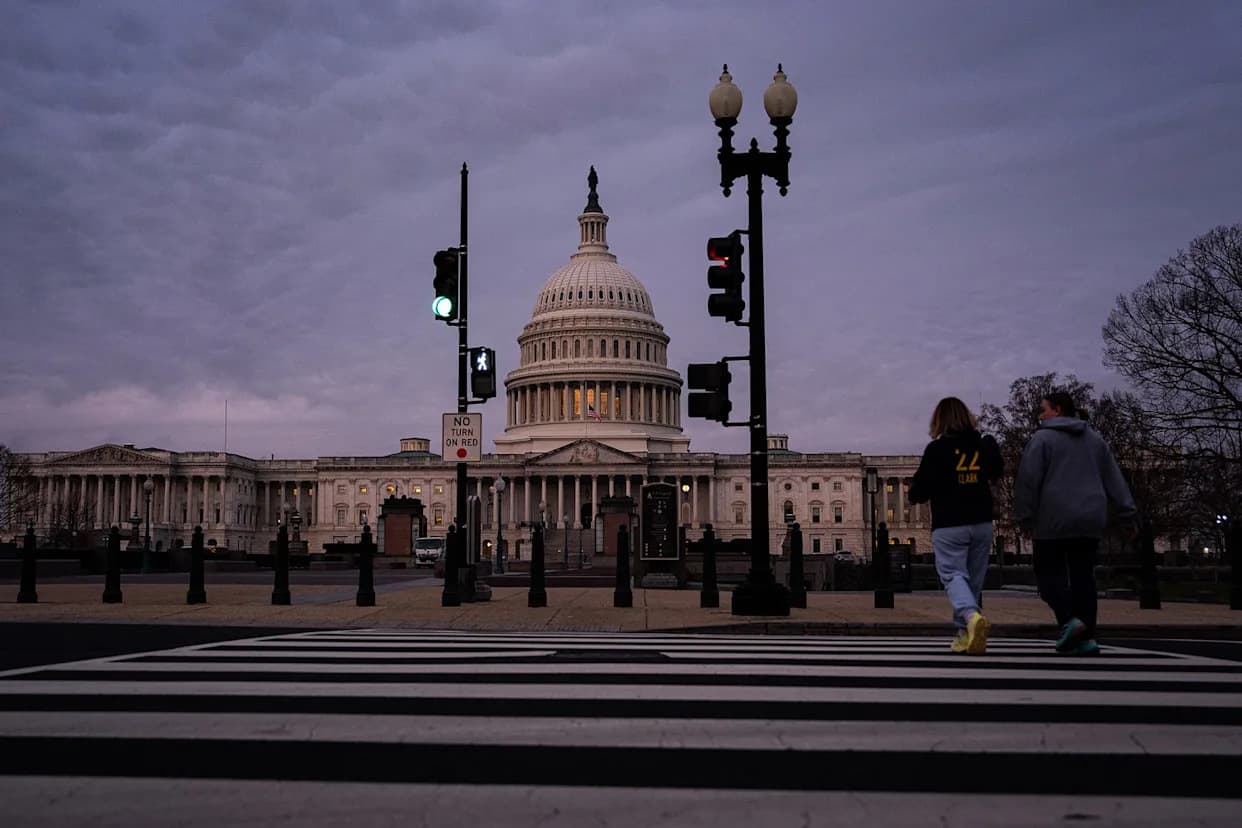
The U.S. Capitol on Wednesday. (Bill Clark / CQ-Roll Call, Inc via Getty Images)
WASHINGTON — The Republican-controlled House and Senate recessed Thursday for the year without reaching an agreement to extend enhanced Affordable Care Act (ACA) premium subsidies. As a result, roughly 22 million Americans are set to see higher insurance premiums when new rates take effect next month.
Despite opposition from House Speaker Mike Johnson (R-La.) and Senate Majority Leader John Thune (R-S.D.), some lawmakers from both parties say there is still a pathway to action when Congress returns in 2026. Democrats also warned they will make the issue central to next year’s midterm campaigns if no solution is reached.
“They are absolutely screwing over millions of people, including my constituents, which pisses me off,” Rep. Pat Ryan (D-N.Y.) said, noting his competitive Hudson Valley district. “It’s just pathetic. The last time there was a major national Republican effort to repeal the ACA, we had an overwhelming wave where they got absolutely wiped out, and I think that’s likely what will happen here again.”
In the closing days before adjournment, four Republican members from swing districts — Reps. Brian Fitzpatrick, Rob Bresnahan, Ryan Mackenzie (all of Pennsylvania), and Mike Lawler (N.Y.) — teamed with 214 House Democrats on a discharge petition designed to force a House vote on a three-year extension of the enhanced ACA subsidies. If successful, that vote is expected the week of Jan. 5 when the House reconvenes.
“I do believe if the bill comes to the floor, not only will it pass, but it’ll give the Senate the ability to come back with a bipartisan compromise and actually get something passed into law,” Rep. Mike Lawler said on NBC’s Meet The Press Now.
Republican leaders broadly favor letting the Covid-era subsidy boosts expire; some GOP members are open to a temporary extension if it includes limits or a phased reduction. Both chambers circulated competing Republican proposals this week that included conservative changes, but neither would reinstate the enhanced subsidies. House Republicans passed their version on Wednesday, though it faces long odds in the Senate.
Several swing-district Republicans appear sensitive to constituent pressure: Rep. Madeleine Dean (D-Pa.) recounted a crowded town hall in a district represented by one of the Republicans who signed the petition and said voters “got the message.”
Senate reactions were mixed. Retiring Sen. Thom Tillis (R-N.C.), an early supporter of an extension with reforms, said the House measure “is not going to sail through” as written. The Senate rejected a three-year extension last week by a 51-48 vote; that tally fell short of the 60 votes typically required to overcome a filibuster in the 100-member chamber.
Centrist Sen. Susan Collins (R-Maine) said negotiators are pursuing a bipartisan approach she prefers — pairing a shorter extension (she cited two years) with reforms such as an income cap — and that House passage could help sustain momentum.
“What we’re trying to do is to put together a bipartisan bill that would have reforms plus a two-year extension,” Collins said. “That is the best approach, in my opinion, and we’re making good progress.”
Sen. Lisa Murkowski (R-Alaska) suggested the House bill could serve as a negotiating vehicle in the Senate, even if it won’t pass in its current form. Other Republicans, including Sen. Jim Justice (R-W.Va.) and Sen. Mike Rounds (R-S.D.), warned of political and financial consequences if the subsidies end without a phase-down or compromise.
One major sticking point in bipartisan discussions is so-called Hyde language — restrictions on federal funding for abortion services. Many Republicans seek tighter Hyde provisions tied to any ACA funding, which Democrats view as unacceptable and a dealbreaker.
Senate Minority Leader Chuck Schumer (D-N.Y.) warned that once higher premiums take effect after Jan. 1, “it will be very hard to put that toothpaste back in the tube.” Democrats say they do not plan to tie an ACA subsidy extension to the Jan. 30 government funding deadline, a tactic that contributed to a recent 43-day partial government shutdown in the fall.
Sen. Josh Hawley (R-Mo.), one of the GOP senators who voted to advance an extension, urged colleagues to put partisan history aside and address rising costs for constituents. With Congress adjourned until 2026, attention now shifts to whether the House discharge petition will force a vote and whether negotiators can resolve the remaining policy disputes — length of extension, reforms such as income caps, phase-down schedules, and Hyde restrictions — before premiums rise.
This article was originally published on NBCNews.com.
Help us improve.