Buffalo Therapy Services is effectively closing two clinic locations after Kaleida Health said federal funding cuts tied to the One Big Beautiful Bill Act contributed to the decision. Patients who relied on cognitive and physical therapy fear losing access to specialized care, while Kaleida estimates the law could cost the system up to $125 million a year. Experts warn the legislation may reduce over $1 trillion in federal health funding and could leave roughly 10 million people uninsured, threatening dozens of hospitals and local services nationwide.
Trump’s Health Cuts Leave A ‘Huge Void’ In Buffalo — Patients Fear They’ll Lose Essential Care

Rita Buckley poses for portrait in East Aurora, New York.Photograph: Lindsay DeDario/The Guardian
After Rita Buckley slipped on a sidewalk and struck her jaw, she lost four teeth and suffered a traumatic brain injury that left her unable to reliably distinguish red from green. Simple tasks grew difficult: turning her head could trigger dizziness or a blinding headache, her short-term memory faltered, and driving — and returning to work as a nurse — became impossible.
At Buffalo Therapy Services, a clinic near her home in East Aurora, Buckley found a path forward. For more than a year she worked steadily with cognitive and occupational therapists who used targeted rehabilitation techniques — from darkened rooms and colored laser lights to memory strategies and step-by-step goal-setting — to help her relearn skills and regain confidence.
Local Closures, Immediate Consequences
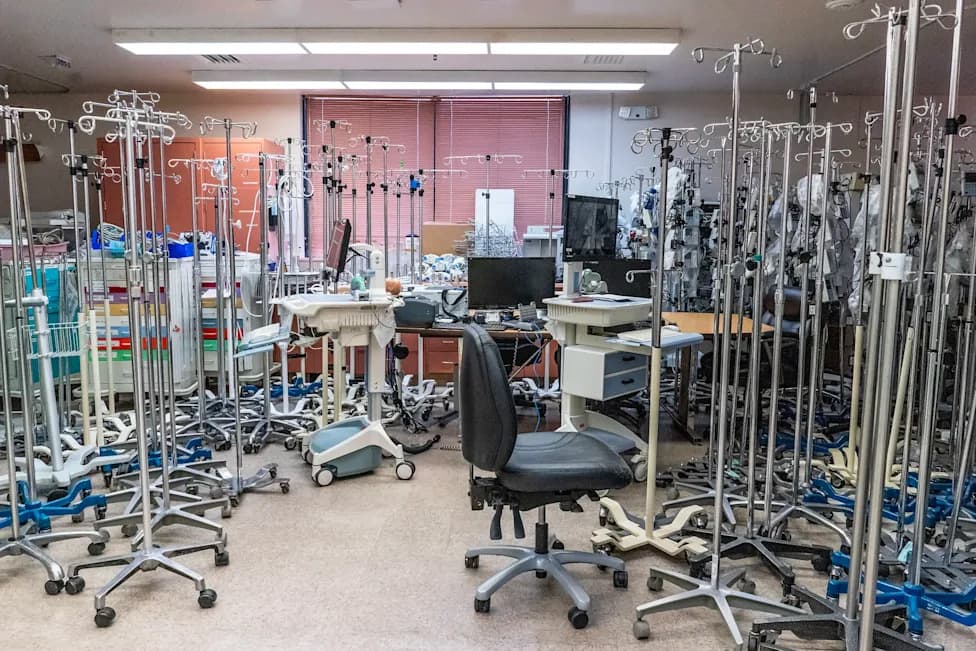
In August, Kaleida Health — the largest health system in western New York and parent organization of Buffalo Therapy Services — announced it would effectively close two of the clinic’s locations and shutter a freestanding surgery center and a family planning clinic. Kaleida attributed the moves in part to sweeping funding cuts in the federal law commonly referred to as the One Big Beautiful Bill Act (HR 1).
The sites remain technically open for limited administrative functions, but are no longer delivering clinical services. Patients like Buckley and longtime therapy recipient Gina Passantino say they have nowhere comparable to turn. Buckley last saw her therapists in November and is on waiting lists for future care; Passantino, whose chronic shoulder and neck pain improved with therapy, describes daily anxiety about how she will manage without her clinician.
What The Law Does And Why Providers Say It Hurts
The One Big Beautiful Bill Act extends certain tax cuts while restructuring federal social programs. Analyses estimate the law will reduce more than $1 trillion in federal health funding over three years and could leave roughly 10 million people uninsured, according to the Congressional Budget Office. Experts warn that fewer insured patients and reduced Medicaid eligibility will increase uncompensated care and strain providers’ finances.
“Hospitals that treat a large number of Medicaid patients, safety-net hospitals, will take a relatively large hit from the law,” said Zachary Levinson of KFF, which tracks health system finances. University of North Carolina researchers have identified more than 300 rural hospitals at risk of closure or service reductions, while Harvard analysts flagged roughly 90 urban hospitals that could also be imperiled.
Kaleida’s Case And Community Response
Kaleida says it had already planned a $200 million strategic initiative to address rising costs and other pressures, but that the new federal law accelerated and deepened the financial challenges. The system estimates it could lose up to $125 million a year because of the legislation. The union representing affected workers, Communication Workers of America Local 1168, says at least 50 positions have been eliminated across the therapy sites, the family planning center and the surgery center.
Patients, staff and community members rallied after the announcement. Local nurse and union leader Sarah Buckley organized a meeting that drew roughly 75 people, far more than she expected. Elected officials, including Congressman Timothy Kennedy — a trained occupational therapist — have called the closures a warning sign of a broader national trend: when local facilities close, people lose access to essential care.
Regulatory Hurdles And The Search For Alternatives
New York State requires facilities to obtain permission from the Department of Health to close and to identify alternative sources of care before shutting services. The department has not authorized Kaleida’s closure plans. Kaleida says the two therapy sites remain staffed to assist walk-ins and callers but are not providing clinical services; the family planning center remains open until authorized to close, and the surgery center has not seen patients since October.
Patients report that recommended alternative clinics do not offer the same specialized therapies or lack capacity to absorb Buffalo Therapy Services’ patients. “There’s a huge void in this area now for care,” said Passantino.
Human Impact And Outlook
For patients who depend on consistent, specialized rehabilitation, the disruption is more than inconvenient — it threatens hard-won recovery. Buckley continues homework her therapists assigned and attends a different physical-therapy-style program at a community gym, but she worries her cognitive gains could atrophy without steady professional support.
“Even small cuts have such a terrible impact on our patients, but a cut that is as big as this, in terms of the human suffering that will create — it’s actually immeasurable,” said a local nurse.
The situation in Buffalo reflects larger strains across American hospitals and clinics, where rising costs and reimbursement shortfalls have left many facilities financially fragile. Local leaders, unions and patients are pressing regulators and Kaleida for solutions, while researchers warn the law’s funding changes could produce widespread closures and service losses nationwide.
Help us improve.