
South Korea’s Suneung exam sparked national outrage after English questions in the November test were widely criticized as too difficult. The exam authority apologized and its head resigned; only about 3% of candidates achieved a top English score, the lowest since a 2018 grading change. Critics say the incident highlights how high-stakes testing amplifies inequality, harms student well-being and may affect broader social trends, prompting calls for concrete relief for impacted students.
South Korea’s Suneung Fallout: Official Resigns After Controversial English Questions

Students wait for the start of the annual college entrance examinations at an exam hall on November 13, in Seoul, South Korea. - Kim Kong-Ji/Pool//AFP/Getty Images
Imagine sitting an eight-hour college entrance exam after months or years of preparation — then facing English questions so difficult they sparked nationwide outrage. That is what happened this November during South Korea’s Suneung, the high-stakes test that helps determine university admission and future career prospects.
The testing authority issued a rare public apology, saying it "takes seriously the criticism that it did not meet the appropriate level of difficulty... for the English portion," and pledged to consult schools to keep future questions "within the scope of school education." The controversy escalated when the head of the exam body resigned amid intense public pressure, KBS reported.
Only about 3% of candidates earned a top score in the English section — the lowest rate since a new grading system was introduced in 2018 — prompting further criticism that the test unfairly penalized students this year.
"The former head of the evaluation admitted the faults, as he resigned," wrote one user, Choi, on the Suneung website. "Is it not common sense to come up with a measure for test takers and parents, who are the victims impacted by the fault?"
Other commenters asked what immediate relief would be offered to discouraged students.
"How can an investigation saying what they will do for next year’s entrance exam comfort the test takers that are discouraged this year?"
Why the Suneung Matters
The Suneung is treated as a national event in South Korea. On Nov. 13, when more than half a million students sat the exam, flights across the country were grounded for 30 minutes to avoid interrupting an English listening section, financial markets opened an hour late, and police were mobilized to ensure examinees reached test centers on time.
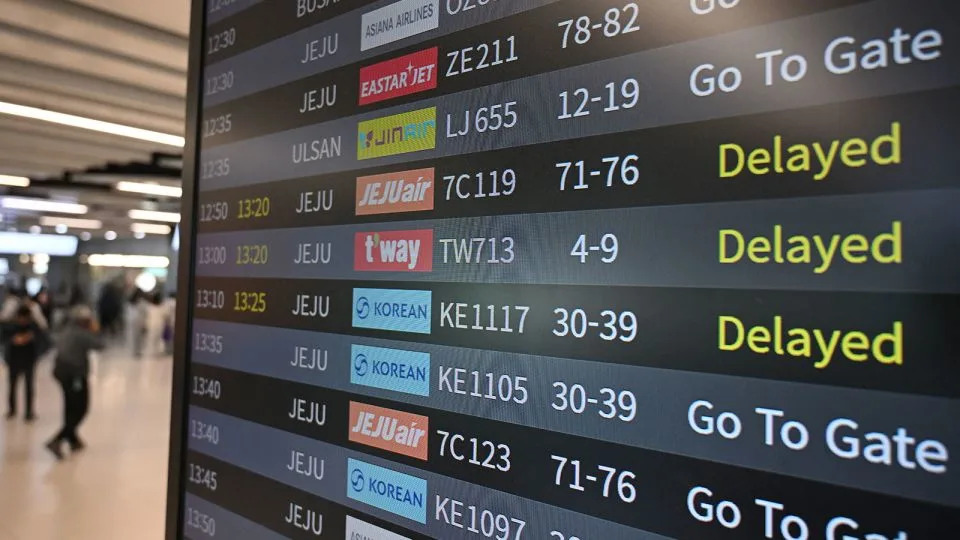
Passengers walk past an information board showing delayed flights at Gimpo airport in Seoul on November 13, on the day of the annual college entrance exam. - Jung Yeon-Je/AFP/Getty Images
Broader Impacts and Concerns
Critics say such high-stakes testing worsens social inequality because wealthier families can afford private tutoring and other resources that can provide an advantage. Authorities earlier this year arrested 126 people on suspicion of selling Suneung questions to hagwons and private tutors, according to Yonhap.
Observers also link the intense exam pressure to mental-health challenges: South Korea recorded the highest suicide rate among OECD countries in 2020. The financial burden of education, long working hours, stagnant wages and high housing costs are cited as factors contributing to the country’s steeply falling fertility rate.
Government Response And Reforms
In 2023, the government moved to remove so-called "killer questions" — items that required knowledge beyond the public school curriculum and tended to advantage students with private tutoring. Despite those reforms, critics argue that even the remaining questions can be excessively demanding.
Parents and students insist that an apology and leadership change are not enough to repair damaged scores and disrupted college applications. Many are calling for concrete remedies for this cohort of examinees, such as score adjustments, additional admissions consideration, or other compensatory measures.
"I’m so angry," one commenter surnamed Jung wrote on the exam authority’s website. "What are you going to do with the kids’ lives?"
For more on this story and updates, follow coverage from multiple news outlets including KBS and Yonhap.


