South Korea’s Constitutional Court has removed National Police Commissioner Cho Ji-ho for aiding former President Yoon Suk Yeol’s short-lived December 2024 martial law. The court found Cho “actively disrupted” the legislature and violated the independence of the National Election Commission by deploying police to assist military seizures. Cho was impeached and arrested after the power grab; he has since been granted bail for medical treatment and faces a separate trial on charges of assisting a rebellion.
Constitutional Court Removes National Police Chief Over Role in Yoon’s December Martial Law

Kim Sang-hwan, top center, chief justice of the Constitutional Court and the court's other justices attend a hearing to deliver a verdict on impeached police chief Cho Ji-ho at the court in Seoul, South Korea, Thursday, Dec. 18, 2025. (Kim Sung-min/Yonhap via AP)(ASSOCIATED PRESS)
South Korea’s Constitutional Court on Thursday formally removed National Police Commissioner Cho Ji-ho after finding he helped execute former President Yoon Suk Yeol’s brief imposition of martial law in December 2024.
Court Findings
The court said Cho “actively disrupted” the legislature by dispatching police to the National Assembly and attempting to prevent lawmakers from reaching the main chamber to vote to revoke Yoon’s decree. It also ruled that Cho violated the independence of the National Election Commission (NEC) by sending police to assist in the military’s seizure of two NEC offices. Yoon defended those actions as investigations into alleged election fraud.
Events Surrounding Martial Law
Yoon ordered martial law on Dec. 3, 2024, saying it was necessary to suppress what he called an “anti-state” liberal opposition that controlled the legislature. Hours after the declaration, about 300 police officers and heavily armed troops — including special operations units and Black Hawk helicopters — surrounded the National Assembly in what the court described as an effort to block a legislative vote. A quorum of lawmakers later forced their way past the blockade and unanimously voted to revoke the order.
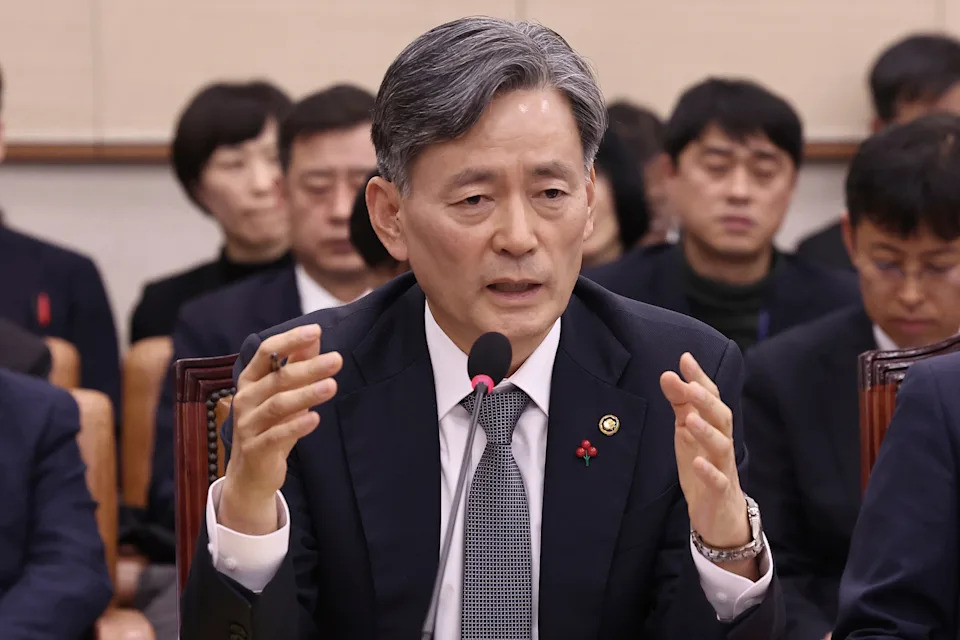
FILE - South Korea's National Police Agency Commissioner General Cho Ji Ho speaks at the National Assembly in Seoul, South Korea, Dec. 9, 2024. (Ryu Hyung-seok/Yonhap via AP, File)(ASSOCIATED PRESS)
Legal Consequences
Cho was impeached by lawmakers and arrested a week after the power grab. He is the first commissioner general of the National Police Agency to be removed by the Constitutional Court. A Seoul criminal court granted him bail in January on medical grounds related to cancer treatment. He faces a separate criminal trial on charges of assisting a rebellion.
Additional Details
The court noted that hours before the declaration of martial law, Yoon summoned Cho and the Seoul metropolitan police chief to a safe house, where they discussed implementation plans with Yoon’s then defense minister. Following the declaration, police briefly allowed some lawmakers and staff to enter the Assembly before sealing the grounds for more than two hours; nonetheless a quorum eventually entered, with some lawmakers — including current President Lee Jae Myung — climbing fences to reach the main chamber.
Court: "Considering that lawmakers and others had no choice but to enter the National Assembly by abnormal means, such as climbing over fences, due to the respondent’s order to block the entrances, the respondent’s claim is not acceptable."
Cho has argued his actions were intended to maintain order and prevent clashes, not to support the martial law. The Constitutional Court rejected that defense, finding he acted despite being clearly aware the orders were “unconstitutional, unlawful.”
Help us improve.