
Peter Arnett conducted Osama bin Laden’s first TV interview in March 1997 atop a mountain in eastern Afghanistan, where bin Laden warned: 'You’ll see them and hear about them in the media.' Within a year al‑Qaeda carried out deadly attacks on U.S. embassies in Africa and later struck the USS Cole and 9/11. The author, who produced the interview, reflects on Arnett’s influential career — notably his decision to stay in Baghdad during the Gulf War — and on how those experiences shaped his own approach to reporting from conflict zones.
What Peter Arnett Asked Osama Bin Laden — The Night That Foretold Terror

From left: Peter Arnett, Osama bin Laden, Peter Bergen and cameraman Peter Jourvanal pose for a photo in 1997. - Courtesy Peter Bergen
It was a bitterly cold night in March 1997 in a mud hut high in the mountains of eastern Afghanistan. Surrounded by well-armed al‑Qaeda fighters, Peter Arnett asked their leader a simple, chilling question: 'What are your future plans?'
"You’ll See Them And Hear About Them In The Media"
Osama bin Laden’s reply was short and ominous: 'You’ll see them and hear about them in the media, God willing.' That exchange was bin Laden’s first television interview, chosen by him and his team to be conducted by CNN — an interview I produced.
From Interview To Attacks
Within a year, al‑Qaeda fulfilled that warning with near‑simultaneous attacks on two U.S. embassies in Africa (1998) that killed more than 200 people. In 2000, the group bombed the USS Cole in Yemen, killing 17 American sailors. The later 9/11 attacks in 2001 killed nearly 3,000 people and launched the global "War on Terror."
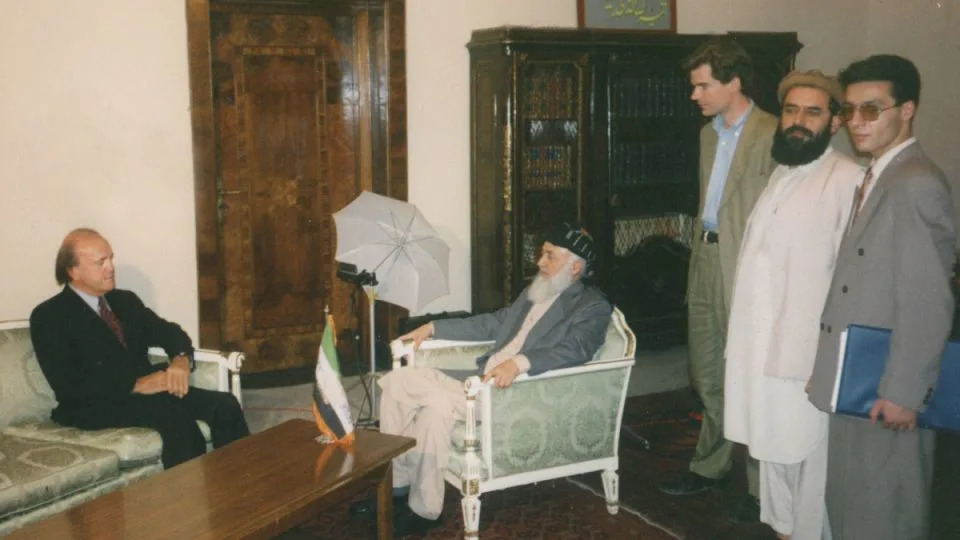
Peter Arnett, left, and Peter Bergen, third from right, meet with Afghan President Burhanuddin Rabbani, in Afghanistan in 1993. - Richard Mackenzie
Working With Peter Arnett
I first met Peter Arnett in 1993. Already one of the world’s best‑known foreign correspondents, Arnett had become a household name after he stayed in Baghdad during the first Gulf War while other Western reporters evacuated. His decision to remain on the ground under bombardment helped define CNN’s global reputation and made him a public figure associated with fearless conflict reporting.
Arnett was unmistakable: compact and stocky, with a booming New Zealand‑accented voice that announced his arrival before you saw him. He was a reporter’s reporter, full of stories from Vietnam and other conflicts, and utterly at ease amid danger. One piece of his advice that stayed with me was: 'Never do anything for fun in a war zone.'
Afghanistan, 1993–1997
In 1993 we traveled to Afghanistan during its civil war. Kabul lay in ruins; warlords fought block by block and child soldiers were commonly seen. Arnett interviewed major figures of that conflict for CNN — including Gulbuddin Hekmatyar, Ahmad Shah Massoud (who would be assassinated days before 9/11), and President Burhanuddin Rabbani (killed by the Taliban in 2011).
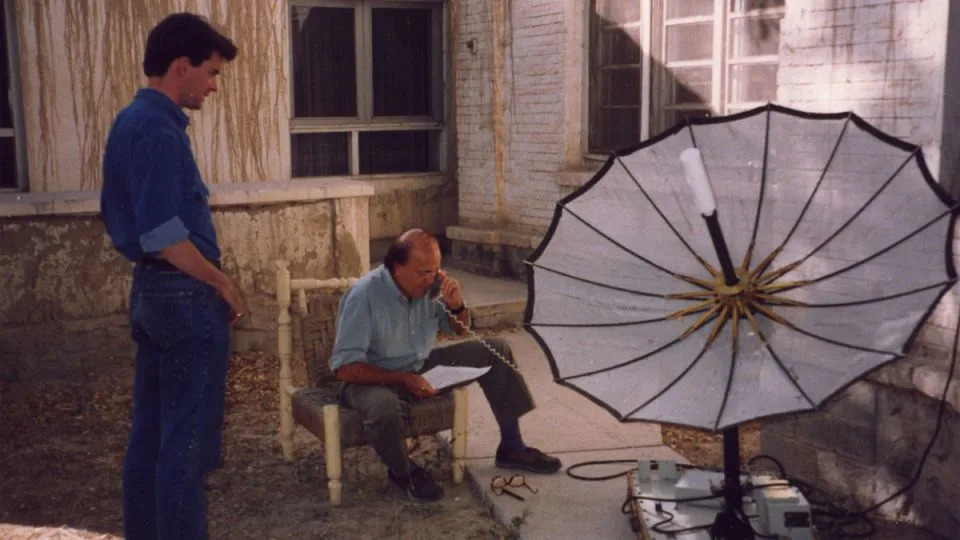
Peter Bergen and Peter Arnett make a phone call with a satellite telephone, in Afghanistan in 1993. - Richard Mackenzie
We were in Afghanistan partly because we were tracking suspects linked to the 1993 World Trade Center bombing — a van filled with explosives placed beneath the towers that killed six people. In 1997 I spent weeks negotiating in London with bin Laden associates to secure the TV interview. Other networks sought access too, but Arnett’s reputation for balanced reporting helped CNN win the assignment.
Bin Laden’s Stated Motive
'You’ll see them and hear about them in the media, God willing.'
When Arnett asked why he had declared jihad against the United States, bin Laden answered at length, criticizing U.S. policy in the Middle East — including American support for Israel and for regional allies such as Saudi Arabia. That explanation directly challenged later assertions by President George W. Bush that the attacks were driven primarily by resentment of American freedoms; in the interview bin Laden tied his rationale to foreign policy.
Legacy
It was a privilege to spend many weeks in Afghanistan with Peter Arnett in 1993 and again in 1997 producing bin Laden’s first television interview. Arnett seemed fearless, and his approach to conflict reporting changed how audiences worldwide perceived modern wars. Personally, his counsel has kept me cautious: I have not done anything 'for fun' in an active war zone since.
For more CNN news and newsletters, create an account at CNN.com.


