Podcast Attempt, Audience Missed: Katie Miller’s new show aims to humanize prominent MAGA figures by emphasizing family life and everyday details, but nearly 20 episodes in it has produced few revealing moments and limited audience growth. Background Matters: Miller’s affluent upbringing and political rise—DHS, Pence’s office, campus controversy, and ties to Elon Musk—explain her strategic pivot to a domestic persona. Why It’s Failing: The series neither satisfies skeptics demanding policy accountability nor excites the MAGA base, leaving it struggling for traction.
Married To Trump’s Hard‑Line Architect, Katie Miller’s Podcast Tries To Soften MAGA — And It’s Flopping

The Katie Miller Podcast
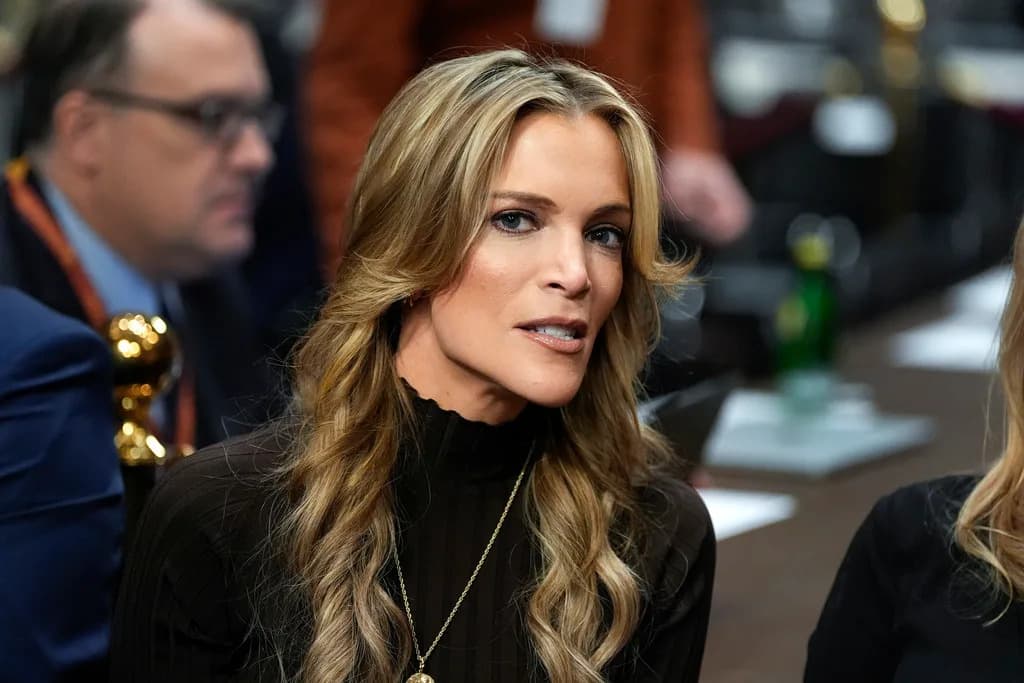
When Katie Miller launched a highly promoted podcast this August, it promised an intimate, humanizing window into leaders of the MAGA orbit. Nearly 20 episodes later, the result is puzzling: a soft‑lit series featuring high‑profile guests that rarely delivers revealing moments, tough questions, or genuine insight into the policies those guests advance.

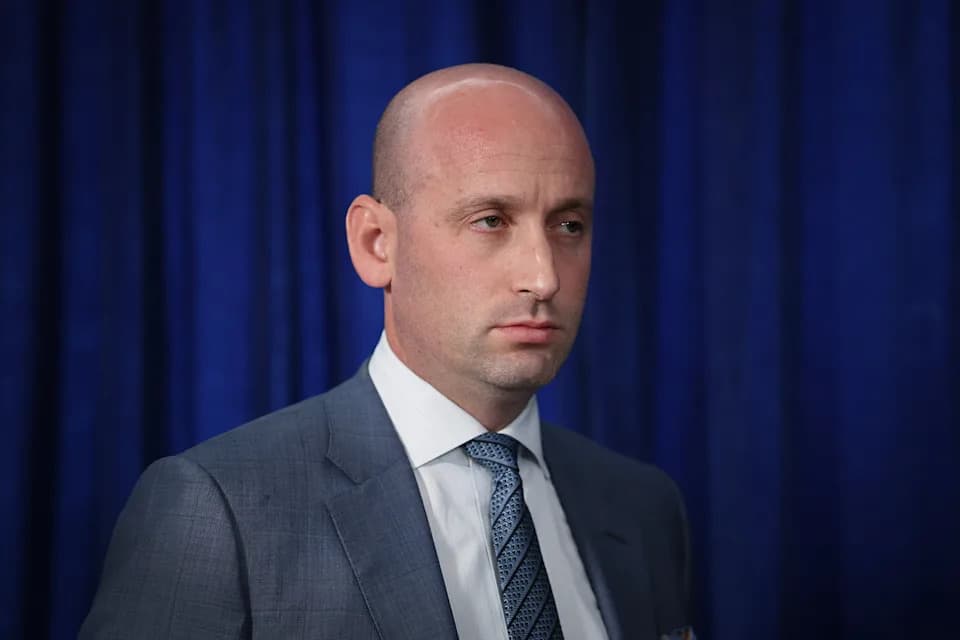
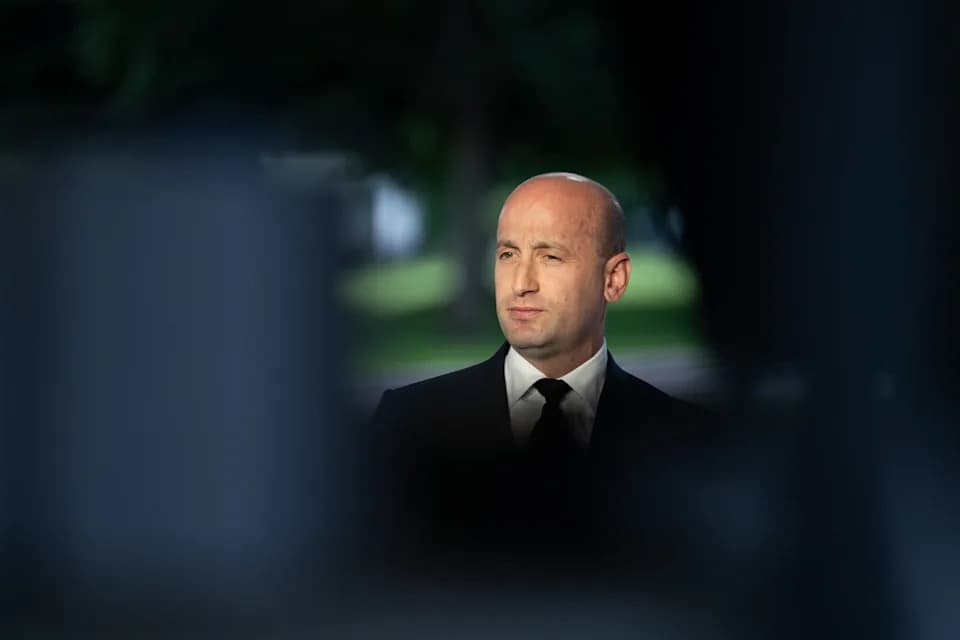
Stephen and Katie Miller at the White House in April.Andrew Leyden/Zuma Press Wire/Reuters
Podcast Format And Guests
The show’s format is deliberately domestic and conversational. Miller interviews a who’s‑who of conservative figures—Vice President J.D. Vance, House Speaker Mike Johnson, Elon Musk, Attorney General Pam Bondi, Pete Hegseth, Sen. Katie Britt, and FBI Director Kash Patel, among others—asking cozy questions about family dinners, fashion, favorite foods, and weekend routines. Moments that could probe policy are replaced with harmless asides: debates over whether a hot dog is a sandwich, wing preferences, and new eyeglasses.

Jeffrey Greenberg/Universal Images Group via Getty Images
Miller’s Public Rebrand
Katie Miller, born Katie Waldman and married to Stephen Miller, the former Trump aide widely described as an architect of hard‑line immigration policies, has repositioned herself as a wife and mother of three. Her launch video emphasized a domestic aesthetic—jeans, a gray armchair, soft lamps, plants, and a casual pitch: “As a mom of three who eats healthy, goes to the gym, works full time, I know there isn’t a podcast for women like myself.” The stated aim: to appeal to white women voters and make MAGA figures feel more relatable.

Cypress Bay High School, in Weston, Florida.Jeff Greenberg/Universal Images Group via Getty Images
Roots And Political Trajectory
People who knew Miller in Weston, Florida, and later at the University of Florida describe her as socially ambitious and politically tenacious. Raised in an affluent planned suburb, she rose through student government—where accounts of controversy, strategic ambition, and a 2012 incident involving the campus paper follow her—and later worked for the Department of Homeland Security and in Vice President Mike Pence’s communications shop. She also spent time associated with Elon Musk’s Department of Government Efficiency (DOGE) and political consulting in Florida.
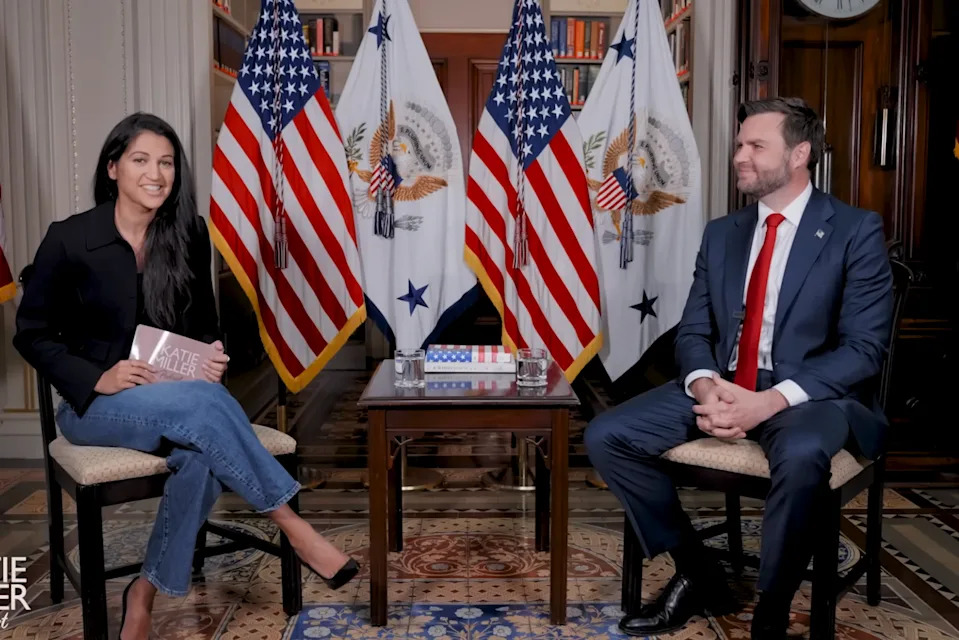
The Katie Miller Podcast
Strategy, Audience, And Timing
The timing and tone of the podcast are intentional: at moments when the administration is taking aggressive stances on policing, immigration, and law enforcement presence in Washington, Miller’s show attempts to overlay a veneer of normalcy—family anecdotes, faith, and homemaking—on top of a hard‑right policy agenda. The explicit target appears to be white women, a swing demographic that the campaign views as persuadable.
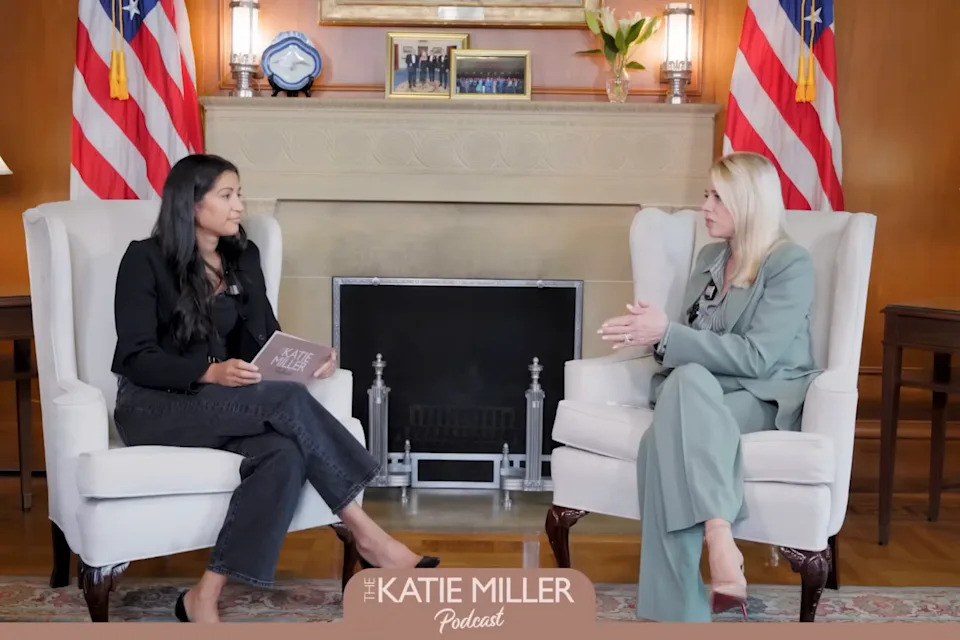
The Katie Miller Podcast
Reception And Metrics
Despite marquee guests, the series has struggled to find an audience. Most YouTube episodes hover around 10,000 views; Elon Musk’s appearance is a notable outlier with roughly half a million views. By contrast, established conservative women creators routinely draw much larger, more engaged audiences after years of content production. Critics say Miller hasn’t filled a unique niche and that the podcast lacks the sharpness or viral moments modern political audio and video rely on.
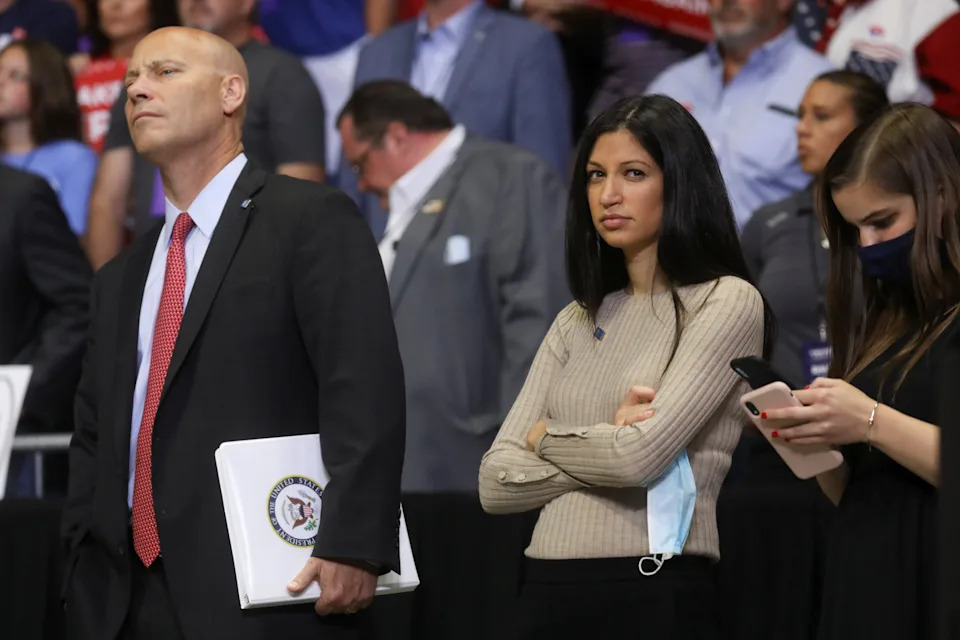
Miller in June 2020, at a Trump reelection rally.Reuters/Leah Millis
Why The Podcast Is Faltering
There are several likely reasons for the show’s weak performance: Miller’s interview style rarely produces confrontational or revealing moments; the softening strategy may not persuade moderates who are concerned about the guests’ policies; and it may not satisfy the MAGA base that thrives on grievance and combative rhetoric rather than domestic intimacy. In short, humanizing anecdotes do little to offset accountability questions for many listeners, and they fail to energize others who already support the guests.
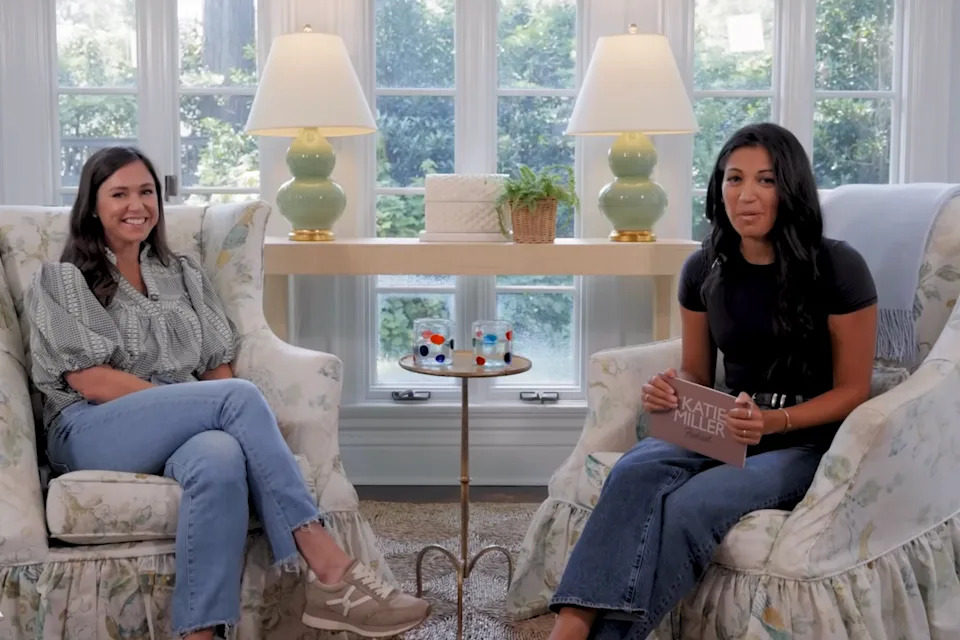
The Katie Miller Podcast
“Victimhood Is Currency.” Critics note that presenting conservative women as aggrieved mothers can be a tactic to deflect scrutiny and claim moral authority—an approach Miller sometimes adopts on air.
The most recent episode—an awkwardly domestic chat with FBI Director Kash Patel and partner Alexis Wilkins—prompted a viewer to remark: “We are not a serious country.” That blunt assessment captures why this campaign to humanize MAGA through homey anecdotes may be an insufficient response to a polarized, policy‑focused moment in American politics.
Bottom Line
Katie Miller’s podcast is an ambitious effort to recast polarizing political figures as approachable neighbors and parents. But its soft focus, uneven interviewing, and poor traction suggest the strategy isn’t working: it neither neutralizes scrutiny of controversial policies nor delivers the kind of entertaining, revealing content that builds a durable audience.
Help us improve.