Gaza medical teams, led by Dr Fadel Naim at al-Ahli Arab Hospital and supported by Glia, are using solar-powered 3D printers to produce low-cost external fixators that stabilise complex fractures and reduce the need for amputations. Components are printed locally from recycled materials and assembled with standard hardware, enabling production despite power outages. One early patient regained mobility after receiving a Palestinian-made fixator; 12 more are waiting for treatment. The approach offers a scalable model for delivering medical supplies in conflict, disaster and climate-affected settings.
Gaza Doctors Use Solar-Powered 3D Printing To Save Limbs From Amputation

Dr Naim assembles an external fixator using 3D-printed components and metal rods [Al Jazeera]
Gaza surgeons and engineers are using solar-powered 3D printers to produce low-cost external fixators that stabilise complex limb fractures and help patients avoid amputations after intense bombardment damaged the territory's medical infrastructure.
Local Innovation Under Siege
With frequent electricity outages and damaged supply chains, medics at al-Ahli Arab Hospital in Gaza City, led by Dr Fadel Naim, turned to 3D printing as a practical solution. Working with the medical solidarity group Glia, the team adapted open-source designs so plates and connectors can be printed locally from recycled materials and assembled with metal rods, nuts and bolts.
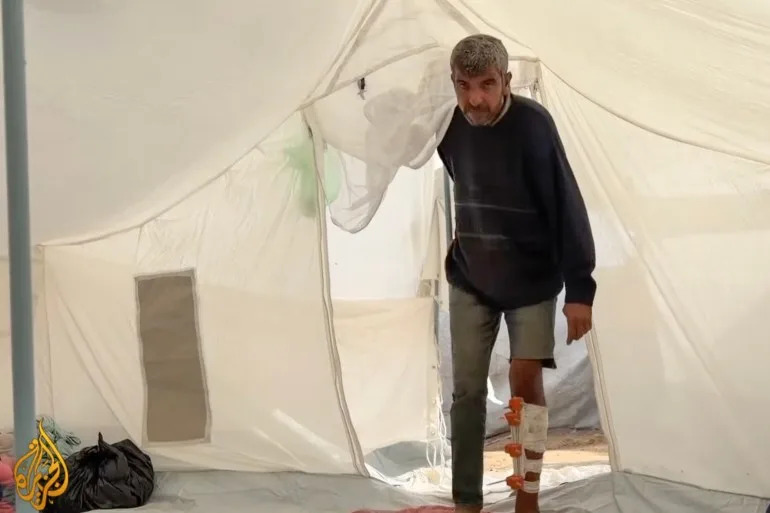
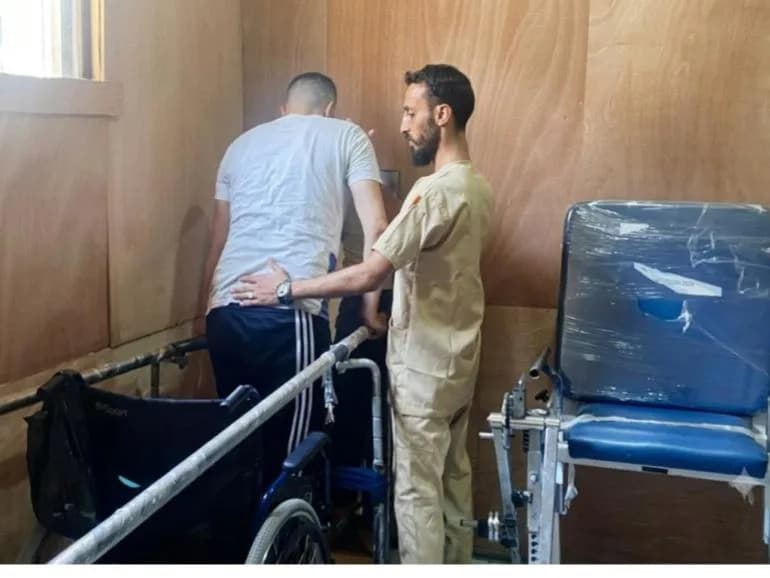
Zakaria, met in his tent in Deir el-Balah, can walk thanks to his locally made external fixator [Screen grab/Al Jazeera]
How It Works
The devices — known as external fixators — support shattered bones externally while soft tissues heal. By printing key components and using solar arrays to power printers when the grid is down, the team can produce functional fixators at a fraction of the usual price for commercial devices, which typically cost more than $500 each.
“I was injured in August and I was taken to the hospital without any medical care, but after two weeks, they brought me to the operation room and used a new device to fix my leg. To my surprise, it was a Palestinian-made device,”
— Zakaria, patient
Dr Naim said the nature of war-related injuries in Gaza — often complex, high-energy fractures — makes external fixators the most suitable immediate treatment in many cases. Al Jazeera reported that one of the first recipients, a man named Zakaria displaced from Jabalia to Deir el-Balah, regained mobility and had no significant loss of motion after receiving a locally produced fixator.
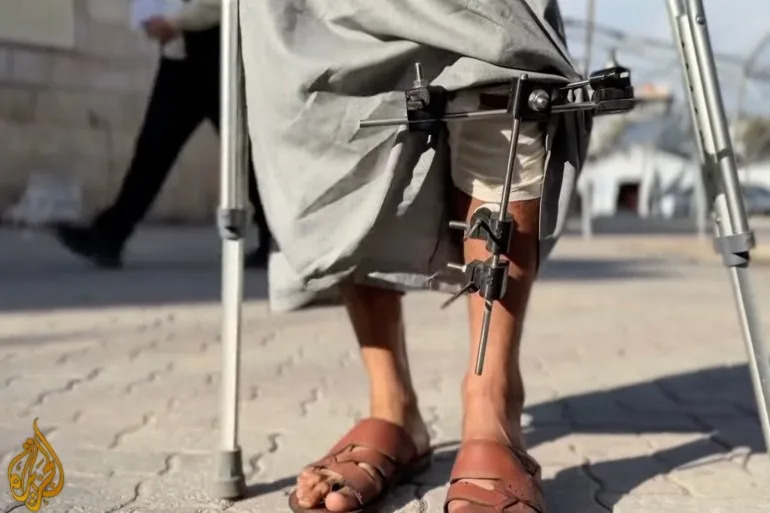
The technology has proven to be a ‘lifeline’ in Gaza, where medical infrastructure has collapsed during the war [Al Jazeera]
Impact And Broader Relevance
Glia said that 12 more patients are currently awaiting treatment, highlighting both urgent local need and the life-saving potential of in-situ manufacturing under siege. The group described the Gaza-led project as a demonstration of how 3D printing combined with renewable energy can deliver practical medical solutions in conflict zones, disaster-affected regions, and climate-vulnerable communities worldwide.
The wider humanitarian context remains severe: reports indicate that 63 percent of Gaza hospitals were out of commission as of December 9; the United Nations agency for Palestinian refugees (UNRWA) has said about 282,000 housing units were destroyed and roughly 1.5 million people displaced. Media and humanitarian reports also cite high civilian casualties since the escalation of hostilities in October 2023.
Note: Cost estimates, patient outcomes, and humanitarian figures are reported by hospital staff, Glia, Al Jazeera and UN agencies. On-the-ground conditions and numbers may continue to change as verification and access evolve.
Help us improve.