
Benin’s December 7 coup attempt failed after loyalist forces, aided by rapid regional support led by Nigeria and ECOWAS standby troops, repelled a small group of rebel soldiers. Nigerian air strikes and French intelligence helped dislodge the putschists; at least 14 arrests were made and the alleged coup leader was traced to Togo. The episode demonstrated ECOWAS can act decisively under certain conditions, but analysts say the bloc still needs to rebuild credibility by defending democratic norms and managing geopolitical rifts with the pro‑Russia Alliance of Sahel States.
Has Benin’s Foiled Coup Revived ECOWAS’s Regional Muscle?

People gather at the market of Dantokpa, two days after Benin’s forces thwarted the attempted coup against the government, in Cotonou, December 9, 2025 [Charles Placide Tossou/Reuters]
When armed soldiers in Benin appeared on national television on December 7 to announce they had seized power, many in West Africa feared another chapter in the wave of coups that has shaken the region since 2020. What followed in Cotonou, however, played out differently.
What Happened
Reports of gunfire and civilians fleeing the streets circulated through the morning as conflicting accounts emerged. A small group of roughly 100 putschists broadcast claims of victory after an early attack on the presidential palace, but President Patrice Talon remained at large and loyalist forces rapidly rejected the seizure.
By evening, Benin’s government was confirmed to be intact. Talon and loyal units, aided by quick support from neighbouring states — most notably Nigeria — sustained control. At least 14 people were arrested and several casualties were reported on both sides; one civilian death included the wife of a senior officer. Authorities later reported that the coup leader, Colonel Pascal Tigri, was hiding in neighbouring Togo.
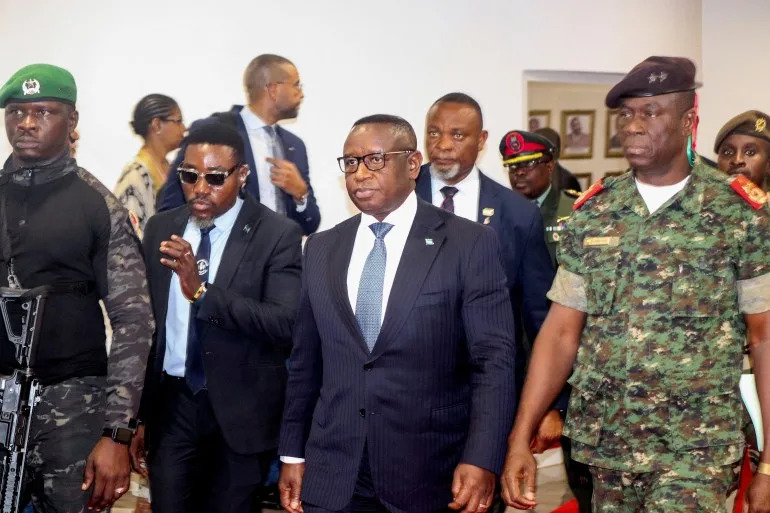
Sierra Leone’s President Julius Maada Bio, who chairs ECOWAS, walks with Guinea-Bissau’s transitional president, Major-General Horta Inta-A, during a meeting in Bissau, Guinea-Bissau, on December 1, 2025 [Delcyo Sanca/Reuters]
Why ECOWAS Intervened
The Economic Community of West African States (ECOWAS) mobilised its standby ground forces for the first time in nearly a decade, drawing troops from Nigeria, Ghana, Côte d’Ivoire and Sierra Leone. Abuja authorised targeted air strikes against rebel positions in Cotonou, while France provided intelligence support. By nightfall Nigerian jets had dislodged the rebels and the immediate threat was neutralised.
Analysts say two main rebel mistakes created a window for action: the putschists failed to seize President Talon, allowing him to call for help, and they misjudged military loyalty — many units stayed loyal to the president rather than joining the coup. Survey data cited by Afrobarometer indicate strong public support for democracy in Benin (about 73% prefer democracy), adding political resistance to military rule.
Context: A Region Under Strain
Between 2020 and 2025, nine coup attempts toppled five democratic governments and two military ones across West Africa. The most recent successful takeover, in Guinea-Bissau on November 28, occurred while ECOWAS officials were on the ground to monitor elections — an episode that highlighted the bloc’s earlier limitations and drew criticism over its largely rhetorical responses.
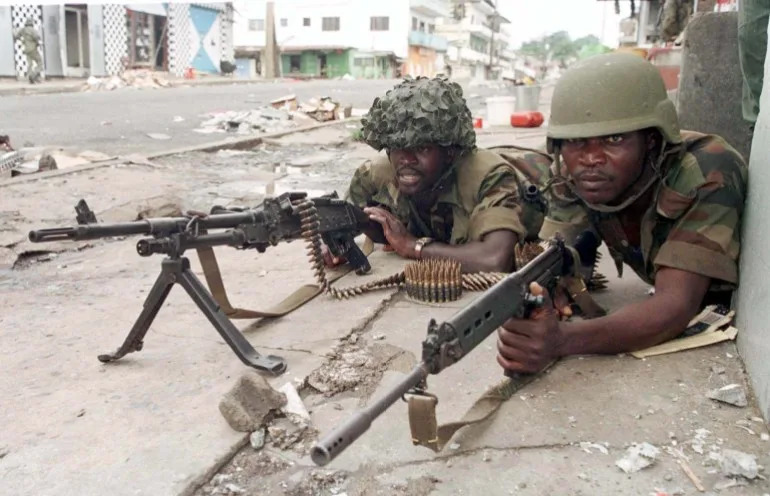
Nigerian ECOWAS Ceasefire Monitoring Group (ECOMOG) soldiers guard a corner in downtown Monrovia during fighting between militias loyal to Charles Taylor and Roosevelt Johnson in Liberia in 1996. Between 1990-2003, ECOWAS successfully intervened to help stop the Liberian civil war [File: Reuters]
ECOWAS’s capacity to act historically relied on stronger member states — particularly Nigeria. But Nigeria itself has faced economic strain and internal security challenges, including Boko Haram and a first recorded JNIM attack on its territory in October. In 2023, ECOWAS threatened force after Niger’s coup but later backed down amid domestic opposition and the consolidation of the junta, prompting Niger to leave ECOWAS and co-found the pro-Russia Alliance of Sahel States (AES) with Mali and Burkina Faso.
Implications And Risks
Observers say ECOWAS acted partly to prevent Benin — a littoral state with the key port of Cotonou — from joining the AES, which would have expanded that alliance’s access to sea routes. The intervention also served Nigeria’s strategic interest in preventing a neighbouring military takeover that could worsen cross-border insecurity.
Yet analysts caution that a successful tactical response in Benin does not equate to a full revival of ECOWAS’s credibility. Critics note that the bloc did not challenge democratic backsliding in Benin before the coup: President Talon, in power since 2016, has been accused of sidelining opposition figures. His administration barred the main challenger, Renaud Agbodjo, from the upcoming presidential vote, while Talon’s preferred candidate, former finance minister Romuald Wadagni, is widely seen as the frontrunner.
On December 9, two days after the failed putsch, ECOWAS declared a state of emergency and called for "serious introspection" on democracy and regional security. Commission president Omar Touray warned that eroding electoral integrity and geopolitical polarization — notably between Western partners such as France and the pro-Russia AES — increase coup risk.
Looking Ahead
The Benin episode shows ECOWAS can act decisively under favorable conditions: when a head of state remains free, part of the military resists the seizure, and neighbouring powers are willing to intervene. But to rebuild long-term credibility the bloc must be more consistent in defending democratic norms, proactively address electoral erosion, and manage delicate relations with AES members and external partners to avoid entrenching geopolitical divisions.
Key Fact: ECOWAS deployed standby troops and used Nigerian air power, with French intelligence support; the bloc declared a state of emergency on December 9.


