About 400 dead storks were found along the Manzanares River in Getafe, near Madrid, prompting concern that a more virulent bird flu strain could be involved despite initial tests showing a low-pathogenic variant. Samples have been sent to the agriculture ministry’s laboratory for confirmation. Authorities have imposed strict controls on poultry farming and increased surveillance; more than 200 avian influenza outbreaks have been reported across Europe this year.
Around 400 Dead Storks Found Near Madrid Raise Fears Of More Virulent Bird Flu Strain

A forestry agent picks up dead storks on the shore of the Manzanares River near Madrid - AFP
About 400 dead white storks were discovered along the banks of the Manzanares River in Getafe, a southern suburb of Madrid, officials said on Tuesday. The unusually large number of carcasses has raised concern that a more virulent form of avian influenza might be involved.
Initial local testing detected a low-pathogenic strain of avian influenza, but the Madrid regional government said the scale of the die-off has prompted further investigation. Samples have been sent to a national laboratory run by the agriculture ministry for more detailed analysis and confirmation.
What Officials Are Doing
Authorities have stepped up containment and surveillance measures to limit further spread. Current controls include:
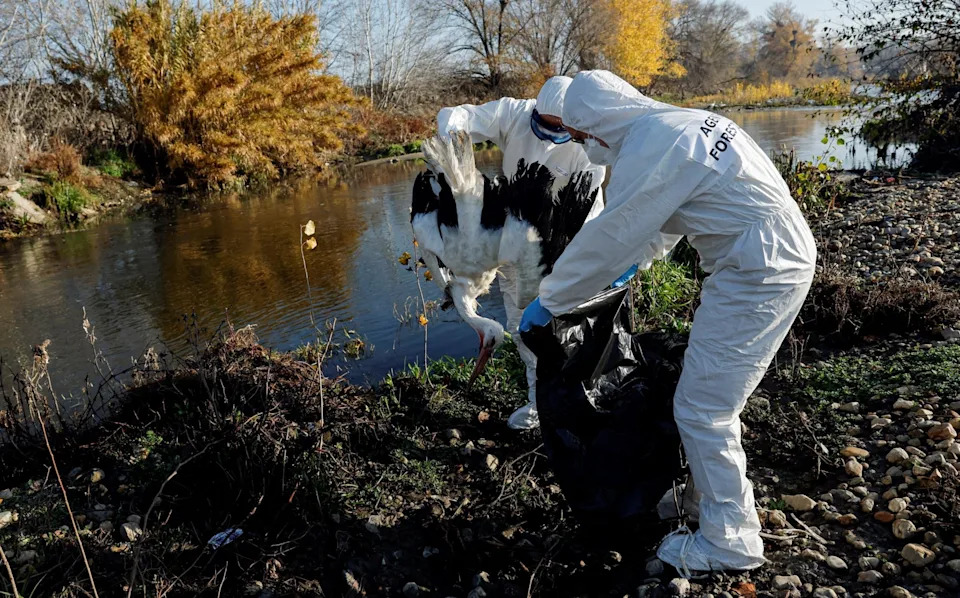
Samples from the dead stork have been sent for test to establish whether deadly bird flu caused their deaths - AFP
- Bans on free-range poultry farming in affected zones;
- Limits on visits to breeding and rearing facilities;
- Restrictions on keeping ducks and geese together with other poultry species;
- Increased monitoring and oversight of shared water sources and wild bird gatherings.
The Madrid regional government emphasized that investigations are ongoing and that laboratory results will determine whether a higher-risk strain is present.
Risk To Humans And Food Supply
Bird flu (avian influenza) very rarely infects people, and there is currently no evidence that the virus can be transmitted through properly handled and cooked poultry products. However, outbreaks can cause heavy losses to the farming sector and disrupt local food supply chains, so rapid detection and containment are priorities.
So far this year, more than 200 outbreaks of avian influenza have been reported at European poultry farms. Officials note this tally is higher than in recent years but remains well below the 2022 peak, when tens of millions of birds were culled across the continent.
Authorities ask the public to avoid handling dead wild birds and to report sightings to local animal health services. Further updates will follow once the agriculture ministry laboratory completes its analysis.
Help us improve.