Summary: Minnesota's probe into about $1 billion in welfare-fraud has put the informal hawala remittance network under scrutiny. Hawala helps Somali Americans send money to relatives where formal banking is scarce, but experts and U.S. authorities warn that once funds are paid out in Somalia they can be reduced or diverted by corruption, extortion or extremist taxation, potentially benefiting groups like al-Shabaab. Federal and congressional investigations are ongoing.
Minnesota Probe Highlights Hawala Transfers — Could Stolen Funds Reach al-Shabaab?

A file image shows al-Shabaab militants in Somalia (left), alongside a woman counting Somaliland shilling notes at a currency exchange stall in Hargeisa on Nov. 8, 2024 (right). Somalia’s limited banking system means many families depend on informal money-transfer networks such as hawala — channels experts say can be vulnerable to taxation or exploitation in areas controlled by al-Shabaab.
Minnesota's sprawling investigation into roughly $1 billion in alleged welfare-fraud schemes has renewed scrutiny of hawala — an informal, centuries-old money-transfer network widely used by Somali Americans to send remittances home. U.S. officials say such informal channels can be vulnerable to diversion, taxation, or extortion by armed groups like al-Shabaab once funds enter Somalia’s informal economy.
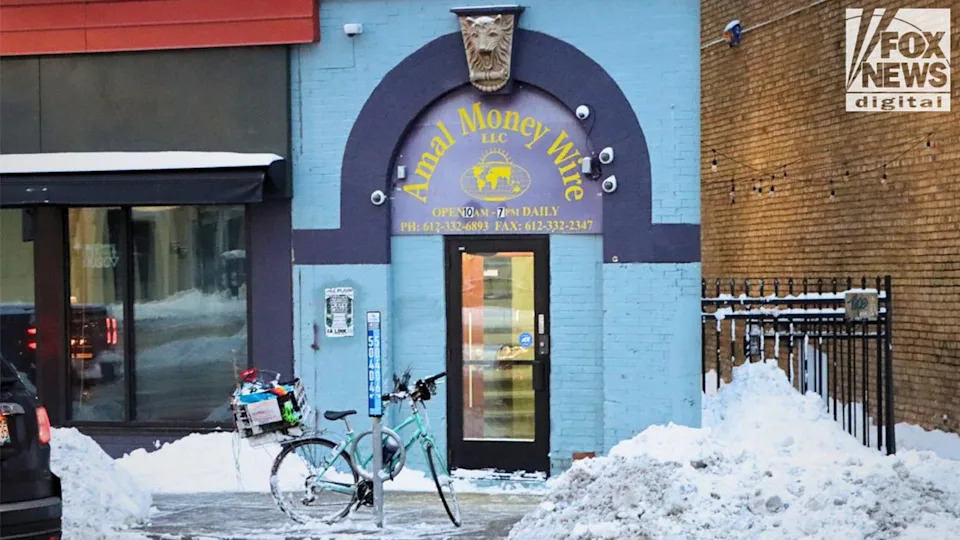
Amal Money Wire in Minneapolis handles legal U.S. remittances for customers sending funds abroad. The business has not been accused of any wrongdoing and is not a hawala operator.
How Hawala Works
Hawala moves value without formal banks, international wiring systems or standard paperwork. A sender gives cash to a licensed money-services agent in the United States, who records the transaction and instructs a counterpart in Somalia to pay the recipient in local currency. No physical cash crosses borders during this instruction-and-settlement process.
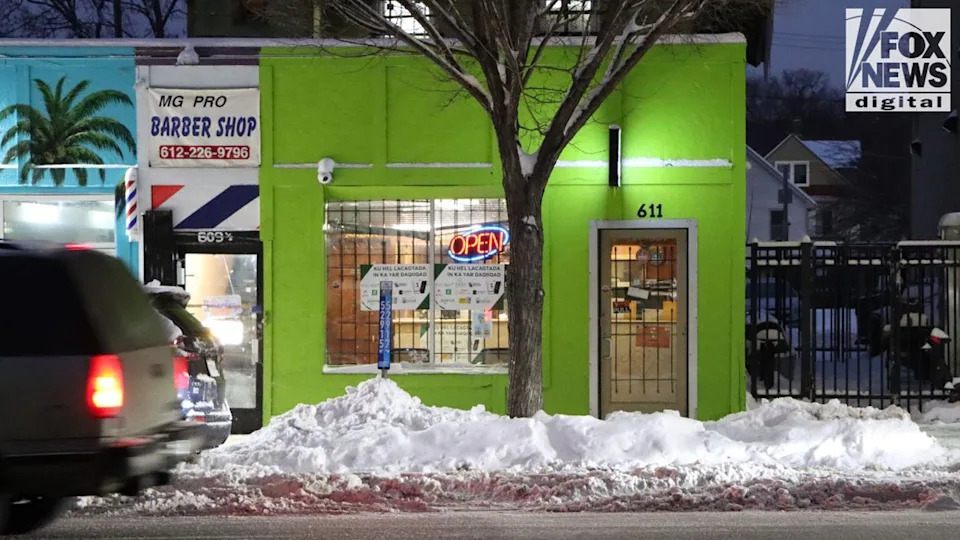
A remittance storefront in Minneapolis’ Cedar–Riverside neighborhood. Businesses like this are licensed money-service providers and are not alleged to be involved in any illegal activity.
Why It Matters
The system is fast, low-cost and reaches rural and remote areas of Somalia where formal banking is limited or nonexistent. For many Somali Minnesotans, hawala-linked disbursements are the most practical — often the only — way to support relatives abroad. According to Oxfam, Somalis in the United States remit about $215 million annually; the global Somali diaspora sends roughly $1.3 billion a year, an amount the World Bank estimates equals 15–20% of Somalia’s economic output.
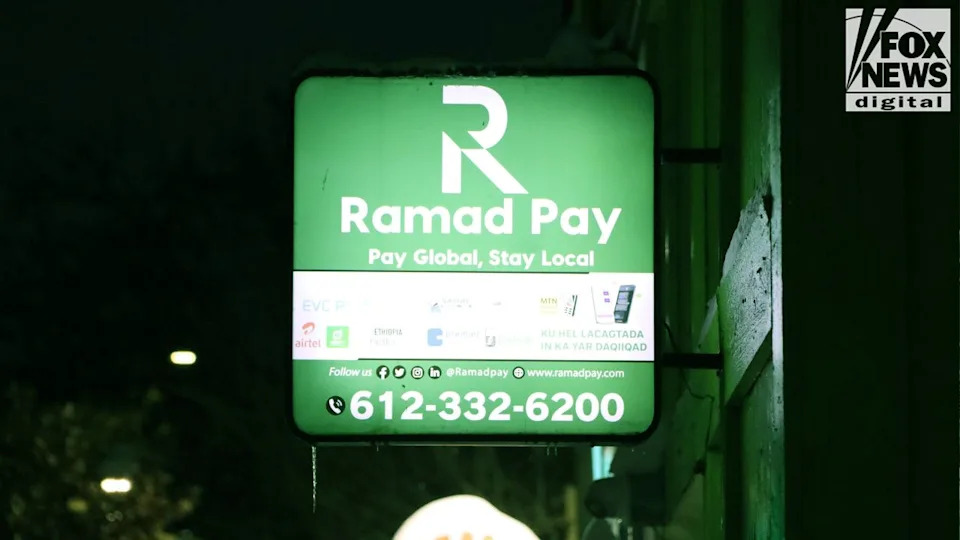
A Ramad Pay sign hangs above a licensed money-transfer business in Minneapolis. These companies legally process U.S. remittances and are not involved in hawala activity inside the United States.
Security Concerns and Ongoing Investigations
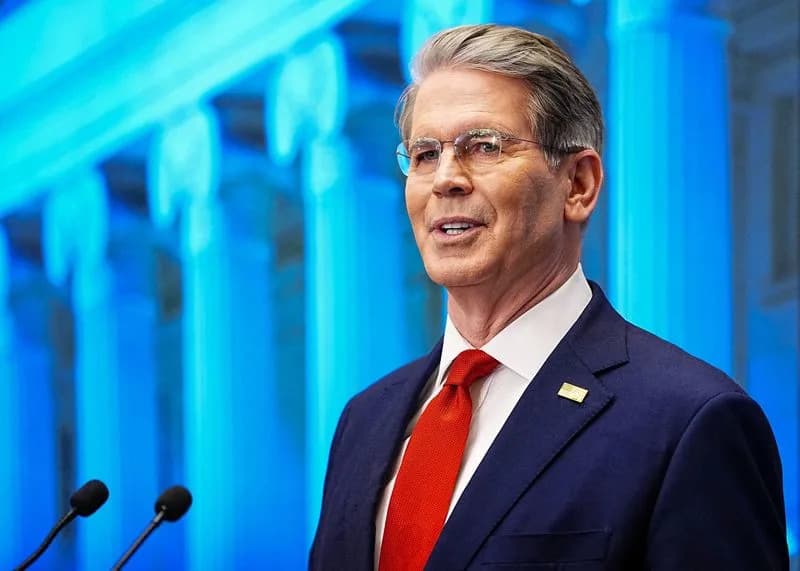
Federal authorities, including Treasury Secretary Scott Bessent, have opened inquiries into whether proceeds from Minnesota’s fraud schemes were routed through informal channels and might have indirectly benefitted al-Shabaab. The House Oversight Committee has also launched an inquiry, and state officials have expressed serious concern.
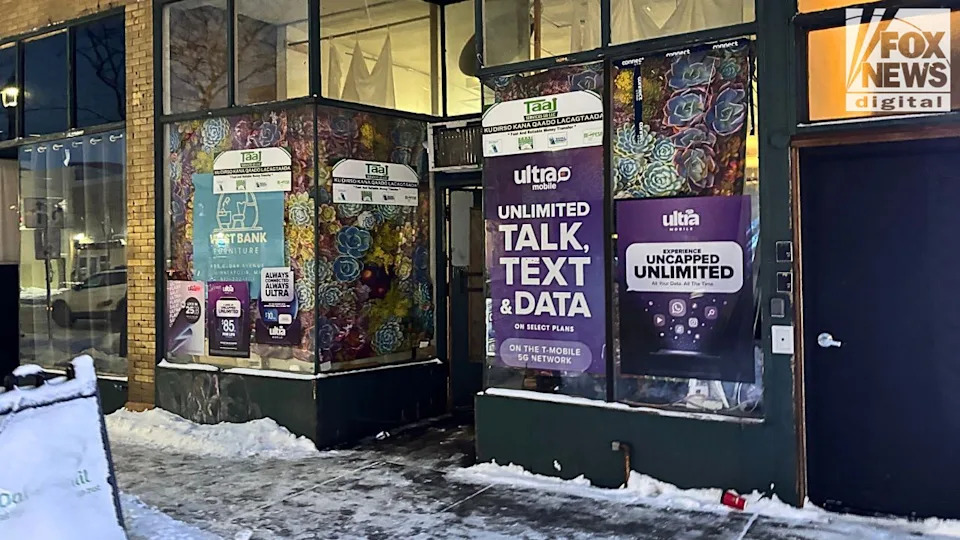
The Taaj Money Transfer storefront in Minneapolis’ "Little Mogadishu" neighborhood. The business is a licensed U.S. money-service provider and is not accused of any wrongdoing; it handles legal remittances before funds are transferred overseas for final delivery.
'Because there’s more than a billion dollars that’s been stolen and a significant portion of those dollars have been directed overseas, there are concerns this money could be either directly or indirectly funding terrorist organizations like al-Shabaab,' Minnesota State Sen. Jordan Rasmusson said.
Where The Risk Arises
Licensed U.S. money-transfer outlets that collect cash and send transaction data overseas (similar to Western Union) are legal and have not been accused of wrongdoing. Experts say the vulnerability typically appears on the Somalia side: local agents often pay recipients from their own cash reserves and later settle debts privately through offsetting transactions, trade arrangements or bulk cash shipments — settlement methods that are difficult for regulators to monitor. In areas where al-Shabaab exerts control, the group can impose taxes, extort businesses or demand 'license' fees from shopkeepers, reducing or diverting legitimate remittances.
Context And Caveats
Al-Shabaab's taxation and extortion are concentrated in south-central Somalia, with much weaker influence in Somaliland and Puntland and variable presence near major cities. The typical diaspora sender is unaware of any local tolls or fees, meaning legitimate remittances can be diminished even without intent to support militants.
Minneapolis' Cedar-Riverside neighborhood — known as 'Little Mogadishu' — contains multiple legal wire-transfer storefronts alongside a single traditional bank branch, illustrating the community reliance on alternative remittance channels. Historical incidents of Somali-Americans joining extremist groups have heightened local sensitivity to the potential for funds to be diverted, but experts emphasize the distinction between licensed U.S. money-service providers and informal settlement practices that occur abroad.
Implications And Next Steps
Investigators face the challenge of tracing funds once they are converted into cash and enter informal networks in Somalia. Policymakers and community leaders may consider strengthening compliance measures, improving transparency in licensed transfer businesses, expanding financial-access solutions, and increasing outreach to diaspora communities to reduce vulnerability without cutting off vital support channels for families in need.
Help us improve.