President Trump’s recent string of pardons and commutations has drawn sharp bipartisan criticism for appearing to benefit allies and contradict his administration’s policy posture. High-profile recipients include former Honduran President Juan Orlando Hernández, convicted in a major narcotics case, and Binance founder Changpeng Zhao. The White House defends the actions as necessary corrections to perceived Justice Department overreach, while critics say the moves send mixed messages on drug policy and raise conflict-of-interest concerns.
Trump’s Pardons Ignite Bipartisan Backlash — Critics Say They Undermine His Own Agenda
Trump’s Use Of Clemency Draws Bipartisan Criticism
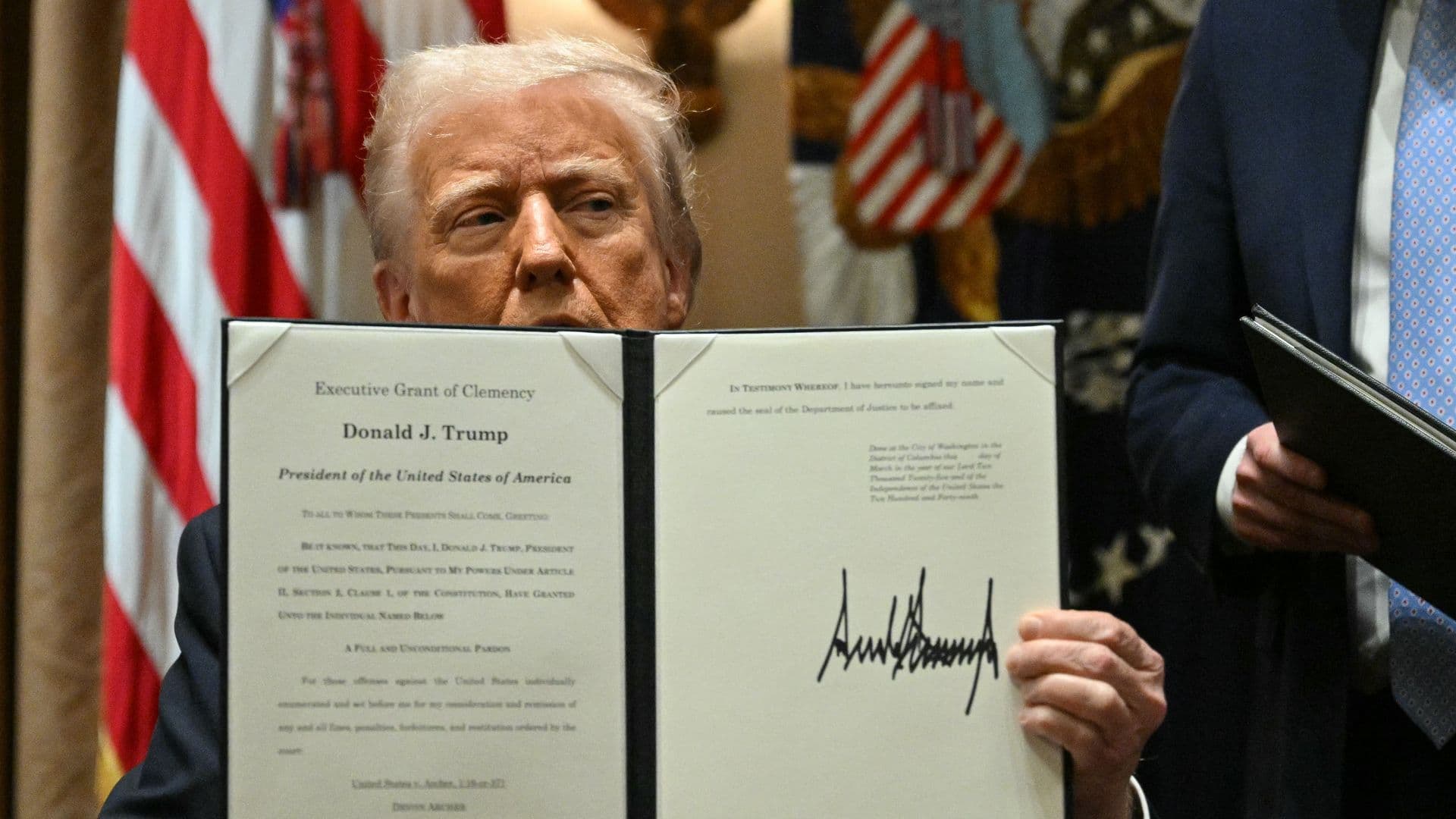
President Donald Trump’s expansive use of the presidential pardon and commutation powers has provoked criticism from both Democrats and Republicans, who say several recent acts of clemency appear to conflict with the administration’s stated priorities and frequently benefit political allies or figures connected to his circle.
Early in his second term, Trump issued broad clemency for many defendants connected to the Jan. 6, 2021, attack on the U.S. Capitol. Since then, he has pardoned or commuted the sentences of several high-profile individuals, including convicted lawmakers and political figures, a cryptocurrency executive with business ties to the Trump family, and a former foreign head of state convicted in a major narcotics case.
High-Profile Pardons And The Fallout
Most controversially, Trump pardoned Juan Orlando Hernández, the former president of Honduras, who was convicted in June 2024 of conspiring to distribute more than 400 tons of cocaine and of accepting millions of dollars in bribes to aid trafficking. The move drew bipartisan rebukes from lawmakers who said it sent a mixed message about U.S. efforts to combat international drug trafficking.
“He was the president, and they had some drugs being sold in their country, and because he was the president they went after him. That was a Biden horrible witch hunt,” Trump said in defense of the Hernández pardon.
Trump also pardoned Changpeng Zhao, the founder of cryptocurrency exchange Binance, a decision that prompted questions about conflicts of interest because of Binance’s business links to the Trump family. Other clemencies included commuting the sentence of former Rep. George Santos after his guilty plea, pardoning former Rep. Michael Grimm after a tax conviction, commuting the sentence of private equity executive David Gentile, and pardoning former Illinois Gov. Rod Blagojevich.
Political Reaction And White House Defense
Critics argue the pardons appear to reward allies and undermine policy messaging. Sen. Chris Murphy (D-Conn.) called the pardons “a huge, growing scandal” and accused pardon recipients and intermediaries of profiteering. Even some Republicans voiced unease: Sen. Thom Tillis (R-N.C.) said the Hernández pardon sends a “horrible” and confusing message given the administration’s anti-narcotics actions in the Caribbean.
“The pardons Trump is handing out are a huge, growing scandal that not enough people are talking about,” Sen. Chris Murphy said. “This is a money making operation – for Trump, his family, his crypto pals, and the Trump-affiliated lobbyists and grifters who the pardon seekers pay.”
White House officials have consistently defended the clemencies as corrective measures aimed at what they describe as a "weaponized" Justice Department under the Biden administration. White House spokesperson Abigail Jackson and press secretary Karoline Leavitt have framed the pardons and commutations as appropriate uses of the president’s constitutional authority to right perceived prosecutorial overreach.
“President Trump has exercised his constitutional authority to issue pardons and commutations for a variety of individuals,” White House spokesperson Abigail Jackson said, contrasting the current actions with what she called problematic pardons by the prior administration.
Where This Leaves Policy And Politics
The pardons have reignited debate about presidential clemency, conflicts of interest, and consistency in U.S. law enforcement policy. Supporters say clemency is an essential executive power to correct miscarriages of justice; critics say these recent choices look political and at times contradict other administration priorities, particularly on drug interdiction and anti-corruption efforts.
Notable clemency actions under this administration include: broad Jan. 6 clemencies, the pardons of Juan Orlando Hernández and Changpeng Zhao, commutations for George Santos and David Gentile, and pardons for Henry and Imelda Cuellar. The decisions are likely to remain politically contentious and subject to continued scrutiny.
Copyright 2025 Nexstar Media, Inc. All rights reserved.
Help us improve.