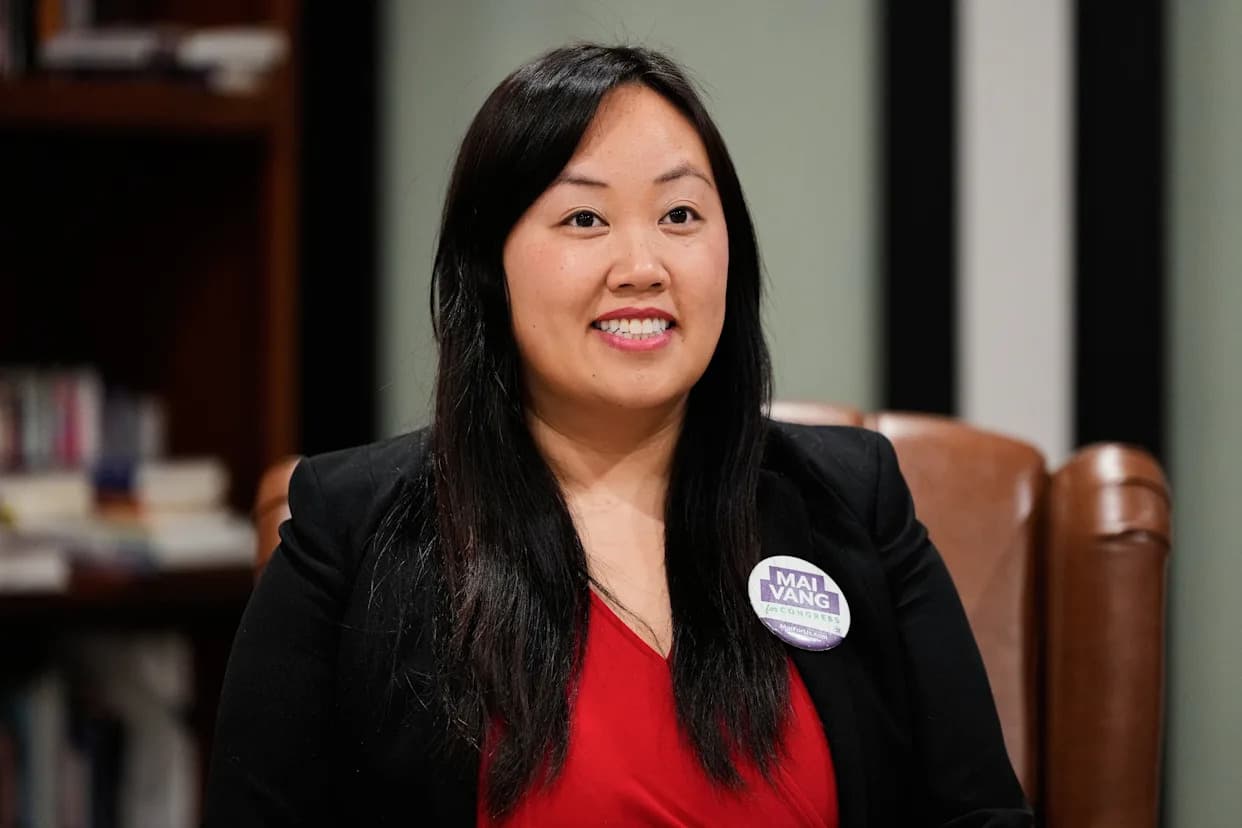
Aftyn Behn lost the Tennessee special election by about nine points to Republican Matt Van Epps in the GOP-leaning 7th District, despite campaigning on affordability and local services. Behn outperformed the district’s 2020 Democratic baseline by roughly 13 points and benefited from turnout near 2022 midterm levels. The result has reopened a debate within the Democratic Party over whether progressive energy or moderate electability is the best strategy for flipping conservative seats ahead of next year’s midterms.
Tennessee Special Election Reignites Democratic Split Over Progressives vs. Moderates
The Tennessee special election in the deeply Republican 7th Congressional District has reopened a familiar debate within the Democratic Party: should the party prioritize progressive energy or moderate electability when nominating candidates for competitive districts?
Democrat Aftyn Behn fell short of flipping the seat, losing to Republican Matt Van Epps by roughly nine percentage points after a campaign focused on affordability and local services. Republicans highlighted Behn's past statements and progressive positions, labeling her "a woke liberal" and comparing her to prominent progressive figures.
What happened on the ground
Despite the loss, Behn ran a competitive race in a district with a strong Republican lean: the seat had favored Donald Trump by more than 20 points in the prior presidential election. Turnout was unusually high for a special election, roughly comparable to the district's 2022 midterm turnout, and Behn outperformed former Vice President Kamala Harris's 2020 showing in the district by about 13 points.
How Democrats reacted
Within hours of the result, voices on both sides of the party argued their case. Lanae Erickson of Third Way, a center-left think tank, framed the debate as two competing goals: winning political power in swing areas and deepening progressive strength in already-blue places. Erickson urged restraint from far-left groups when contests are competitive.
"One is winning political power so we can stop Trump’s calamity. The other is turning blue places bluer," Erickson said.
Dave Cooley, a former deputy governor of Tennessee who worked on many campaigns for former Gov. Phil Bredesen, said a more moderate candidate might have closed the gap. At the same time, Cooley credited Behn for energizing the primary electorate and defeating more mainstream Democrats to win the nomination.
Others defended Behn’s candidacy. Lisa Quigley, who served as chief of staff to former Rep. Jim Cooper (D-Tenn.), argued that Behn uniquely energized Nashville’s Democratic base, which accounts for the bulk of the party’s votes in the district. Quigley maintained that Behn’s campaign achieved the necessary goal of maximizing turnout and raw votes in Nashville.
Campaign dynamics and controversies
Republicans circulated past footage and social-media posts that cast Behn as an ideological outlier. She was asked repeatedly during the campaign about comments from her activist past, including statements about policing and public safety. Behn responded that some remarks were made as a private citizen and that her positions have evolved while serving as an organizer and lawmaker.
Democratic operatives noted that affordability and kitchen-table issues were central to many successful Democratic campaigns this cycle, and Behn emphasized those themes with a message to "feed kids, fix roads and fund hospitals." Yet the Tennessee result underscores that messaging alone may not resolve internal disagreements about the kinds of nominees best suited to win swing and conservative districts.
What this means going forward
The post-election analysis shows the party remains divided about strategy. Some believe progressive candidates can expand the map by energizing new voters and expanding turnout; others argue pragmatic, moderate nominees offer the best path to flipping red or purple seats. Party leaders and strategists will continue to weigh those trade-offs as they organize for next year’s midterms.
Key figures quoted: Lanae Erickson (Third Way), Dave Cooley (former deputy governor of Tennessee), Lisa Quigley (former chief of staff to Rep. Jim Cooper), and Rep. Tim Burchett (R-Tenn.).
Help us improve.