Despite expectations of a quiet off-year, 2025 produced several pivotal political developments. Early Democratic special-election wins signaled broader overperformance, while affordability emerged as the dominant voter concern. A late Virginia scandal tested down-ballot races but didn’t halt Democratic success, a nationwide redistricting fight escalated, and Zohran Mamdani’s NYC upset reverberated nationally — all shaping the landscape for 2026.
Five Game-Changers From the 2025 Campaign Trail That Reshaped the Road to 2026

After a bruising 2024 presidential cycle that left many voters fatigued, the 2025 off-year contests were expected to be quiet. Instead, a string of dramatic developments — from surprise special-election upsets to a nationwide redistricting battle and a high-profile mayoral upset — made the year unexpectedly consequential for both parties and set the tone for the 2026 midterms.
1. Early special-election shocks
Just eight days into President Donald Trump’s second term, Democrats gained momentum. In an Iowa special state Senate race, Democrat Mike Zimmer defeated Republican Katie Whittington, flipping a seat that had supported Mr. Trump by a large margin just months earlier. That result helped spark a pattern of Democratic overperformance in subsequent special and off-year elections.
By August, Democrats had flipped another Iowa state Senate seat, breaking the GOP’s supermajority in that chamber for the first time in three years. Democratic National Committee chair Ken Martin said that since the inauguration there had been dozens of contests in which Democrats exceeded expectations by roughly 16 percentage points on average — a sign that localized dynamics were favoring the party.
2. The economy reshapes voter priorities
While economic messages helped Republicans in 2024, 2025’s voter mood shifted around everyday affordability. Concerns about costs and household budgets emerged as the top political priority, and Democratic candidates who centered affordability in their campaigns scored significant wins.
Democrats notched double-digit gubernatorial victories in New Jersey and Virginia, performed strongly in battleground states such as Georgia and Pennsylvania, and held firm in reliably blue areas like New York City and California. Political observers noted that voters expect elected officials to act on cost-of-living pressures after an election, making economic competence a pivotal campaign issue.
3. Virginia scandal and its down-ballot ripple
Virginia’s campaigns experienced late turbulence when attorney general nominee Jay Jones apologized for inflammatory 2022 text messages that compared a GOP leader to mass murderers and contained violent language. Republicans pushed for Jones to withdraw, and the controversy briefly dominated headlines and was used to pressure other Democrats on the ticket.
Despite the uproar, Democrats prevailed in the commonwealth: Abigail Spanberger won the gubernatorial race by 15 points, the Democratic nominee for lieutenant governor won by 11 points, and Jones himself defeated incumbent Jason Miyares by about six points. The episode illustrated that even explosive scandals do not always determine electoral outcomes when larger campaign themes — such as the economy — are at play.
4. A high-stakes mid-decade redistricting fight
Determined to protect the GOP’s narrow House majority ahead of 2026, President Trump publicly urged mid-decade redistricting to add Republican-leaning seats in several states, identifying Texas as a primary target. Texas Republican leaders convened to redraw maps, provoking a high-stakes political and legal confrontation.
Democratic lawmakers in Texas fled the state to break quorum, galvanizing national Democratic opposition. In response, California voters approved Proposition 50, temporarily returning congressional mapmaking to the Democratic-controlled legislature and paving the way for additional Democratic-leaning districts. Federal judges in Texas subsequently ruled that the state could not use the newly drawn map in next year’s elections, and that decision is expected to be appealed.
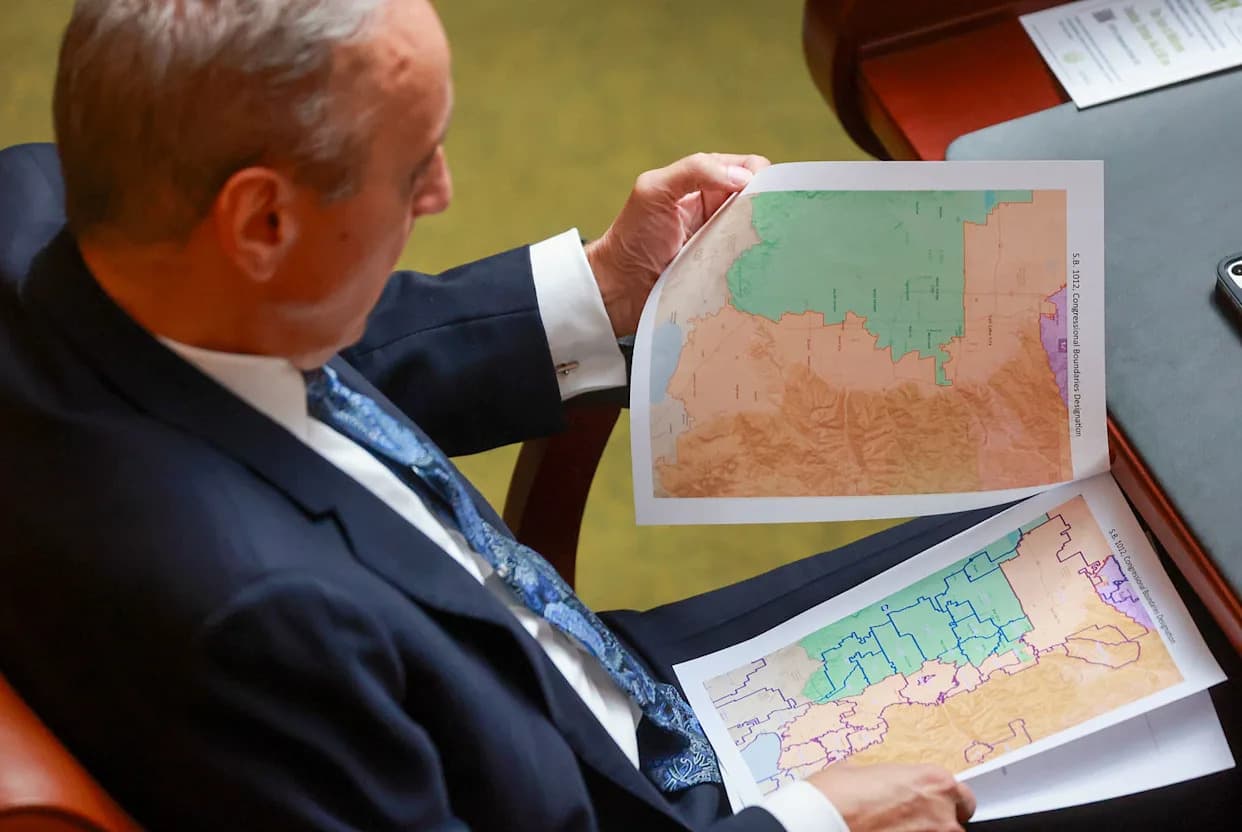
The redistricting debate spread to multiple states, with new or proposed maps in Missouri, North Carolina, Ohio, Indiana, Florida, and Kansas, while Illinois, Maryland and Virginia weighed changes of their own. In Utah, a judge rejected a GOP-drawn map and approved an alternate that creates a more competitive district — a notable setback for Republicans in a broader national fight over congressional boundaries.
5. Zohran Mamdani’s upset and national reverberations
In New York City, 34-year-old state lawmaker Zohran Mamdani pulled off a major primary upset on June 24, defeating better-known contenders to capture the Democratic mayoral nomination. He went on to win the general election by roughly nine points. Mamdani’s victory energized progressives and socialists who view his win as evidence of the left wing’s growing influence within the Democratic coalition.
Republicans quickly tried to use Mamdani’s nomination as evidence that Democrats were moving too far left, while Democratic strategists pushed back, arguing that attacks on Mamdani were distractions from Republican struggles on affordability. President Trump’s post-election meeting with Mamdani at the White House complicated simple partisan narratives and underscored the broader political interest in the new mayor’s rise.
What this means going into 2026
Taken together, these developments — early Democratic special-election gains, voter concern about affordability, a high-profile Virginia scandal that ultimately did not halt Democratic momentum, a heated redistricting battle, and Mamdani’s surprise victory — made 2025 far more consequential than expected. They reshaped campaign strategies on both sides and set the stakes for the crucial 2026 midterm contests.
Help us improve.