Israeli forces stepped up air strikes in southern and central Gaza, with reports the attacks crossed the ceasefire's "yellow line," hitting Bureij and eastern Khan Younis. Gaza civil defence officials describe the strikes as part of hundreds of alleged truce violations, while raids also continued across the occupied West Bank. Prisoner exchanges have advanced, but dozens of fighters remain trapped in tunnels and mediators are debating an international stabilisation force and interim governance for Gaza.
Air Campaign Escalates — Israeli Strikes Cross Gaza 'Yellow Line' as Ceasefire Frays

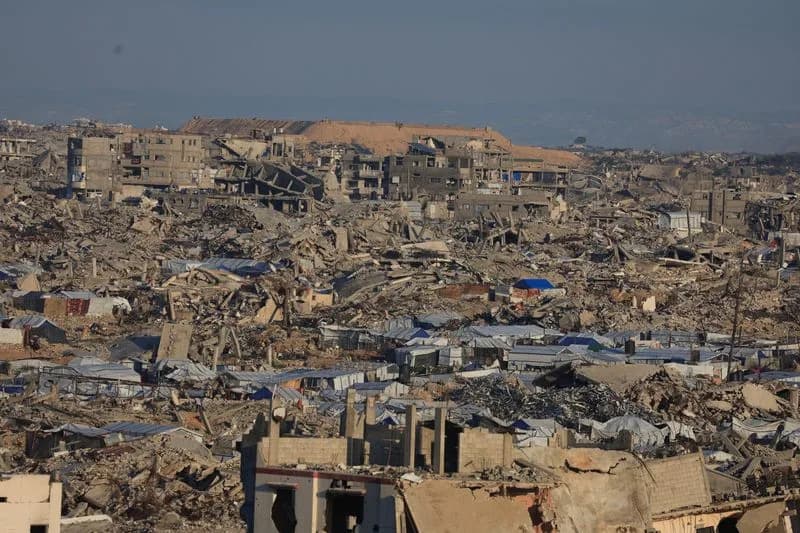
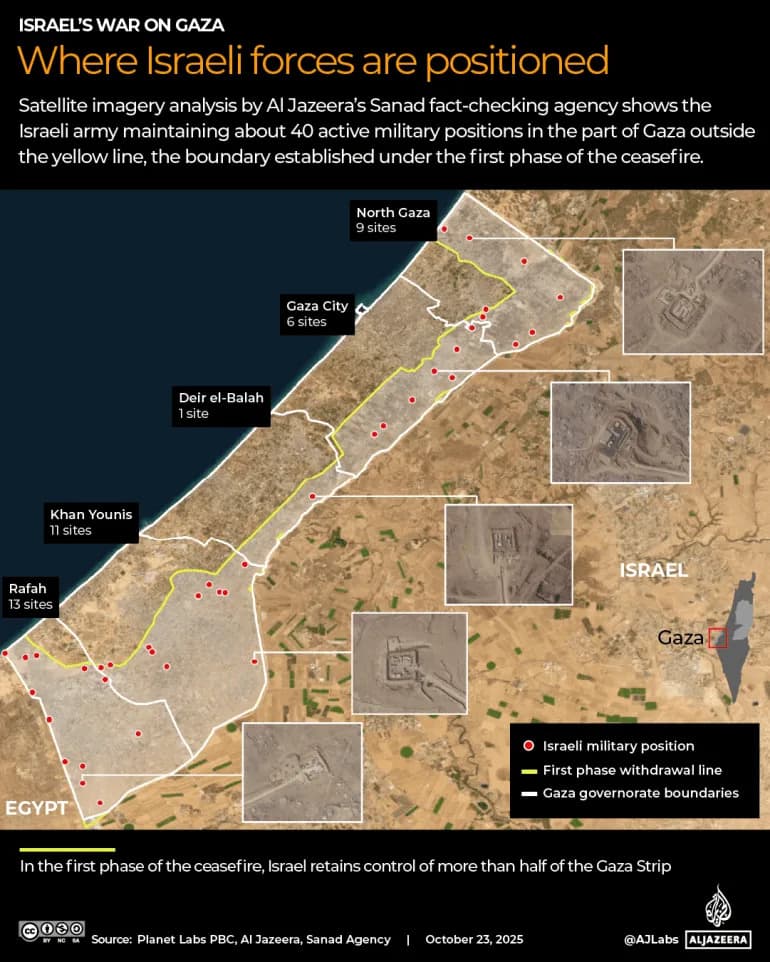
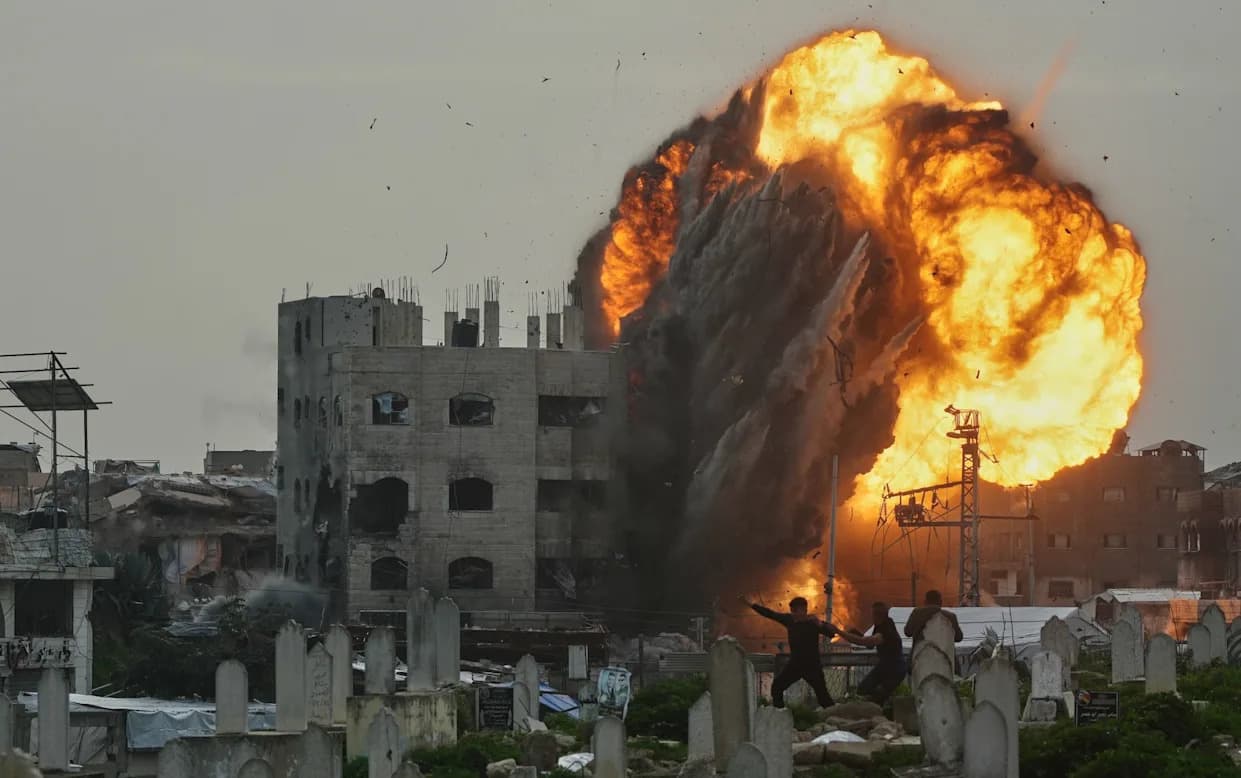
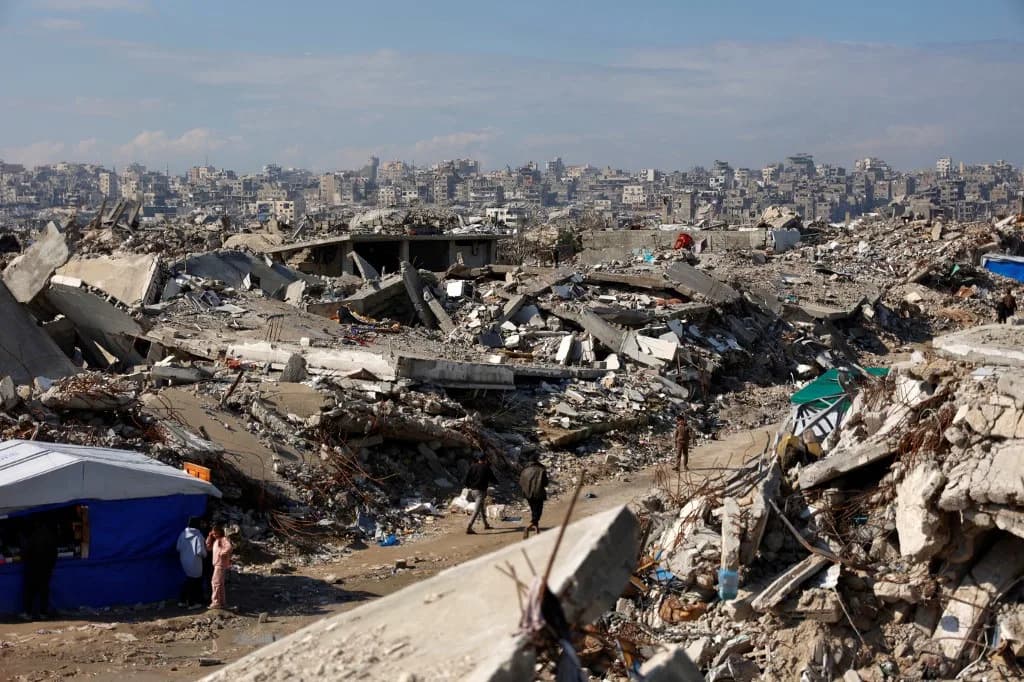
Israeli forces carried out a new wave of air strikes in southern and central Gaza, including areas reported to be beyond the ceasefire's so‑called "yellow line." Local correspondents and civil defence officials say strikes hit buildings in the Bureij refugee camp and in eastern Khan Younis.
Gaza's Civil Defence described Thursday's attacks as adding to hundreds of alleged violations of the fragile seven‑week truce. At the same time, Israeli security operations continued across the occupied West Bank, with raids and arrests reported in Qalqilya, Tubas, Hebron, Tulkarem and Nablus.
During a raid in Tubas, a local Palestinian Red Crescent official reported that security forces conducted field interrogations and assaulted at least 25 people who later required medical treatment.
The first phase of the truce moved forward after Israel transferred the bodies of 15 Palestinian prisoners to Gaza authorities, following the earlier handover by Palestinian groups of the body of an Israeli captive. Palestinian groups have now released all living captives and returned the remains of 26 of the 28 deceased captives specified in the deal.
Hamas spokesman Hazem Qassem said the latest handover demonstrated the group's "steadfast commitment to fully complete the exchange process and its ongoing efforts to finalise it despite significant difficulties."
Israel has also released nearly 2,000 Palestinian prisoners and returned the bodies of 345 Palestinian detainees, officials say; some families and medical examiners report signs of torture and mutilation in a number of cases.
Despite the exchanges, major challenges remain. Dozens of fighters aligned with Hamas are reported to be trapped in tunnels on the Israeli‑occupied side of the yellow line in southern Gaza; Israeli authorities say 20 of those fighters were killed over the past week. Hamas has urged ceasefire mediators to press Israel to allow safe passage for the besieged fighters, calling the targeting a breach of the truce.
"We hold [Israel] fully responsible for the lives of our fighters and call upon our mediators to take immediate action to pressure [Israel] to allow our sons to return home," Hamas said in a statement.
Diplomats are discussing a second phase of the ceasefire that would include an armed international stabilization force tasked with demilitarising Gaza and an interim international mechanism to oversee governance and reconstruction. Turkish, Qatari and Egyptian mediators recently met to discuss the plan, but significant questions remain about its implementation and Israel's commitment.
Muhammad Shehada, a visiting fellow at the European Council on Foreign Relations, expressed scepticism about Israel's intentions: "Until this moment, Israel has not given up on its plan to ethnically cleanse Gaza," he said, warning the territory could be left uninhabitable or become a pretext for renewed large‑scale operations.
The situation remains volatile. Observers warn that unresolved issues — including the status of fighters in tunnels, the scope of reconstruction, and the strength of international guarantees — could unravel the truce unless mediators secure clear, enforceable measures.
Help us improve.