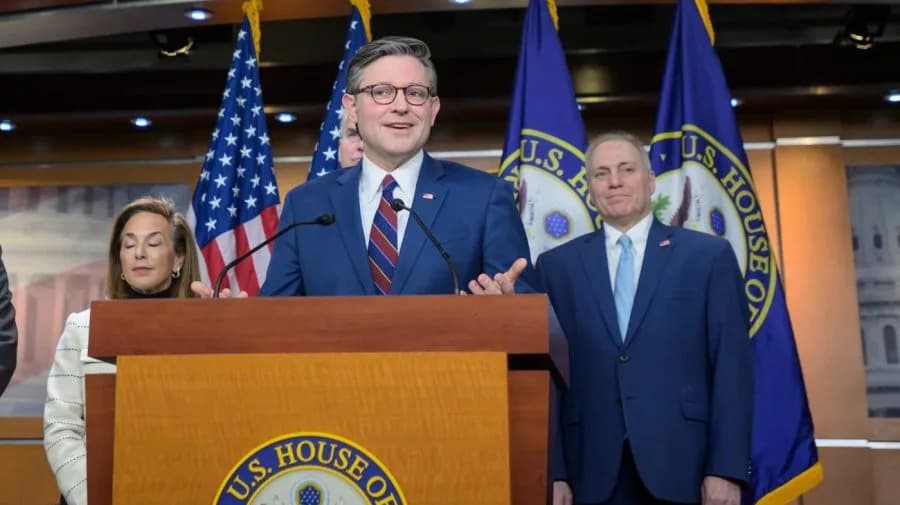
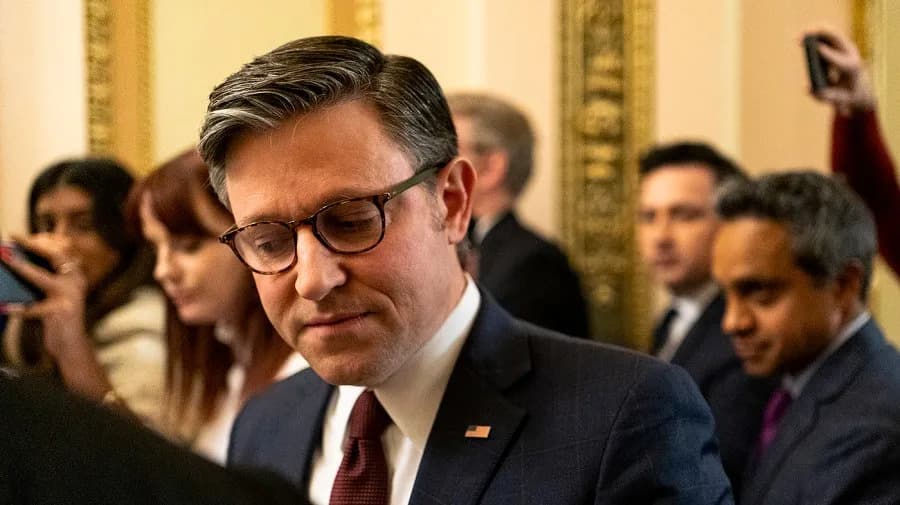
The discharge petition — a procedural device that brings bills to the House floor when 218 members sign — has been used five times under Speaker Mike Johnson, more than in the previous 30 years combined. United Democrats plus a handful of dissenting Republicans have forced votes on measures Johnson blocked, including bills on Epstein records, Social Security payouts, and voting accommodations for lawmakers with newborns. Democrats' tactical preparation with placeholder 'zombie' bills and growing Republican frustration with centralized leadership have turned the petition into an increasingly effective tool.
How Discharge Petitions Are Eroding Speaker Mike Johnson’s Control of the House

What was once an obscure procedural tool on Capitol Hill has become a regular lever for rank-and-file members to force action in the House. Since Mike Johnson became speaker two years ago, lawmakers have successfully used the discharge petition five times — more than in the prior 30 years combined — to bypass leadership and compel floor votes on legislation Johnson declined to call.
What is a discharge petition?
A discharge petition allows a majority of House members (218) to bring a bill to the floor without the speaker's consent. Historically rare and difficult to execute, the petition is intended as a backstop against overly centralized control of the agenda. Today it is functioning as a pressure release for a fractured majority and an organized opposition.
Why the surge under Johnson?
Several factors explain the recent spike. The GOP's narrow majority means united Democrats plus a small number of dissenting Republicans can reach the 218 threshold. Democrats also prepared procedural 'zombie' bills — placeholders that start the clock on discharge petitions — allowing them to move quickly when targets emerge. Meanwhile, many Republicans feel leadership is prioritizing narrow political aims or external influencers over the broader will of the House.
Notable examples
Members used discharge petitions to force votes on a range of measures Johnson had blocked: releasing records related to Jeffrey Epstein (passed overwhelmingly, 427-1), expanding Social Security payments for many public-sector workers, and securing voting accommodations for members with newborns. Rep. Greg Steube's disaster tax-relief bill, which leadership repeatedly declined to call, later passed the House 382-7 after a successful discharge.
Voices from the Hill
Republicans such as Rep. Thomas Massie (R-Ky.) and Rep. Anna Paulina Luna (R-Fla.) have been central to several efforts, arguing the petition is a legitimate check on leadership. Luna said she would 'protect the maneuver with every bone in my body.' Rep. Don Bacon (R-Neb.), who has signed multiple petitions, described the choice as a political test of loyalty but viewed some signatures as a way to give the speaker cover while signaling support for specific policies.
Democratic leaders openly coordinated the tactic. Rep. Jim McGovern (D-Mass.) helped file placeholder measures to jump-start the procedural countdown. 'It takes a lot of courage for Republicans to sign on to a discharge petition when they're in charge,' McGovern said, framing the move as a reflection of Republican frustration with their own leadership.
Scholarly perspective
Scholars note the device's original purpose — created in 1910 to rein in an overbearing speaker — fits today’s moment. Sarah Binder, a congressional scholar, calls the petition a 'pressure valve' that restores majority-driven outcomes when leadership blocks them. Philip Wallach of the American Enterprise Institute suggested that, paradoxically, forced votes can help the speaker manage internal coalitions by allowing him to avoid direct confrontations with powerful factions or external influencers.
What this means for governance
The rise of successful discharges signals a House where centralized control is increasingly contested. For speakers, the mechanism is both a threat and a tool: it can override their agenda, yet it can also diffuse responsibility when contentious measures win passage. For rank-and-file members, it offers a way to advance policy and visibly resist leadership choices when committee or floor procedures are blocked.
As bipartisan and cross-faction cooperation on discharge petitions grows, expect more high-profile efforts — from sanctions and aid packages to oversight and domestic policy — to be pursued through this once-rare route.
Help us improve.