The spending bill includes a provision, added by Senator Mitch McConnell, that would ban hemp products with more than 0.4 mg of THC per package, effective 12 months after enactment. The change threatens a roughly $28 billion industry that employs about 300,000 people and could force companies to alter distribution, product lines, or cease operations. Industry leaders are preparing contingency plans, some foresee state-level carve-outs while others warn of a broader federal crackdown. Lawmakers and stakeholders are beginning to push back and may seek new federal regulation.
Near-Total US Hemp Ban Looms After McConnell’s Last-Minute Change — What It Means for the Industry

The US hemp industry is bracing for a potential near-total prohibition on most hemp-derived products after Senator Mitch McConnell inserted new language into a spending bill just before the Senate approved it to end the shutdown. The provision would ban any product that contains more than 0.4 milligrams of THC per package, taking effect 12 months after enactment.
What’s at stake
Jonathan Miller, general counsel for the US Hemp Roundtable, says the hemp sector generates roughly $28 billion in annual revenue and supports about 300,000 jobs. Industry leaders say the late addition of the measure — added to a must-pass bill rather than debated in open hearings — has prompted sharp criticism and a flurry of political and legal questions.
Unclear implementation and competing scenarios
Exactly how the restriction will be applied remains uncertain. Jasmine Johnson, CEO of Florida-based GŪD Essence, which sells CBD-infused products, said her company is preparing multiple scenarios to minimize disruption for customers.
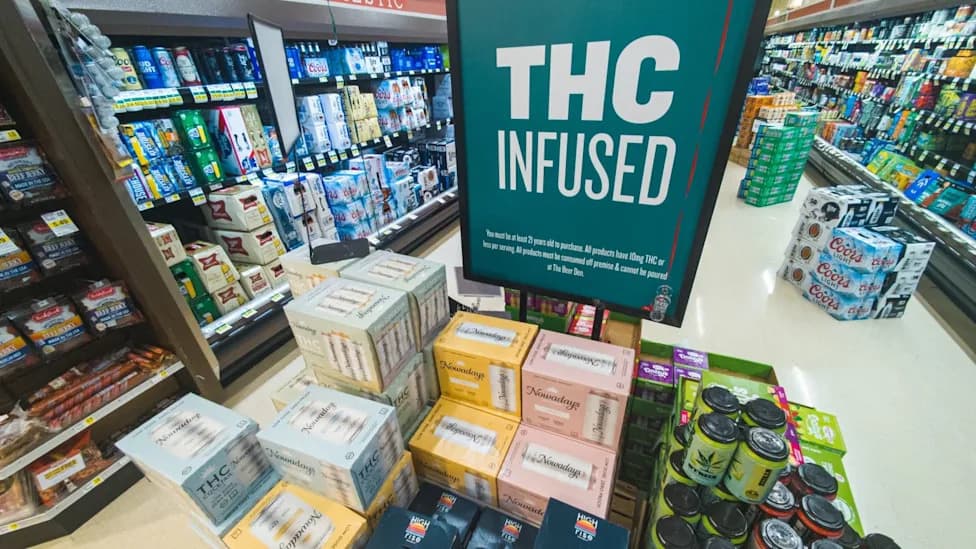
One possible outcome is that states would retain control over hemp markets, similar to the current patchwork approach to state-legal cannabis. In that model, hemp could still be sold in grocery stores and liquor stores within states that choose to allow it, as long as age-gating and other local rules are followed. But even under state autonomy, interstate shipping of hemp products would likely be prohibited, complicating distribution and supply chains.
“It would be a much more viable model than the current marijuana industry, because we would have the ability to distribute through liquor stores and grocery stores as long as it was an age-gated environment,” said Aaron Nosbisch, founder of BRĒZ, which makes THC beverages.
Risk of broader federal crackdown
Other observers warn the measure could be a prelude to wider federal restrictions on cannabis. Josh Kesselman, founder of RAW Rolling Papers and owner of High Times magazine, predicts the provision could be the start of broader federal action. He pointed to ideological alignment between some lawmakers and policy groups that favor keeping cannabis federally illegal.
A full ban could force many manufacturers to close or pivot to non-THC products. Nosbisch noted BRĒZ already has a non-THC beverage line that accounts for more than 30% of its revenue, featuring ingredients such as lion’s mane mushroom extract and L‑theanine.
Industry response and next steps
Many in the sector remain hopeful the ban will not be enforced as written, or that Congress will move instead to establish a clearer federal regulatory framework for hemp. Miller said the provision has generated significant backlash, with consumers and stakeholders contacting members of Congress. Some lawmakers, including Representative Maxwell Alejandro Frost and Senator Tina Smith, have begun publicly opposing the measure.
The coming months are likely to bring legal challenges, lobbying efforts and attempts to pass follow-up legislation that could clarify or overturn the new restriction. For now, hemp companies are developing contingency plans and monitoring the political response closely.
Help us improve.