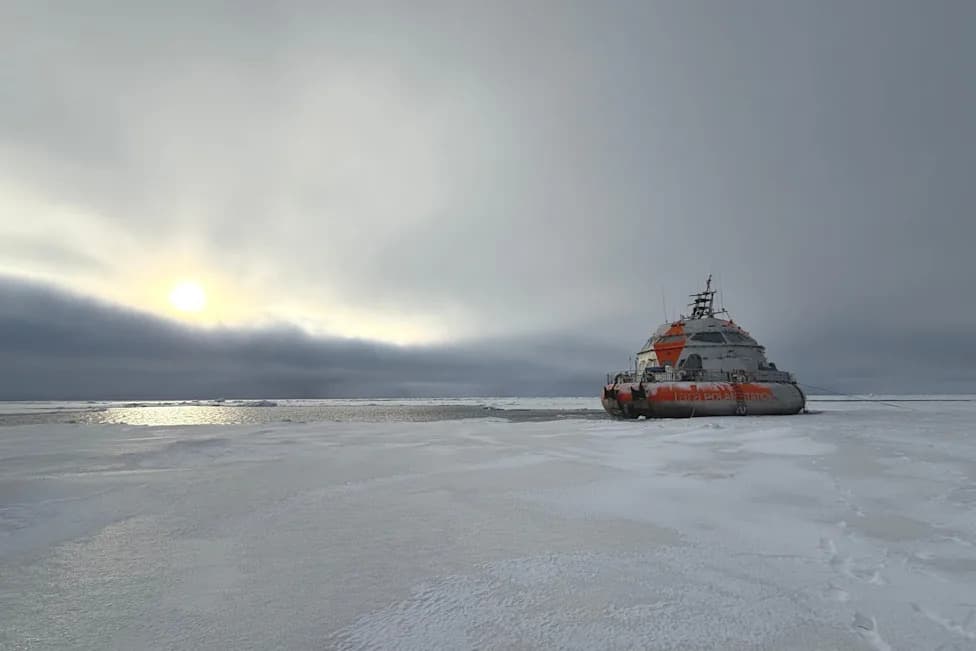
The Purdue-led Taraia Object expedition departed Oct. 2 to investigate a lagoon anomaly at Nikumaroro that some researchers link to Amelia Earhart's 1937 disappearance. Fieldwork will begin with photography and remote surveys (magnetometer and sonar), followed by an underwater hydraulic dredge and onshore walk-over surveys if the object is confirmed. Purdue and Kiribati emphasize scientific rigor, cultural stewardship and possible future collaboration if anything is recovered.
Is It Her Plane? Purdue-Led Team Heads to Nikumaroro in Hunt for Amelia Earhart's Lockheed Electra
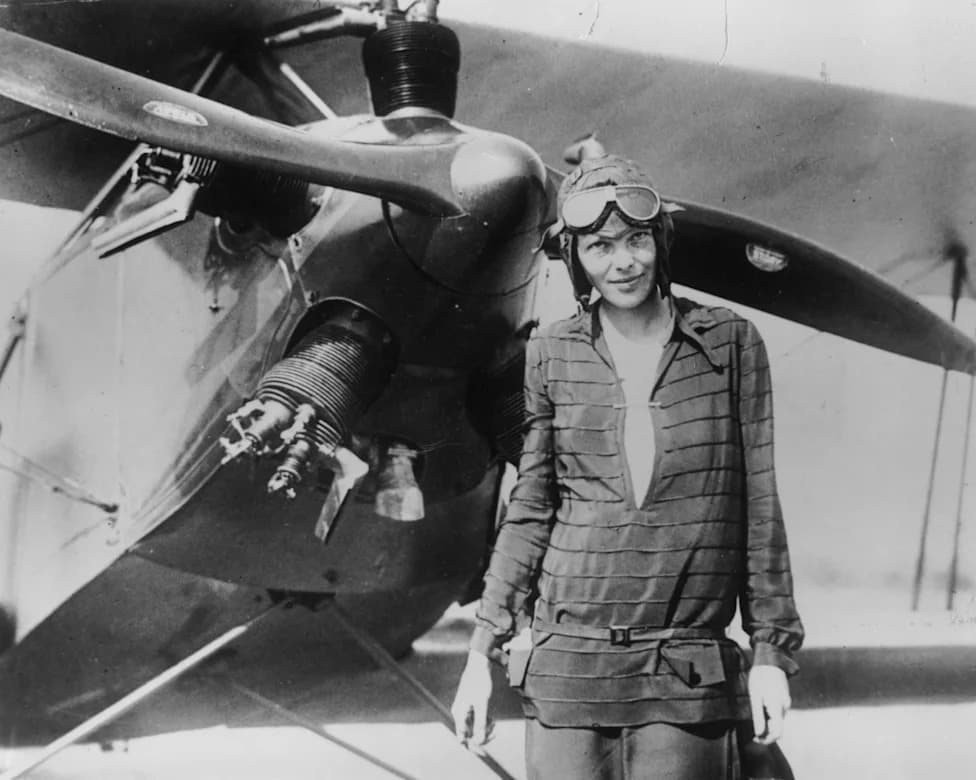
Amelia Earhart stands June 14, 1928 in front of her bi-plane called "Friendship" in Newfoundland. Amelia Earhart was the first woman to fly the Atlantic as a passenger, in 1928, and followed this by a solo flight in 1932. In 1935 she flew solo from Hawaii to Califofrnia. In 1937, with Fred Noonan, they set out to fly round the world, but their plane was lost over the Pacific.(Getty Images, Getty Images)
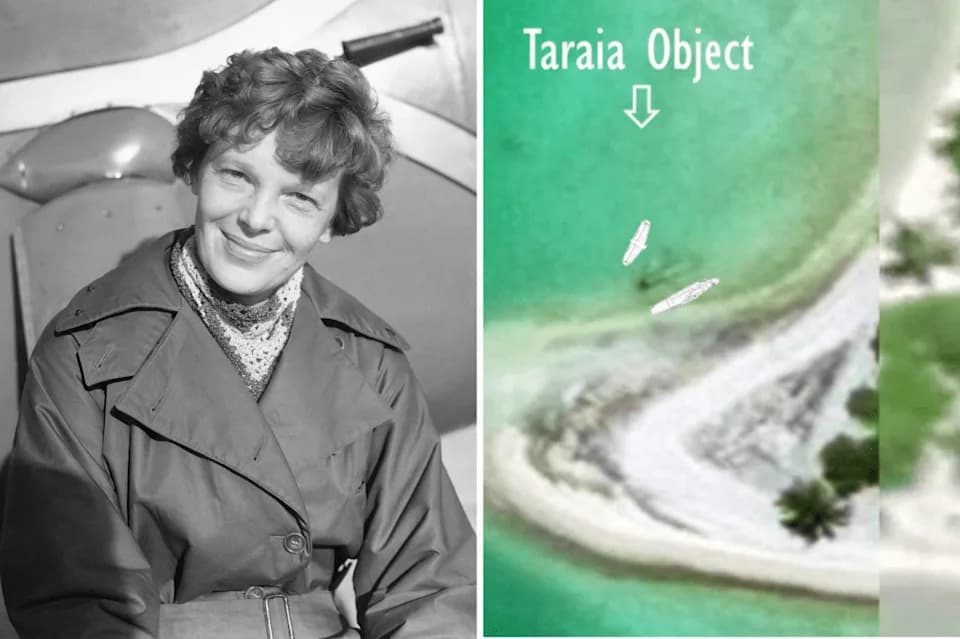
An international team led by Purdue University launched the Taraia Object expedition on Oct. 2 to search for the long-missing Lockheed Electra 10-E flown by Amelia Earhart and navigator Fred Noonan in 1937. The 17-person crew will travel from Los Angeles to Fiji and then to Nikumaroro, a remote island in Kiribati, where satellite imagery has revealed a curious anomaly in a lagoon.
Expedition Goals and Timeline
Three members of the expedition departed Purdue on Oct. 2 to join the full team; the group planned to arrive on Nikumaroro on Oct. 7. The search focuses on the so-called "Taraia object," a visual anomaly first spotted in satellite images, and on other evidence that has long tied Nikumaroro to the Earhart disappearance.
Methods and Field Work
The team will begin with high-resolution video and still photography of the lagoon site before any physical work. Remote magnetometry and sonar mapping will follow to characterize the anomaly. If promising signatures are found, an underwater hydraulic dredge will be deployed to expose and identify the object. Onshore, archaeologists will perform walk-over surveys of nearby beaches and land for debris or artifacts that may have washed ashore.
What Makes Nikumaroro a Focus
Nikumaroro lies about 400 miles southeast of Howland Island, Earhart and Noonan's intended destination on the third-to-last leg of their 1937 flight. A leading hypothesis holds that the pair may have landed on Nikumaroro and later perished there. Supporters point to 2015 satellite imagery of the lagoon feature, radio bearings that converge near the island, human skeletal remains found decades ago whose dimensions some researchers say are consistent with Earhart, and artifacts recovered on the island — including a woman's shoe, a jar of freckle cream and a medicine vial — that date to the 1930s.
"I am feeling very confident about this," said lead archaeologist Richard Pettigrew, executive director of the Purdue Archaeological Legacy Institute. "I'm pumped."
Partnership With Kiribati
The mission was delayed from an earlier planned date (originally scheduled for October 2025) because of weather and logistical approvals. Kiribati's government has since granted permission for the expedition to proceed. Kiribati officials emphasize that Nikumaroro is part of the nation's heritage and say they view the work as an opportunity for cultural preservation, education, regenerative tourism and economic development.
Potential Outcomes and Next Steps
Purdue has said it would like to repatriate any recovered aircraft remains to the university, citing the institution's historical connection to Earhart and its previous support of the Electra "Flying Laboratory." Pettigrew cautioned that any recovery and transfer would require extensive documentation, conservation and further conversations with Kiribati.
The Taraia Object expedition represents the latest scientific effort to resolve one of aviation history's enduring mysteries. The team will follow strict documentation protocols so that any discoveries can be properly evaluated, conserved and shared with both the scientific community and Kiribati authorities.
Contributors: Christopher Cann, USA TODAY. Reporting by Phaedra Trethan.
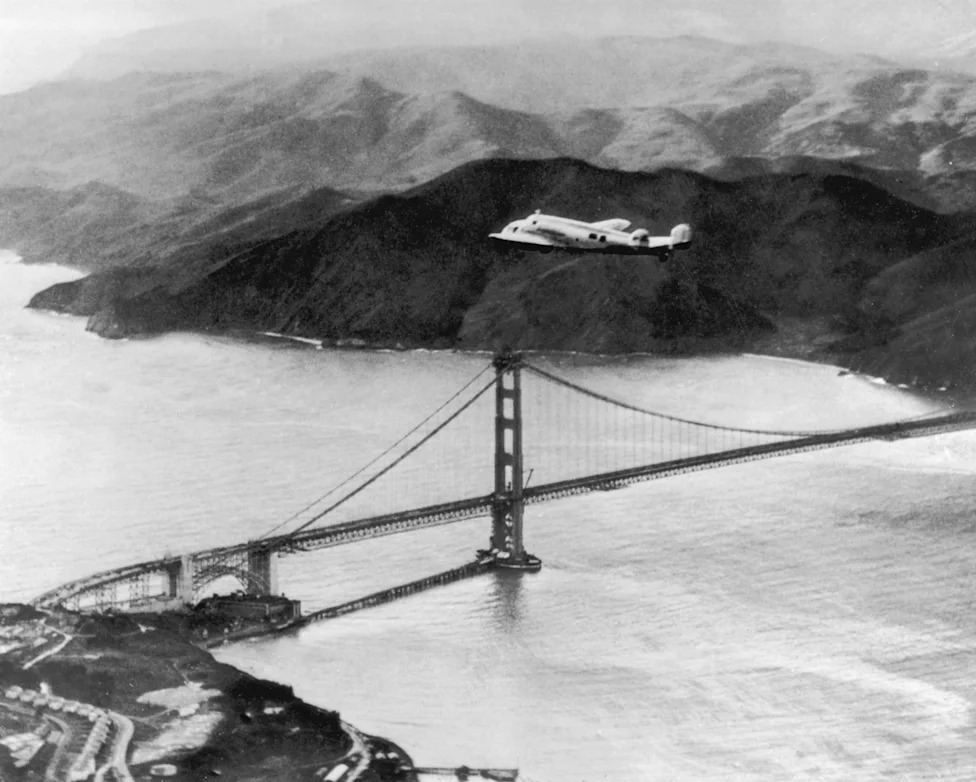
The Lockheed Electra 'Flying Laboratory', piloted by American aviator Amelia Earhart and Fred Noonan flies over the Golden Gate bridge in Oakland, California, at the start of a planned round-the-world flight, 17th March 1937. The trip had to be abandoned after the plane crashed on take off in Hawaii. A subsequent attempt ended when the aviators went missing in the Pacific and the pair were eventually presumed dead.(Keystone, Getty Images)
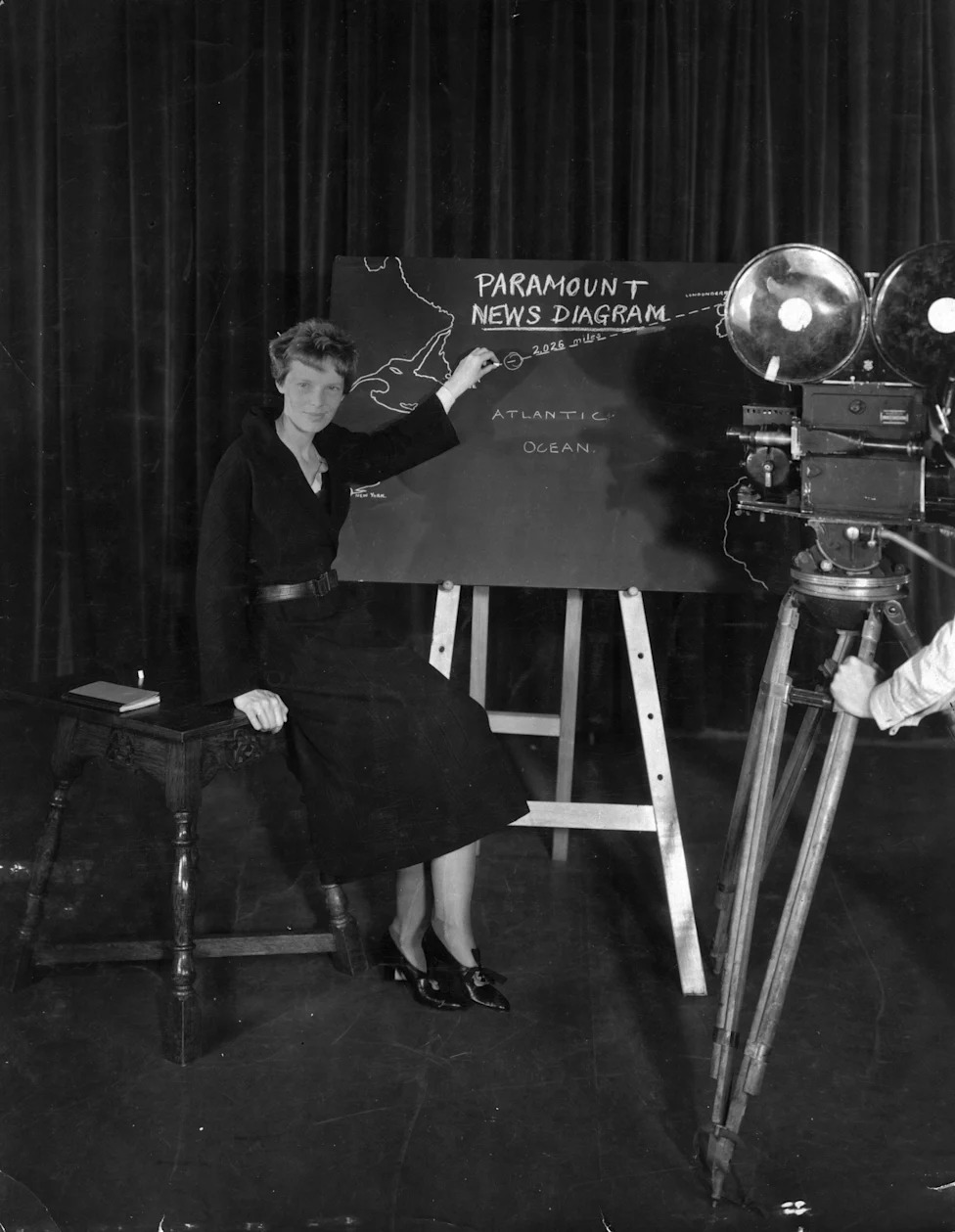
American aviator Amelia Earhart, the first woman to fly the Atlantic, demonstrates her route for the camera.(Hulton Archive, Getty Images)
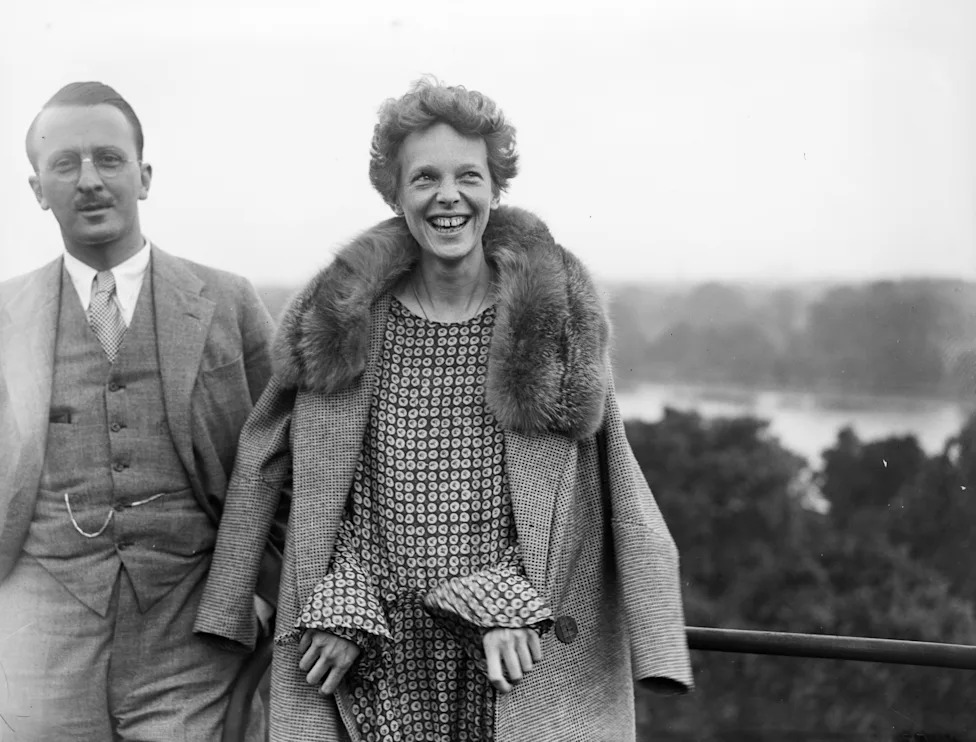
US aviator Amelia Earhart, and Captain Raleigh on the roof of the Hyde Park Hotel, London, after she became the first woman to fly the Atlantic Ocean, from Newfoundland to Wales on June 17, 1928).(Hewerdine, Getty Images)
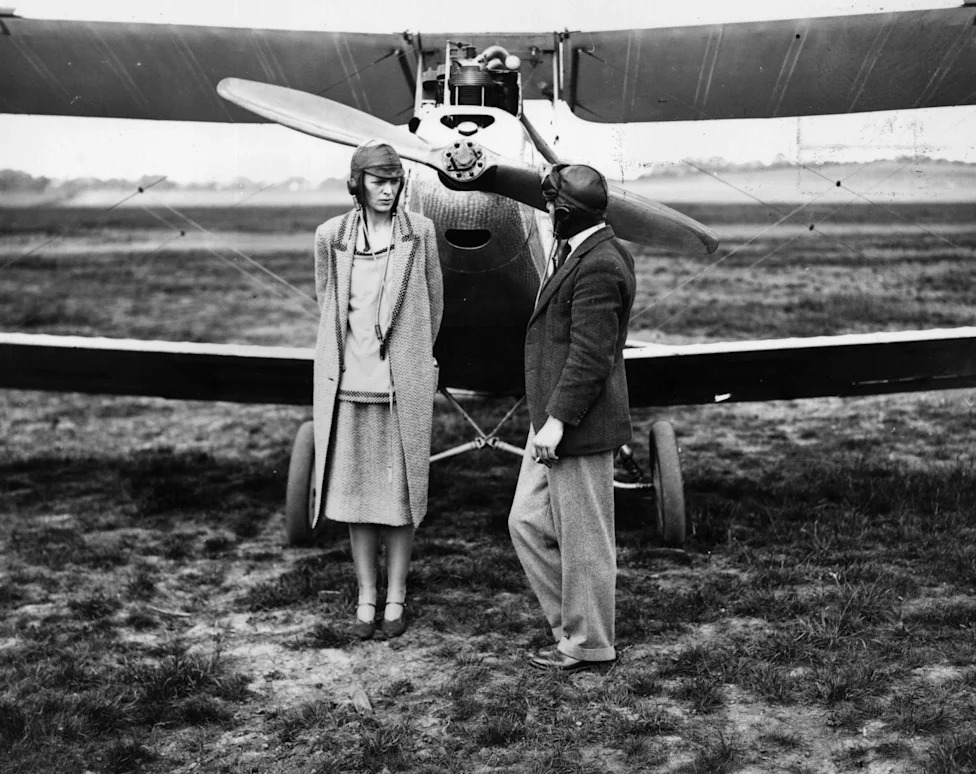
American aviator Amelia Earhart with her pilot Captain A H White, after their trip to Northolt in a moth aircraft in 1928.(H. F. Davis, Getty Images)
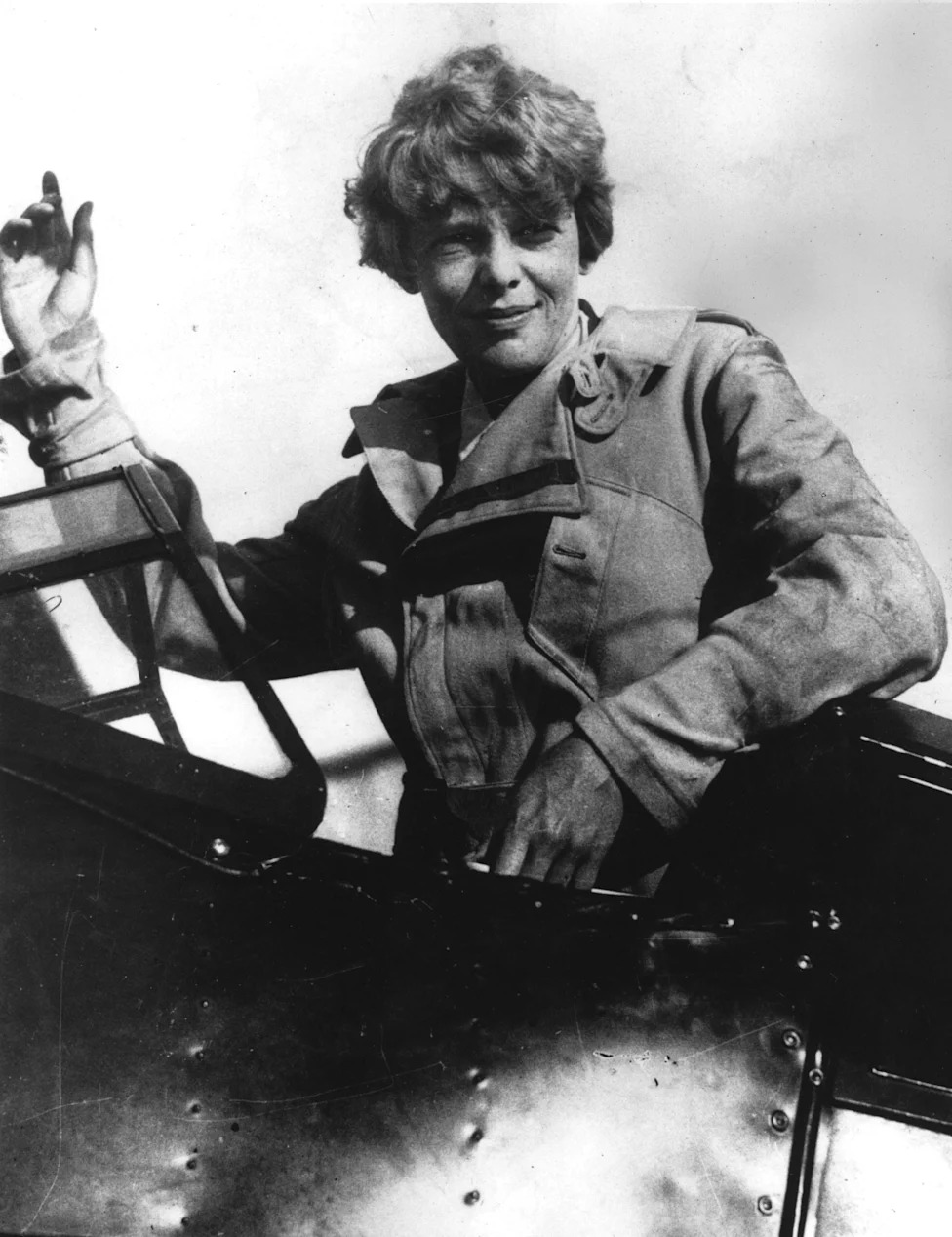
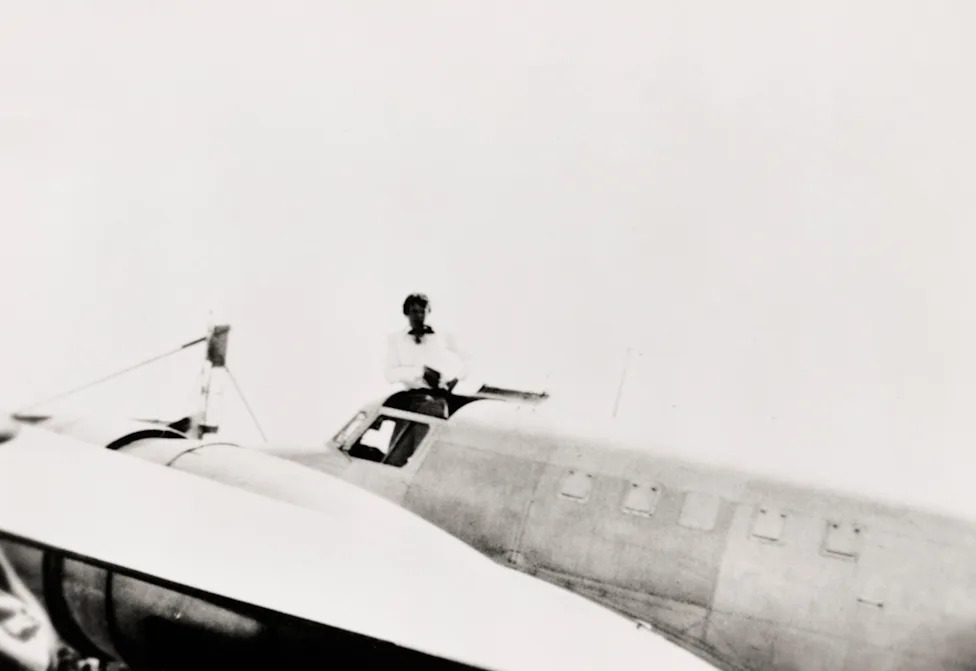
Amelia Earhart waves from the cockpit of her plane circa 1929. Earhart disappeared without trace over the Pacific Ocean in her attempt to fly around the world in 1937.(Getty Images)
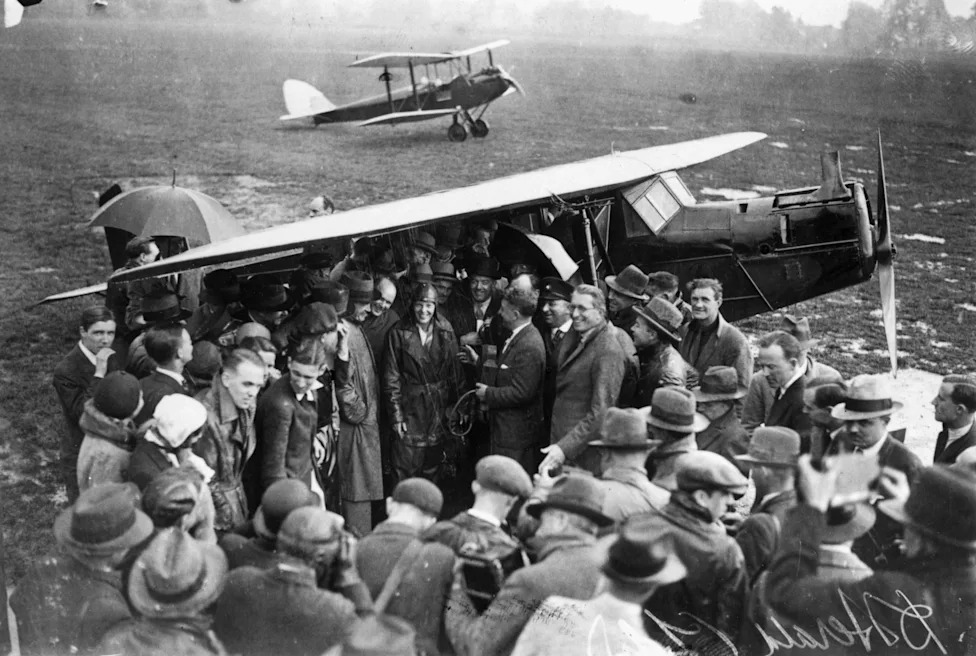
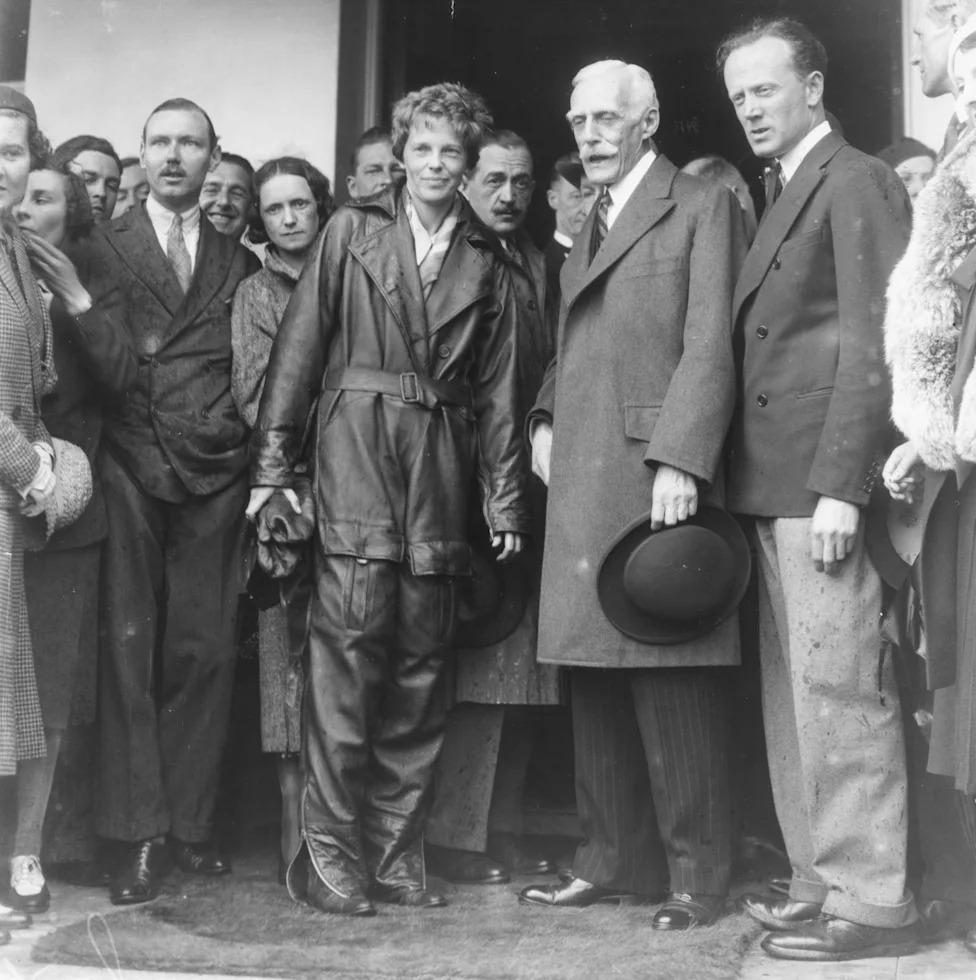
American aviator Amelia Earhart is surrounded by a crowd of well wishers and pressmen on arrival at Hanworth airfield after crossing the Atlantic in 1932. She is being congratulated on her flight in a Lockeed Vega by Andrew Mellon, US ambassador to Britain.(Topical Press Agency, Getty Images)
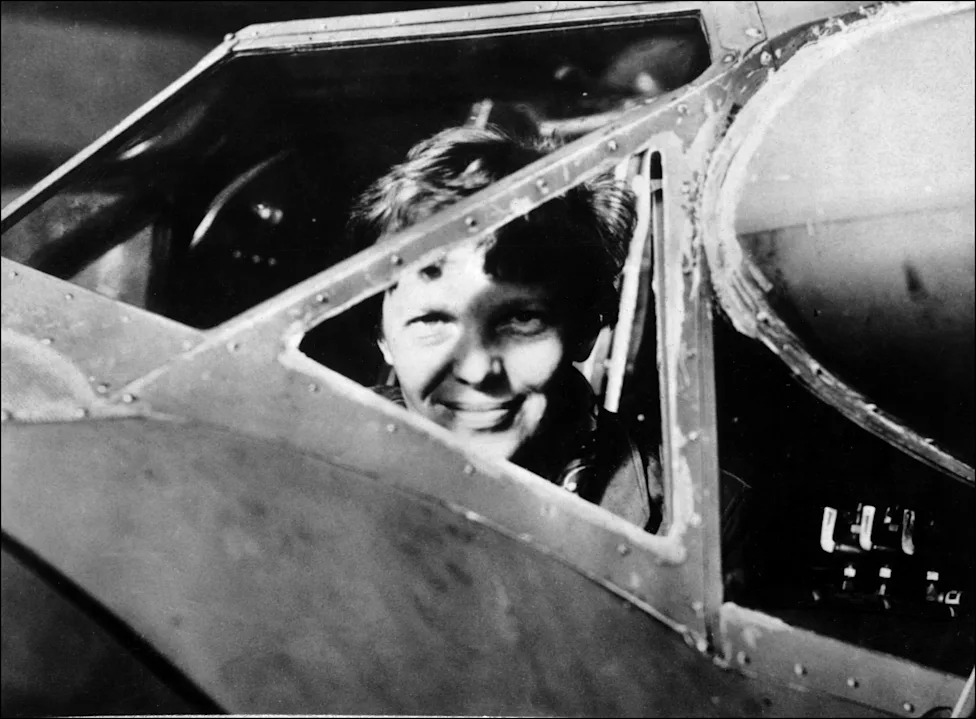
Undated picture taken in the 30' s of American female aviator Amelia Earhart at the controls of her plane. Amelia Earhart was the first woman to fly the Atlantic as a passenger, in 1928, and followed this by a solo flight in 1932. In 1935 she flew solo from Hawa• to California. In 1937, with Fred Noonan, they set out to fly round the world, but their plane was lost over the Pacific.(STAFF, AFP via Getty Images)
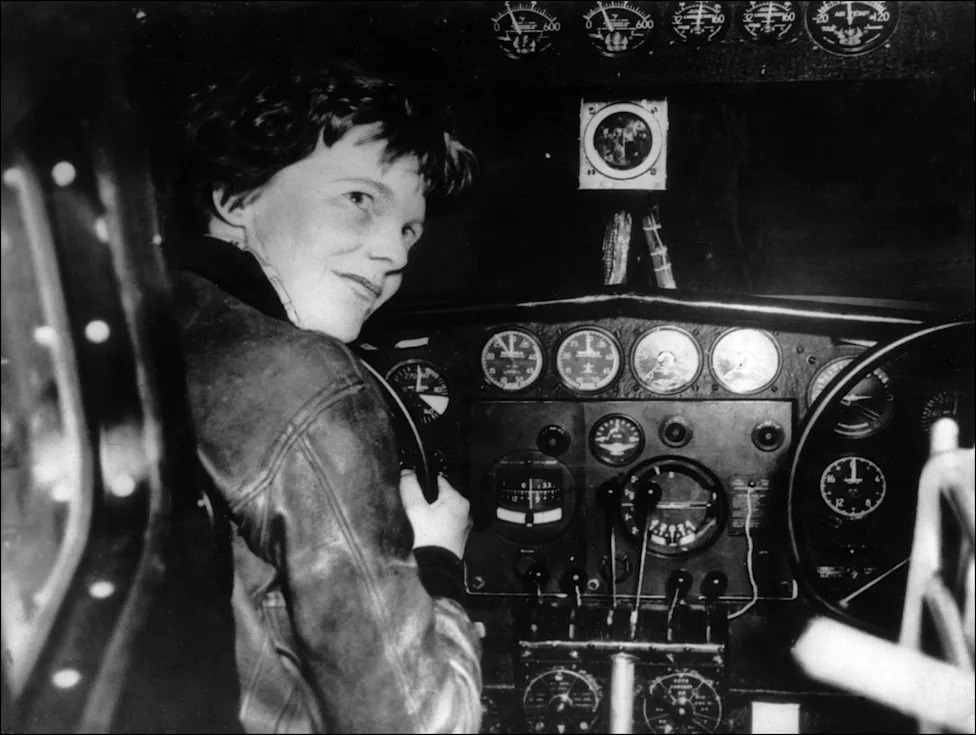
Undated picture taken in the 30' s of American female aviator Amelia Earhart at the controls of her plane. Amelia Earhart was the first woman to fly the Atlantic as a passenger, in 1928, and followed this by a solo flight in 1932. In 1935 she flew solo from Hawa• to California. In 1937, with Fred Noonan, they set out to fly round the world, but their plane was lost over the Pacific.(STAFF, AFP via Getty Images)
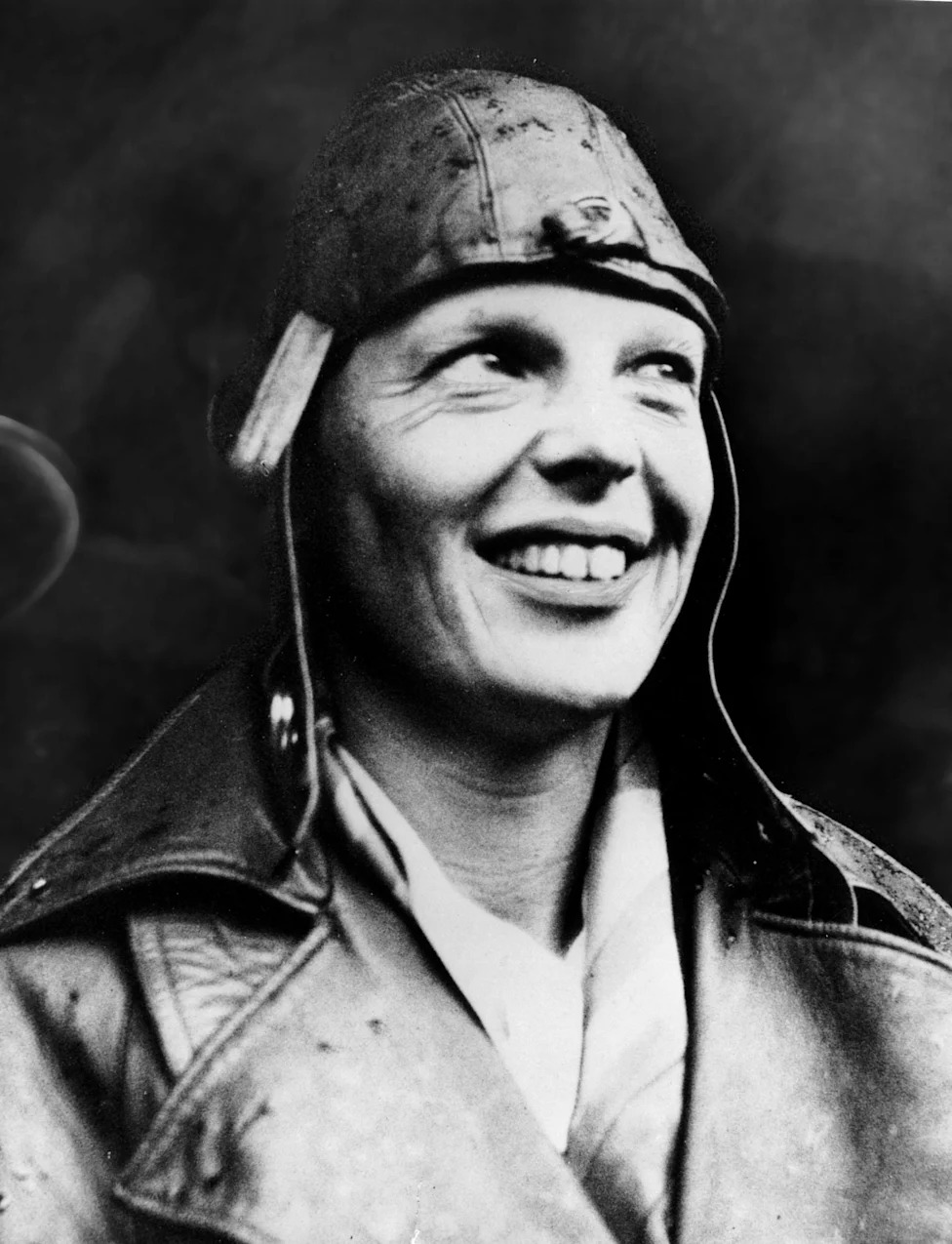
American aviator Amelia Earhart smiles May 22, 1932 upon arriving in London, England having become the first woman to fly across the Atlantic alone.(Getty Images)
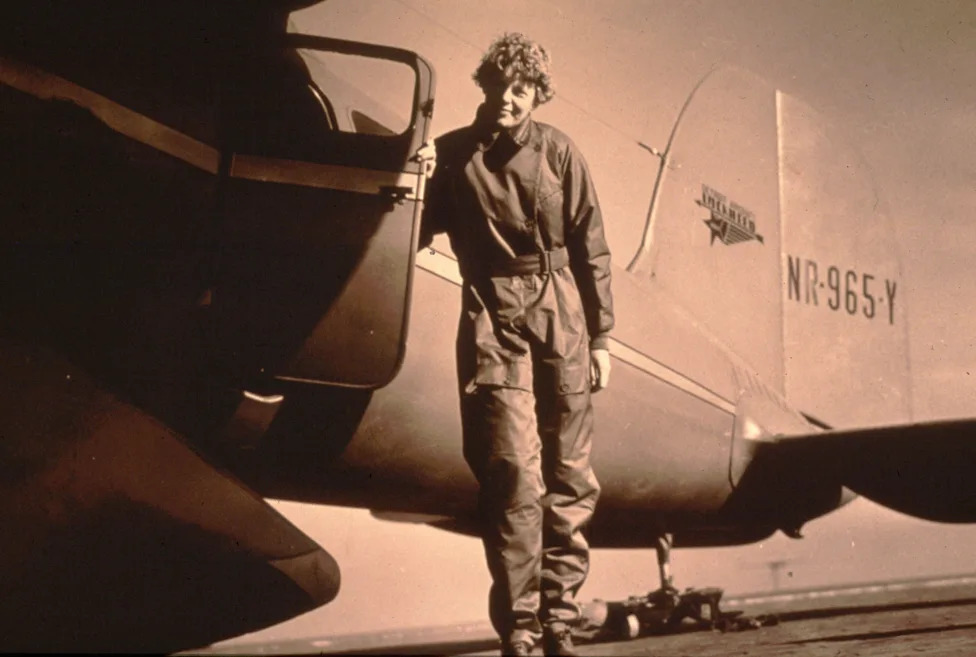
Photo of pilot Amelia Earhart standing by her plane circa 1935.(Getty Images)
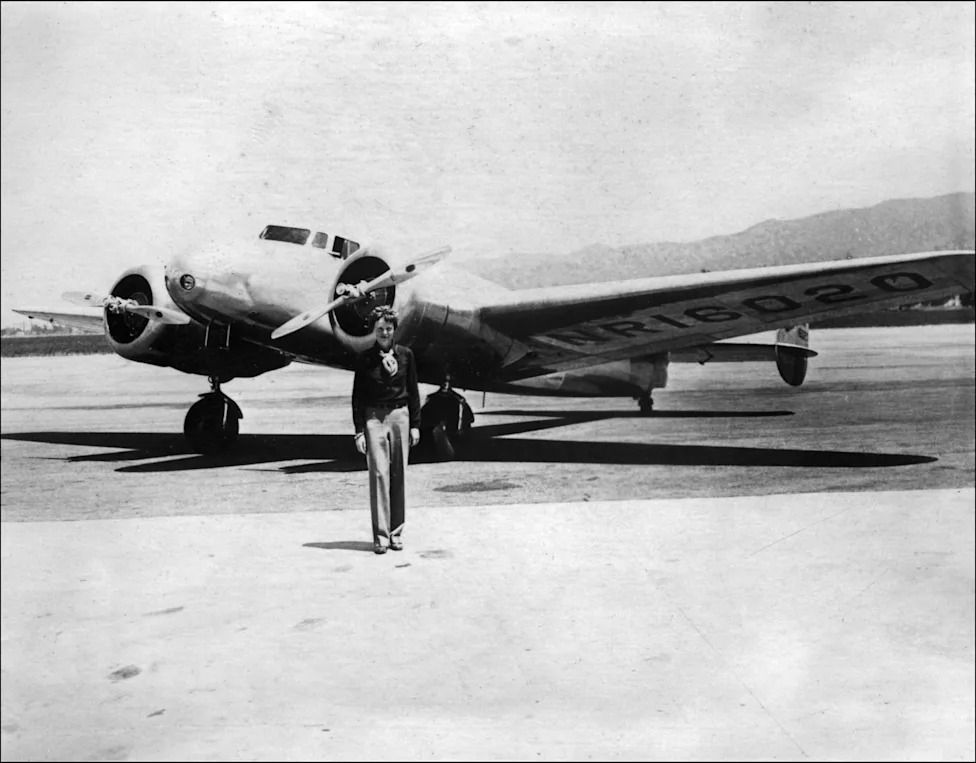
Undated picture taken in the 30' s of American female aviator Amelia Earhart in front of her plane. Amelia Earhart was the first woman to fly the Atlantic as a passenger, in 1928, and followed this by a solo flight in 1932. In 1935 she flew solo from Hawaii to California. In 1937, with Fred Noonan, they set out to fly round the world, but their plane was lost over the Pacific.(AFP via Getty Images)
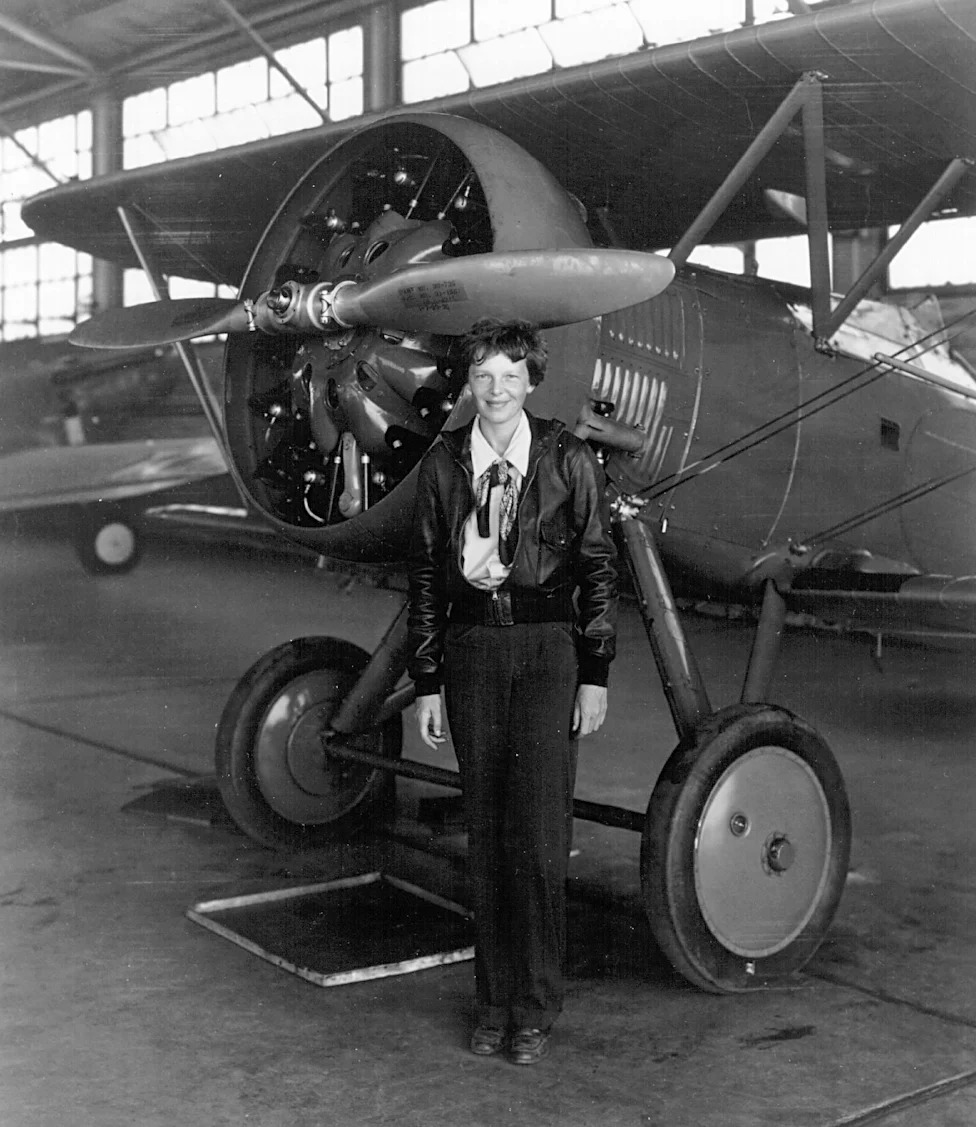
Portrait of Amelia Earhart, July 30, 1936.(National Archives, Getty Images)
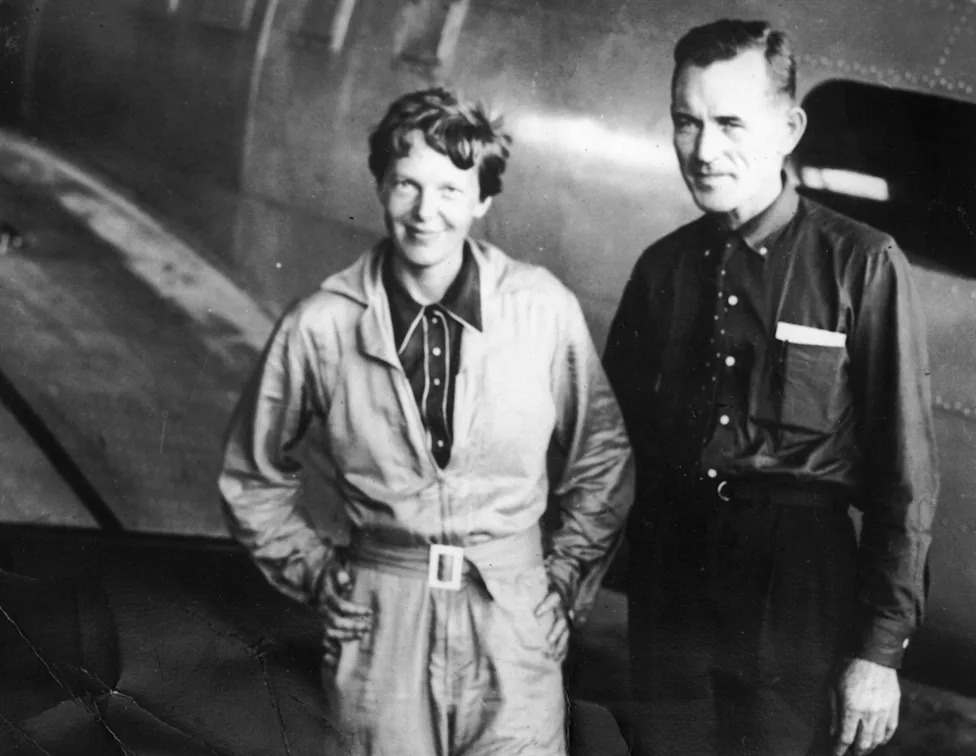
American aviatrix Amelia Earhartwith her navigator, Captain Fred Noonan, in the hangar at Parnamerim airfield, Natal, Brazil on June 11, 1937.(Topical Press Agency, Getty Images)
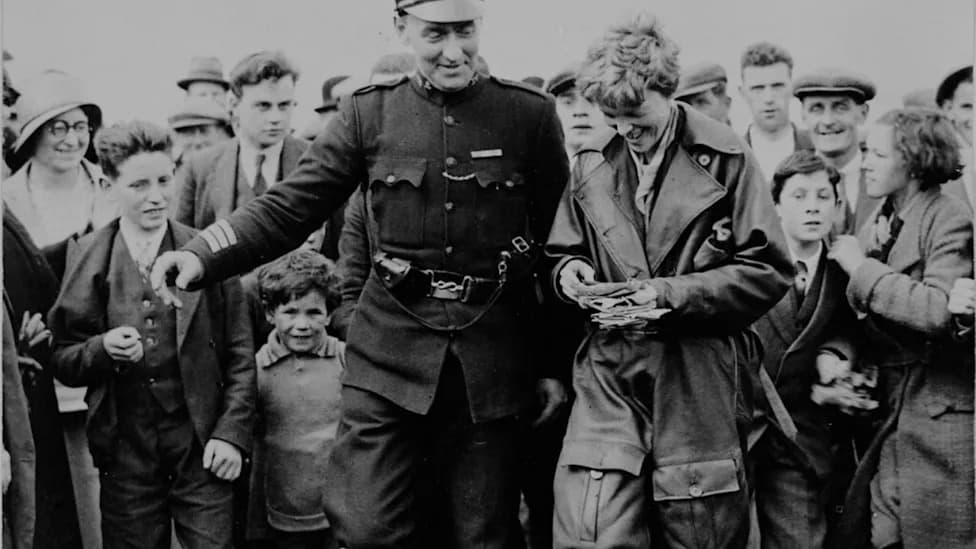
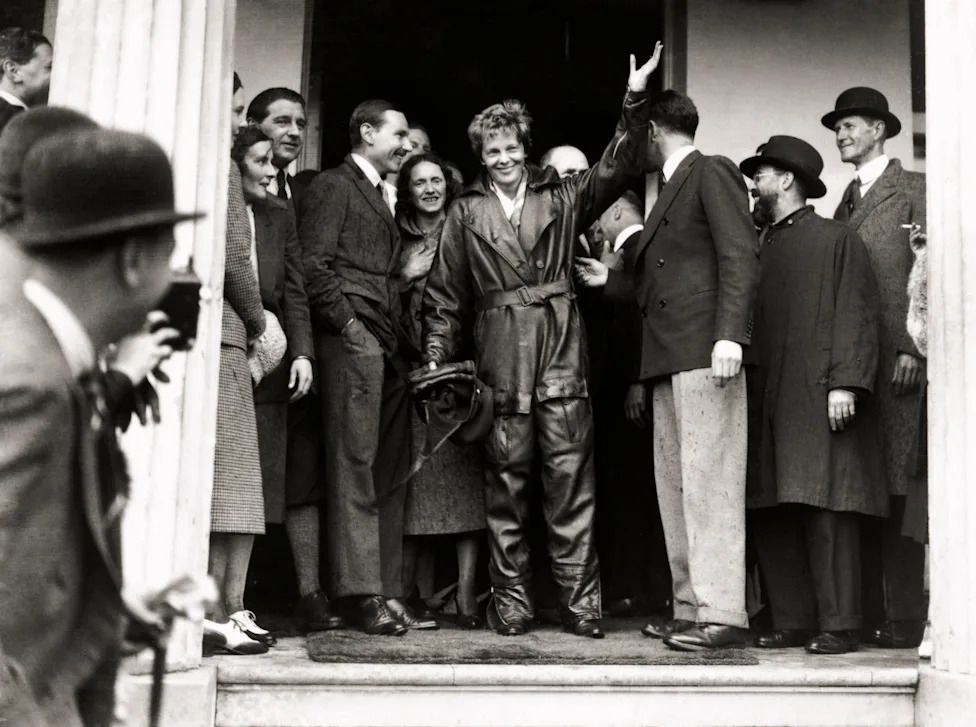
American pilot Amelia Earhart greeting the crowds after her solo Atlantic flight from the US to Londonderry, Hanworth Aerodrome, England, May 22, 1932.(Central Press, Getty Images)
American aviator Amelia Earhart at a refueling stop in Khartoum, Sudan, with the Lockheed Electra 10E in which she is attempting a circumnavigational flight of the world with navigator Fred Noonan on June 13, 1937. On a subsequent stage of the journey, Earhart and Noonan disappeared over the central Pacific Ocean near Howland Island and were later presumed dead.(Hulton Archive, Getty Images)
American aviator, Amelia Earhart, in London after becoming the first woman to fly solo nonstop across the Atlantic on May 22, 1932. Earhart flew from Harbour Grace, Newfoundland to Culmore, Northern Ireland in 14 hours, 56 minutes. She is seen after a second flight from Culmore to London.(Jimmy Sime, Getty Images)
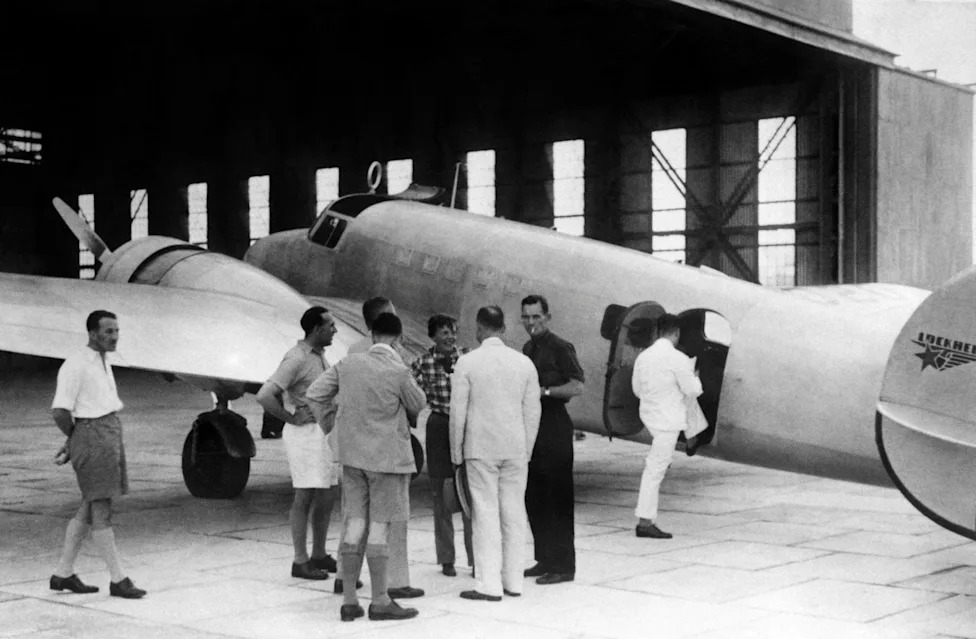
US aviator Amelia Earhart speaks with her navigator, Fred Noonan (R, dark shirt) and technicians near her Lockheed L10 Electra aircraft in July 1937 in Singapore, before their last flight across the Pacific during which she disappeared. US Amelia Earhart was a aviation pioneer and writer, the first woman to fly the Atlantic as a passenger, in 1928, and the first female aviator to fly solo across the Atlantic Ocean in 1932. She disappeared over the Pacific on July 2, 1937 with Fred Noonan, while they were undertaking a world tour.(-, AFP via Getty Images)
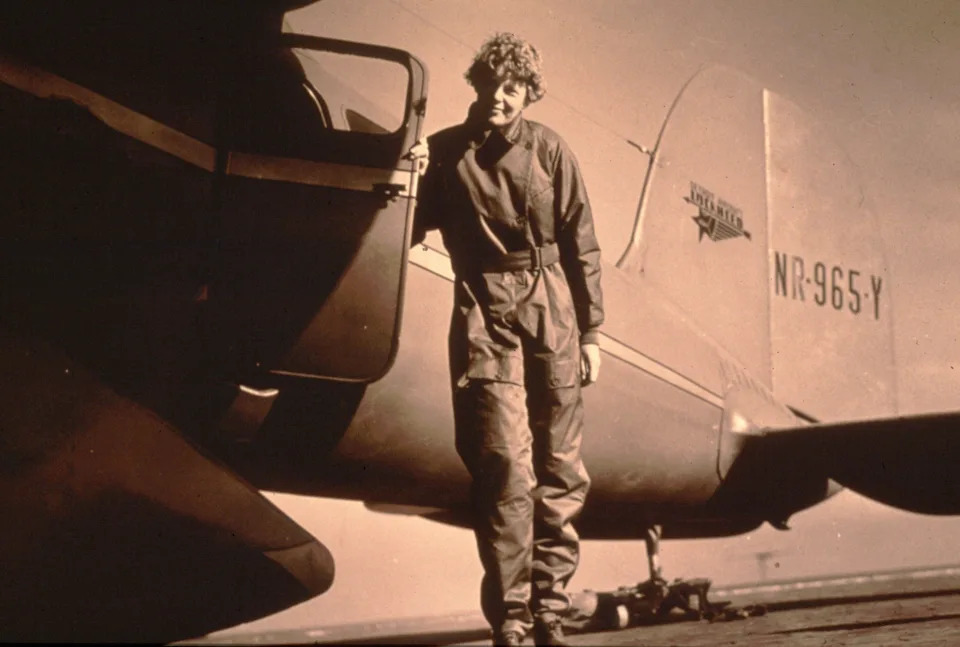
Photo of pilot Amelia Earhart standing by her plane circa 1935.
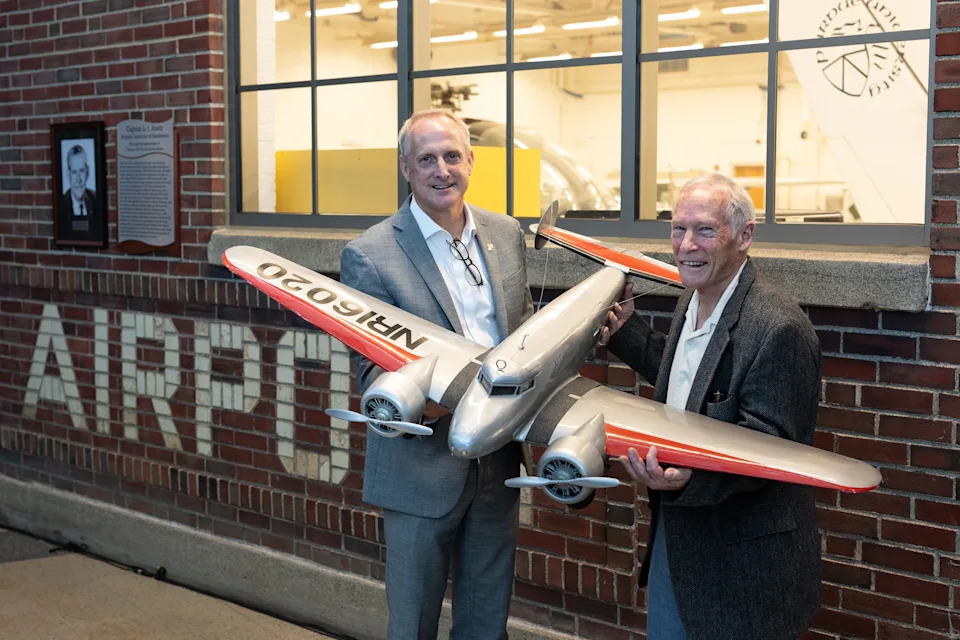
Steve Schultz, Purdue University senior vice president and general counsel, and Richard Pettigrew, archeologist and executive director of the Archeological Legacy Institute, pose for a photograph. The two are part of an expedition seeking to locate Amelia Earhart's long lost plane.
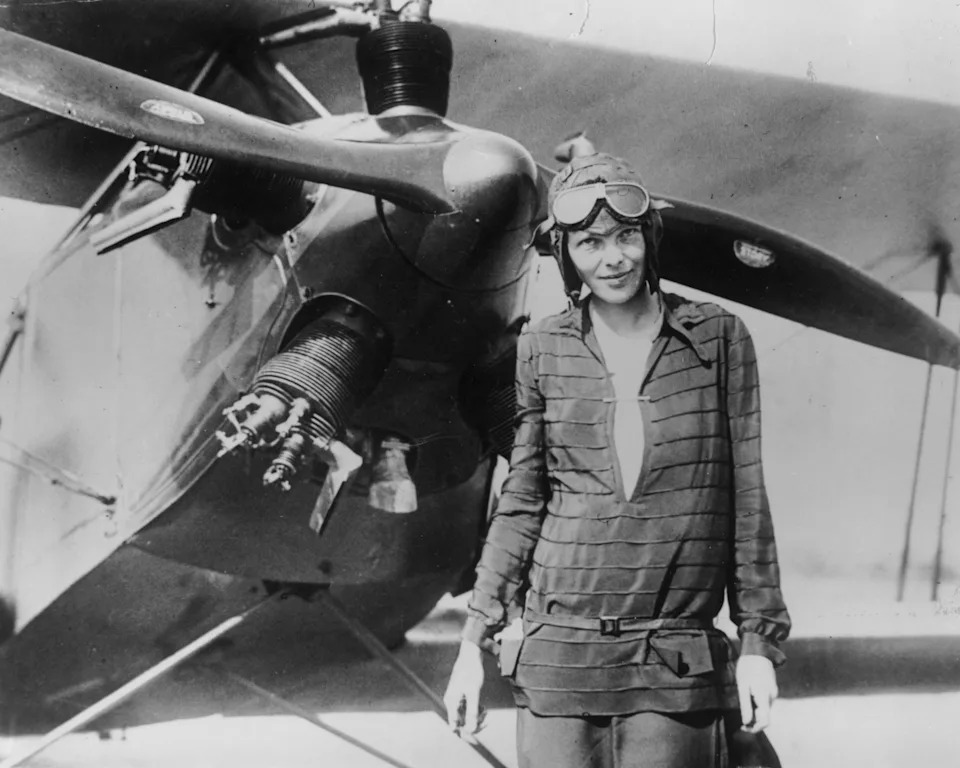
Amelia Earhart stands June 14, 1928 in front of her bi-plane called "Friendship" in Newfoundland. Amelia Earhart was the first woman to fly the Atlantic as a passenger, in 1928, and followed this by a solo flight in 1932. In 1935 she flew solo from Hawaii to Califofrnia. In 1937, with Fred Noonan, they set out to fly round the world, but their plane was lost over the Pacific.
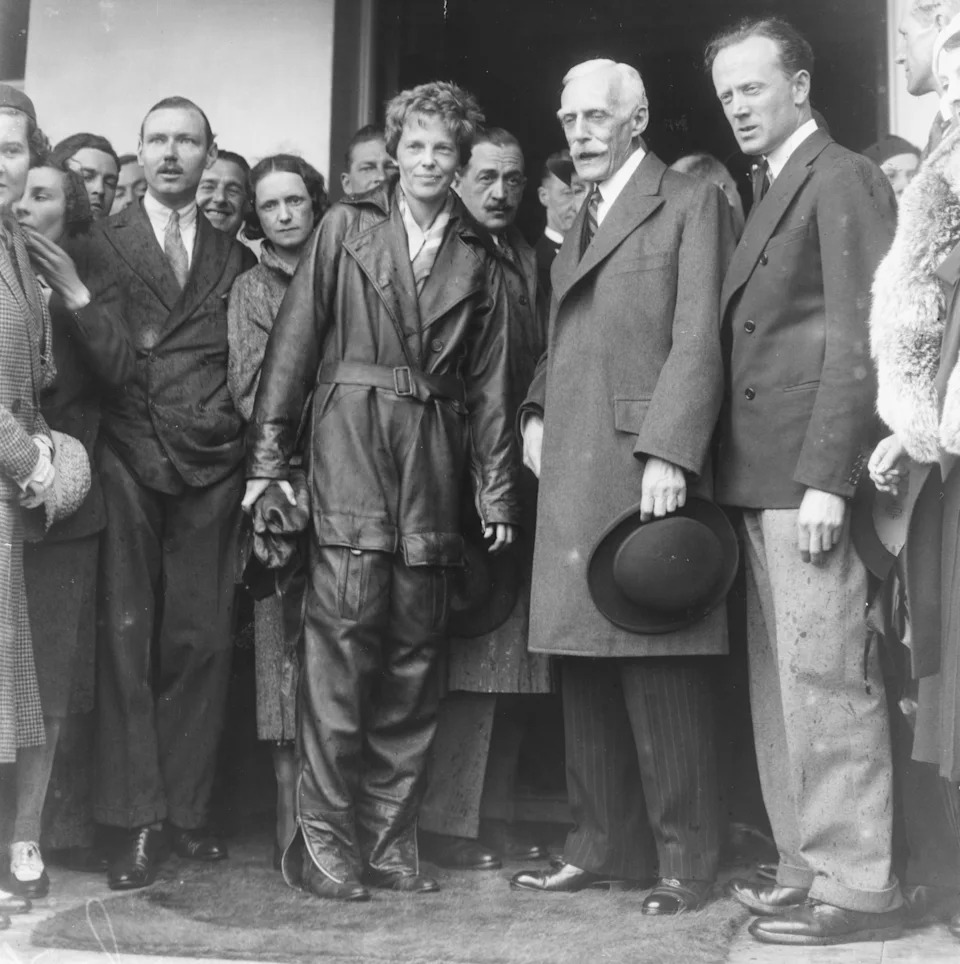
American pilot Amelia Earhart greeting the crowds after her solo Atlantic flight from the US to Londonderry, Hanworth Aerodrome, England, May 22, 1932.
Help us improve.