The Tara Polaris I will carry a 12-person crew in an 88-foot drifting laboratory across the Arctic for eight months, facing prolonged darkness and average winter temperatures near -13°F. This first of 10 planned drifts by the Tara Ocean Foundation will study human physiology and psychology under extreme isolation, serve as a spaceflight analogue for missions to Mars, and survey biodiversity beneath the pack ice. Coordinated satellite overpasses will let crew take in situ measurements to calibrate orbital observations, with the wintering leg expected to conclude in April 2027.
Tara Polaris I: Twelve Scientists to Spend Eight Months Aboard a Drifting Arctic Laboratory
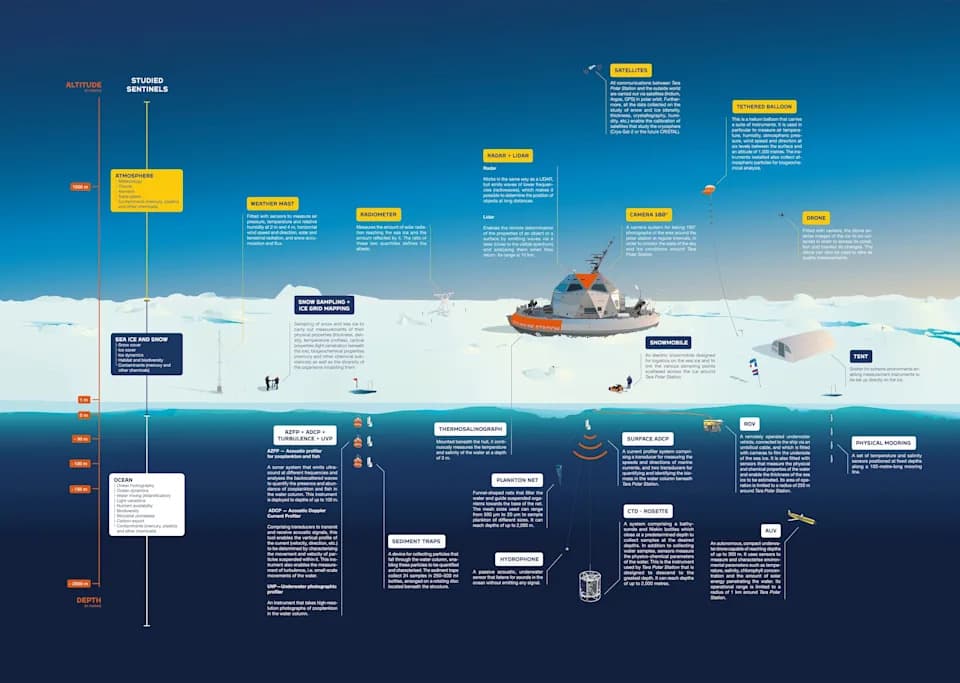
An infographic explaining the technology and what it is capable of studying on the Tara Polaris I.
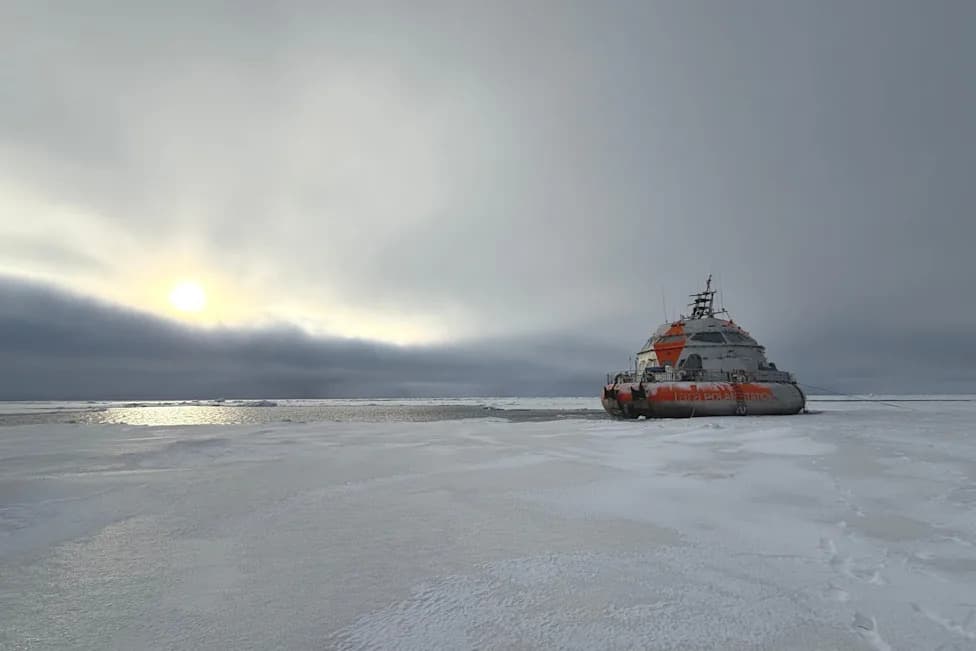
For eight months a dozen people will live and work inside an 88-foot oval laboratory, Tara Polaris I, as it drifts with the Arctic sea ice. Operating through polar night and average winter temperatures near -13°F, the team will carry out multidisciplinary science while testing human resilience in extreme isolation.
Mission Overview
The Tara Polaris I expedition is the first of 10 planned drifts by the Tara Ocean Foundation over the next 20 years. The platform will serve three main purposes: to study how humans endure prolonged isolation and extreme conditions, to act as a spaceflight analogue for long-duration missions such as those to Mars, and to survey biodiversity beneath the polar pack ice to better understand rapid Arctic change.
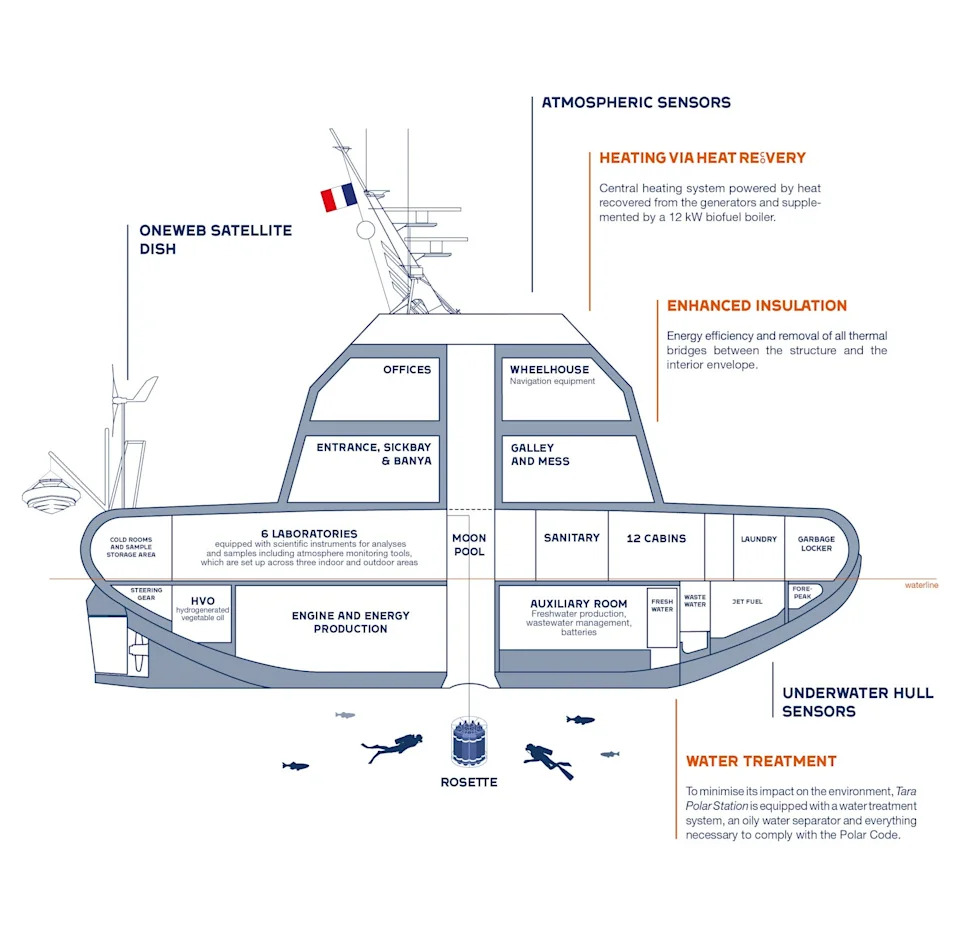
A map of the Tara Polaris I ship.
Crew and Research Focus
The 12-person crew includes scientists, experienced sailors, a media specialist and a physician. Crew members underwent psychological screening comparable to that used at Concordia Station in Antarctica, one of the world’s most isolated research outposts, to ensure rigorous selection and comparable baseline data.
Human Physiology and Psychology
Investigators will continuously monitor physical and mental health metrics: sleep patterns, stress biomarkers, cognitive performance and other indicators of well-being and operational readiness. The mission’s designers view Tara Polaris I as complementary to Concordia: while Concordia mimics a stationary, Mars-like habitat, Tara simulates a moving spacecraft en route to such destinations.
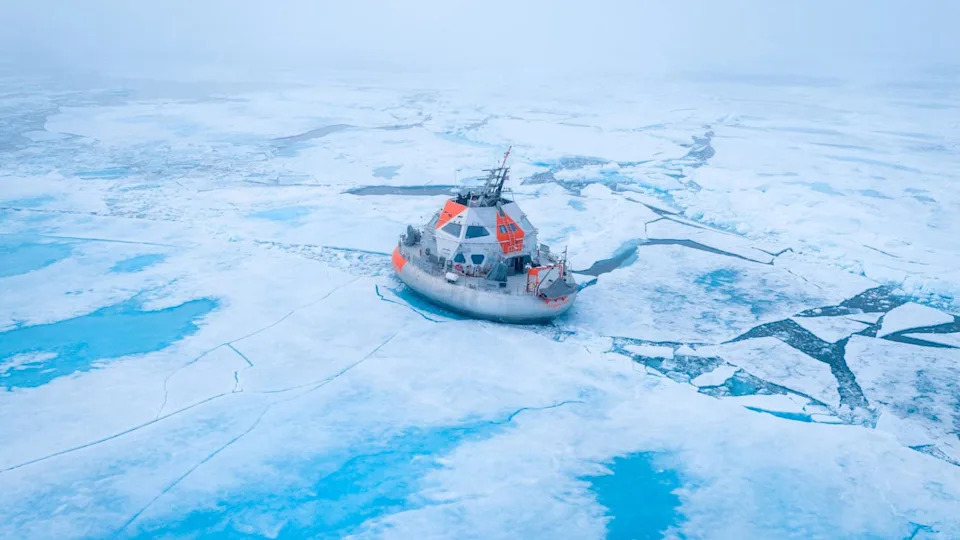
The Tara Polaris I drifting across the ice of the Arctic Ocean.
“While Concordia is similar to a habitat on a white Mars, Tara will be more like the spaceship traveling toward it,” said Carmen Possnig, a physician who wintered at Concordia and is part of the European Space Agency’s astronaut reserve.
Melike Balk, the ESA’s science coordinator for the mission, notes that drifting sea ice introduces additional uncertainty and psychological stress beyond that of a stationary station, making this an especially valuable analogue for long-duration spaceflight.
Arctic Science and Satellite Calibration
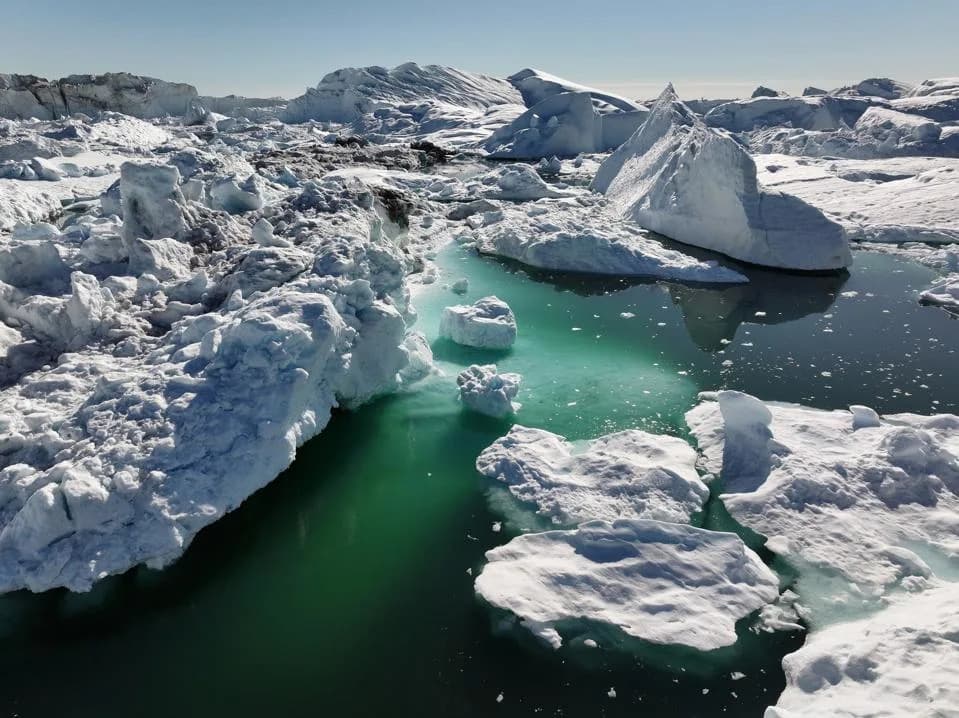
As the platform travels with the pack ice, researchers will sample under-ice biodiversity and environmental conditions in a region warming faster than almost anywhere else on Earth. Unique to this first drift, several satellites will pass over the vessel while it is on station. The European Space Agency will share precise pass times and trajectories so crew members can take coincident in situ measurements. Those observations will be used to calibrate and validate orbital remote-sensing data.
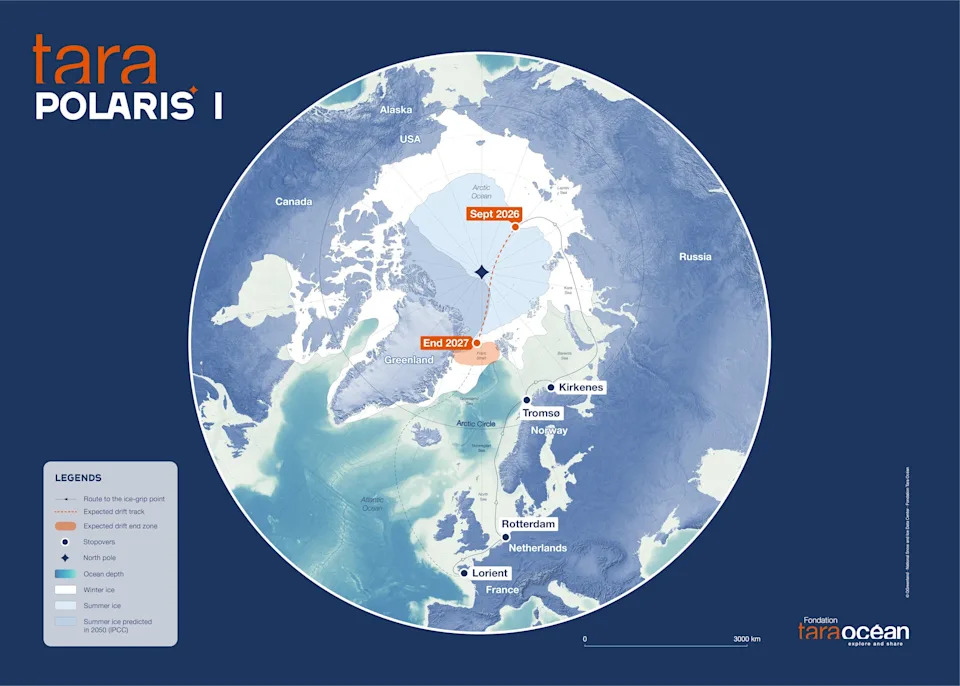
The path of the Tara Polaris I across the Arctic Ocean.
Timeline and Risks
The team expects to complete the wintering leg by April 2027. By the end of 2027 the vessel aims to break out of the ice and return toward France. The mission combines human physiology research, spaceflight-analogue science and Arctic climate monitoring in a single, high-risk field program that could yield valuable insights for both planetary exploration and our understanding of a rapidly changing Arctic.
Why it matters: The expedition links human factors research to climate and ecosystem science, improving how we monitor Earth from space and how we prepare people for extreme, long-duration missions off-world.
Help us improve.