Mental-health awareness has reduced stigma and encouraged help-seeking, but public understanding has outpaced treatment innovation. Traditional approaches—psychotherapy and medication—help many, yet a significant number remain treatment-resistant. Emerging options such as TMS and ketamine-based therapies, informed by research into neural circuitry and neuroplasticity, may offer new pathways. The author calls for urgent investment in clinical research, responsible access to promising therapies, and systems that keep searching when standard care fails.
When Awareness Isn’t Enough: Why Mental Health Needs Treatment Innovation Now
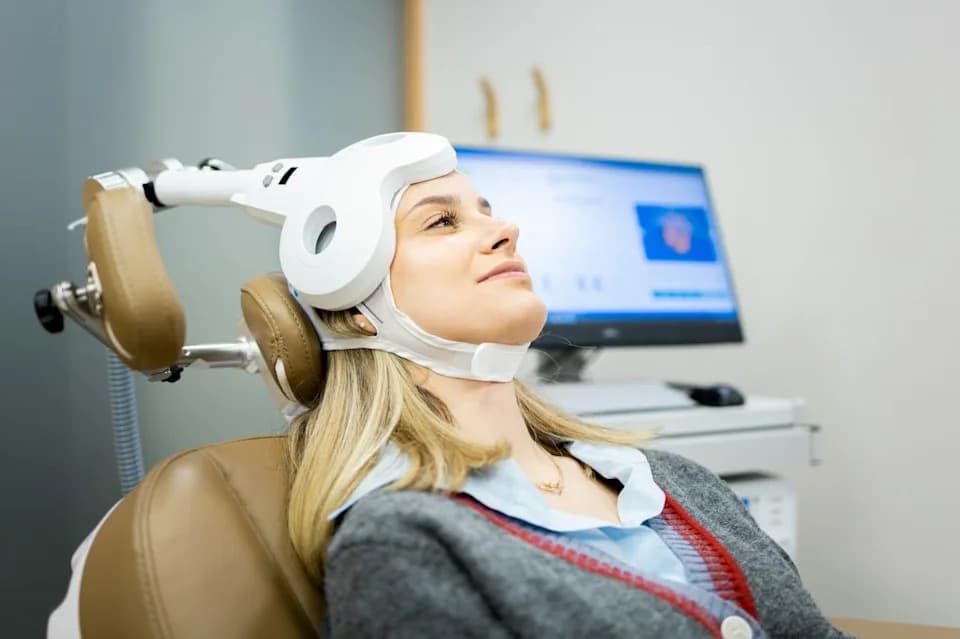
Stock image: A woman undergoing transcranial magnetic stimulation therapy.
Mental-health awareness is rightly celebrated, but recognition alone can no longer be our finish line. Over the past decade, public conversation has destigmatized depression and anxiety and encouraged millions to seek help. Yet understanding the problem has outpaced our progress in expanding and refining treatments.
The Scale—and the Gap
The World Health Organization estimates that more than one billion people worldwide live with a mental-health condition, and depression remains a leading cause of disability. An earlier analysis by the World Economic Forum and the Harvard School of Public Health projected the global economic burden of mental-health conditions could reach $6 trillion by 2030, up from $2.5 trillion in 2010. Those numbers demand more than sympathy: they demand strategy, investment, and accountability.
Recognizing Limits: The Two Cranes
In clinical practice I use the image of two cranes lifting an immense weight: one for psychotherapy, the other for medication. Together, they have transformed countless lives and remain central to care. But many patients—after multiple medication trials and sustained therapy—still experience limited improvement. Fine-tuning the same two tools will not always be enough.
A Third Crane: New Pathways for Treatment-Resistant Conditions
Emerging approaches such as Transcranial Magnetic Stimulation (TMS) and ketamine-based therapies are showing real promise for people who have not responded to conventional treatment. By targeting neural circuitry and supporting neuroplasticity—the brain’s ability to reorganize and form new connections—these methods offer alternative pathways when psychotherapy and medication stall.
“When effective treatment is out of reach, families carry the strain, workplaces lose talent, and communities bear social and economic costs.”
What Must Change
Treatment innovation requires concerted action from healthcare leaders, researchers, funders and policymakers. That means: increasing investment in clinical research; designing responsible, evidence-based pathways to expand access to promising therapies; improving training and infrastructure in clinical settings; and creating systems that continue seeking alternatives when standard care fails.
Why This Matters
Mental health shapes how people work, parent, learn, connect and contribute. If we underfund innovation, chronic suffering risks becoming normalized and treatment-resistant patients are left to manage disappointment. If we invest boldly, today’s refractory conditions could become tomorrow’s treatable ones—broadening what recovery can mean.
Conclusion: Awareness was a necessary first step. The next step is ambition—applying the same courage that destigmatized mental illness to the harder work of improving and expanding treatments.
Author note: Dr. Matthew Zuchis is a licensed practising psychologist and co-founder of NeuroBoost, a New Jersey clinic offering TMS for treatment-resistant depression. The views expressed here are his own.
Help us improve.