The Spanish police, with military support, cleared a makeshift migrant camp of about 3,000 people from Trampolín Beach in Ceuta ahead of a planned royal visit. Migrants were bused to the Tarajal border crossing and offered immediate voluntary return to Morocco or registration for tent reception camps, but many refused amid fears that biometric registration would make future deportation easier. Aid group Mission Lifeline accused authorities of using excessive force during the operation.
Spanish Forces Clear Ceuta Migrant Camp Ahead Of Royal Visit
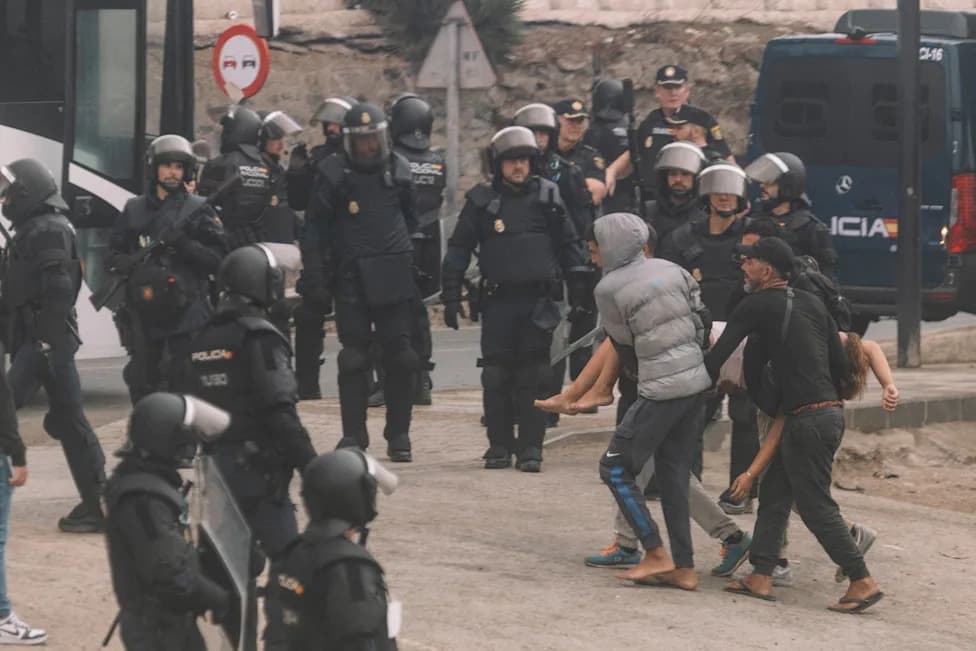
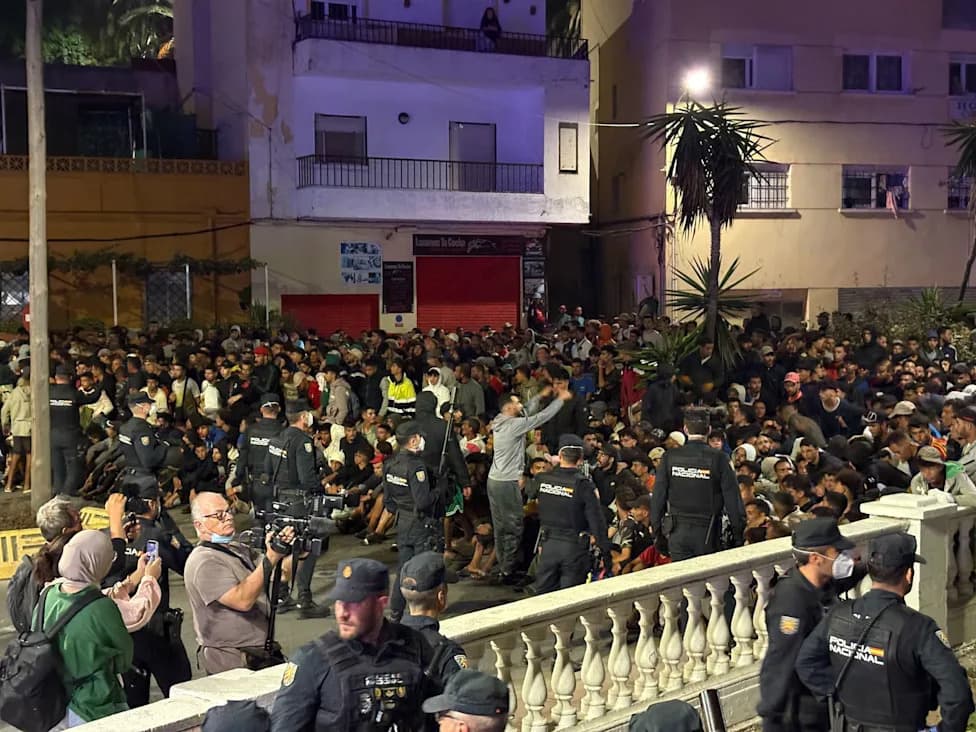
Police officers guard a cordoned-off street near El Trampolin Beach in Ceuta during the clearance of a makeshift migrant camp. On October 4, the Spanish National Police began clearing the camp, where more than 3,000 migrants are staying. (is associated with: «Spanish police clear migrant camp in Ceuta») Fabian Suspensivo/ZUMA Press Wire/dpa
Spanish police, backed by military units, completed the clearance of a large migrant encampment on Trampolín Beach in Ceuta on Monday, authorities and local media said.
The operation took place just over a week before a scheduled visit by the Spanish King and Queen to the North African Spanish exclave.
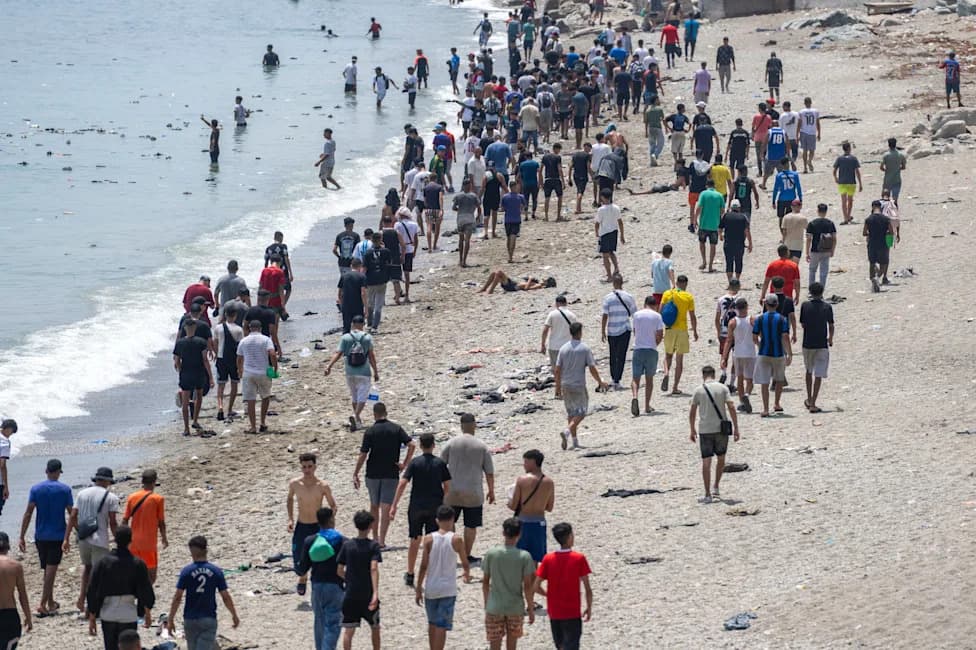
Local newspaper El Faro reported that roughly 3,000 people who had been sheltering in improvised structures on the beach since late July were removed from the area. The government has said that as many as 80,000 migrants arrived in Ceuta from Morocco on July 30 and 31; most later returned, but thousands remain in the enclave.
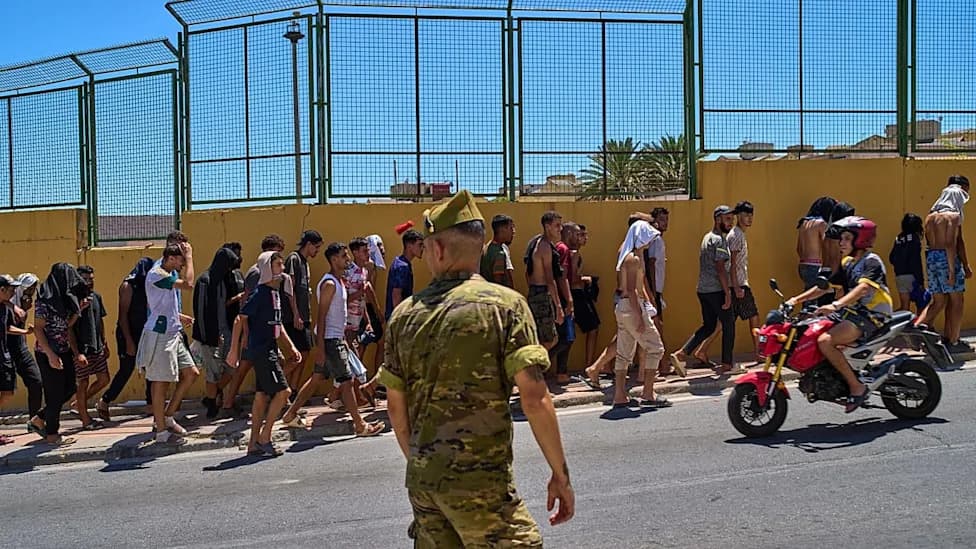
As on the previous day, officers loaded migrants onto buses bound for the Tarajal border crossing. According to Spanish state broadcaster RTVE, migrants were then offered a choice: return voluntarily to Morocco immediately, or register to be transferred to a tent reception camp.
Many migrants declined registration or placement in reception facilities, citing fears that registration and the collection of biometric data could make later identification — even if they reach mainland Spain or other EU countries — easier and therefore increase the risk of deportation to Morocco or to their country of origin.
RTVE reported that about 600 Moroccans left Ceuta voluntarily on the first day of the latest clearance. On the second day, many of the migrants who had been living for months in huts of plastic sheeting on the beach fled into nearby woods.
German aid group Mission Lifeline sharply criticised the authorities' actions. "Under pressure and surrounded by police acting with excessive force and using armoured vehicles, there can be no question of voluntary action or due process," Nolte Bauer, head of the Dresden-based NGO, told dpa.
The authorities say the removals were part of orderly reception procedures intended to register and accommodate people arriving in Ceuta. Aid groups and advocates, however, warned that heavy-handed clearances and concerns over biometric registration undermine trust and may push people into hiding or onward irregular routes.
Key sources: Local paper El Faro; Spanish state broadcaster RTVE; statements from Mission Lifeline and government estimates.
Help us improve.