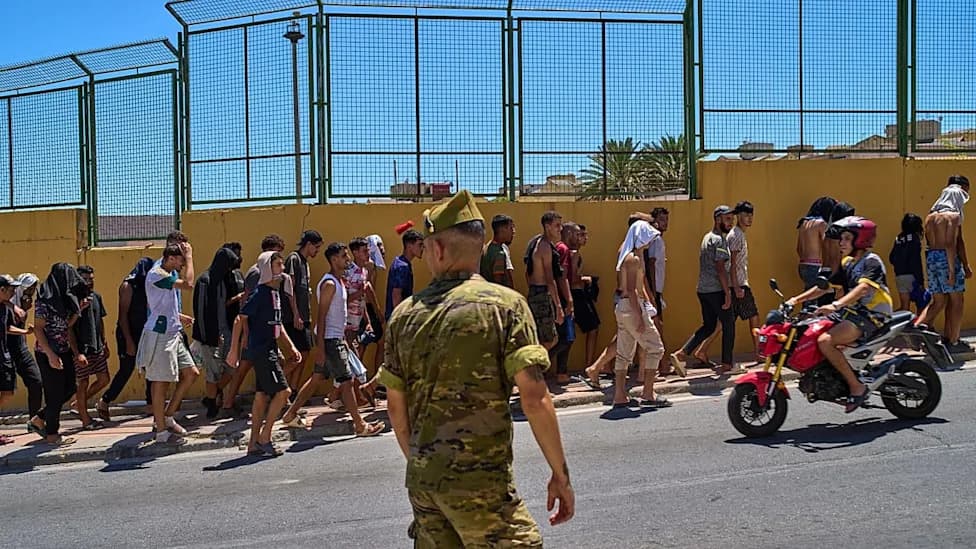
Morocco denies involvement in the mass migrant crossings into Ceuta on July 30–31, when more than 70,000 people entered the Spanish enclave. Local officials and NGOs report over 100 deaths, and thousands — including unaccompanied minors — remain in makeshift camps. Spain has declassified intelligence that warned of possible "mass entries" and said Moroccan authorities likely acted negligently rather than actively encouraging the surge. Rabat rejects being used as a pre-election political pawn ahead of Spain's 2027 vote.
Morocco Rejects Claims It Orchestrated 70,000-Person Ceuta Migrant Surge
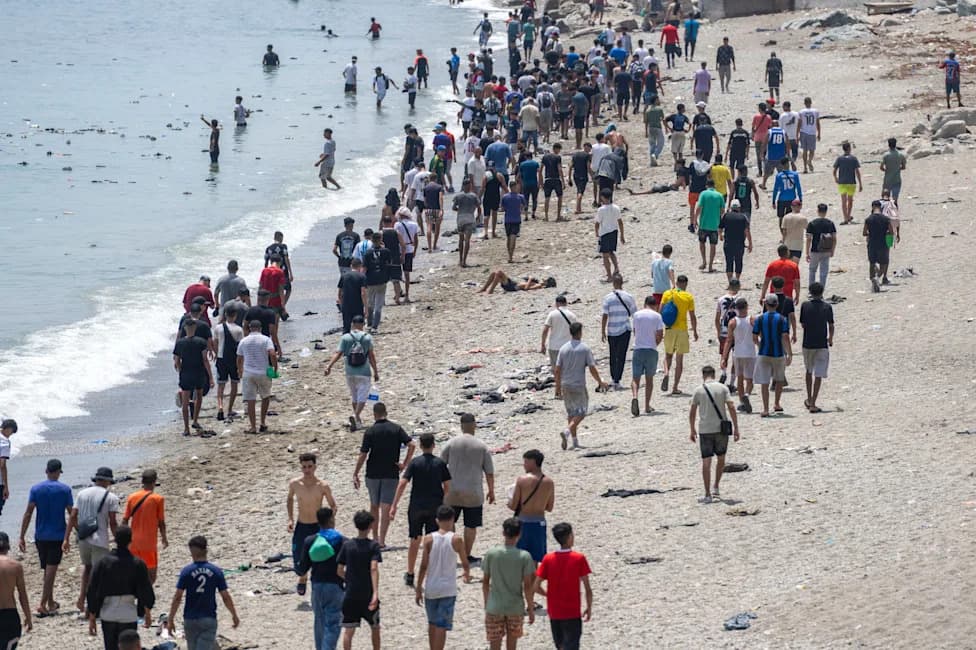
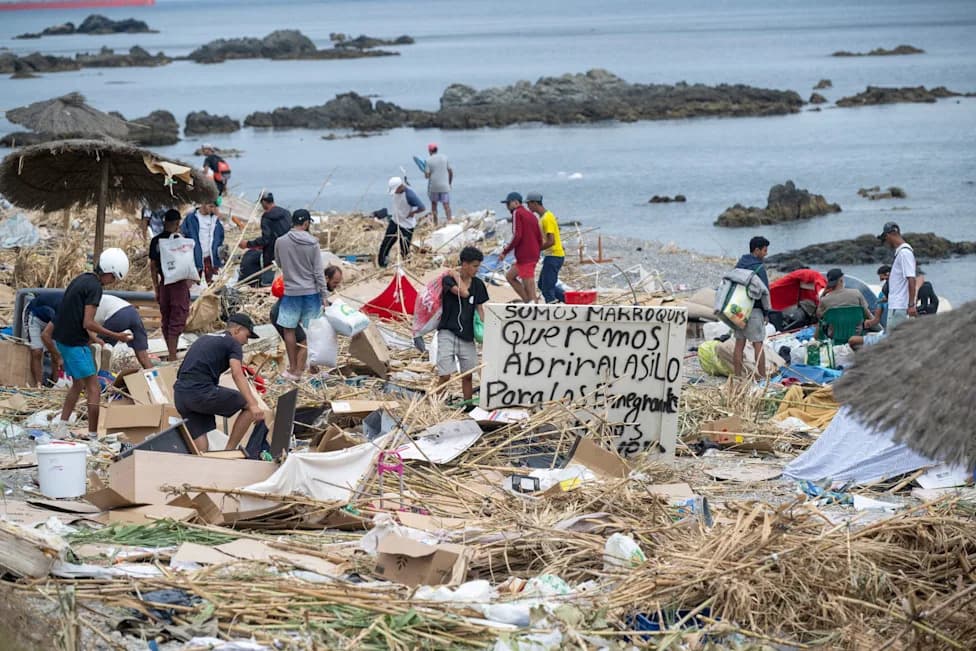
People walk on a beach after attempting to cross from the northern Moroccan border town of Fnideq into the nearby Spanish enclave of Ceuta, July 31, 2026 [AP Photo]
Morocco's Foreign Ministry has rejected allegations that Rabat played any role in the unprecedented migrant surge into Spain's North African enclave of Ceuta on July 30–31, saying there is no evidence to support claims that Moroccan authorities orchestrated the crossings.
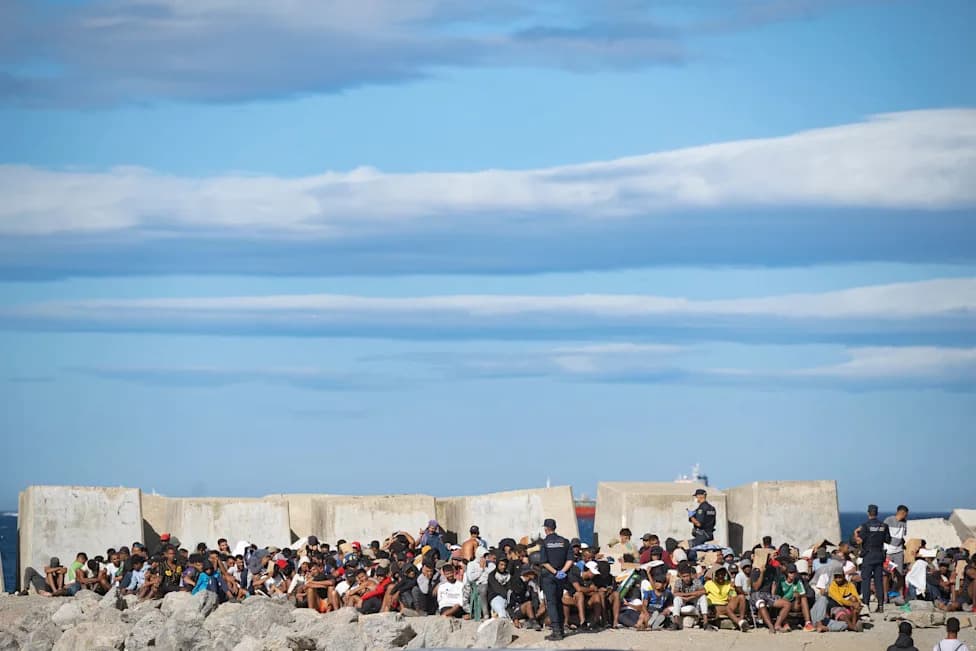
Authorities report that more than 70,000 people entered Ceuta from nearby Morocco during the two-day episode. Local officials and civil organisations say the surge left more than 100 people dead and that thousands — including many unaccompanied minors — remain in the enclave, living in makeshift camps, on streets and on beaches.
Political Fallout And Local Tension
The influx has fuelled near-daily protests by residents angered at the Spanish government's handling of the crisis. Spain's opposition parties have criticised Madrid's relationship with Rabat and alleged that Moroccan authorities may have facilitated or deliberately encouraged the crossings.
"Why continue to level accusations against Morocco when no evidence, facts, or reports establish any involvement on the part of Moroccan authorities?" the ministry asked in a Thursday statement. It also questioned why migrants are not being returned despite Morocco's stated willingness to readmit them, and why unaccompanied minors have not been reunited with families after urgent Moroccan requests.
Intelligence Reports and Diplomatic Context
Spain on Wednesday released declassified intelligence reports that warned of potential "mass entries" shortly before the incident. A declassified military intelligence document dated July 30 said it was highly likely that Moroccan authorities were not actively encouraging the migratory wave but had acted in a negligent or passive manner.
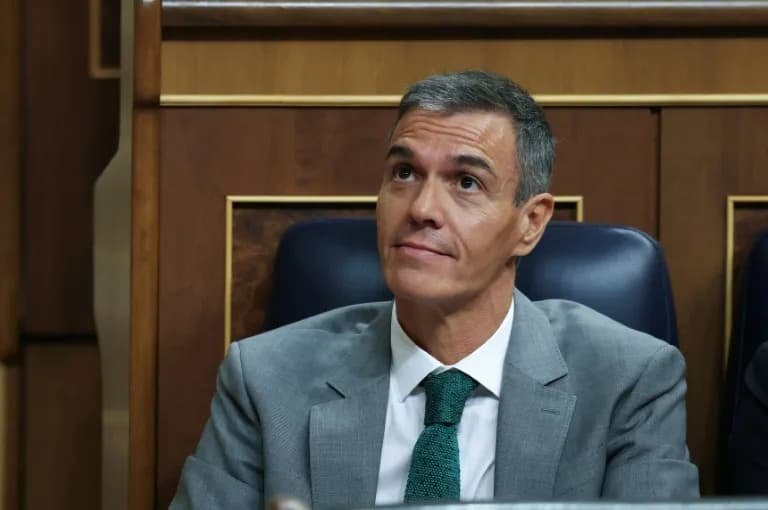
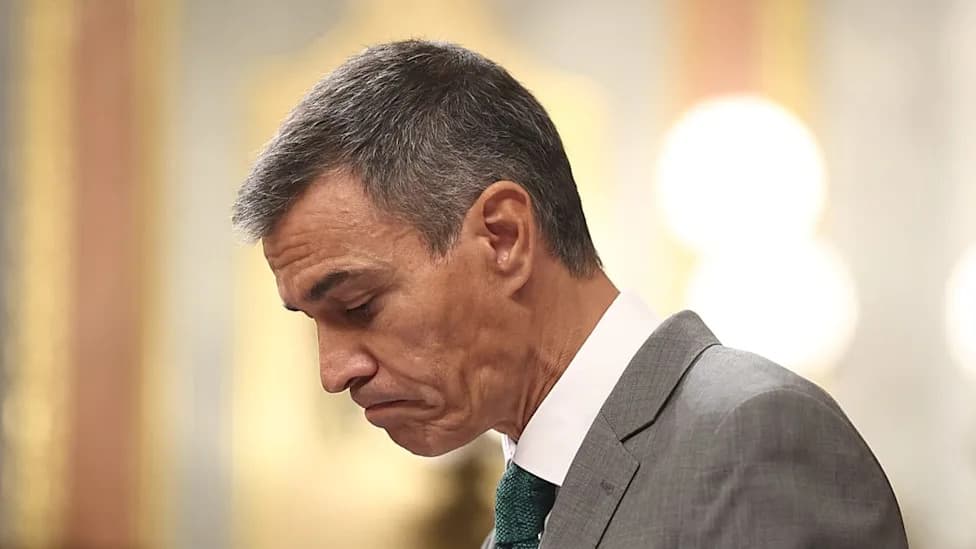
The Moroccan ministry emphasised longstanding security, migration and economic ties with Spain, and noted that diplomatic relations were strengthened after Prime Minister Pedro Sánchez publicly backed Morocco's autonomy plan for Western Sahara in 2022. Rabat also reiterated that it will not be used as a "pre-election political pawn" or a scapegoat in Spanish domestic debates ahead of national elections scheduled by mid-2027.
Morocco does not recognise Spanish sovereignty over Ceuta or Melilla, the other Spanish enclave that borders Morocco — a longstanding point of contention that forms part of the broader diplomatic context.
Authorities in both countries face pressure to clarify responsibilities, accelerate migrant processing and returns where appropriate, and improve protections for vulnerable people — especially unaccompanied minors — while investigations into the events and political accusations continue.
Help us improve.