ARPA-H has awarded more than $100 million across four projects under the Delphi program to develop modular wearable biosensor patches. MIT leads with up to $37.9M for a heat-powered, AI-enabled heart-failure patch; Novelna, NYU and University of Washington were awarded to build patches for post–heart-attack inflammation, continuous inflammation monitoring, and perimenopause tracking, respectively. ARPA-H expects interoperability within 18 months and clinical or human factors testing by month 54 as part of a $117.4M effort over 4.5 years.
ARPA-H Commits $117M Program Funding, Awards Over $100M to Four Teams Building Wearable Biosensor Patches
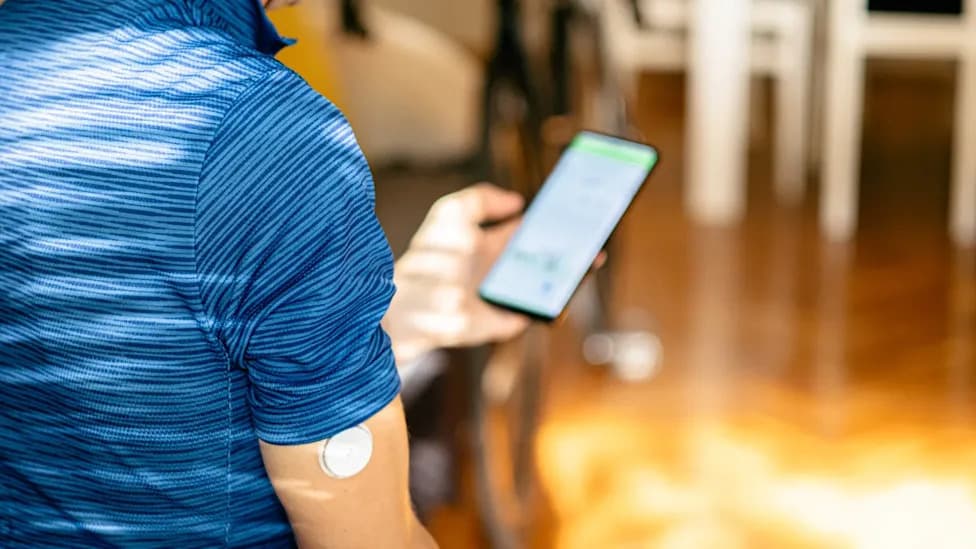
A person measures their blood glucose levels using a continuous glucose monitor with a connected mobile phone. A recent report found that Medicare is paying more than supplier costs for CGMs and supplies.
The Advanced Research Projects Agency for Health (ARPA-H) has awarded more than $100 million across four projects to advance modular, continuous wearable biosensors under its Delphi program.
ARPA-H plans to commit a total of $117.4 million to Delphi over 4.5 years. The agency launched Delphi in March to overcome the limitations of single-purpose wearable platforms by promoting a "chiplet" architecture that enables mix-and-match sensor components and full interoperability between devices.
Who Got Funding and What They’re Building
Massachusetts Institute of Technology — Up to $37.9M
MIT received the largest award to develop a clinical-grade wearable patch for continuous monitoring of heart-failure biomarkers. The design will harvest heat from the wearer to power the device and will incorporate advanced, power-efficient on-chip artificial intelligence to process signals.
Novelna — Up to $33.2M
California proteomics company Novelna will develop a patch to measure post–heart attack inflammation aimed at reducing hospital readmissions. ARPA-H said Novelna’s approach will use the human body to help conduct data and extend battery life. (Novelna also received a separate ARPA-H award — up to $25.5M — for a digital twin project days earlier.)
New York University — Up to $30.8M
NYU’s project will create a patch that continuously monitors inflammation using microscopic under‑the‑skin probes and DNA‑based sensors. The device is also designed to harvest energy from radio‑frequency sources such as Bluetooth and Wi‑Fi to minimize power needs.
University of Washington — Up to $7.5M
The UW team will build an ultra‑low‑power wearable patch to track perimenopause transitions. Their approach uses engineered protein sensors that detect sweat biomarkers; the proteins can be refreshed and reused by adjusting the local pH to maintain sensitivity and reliability over long periods.
Program Milestones and Expectations
ARPA-H has set clear technical milestones for awardees: within 18 months teams must demonstrate full interoperability and comply with secure communication standards; by 24 months in‑vivo prototype demonstrations are due and teams should have identified additional sensors to expand biomarker coverage; and by 54 months ARPA-H expects teams to complete clinical trials or human factors studies.
Why It Matters
Delphi’s modular "chiplet" approach aims to accelerate development of multi-analyte wearables that can move beyond single-signal devices (like basic heart-rate monitors) toward clinically useful, continuous biomarker sensing for conditions such as heart failure, inflammation and hormonal transitions.
Help us improve.