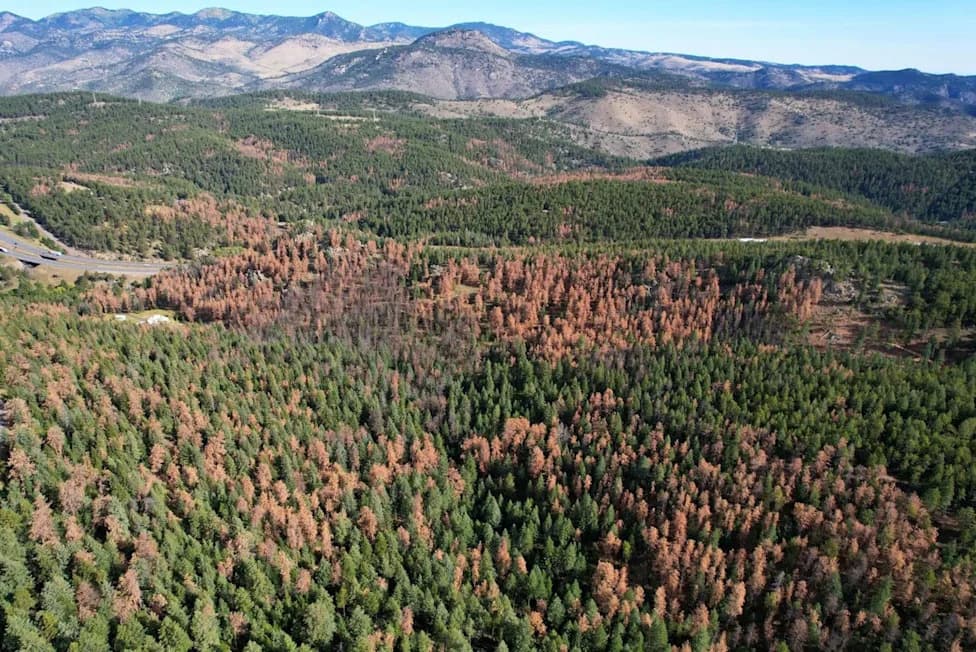
More Than 700,000 Acres in Colorado are affected by a mountain pine beetle outbreak worsened by heat and drought. Boulder and Boulder County sued Exxon Mobil and Suncor in 2018 seeking damages for climate-related harms, a case now before the U.S. Supreme Court. Opponents argue such national policy questions belong to Congress, while supporters say a ruling for Boulder could increase corporate accountability and fund local adaptation. The outbreak raises mounting ecological, public-safety and fiscal challenges for Colorado communities.
Killer Beetles, Tinderbox Forests: Pine Beetle Crisis and Climate Liability Face the Supreme Court
Killer beetles, tinderbox forests: Climate change costs center stage at Supreme Court
Walking into the mountain forests at the edge of the Rocky Mountains, visitors encounter the fragrant grandeur of century-old ponderosa pines. Those iconic Colorado trees — already weakened by record heat and prolonged drought — now face a rapidly spreading threat: the mountain pine beetle.
The Outbreak
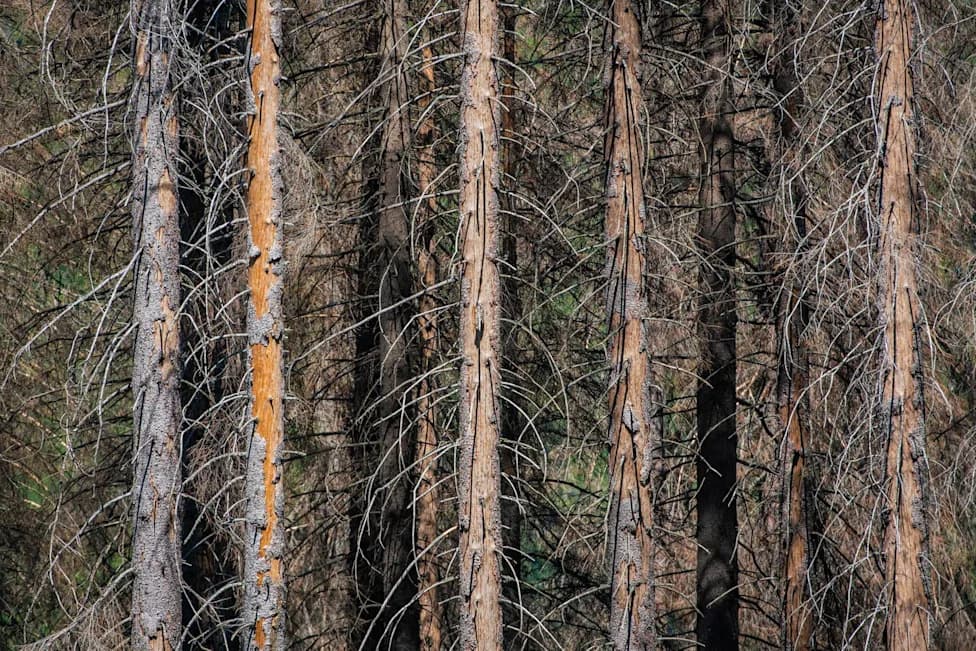
The mountain pine beetle, about the size of a grain of rice, can infest and kill a tree within weeks by burrowing beneath the bark and feeding on vital tissues. State officials report that more than 700,000 acres in Colorado are affected. Forest ecologist Sarah Hart of Colorado State University warns: "Once a tree has been attacked, it's likely to die," and on the scale of whole landscapes, managers currently lack effective tools to stop the outbreak.
Local Impacts and Costs
Dead and dying trees streak the Front Range hillsides, creating severe wildfire fuel and long-term damage to watersheds and recreation areas. Dan Gibbs, director of Colorado's Department of Natural Resources, explains that bark-beetle-killed timber "burns differently than a green, alive forest," contributing to erratic wildfire behavior. State teams are clearing beetle-killed trees near communities to reduce fire risk at an estimated cost of about $10,000 per acre, placing heavy burdens on local and state budgets.
The Legal Battle
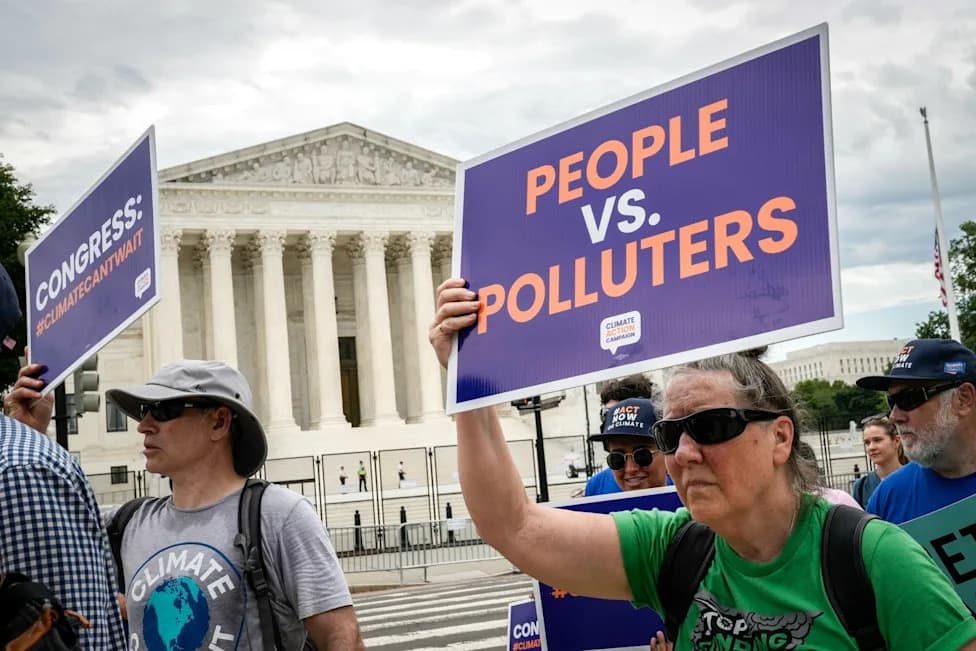
The financial strain of responding to the outbreak — together with other climate-amplified costs — is central to a major legal case now before the U.S. Supreme Court. In 2018 the City of Boulder and Boulder County sued fossil-fuel producers Exxon Mobil and Suncor Energy under Colorado public nuisance law, seeking damages for climate-related harms, including widespread forest devastation attributed in part to beetle outbreaks.
Exxon and Suncor argue the suit is based on a flawed theory, asserting that localized harms from the global phenomenon of climate change cannot be pinned to individual companies. Thirty states and the District of Columbia did not join the companies; however, West Virginia and 25 other states are backing Exxon and Suncor, arguing that questions of national policy — including who pays — belong to Congress. Michael Williams, West Virginia’s solicitor general, warned that such suits could have broad economic consequences.
Voices From Colorado
Local residents and officials express mixed but urgent concerns. Paul Chinowsky, a Boulder civil engineer who studies climate impacts and lost his home in the Marshall Fire, said he does not want oil companies bankrupted but believes they should contribute to costs tied to fossil-fuel production: "We can't live today without some level of fossil fuels, but we need regulation." John Tayer, CEO of the Boulder Chamber of Commerce, noted that climate-related repairs and upgrades have become a significant city budget item.
"We've had this dearth of precipitation, above-average temperatures—it's kind of like attacking the bank when there's no security guard. These trees are standing there with not a lot of defenses," said Dan West, an entomologist with the Colorado State Forest Service.
Scale and Stakes
Bark beetles previously killed more than 54 million acres of pines across the West in the early 2000s. Officials warn the current outbreak, together with increasing wildfire risk, could exact even greater ecological and fiscal costs. If the Supreme Court allows Boulder and Boulder County to pursue damages, a favorable ruling would not end the outbreak but could increase corporate accountability and potentially unlock funding for adaptation and forest protection.
Procedural Note
In a related development, Justice Samuel Alito stepped aside from part of the case after scrutiny over his holdings in oil stocks. The case is therefore also drawing attention to judicial ethics and the broader political stakes of climate litigation.
What Comes Next
The beetle outbreak is expected to play out over years or decades. For now, Colorado officials face immediate decisions about forest management, fire mitigation and budget priorities while the Supreme Court weighs a novel legal question about who should bear the costs of climate-driven damage.

ABC News - PHOTO: The mountain pine beetle is the size of a grain of rice but can inflict colossal harm to forests.
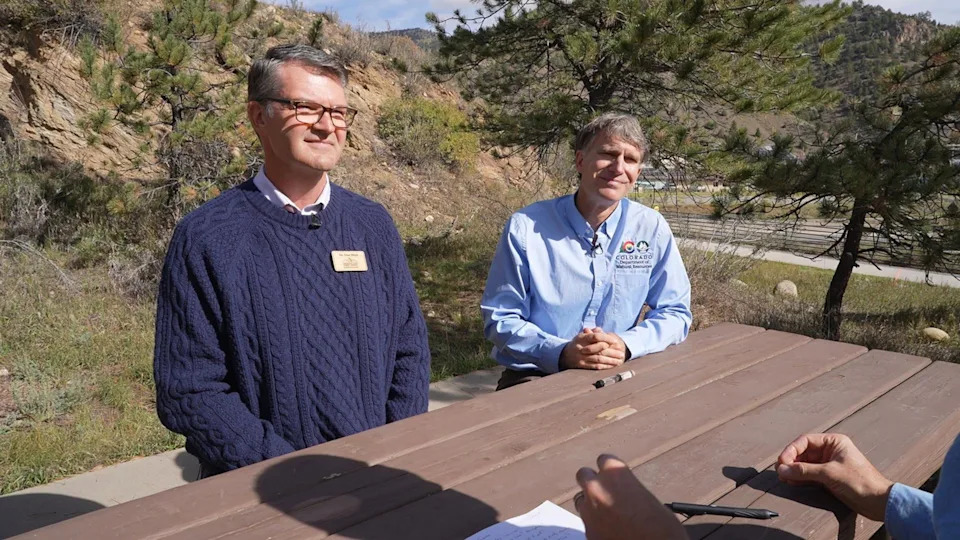
ABC News - PHOTO: Dan West, left, an entomologist with the Colorado State Forest Service, and Dan Gibbs, right, executive director of the Colorado Department of Natural Resources, are leading a statewide response to the pine beetle outbreak across the state.

ABC News - PHOTO: The City of Boulder and Boulder County in Colorado have sued energy companies seeking financial damages for the impacts of climate change.

ABC News - PHOTO: Suncor Energy, a Canadian company, purchased the Commerce City, Colo., refinery in 2005.

ABC News - PHOTO: Michael Williams, Solicitor General of West Virginia, speaks with ABC's Devin Dwyer. The state is among a group of 26 backing Exxon Mobil and Suncor Energy in a legal battle with Boulder, Colo.
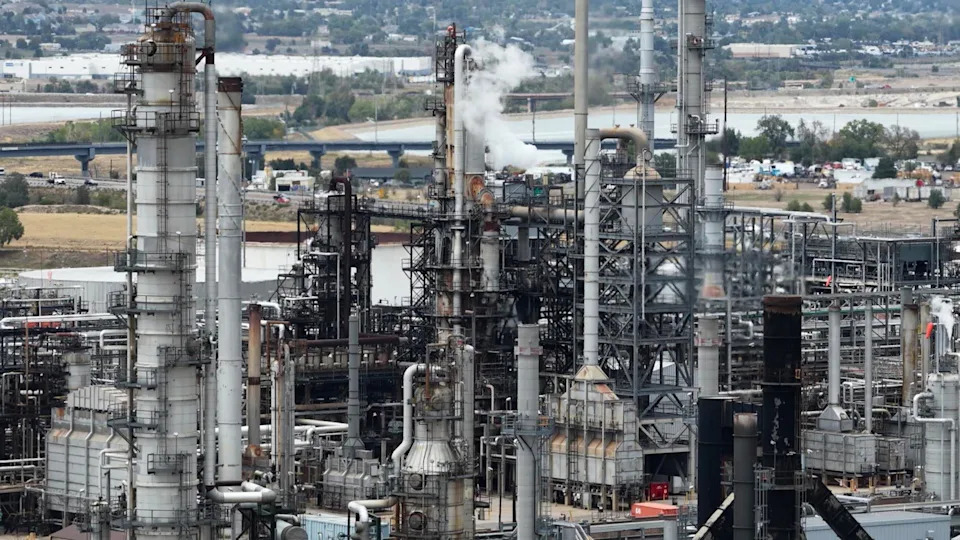
ABC News - PHOTO: The Commerce City refinery in Colorado is the state's largest processor of gasoline and jet fuel.
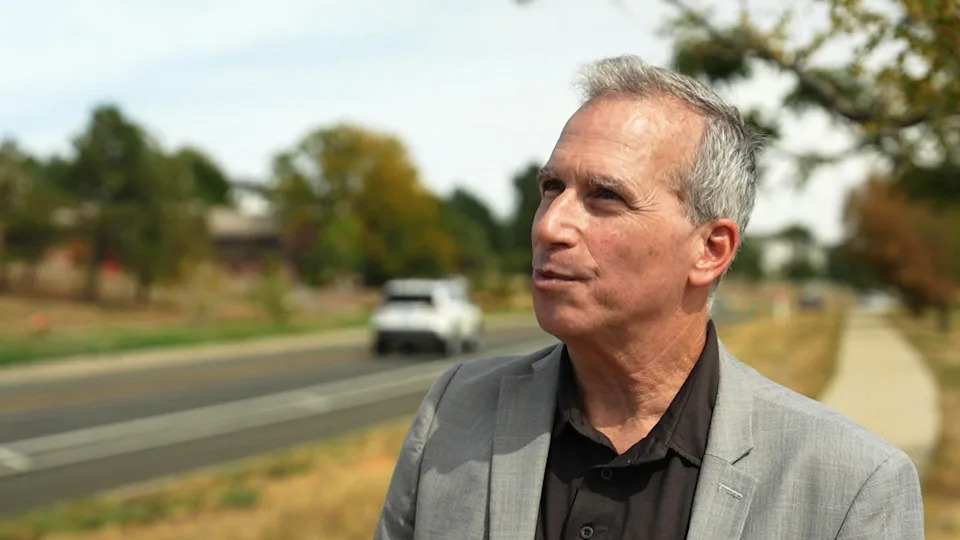
ABC News - PHOTO: Paul Chinowsky, a longtime Boulder resident and civil engineer specializing in climate impacts, lost his home during the historic Marshall Fire that devastated Colorado in 2021.

ABC News - PHOTO: John Tayer, CEO of the Boulder Chamber of Commerce, says the impacts of climate change have hit local government budgets hard.
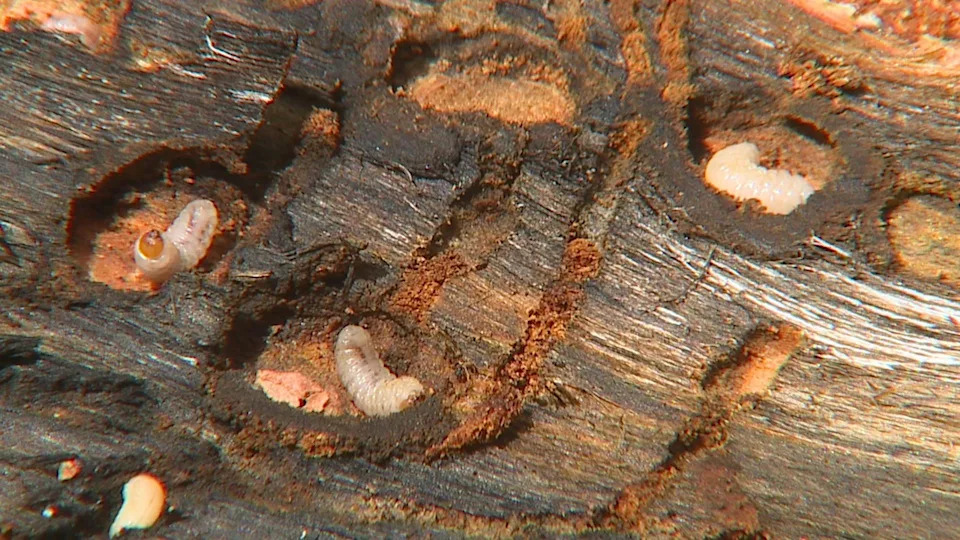
ABC News - PHOTO: Mountain pine beetles that attack ponderosa pine trees burrow into the bark to lay eggs which develop into larvae that feed on critical tree tissues.
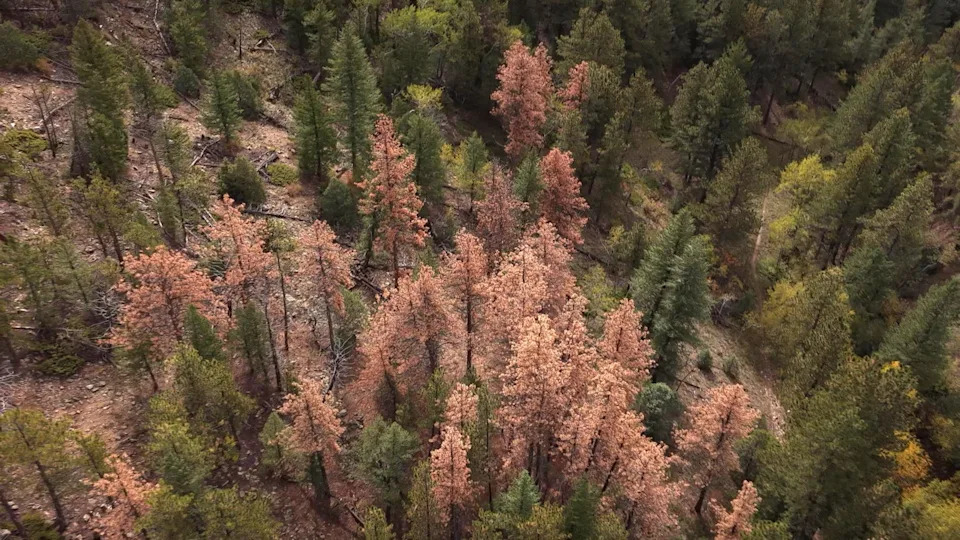
ABC News - PHOTO: A mountain pine beetle outbreak across the American west in the early 2000s killed more than 54 million acres of trees.
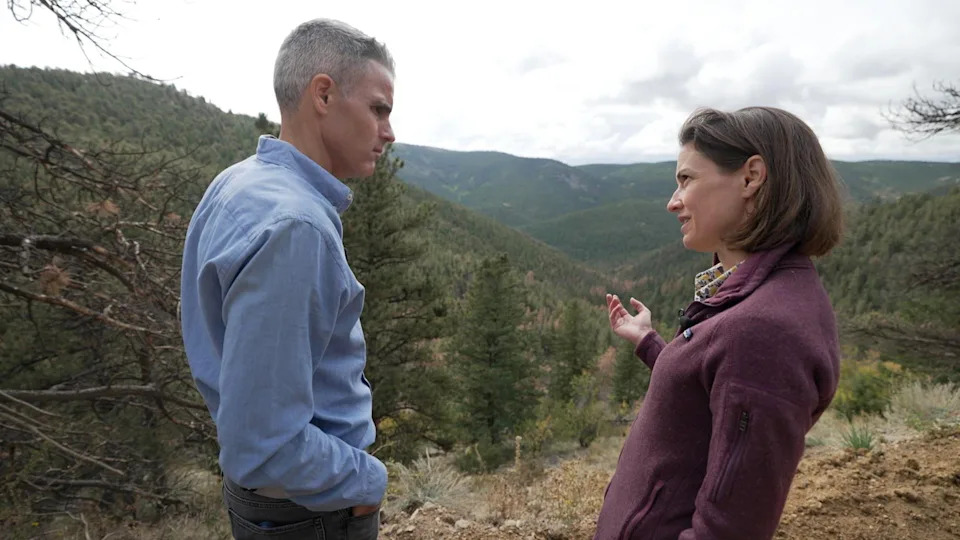
ABC News - PHOTO: Forest ecologist Sarah Hart with Colorado State University speaks with ABC's Devin Dwyer about the scale of the latest beetle outbreak.
Help us improve.