Canadian PET scans of 24 people with long COVID showed reduced signals for a protein on dopamine-releasing nerve endings in regions of the striatum. Greater reductions correlated with more apathy, slower movement and worse memory, with about 25% of symptom variance associated with these markers. The authors suggest dopamine-boosting treatments (for example, L‑dopa) might help some patients, but stress the study is preliminary, PET is an indirect measure, and larger trials and postmortem confirmation are needed.
Brain Scans Suggest Dopamine Neuron Damage May Underlie Some Long COVID Symptoms
(sbk_20d pictures/Moment RF/Getty Images)
Researchers in Canada report distinct changes in dopamine-related signals in the brains of people with long COVID, findings that could help explain symptoms such as apathy, slowed movement and memory complaints.
What the Study Did
Using positron emission tomography (PET) with a radioactive tracer that binds to a protein on dopamine nerve endings, the team scanned 24 people who had persistent, debilitating symptoms following SARS‑CoV‑2 infection. None had an active infection at the time of scanning. Participants, as a group, reported increased apathy and performed worse than age-matched healthy controls on memory and movement-speed tests.
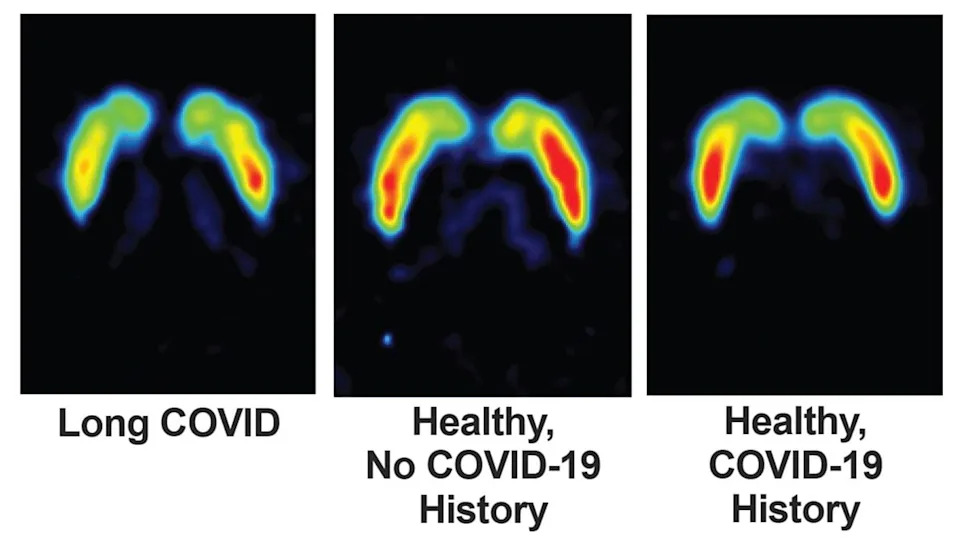
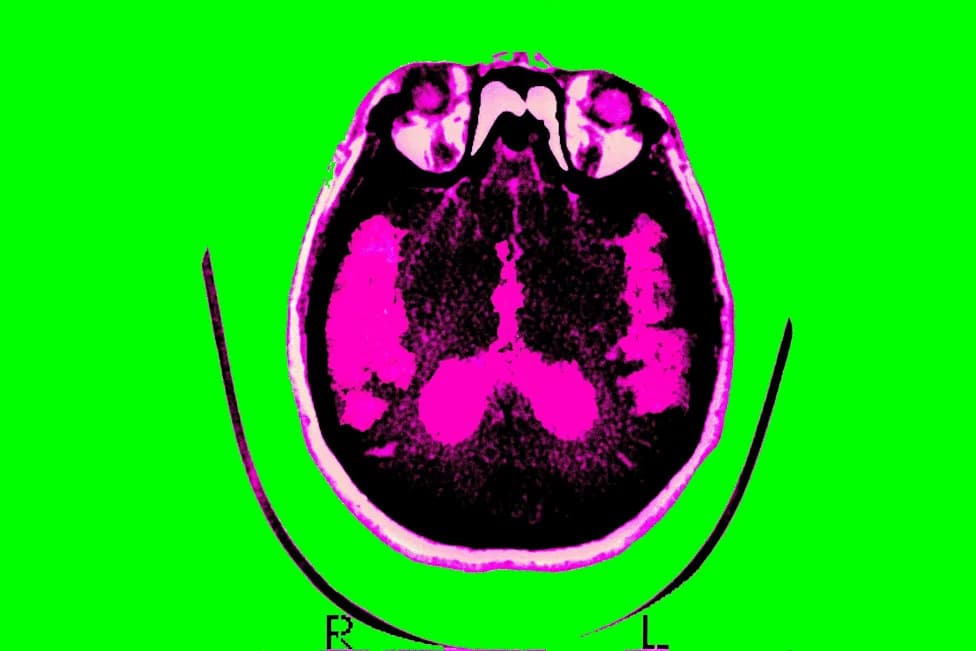
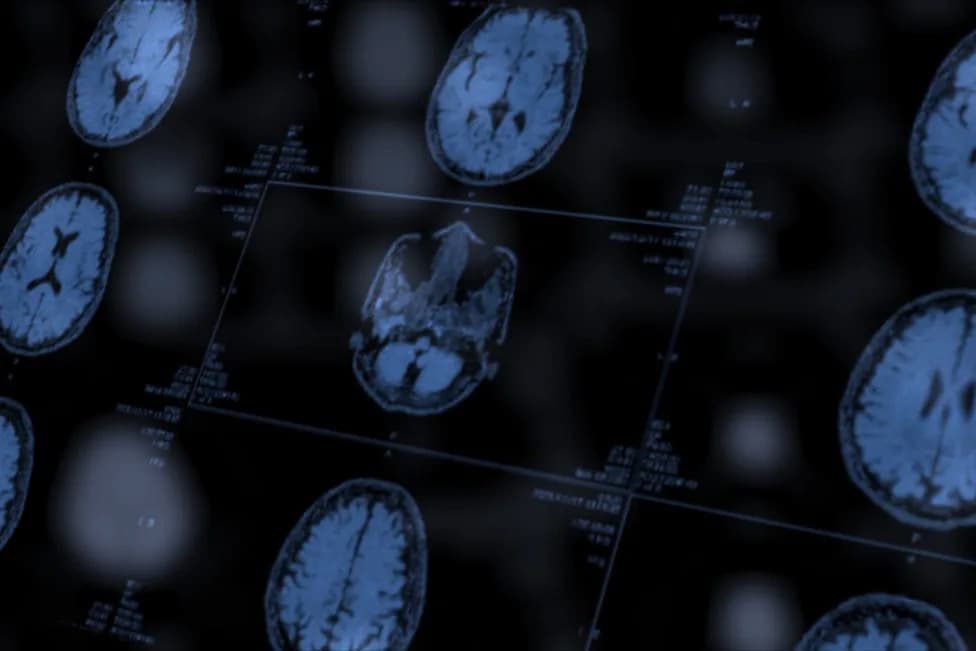
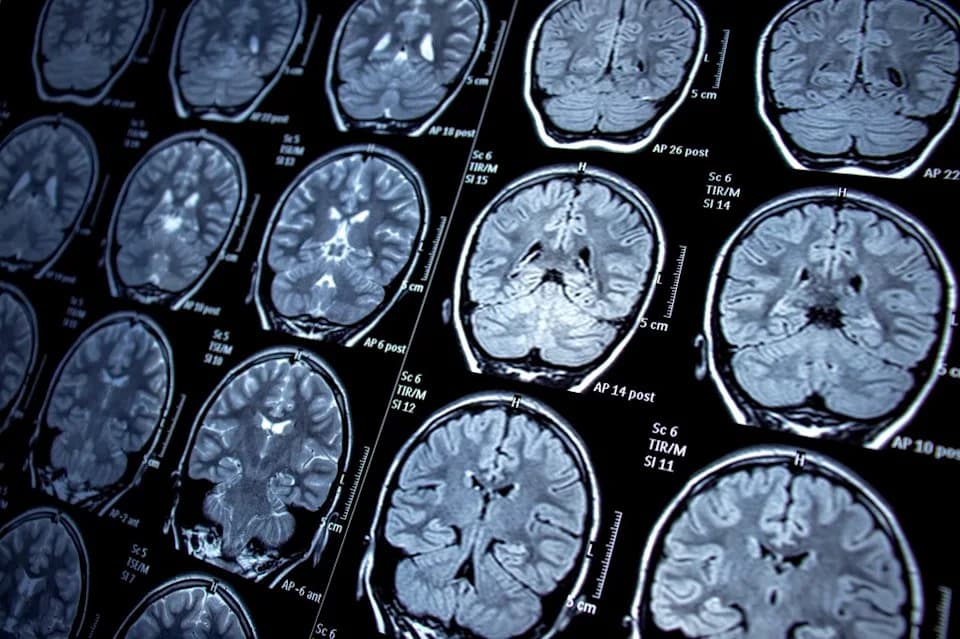
PET scans show a weaker signal for a marker of dopamine-releasing nerve endings in a person with long COVID (left), compared with healthy people without and with a history ofCOVID-19(center and right). (Liu et al.,eBioMedicine, 2026)
Main Findings
The PET scans showed a reduced signal for the dopamine nerve-ending marker across several regions of the striatum, a brain area involved in motivation, motor speed and certain types of memory. In general, participants with greater apathy, slower physical movement and worse memory complaints showed larger reductions in the tracer signal. Statistically, about 25% of the variance in these key symptoms was associated with reduced dopaminergic markers.
"Our findings provide compelling evidence that long COVID involves the loss of dopamine-releasing neurons," said psychiatrist Jeffrey Meyer of the Brain Health Imaging Center in Canada. "This kind of injury is well known to produce symptoms like lack of motivation and motor slowing."
Biological Plausibility
There are plausible biological pathways for dopaminergic vulnerability in long COVID. Some studies report elevated markers of cellular processes that prune synapses, which could harm dopamine-releasing nerve endings. It is also theoretically possible that SARS‑CoV‑2 could infect neurons that express receptor proteins the virus uses to enter cells, potentially injuring them from within.
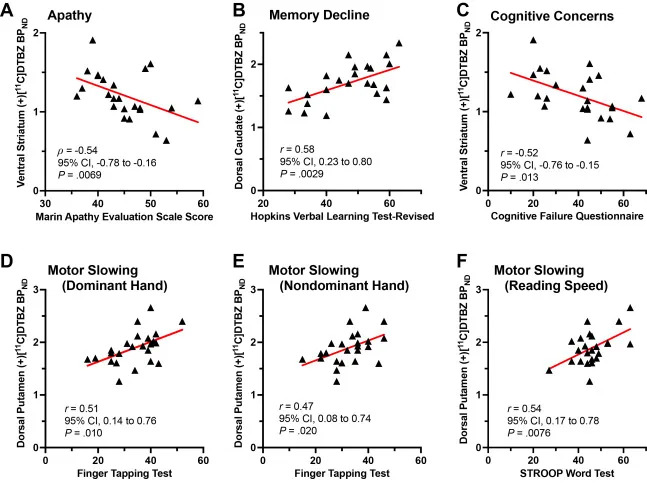
In people with long COVID, a lower PET scan signal for a dopamine neuron marker was associated with more apathy and cognitive concerns, poorer memory, and slower performance on movement and reading tests. (Liu et al., eBioMedicine, 2026)
Therapeutic Implications and Cautions
The authors suggest that treatments that boost dopamine function—such as drugs used for Parkinson's disease (for example, L‑dopa)—could conceivably help some patients by increasing tonic and phasic dopamine release and compensating for lost synapses. However, these drugs carry significant side effects and would likely only benefit a subset of people whose symptoms reflect dopaminergic dysfunction. Any repurposing would require careful clinical trials.
Limitations
This study is preliminary. PET tracers measure a protein on dopamine nerve endings rather than direct neuron counts; only postmortem tissue can provide definitive cell-by-cell confirmation. The sample size was small (24 participants), and results must be replicated in larger, well-controlled cohorts. A small autopsy series has reported fewer dopamine neurons in people who died with severe COVID-19, but those cases were confounded by advanced age and preexisting neurological disease in some decedents. The lead investigator, Dr. Meyer, also has a pending patent application for a dopamine-based long COVID treatment; the authors disclose this potential conflict of interest.
"For five years I have been seeking answers on what happened to me after I contracted COVID in 2021. The research of Dr Meyer brings hope. It also validates what long COVID sufferers have always known – long COVID is real, and the effects are devastating," said Susan Deuville, a patient and lived-experience research advisor.
The study appears in eBioMedicine. The findings point to a testable hypothesis—that dopaminergic dysfunction contributes to some long COVID symptoms—and highlight the need for larger studies, postmortem confirmation, and carefully designed clinical trials before treatment recommendations can be made.
Help us improve.