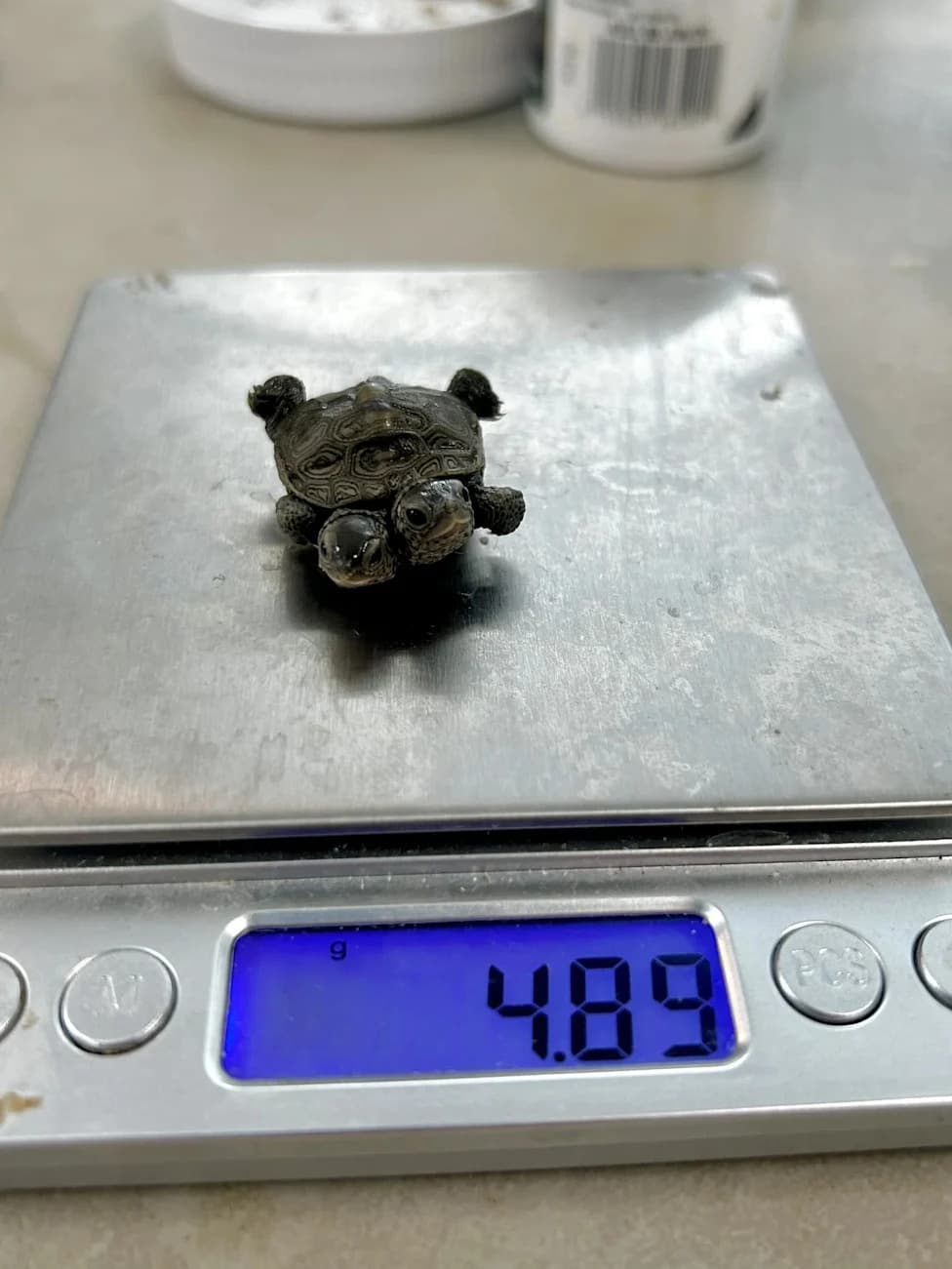
A rare two-headed diamondback terrapin hatchling was found at a protected nest in Wellfleet and taken to the Cape Wildlife Center on Sept. 17. The 0.18-ounce (5.2-gram) hatchling exhibits bicephaly, a developmental anomaly likely influenced by genetic, epigenetic and environmental factors. This is the third bicephalic terrapin discovered locally in five years, and veterinarians are closely monitoring the animal while researchers study the case.
Rare Two-Headed Diamondback Terrapin Hatchling Rescued on Cape Cod
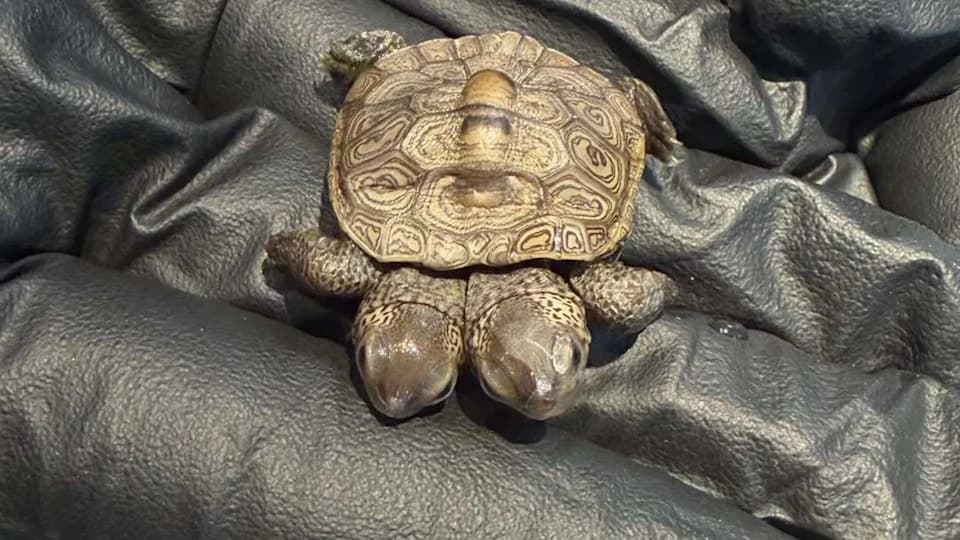
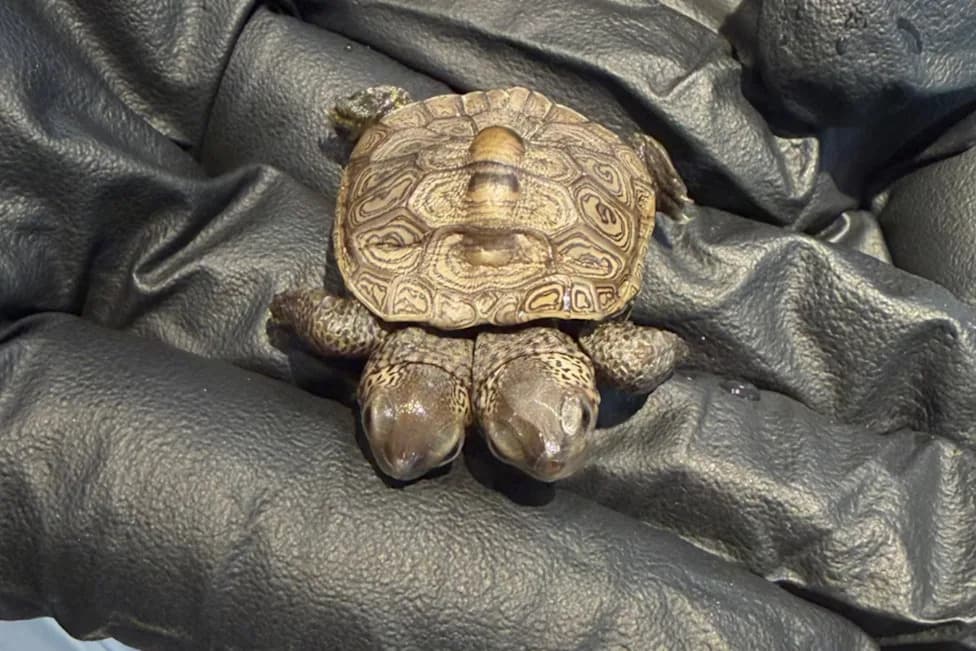
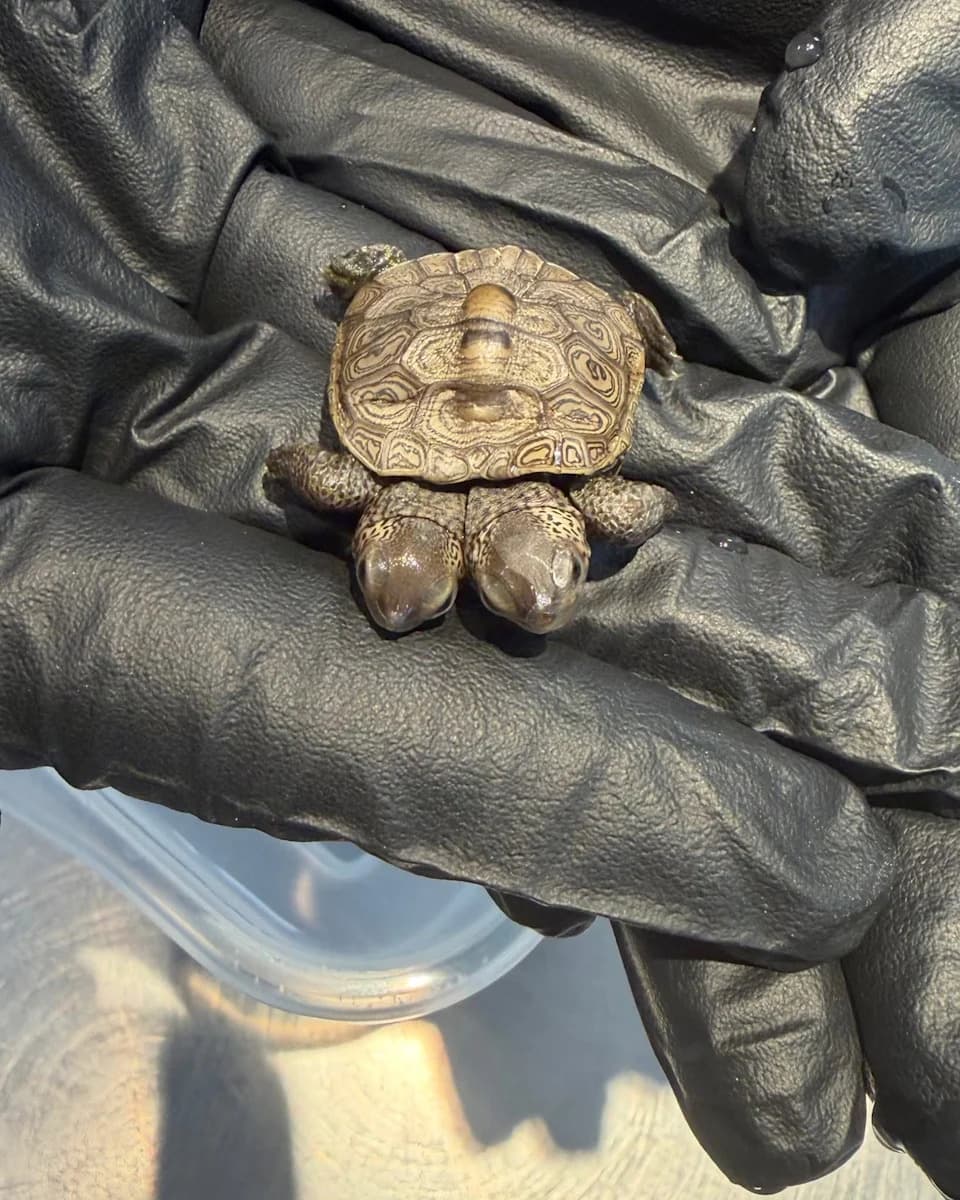
The two-headed turtle, a diamondback terrapin (Malaclemys terrapin), was found on Cape Cod in September. . | Credit: New England Wildlife Centers Staff
Cape Cod — A tiny, rare two-headed diamondback terrapin (Malaclemys terrapin) was discovered at a protected nesting site in Wellfleet and brought to the Cape Wildlife Center in Barnstable, Massachusetts, on Sept. 17.
The hatchling weighed just 0.18 ounces (5.2 grams) when it arrived at the center. The condition, called bicephaly, occurs when a single embryo incompletely splits during the formation of identical twins, producing two fully formed heads sharing one body.
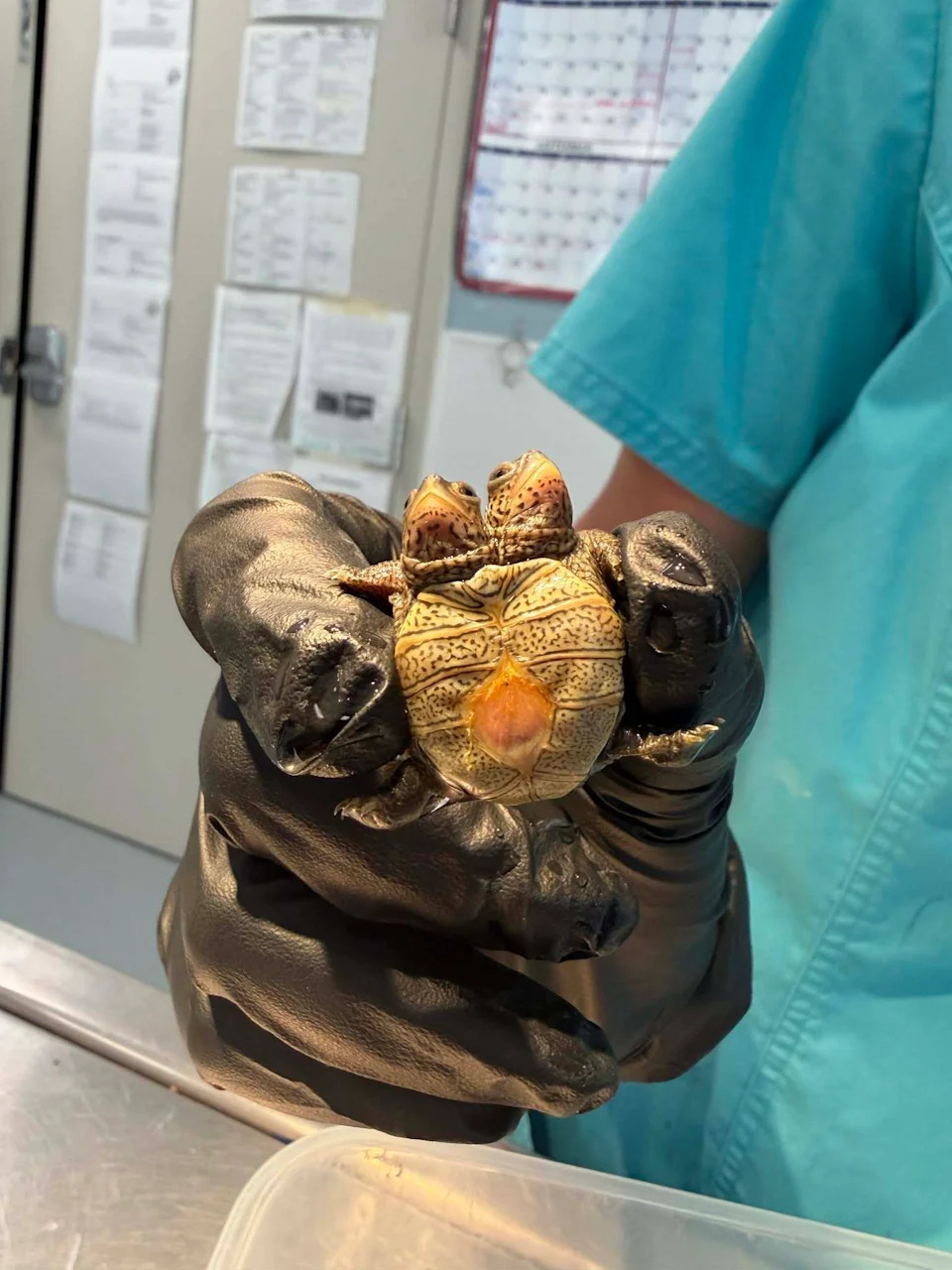
Two-headed turtles face survival challenges, as their abnormal anatomy can impair coordinated movement, feeding, and other functions essential for survival. | Credit: New England Wildlife Centers Staff
How It Happens
Experts say bicephaly likely arises from a combination of genetic and epigenetic factors, with environmental influences such as incubation temperature, humidity, nest microhabitat and potential contaminants also possibly playing a role. "Our understanding based on the available research is that bicephaly is caused by both genetic and epigenetic factors," Zak Mertz, CEO of New England Wildlife Centers, told Live Science.
"It may have to do with the relatively long lifespan of the turtles, their preference for returning to the same nesting sites, and a limited gene pool due to their conservation status," Mertz added. "Environmental factors such as incubation conditions or contaminants could also contribute."
Survival Challenges and Research Value
Two-headed turtles commonly face serious survival obstacles: duplicated anatomy can impair coordinated movement, feeding and other vital functions. A 2021 study of bicephalic sea turtles documented frequent craniofacial and spinal abnormalities and generally smaller size compared with typical hatchlings, underscoring lower survival prospects for these animals.
This Cape Cod hatchling is the third bicephalic diamondback terrapin found locally in the past five years, offering scientists and rehabilitators another opportunity to observe the condition and collect data that may inform conservation and incubation practices.
About Diamondback Terrapins
Diamondback terrapins inhabit brackish marshes along the Atlantic and Gulf coasts of the United States — the transitional waters where freshwater meets the sea. In Massachusetts the species is listed as Threatened under the state Endangered Species Act, and its federal status is currently under review.
Veterinarians and staff at the Cape Wildlife Center are closely monitoring the hatchling’s health. "It is fascinating and an area that certainly merits more study," Mertz said. "We are excited to care for these two and learn as much as we can to inform future study in the process."
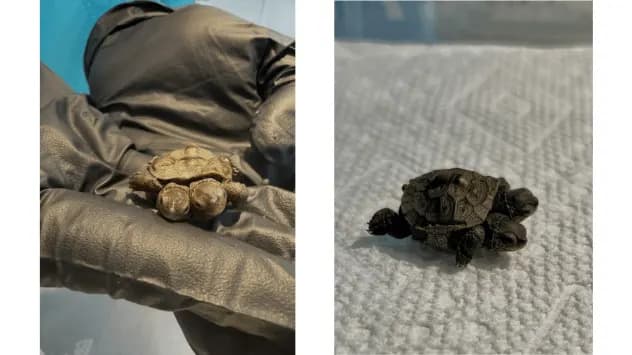
Credit: New England Wildlife Centers Staff. The hatchling was originally located by staff from Mass Audubon Wellfleet Bay Wildlife Sanctuary.
Help us improve.