The Cape Wildlife Center in Massachusetts is caring for a rare two-headed diamondback terrapin hatchling that arrived on Sept. 17, 2026. The 5.2-gram hatchling emerged from a protected Wellfleet nest and was transported by Mass Audubon's Wellfleet Bay Wildlife Sanctuary. Veterinarians are closely monitoring its appetite, behavior and growth to see how the paired heads coordinate. Experts link such cases to axial bifurcation and note that reptiles sometimes have better survival odds than other animals with multiple heads, though outcomes remain uncertain.
Rare Two-Headed Diamondback Terrapin Arrives At Cape Wildlife Center
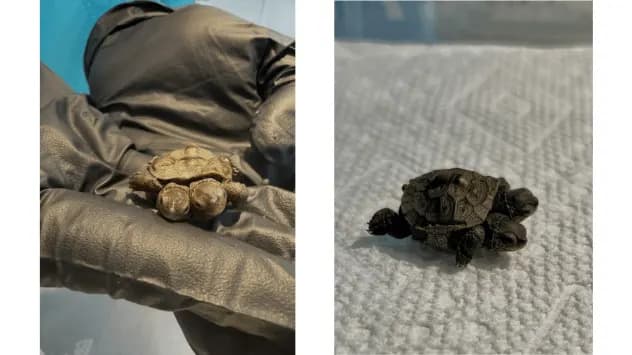
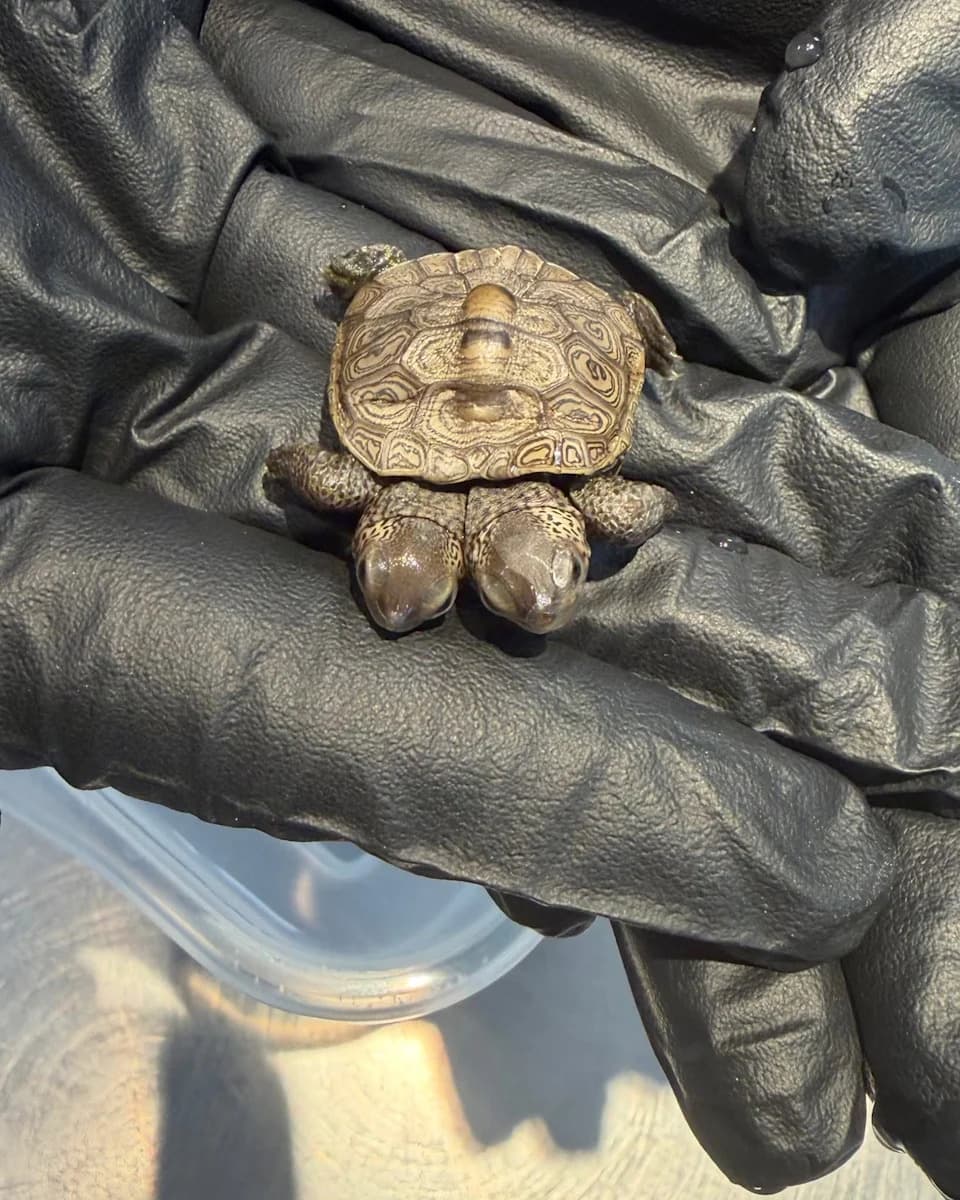
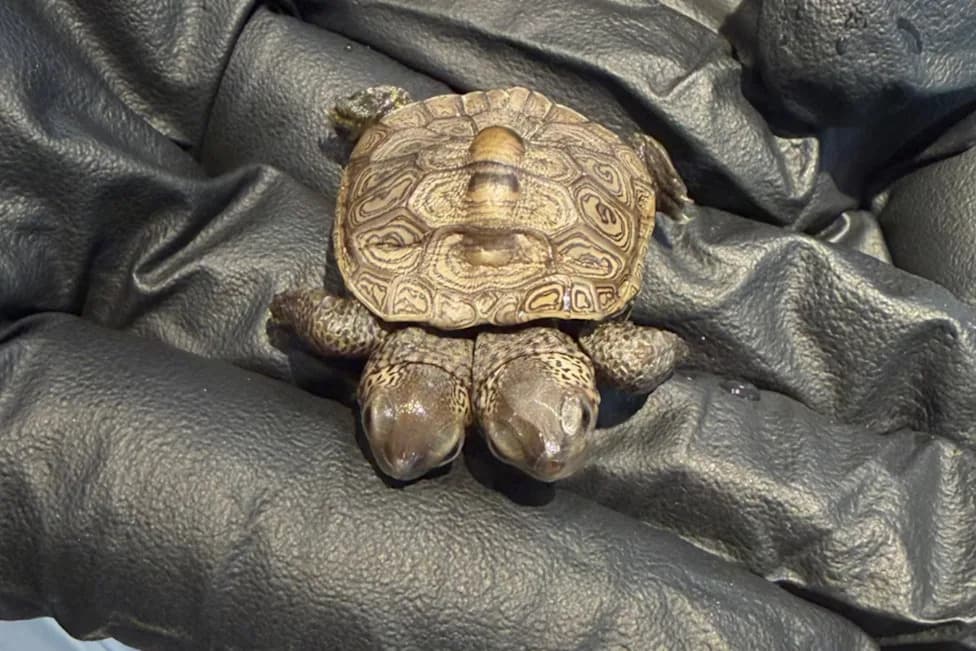
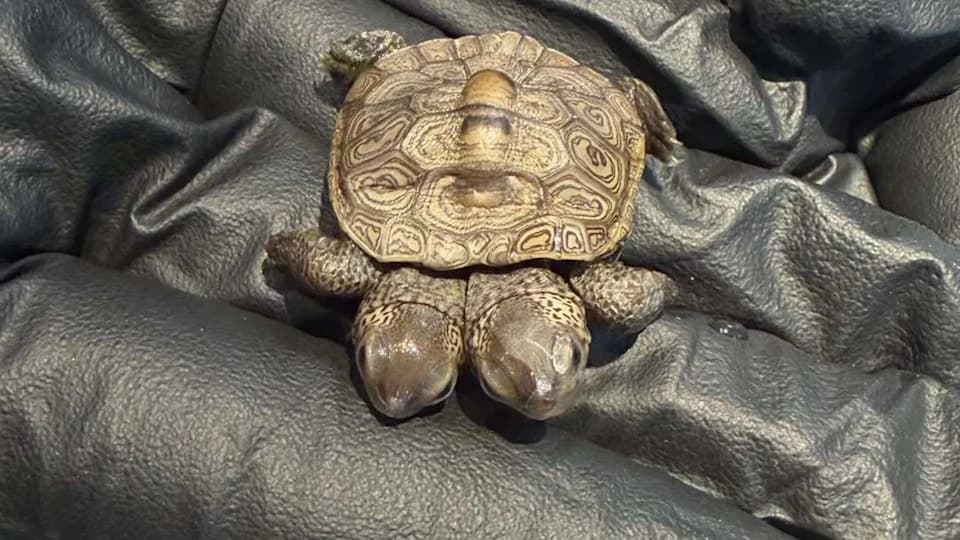
The two-headed diamondback terrapin hatchling arrived at the Cape Wildlife Center on Sept. 17, 2026. (Credit: New England Wildlife Centers)
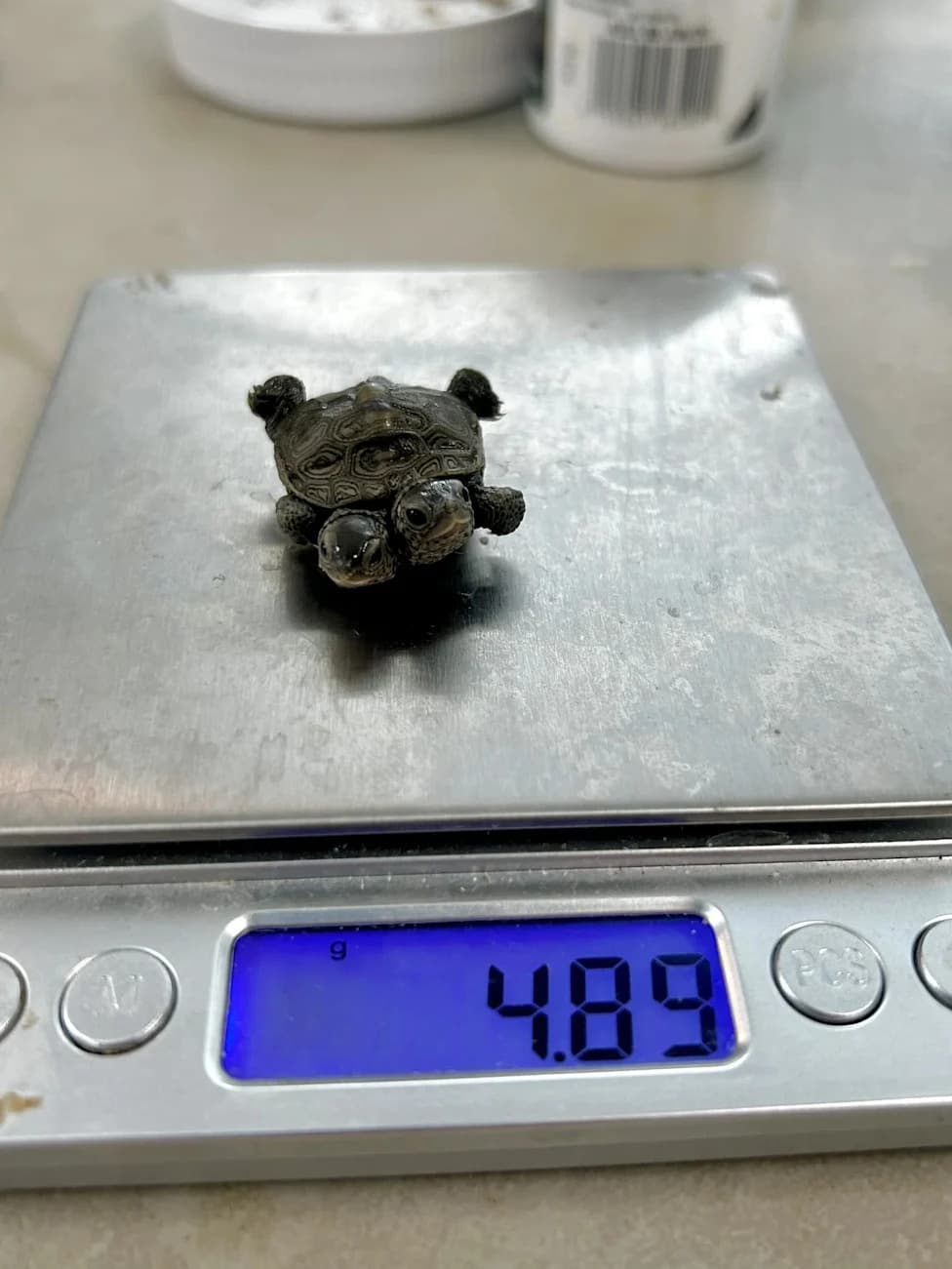
A tiny, two-headed diamondback terrapin hatchling arrived at the Cape Wildlife Center in Massachusetts on Sept. 17, 2026, presenting a rare case of bicephaly that has drawn attention from wildlife staff and the public alike. The hatchling, brought to the center by Mass Audubon's Wellfleet Bay Wildlife Sanctuary, weighs just 5.2 grams — roughly the weight of a U.S. nickel.
What Happened
The terrapin hatched in a protected nesting site in Wellfleet on Cape Cod and was transported to the Cape Wildlife Center for close monitoring and care. Center staff said the organization has recorded only two other bicephalic cases in the past five years, making this an uncommon but important opportunity to study the condition in wild reptiles.
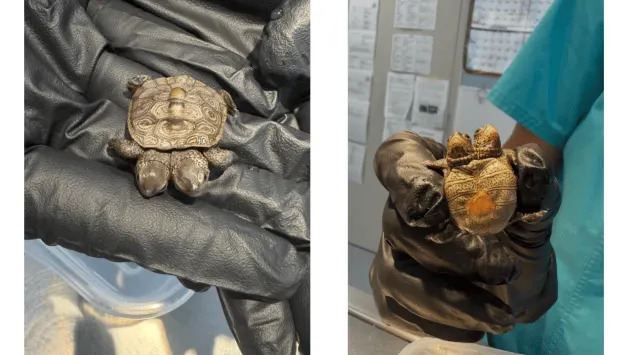
The diamondback terrapin hatchling has bicephaly, a rare developmental condition where an animal is born with two heads. (Credit: New England Wildlife Centers)
Medical Monitoring
Veterinary staff are closely observing the hatchling to understand how the two heads coordinate. Monitoring focuses on appetite, feeding coordination, behavior and growth patterns, as caretakers document whether both heads will feed successfully and how they interact. "Although we've seen this unusual condition before, each case helps us expand our knowledge of these animals' anatomy and physiology," the Cape Wildlife Center said in a social media statement.
Cause And Outlook
Experts say two-headed animals typically arise from axial bifurcation, a developmental process in which an embryo begins to split into twins but the division remains incomplete. Such animals often face challenges — including competition between heads for food or accidental self-injury — and overall survival rates are low. That said, reptiles sometimes fare better than mammals in similar cases because of differences in behavior and physiology.
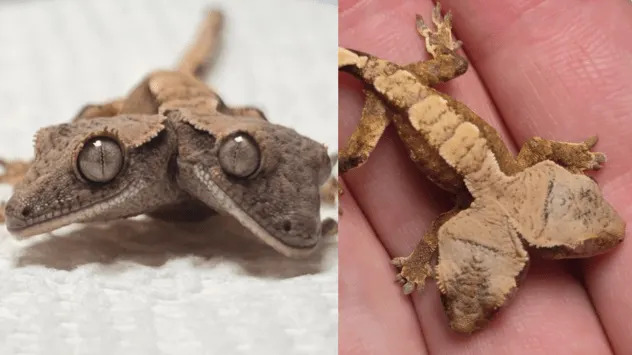
Simon and Garfunkel have polycephaly, a condition in which an animal is born with more than one head. (Credit: @rockstargeckos via Instagram)
Similar Cases
A recent high-profile example involved "Simon and Garfunkel," a two-headed gecko that hatched at Rockstar Geckos in Pennsylvania and attracted widespread attention on social media. The gecko drew many supporters but ultimately died in late August after refusing food and losing weight; Rockstar Geckos shared the news on Aug. 24 and thanked followers for their support.
Why This Matters
Each bicephalic case, while rare, gives researchers and rehabilitators a chance to learn more about developmental anomalies, species resilience and best-care practices for animals with unusual anatomies. The Cape Wildlife Center and its partners will continue to monitor the terrapin and share updates as they learn more.
Credit: New England Wildlife Centers; Mass Audubon's Wellfleet Bay Wildlife Sanctuary
Help us improve.