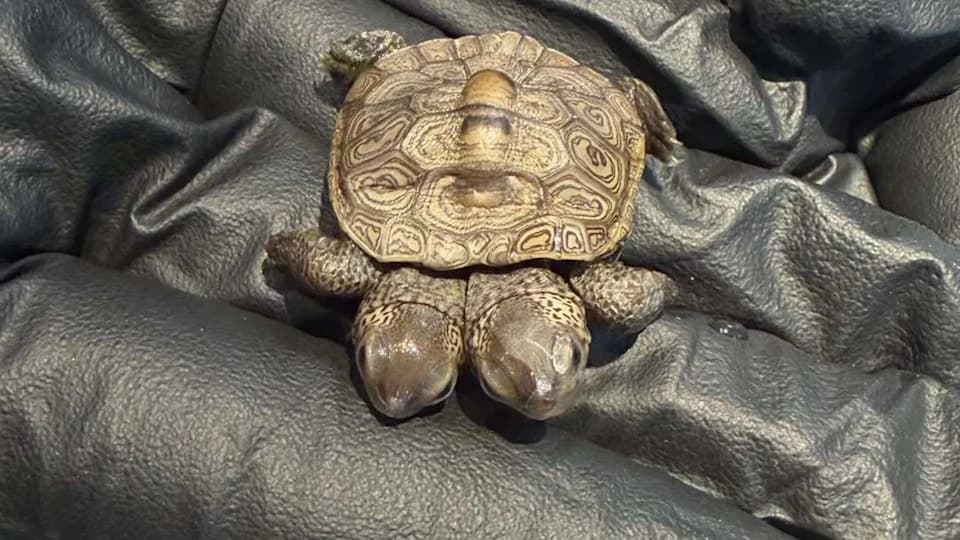
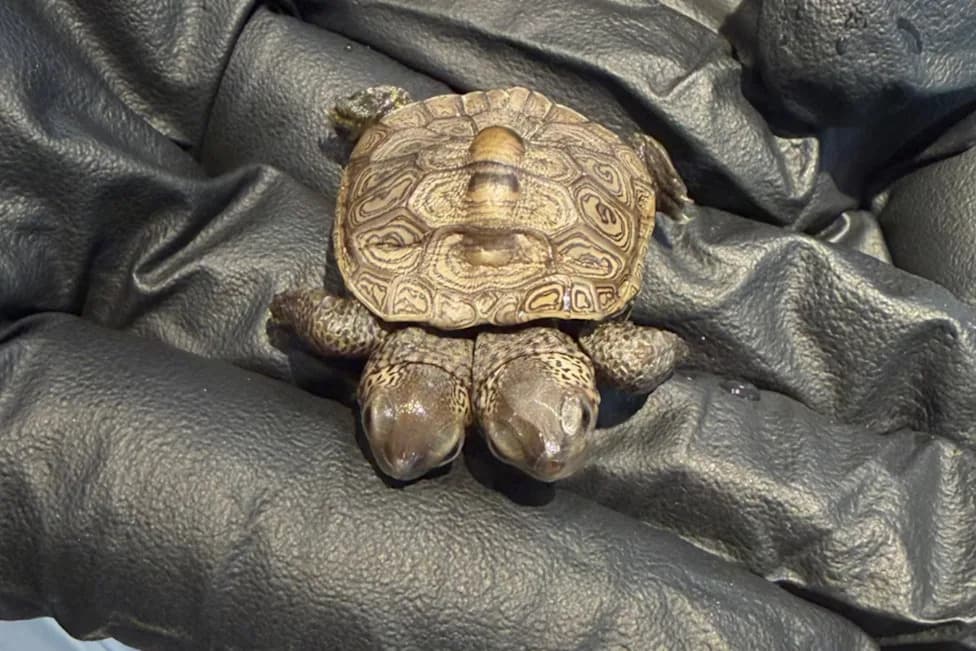
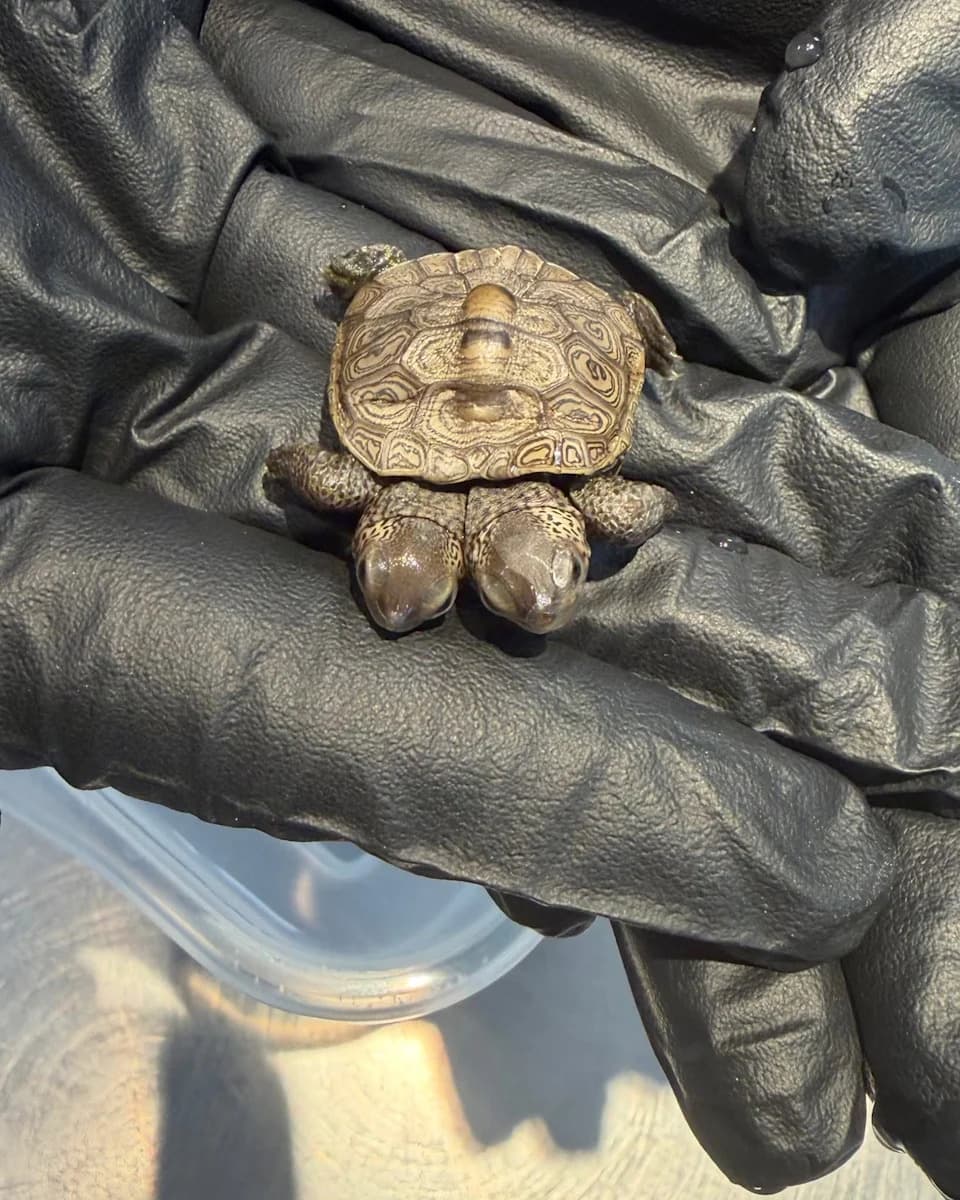
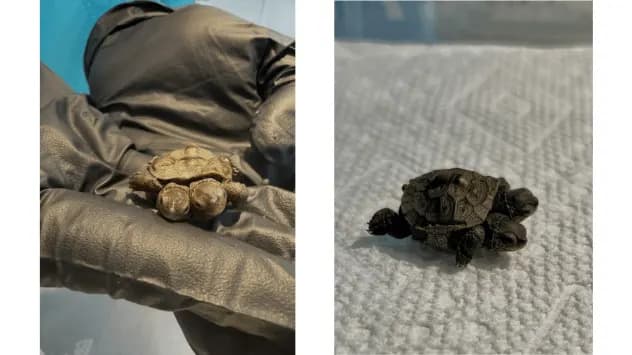
A two‑headed diamondback terrapin hatchling was found in mid‑September during nest monitoring in Wellfleet and is now at New England Wildlife Centers. The nickel‑sized hatchling weighs under 5 grams, can swim, controls all limbs and recently ate its first meal. This is the center’s third bicephalic terrapin in about six years; the condition is rare and likely genetic with possible environmental influences. Staff will monitor the hatchling through winter and may release it if it remains healthy.
Rare Two‑Headed Diamondback Terrapin Hatchling Discovered on Cape Cod
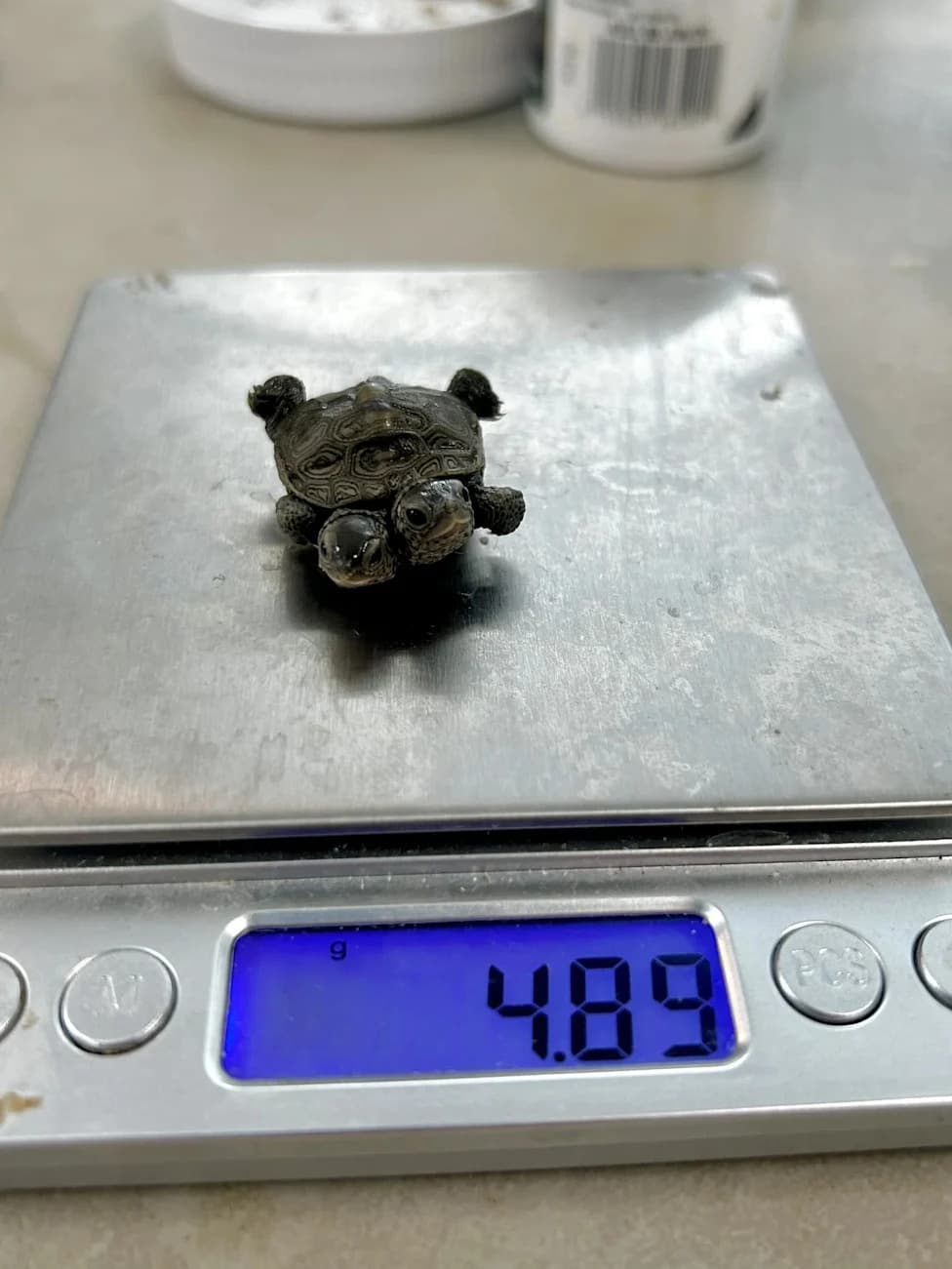
The turtle weighs less than 5 grams.
A tiny diamondback terrapin hatchling with two heads was discovered in mid‑September on Cape Cod and is now receiving care at the New England Wildlife Centers' veterinary hospital.
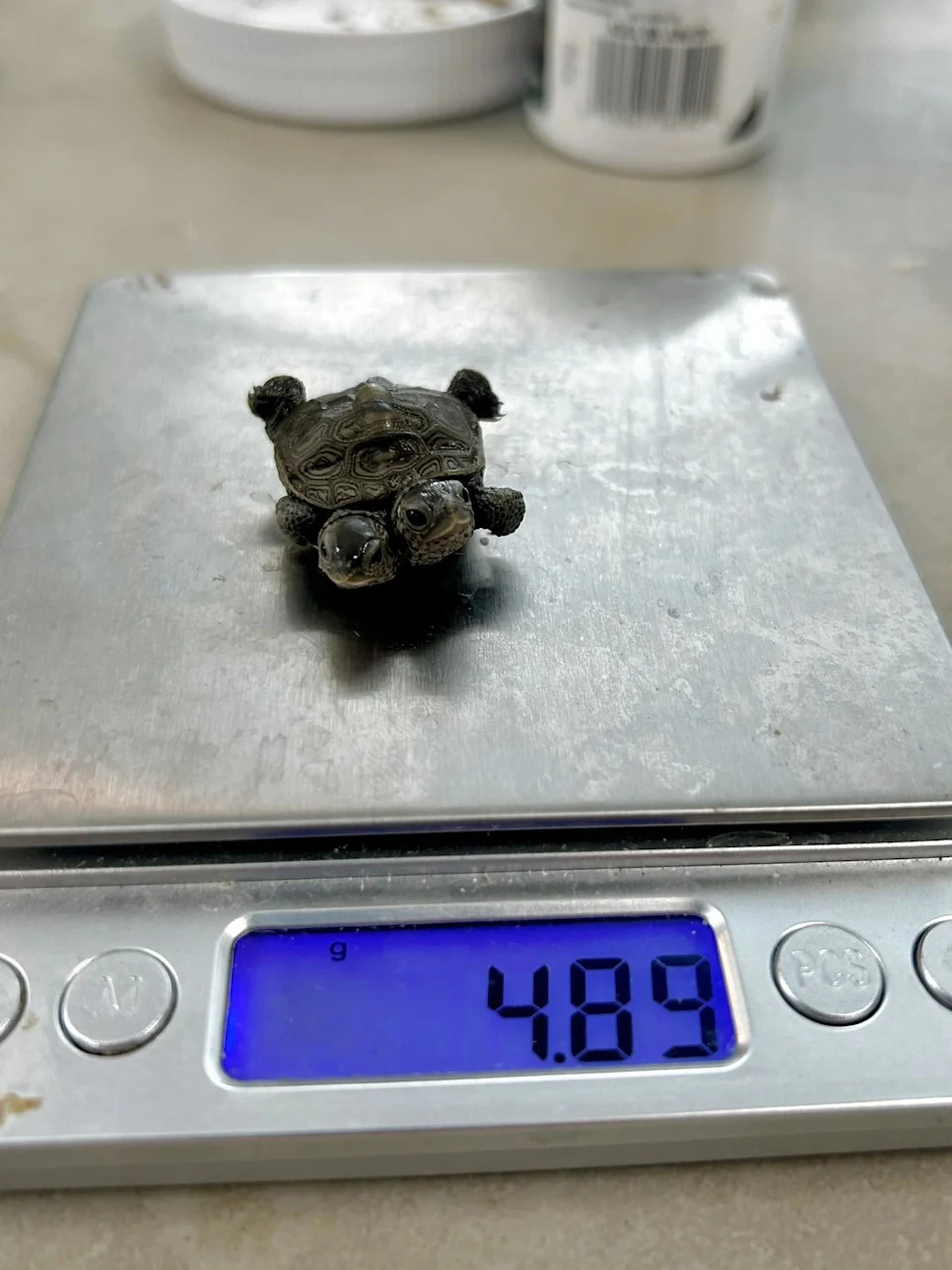
The turtle weighs less than 5 grams.
The hatchling, roughly the size of a nickel and weighing under 5 grams, was found during nest monitoring in Wellfleet by Mass Audubon’s Wellfleet Bay Wildlife Sanctuary and transported to the regional wildlife hospital. Staff report the animal has been in care for about two weeks and that both heads are functioning well.
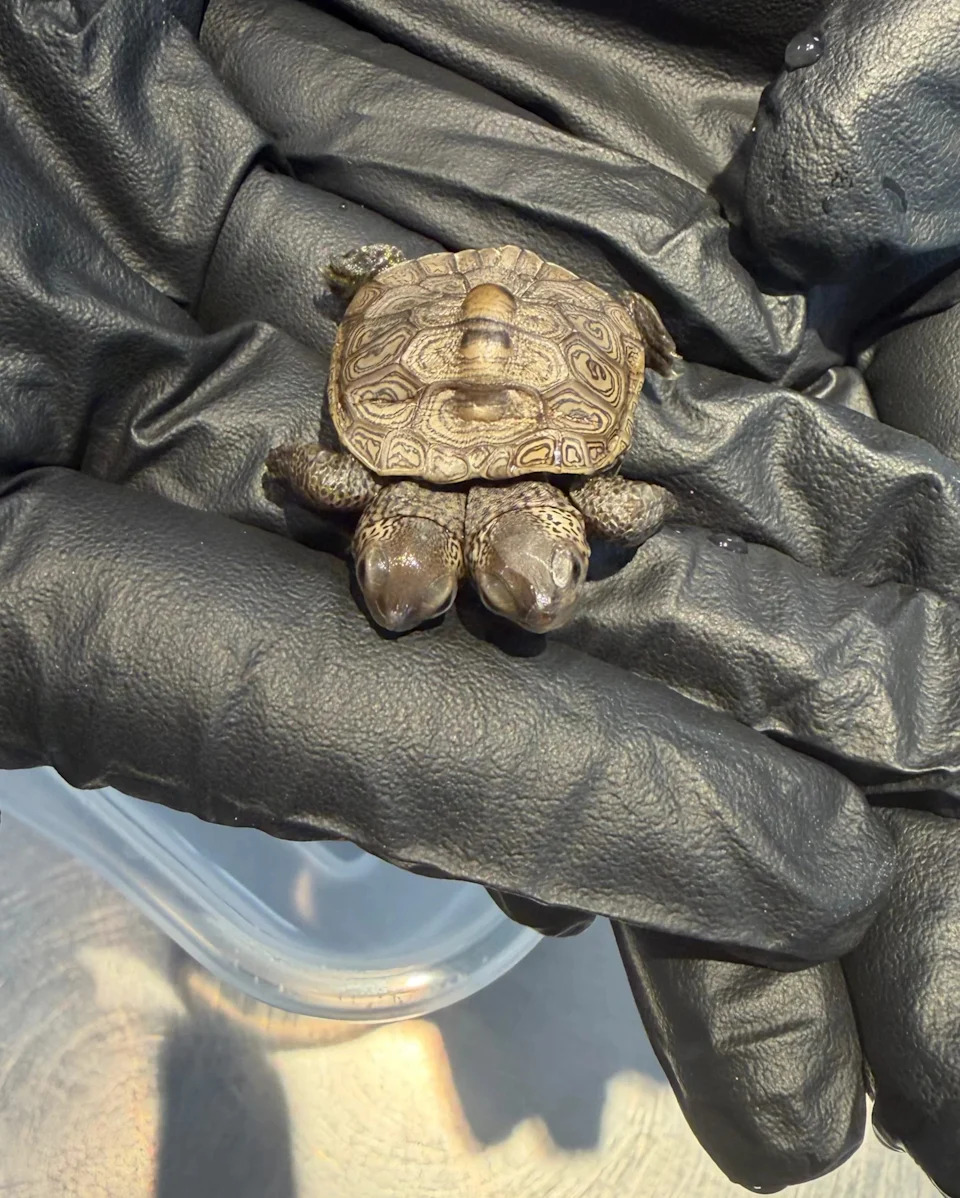
Bicephaly means two heads.
Condition and Current Health
The condition, called bicephaly, produces two heads and has been observed across multiple animal groups, though it remains rare. According to Zak Mertz, CEO of New England Wildlife Centers, the hatchling can swim, controls all of its limbs and recently accepted its first meal — an encouraging milestone because newly hatched turtles typically do not feed until several weeks after hatching when they have absorbed their yolk sac.
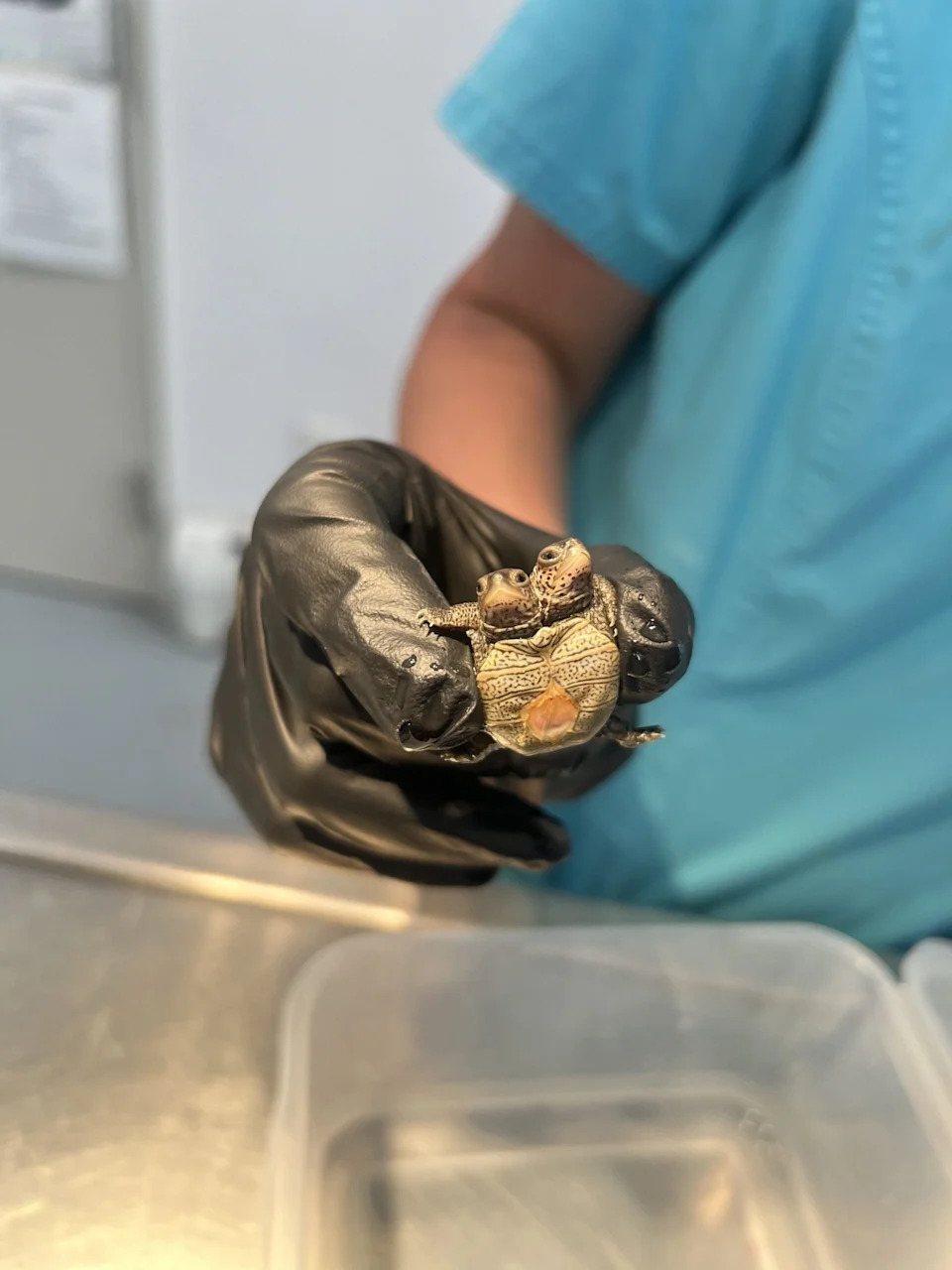
The turtle is about the size of a nickel.
“By all accounts, the turtle is doing well. It has control of all of its limbs and both sides took a meal, which tells us the body systems are functioning as they should,” Mertz said.
Frequency, Causes and Prognosis
Exact rates of bicephaly in turtles are not known, but Mertz estimates it may occur on the order of one in every few tens of thousands of hatchlings. He noted this is the New England Wildlife Centers’ third set of bicephalic diamondback terrapins in roughly six years. Experts suspect a primarily genetic origin, with environmental factors possibly contributing, but definitive causes remain unclear.
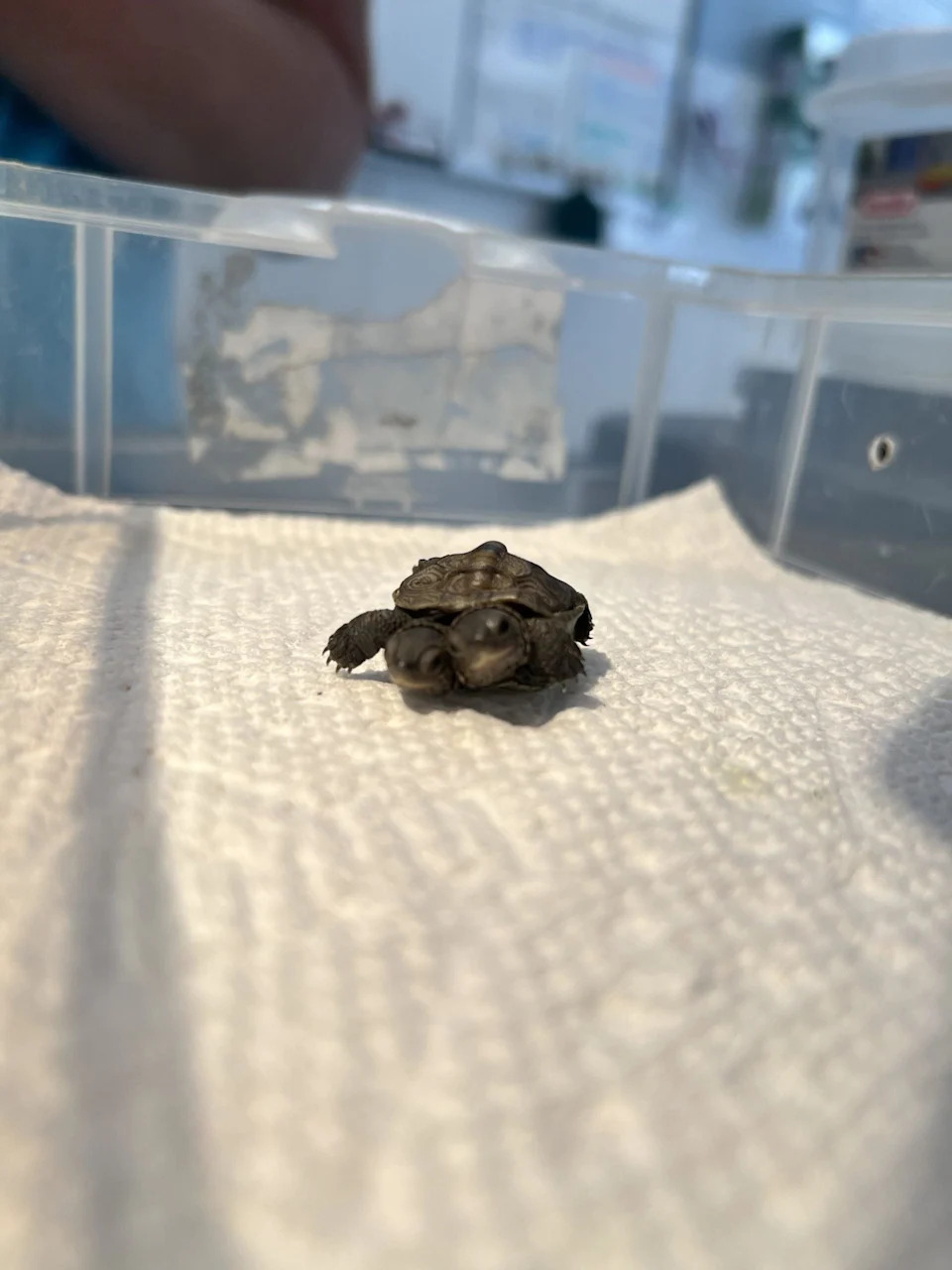
The little turtle is eating, has full control of its limbs and can swim.
Previous cases the center examined showed more separately developed anatomy between the two heads on scans; this hatchling appears to share more internal structures. Anecdotal reports from other cases indicate some bicephalic turtles can live for decades if their quality of life is good.
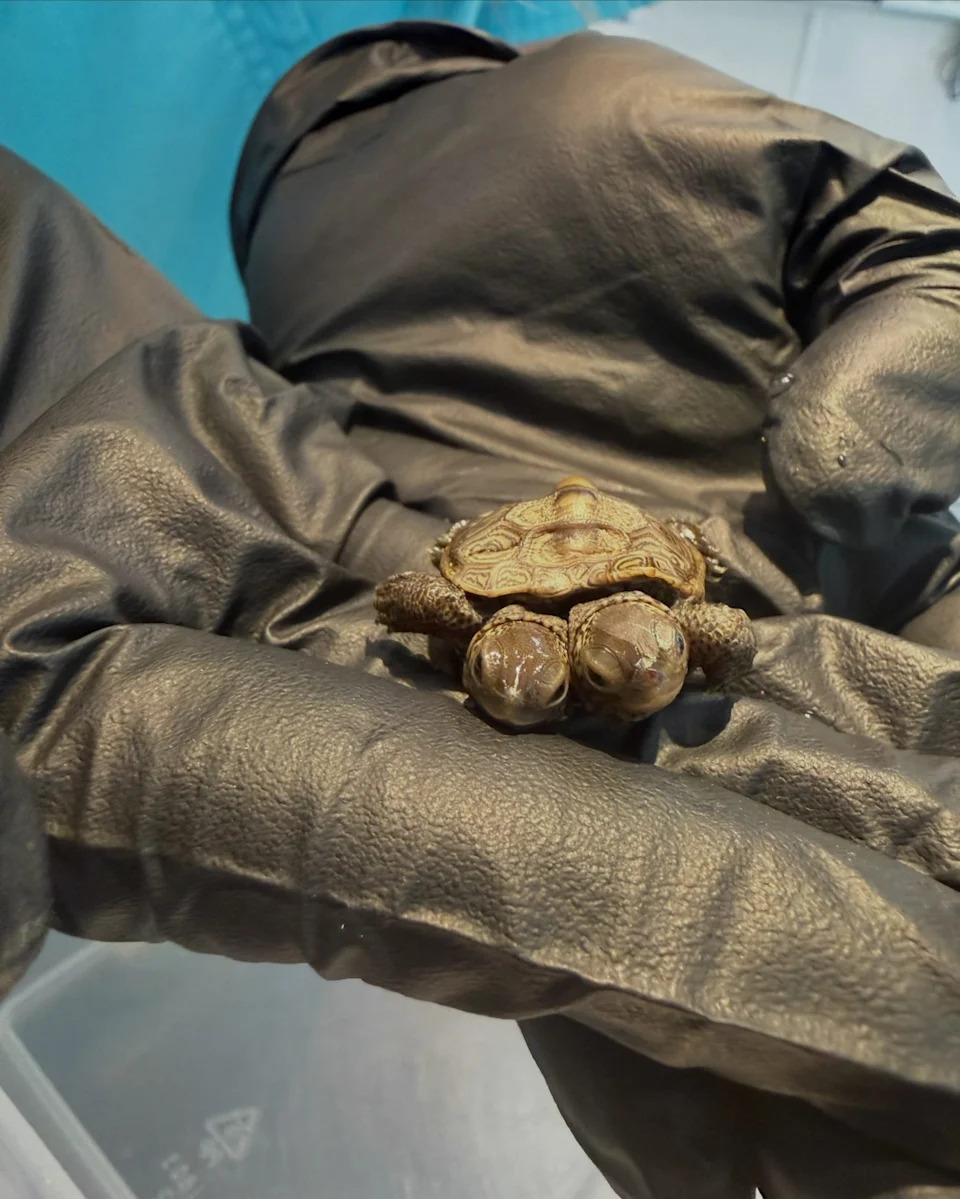
The diamondback terrapin turtle is about two weeks old.
Next Steps
Staff will continue daily assessments and plan to keep the hatchling through the winter. If it continues to thrive and both heads demonstrate sufficient autonomy and overall health, there is a possibility the turtle could be released back into the wild in appropriate habitat.
Note: The diamondback terrapin is a species associated with estuarine habitats in Massachusetts, and wildlife staff emphasize ongoing nest monitoring and conservation work that help detect and protect unusual hatchlings like this one.
Help us improve.