The Grat Be'al Gibri palace at Yeha (c. 800 B.C.) was modelled in 3D and tested using the finite element method, revealing that its rubble‑and‑timber wall system had a "remarkable load‑bearing capacity." The engineering simulations indicate the walls could handle the equivalent vertical load of roughly 19 floors, but experts stress this reflects theoretical load capacity rather than proof the palace reached 19 storeys. The findings highlight sophisticated local engineering in the Ethio‑Sabaean world and reframe assumptions about ancient construction traditions in the northern Horn of Africa.
3,000-Year-Old Ethiopian Palace May Have Withstood ‘Skyscraper’ Loads, Engineers Find
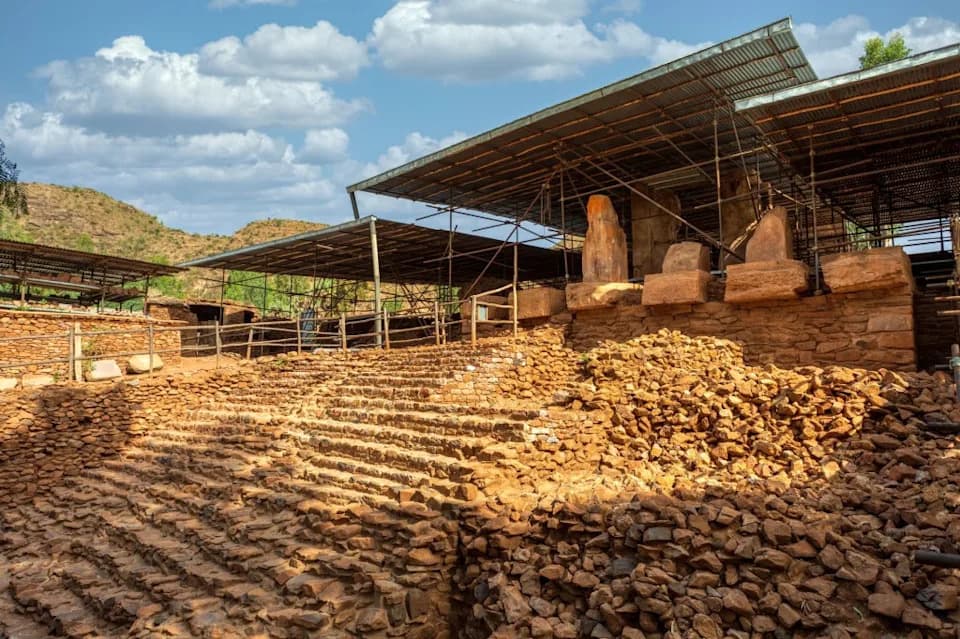
The ruins of the Grat Be'al Gibri complex in Yeha, Ethiopia.
New engineering analyses suggest the Grat Be'al Gibri palace at Yeha in the Ethiopian–Eritrean highlands—built around 800 B.C.—was constructed using a rubble-and-timber system with far greater load capacity than its ruined remains imply. Researchers led by the German Archaeological Institute (DAI) and Brandenburg University of Technology Cottbus‑Senftenberg (BTU) used modern civil‑engineering tools to test whether surviving wall sections could have supported many additional floors.
The palace complex, covering roughly 60 by 60 metres (over 196 feet), is the largest known of its era in South Arabia and East Africa. Archaeologists say it was largely destroyed by fire in antiquity; only parts of the ground floor and podium survive today.
How The Study Was Done
Researchers built virtual 3D models of two wall sections (a corner and a doorway) and analyzed them with the finite element method (FEM), a numerical technique widely used in structural engineering. The modeled construction used rubble masonry bonded with clay mortar and reinforced by horizontal timber beams laid in a grid—an established local technique, according to specialists.

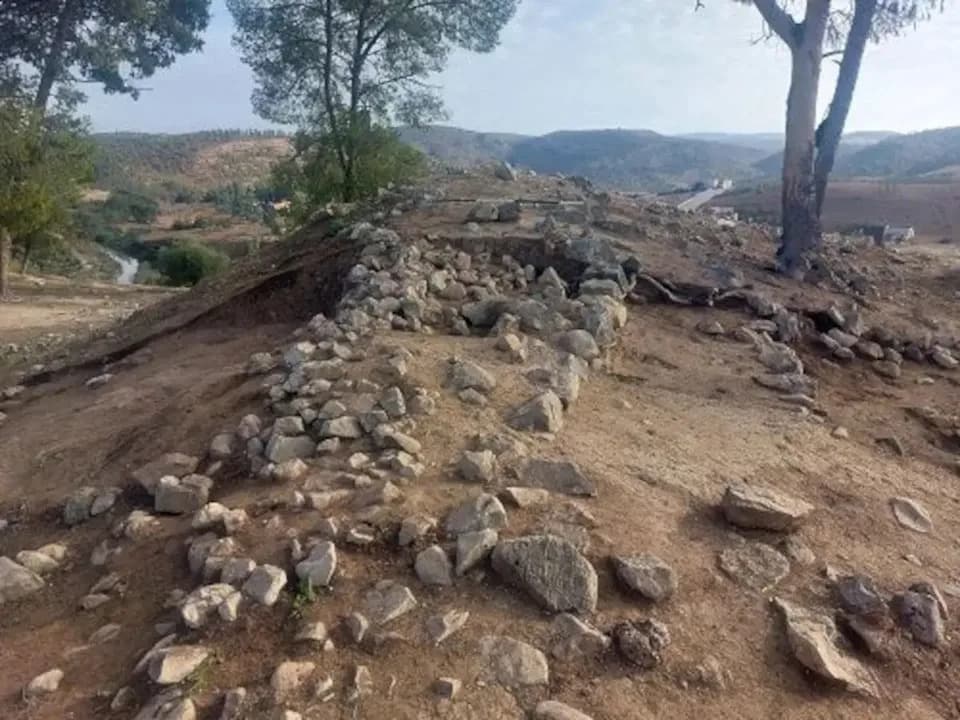
An overview of the landscape around the ruins of the Temple of Yeha in Ethiopia.
"The simulations show a remarkable load‑bearing capacity," said Davide Tanasi, a classical archaeologist involved in the study. Martin Drieschner, BTU’s lead structural researcher, added that applying FEM and modelling of uncertain material properties to a 2,800‑year‑old structure demonstrates the power of modern numerical simulation.
What The Results Mean
The engineering model indicates the wall system could safely bear the equivalent vertical loads of roughly 19 floors. Researchers and historians caution, however, that this number refers to an engineering load factor—how much additional load the wall could theoretically withstand before failure—not direct evidence that the palace actually rose to 19 storeys in practice.
Kwasi Konadu, a historian who commented on the research, emphasized the distinction: a wall capable of carrying 19 floors’ worth of load is not the same as a building that historically stood 19 storeys tall. Practical limits—including construction logistics, foundation design, access, wind, seismic forces, and maintenance—would all affect whether such heights were realized.
Broader Significance
Still, the study is significant. It provides a quantitative assessment supporting long‑held archaeological suggestions that the Ethio‑Sabaean world had sophisticated building traditions. Earlier written and pictorial sources from South Arabia referred to multi‑storey buildings and Arab historians described structures of many floors, but until now few engineering analyses tested the plausibility of those accounts.
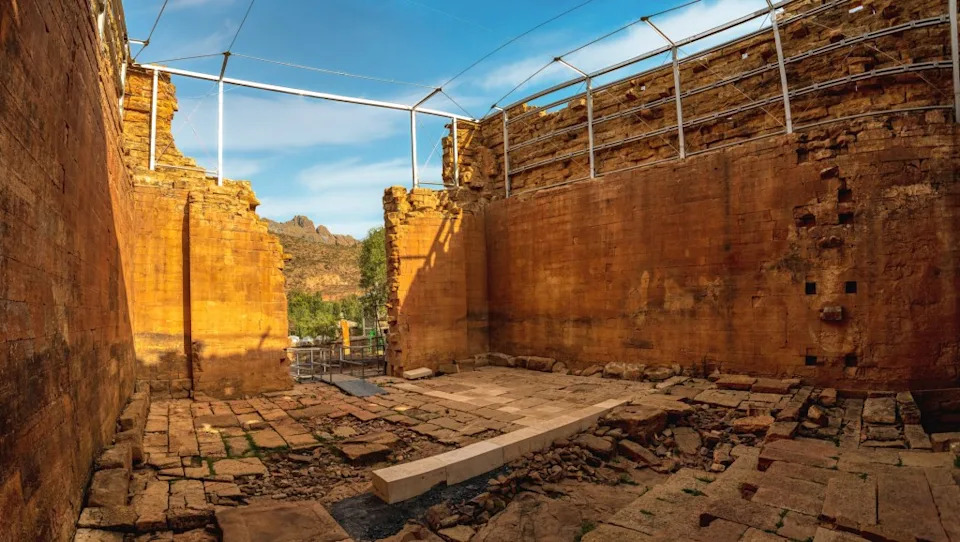
The ruins of the Temple of Yeha in Ethiopia.
These results challenge narratives that place advanced ancient engineering primarily in Egypt, Mesopotamia, Greece and Rome, showing that local traditions in the northern Horn of Africa produced ambitious, calculable solutions for height and load more than two millennia ago.
Key contributors: the German Archaeological Institute (DAI), Brandenburg University of Technology Cottbus‑Senftenberg (BTU), Davide Tanasi (University of South Florida), Martin Drieschner (BTU), and commentator Kwasi Konadu.
Note: The study analyzes structural capacity based on surviving fabric and simulation assumptions. It does not provide archaeological proof that the palace was actually built to the theoretical heights suggested by the load models.
Help us improve.