The G20 trade ministers' meeting in Milwaukee highlighted how President Trump’s extensive tariffs have strained cooperation with allies on confronting China’s trade practices. Ministers achieved consensus only on condemning the weaponization of food trade; broader commitments on manufacturing overcapacity and forced labor were limited. U.S. actions — including forced-labor tariffs affecting more than 80 countries and a planned $15 billion steel plant in Iowa — fueled skepticism about Washington’s motives, leaving practical, binding multilateral steps out of reach.
Trump’s Tariffs Are a 'Ball And Chain' as G20 Splits Over China, Steel and Forced Labor
‘Ball and chain’: Trump's tariffs still a drag on global trade cooperation
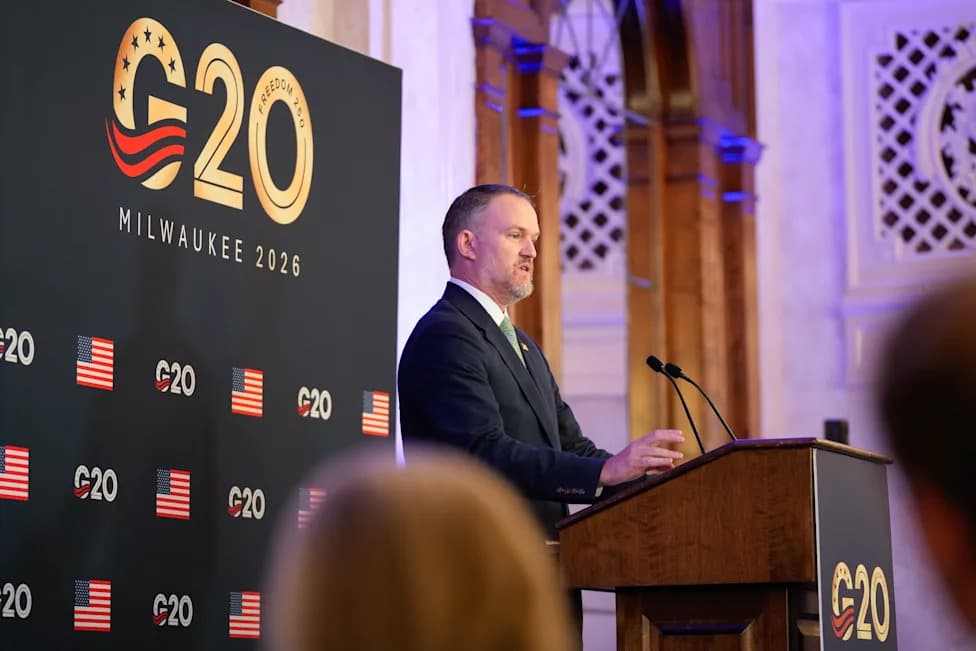
Milwaukee — The G20 trade ministers' meeting in Milwaukee exposed sharp divisions over how to confront China's trade practices and curb forced labor — divisions that many delegates trace in part to President Trump's sweeping tariff policies.
Only One Clear Consensus
The United States pushed the group to back four priorities, from tackling a flood of low-cost Chinese goods to eliminating forced labor in global supply chains. According to U.S. Trade Representative Jamieson Greer, ministers only reached consensus on a single plank: language condemning the weaponization of food trade. Even that agreement drew criticism as largely symbolic.
“There is consensus that food should not be used as a weapon. Of course, there is no consensus on who is using food trade as a weapon,” said Polish Finance and Economy Minister Andrzej Domański, pointing to actions by Russia in the Black Sea that have restricted Ukrainian grain exports.
Tariffs Undermine Trust
Delegations repeatedly signaled that Washington's broad tariffs on steel, aluminum and other sectors have complicated efforts to build a united front against nonmarket practices in China. An EU official who asked to remain anonymous said U.S. blanket tariffs “negatively impact” coordination on issues such as China's export surge — a problem that many Western governments agree is real.
EU Response
The 27-member EU has been hit by cheap Chinese imports that threaten its manufacturing base. French President Emmanuel Macron urged stronger safeguards for European industry, and top EU trade official Maroš Šefčovič raised these concerns directly with Chinese Vice-Minister Li Chenggang in Milwaukee. Still, EU countries stopped short of binding commitments; instead a 28-country coalition issued a voluntary framework to improve steel monitoring, curb harmful subsidies and bolster trade defenses.
U.S. Moves Complicate the Message
Part of the mistrust stems from U.S. actions during the summit. As ministers traveled to Milwaukee, the White House announced a plan for Mesabi Metallics, owned by India’s Essar Group, to build a $15 billion steel plant in Iowa that could add roughly 10 million tons of annual capacity. Critics warned the move risks adding to global steel overcapacity — the very problem the U.S. urged others to address.
“The most likely result from adding U.S. steel capacity at this time is a China-style glut,” said Scott Lincicome of the Cato Institute. U.S. officials countered that the investment is meant to rebuild domestic supply chains and create jobs.
Forced Labor: Agreement In Principle, Few Commitments
Delegates broadly agreed on the goal of removing forced-labor products from global supply chains, but only a handful endorsed the U.S. joint statement. The White House has already applied forced-labor tariffs to more than 80 countries, a move several governments have criticized as unfair or politically motivated. Brazil, for example, called a 12.5% tariff on its exports unjust and said it will seek reductions in upcoming negotiations.
Conclusion
U.S. officials insisted their measures did not dominate talks and emphasized recent bilateral deals with trading partners. Still, former Assistant U.S. Trade Representative Harry Broadman said Trump's trade strategy has become a “ball and chain” that complicates cooperation. The Milwaukee meeting highlighted broad agreement on the problems — overcapacity, harmful subsidies and forced labor — but showed that translating goodwill into binding, coordinated action remains elusive.
Byline: Reporting compiled from POLITICO coverage and delegates' statements.
Help us improve.