The U.S. Space Force and Pentagon have awarded GHOST-R prototype contracts to Northrop Grumman and True Anomaly to develop high-resolution "space-to-space" reconnaissance satellites for geostationary orbit. Northrop will deliver a compact ESPASat-L prototype on a 24-month schedule, while True Anomaly will provide its Jackal vehicle and Mosaic command system. Both prototypes are planned to launch to GEO by 2028 and begin government-operated missions in 2029.
Space Force Awards GHOST-R Prototypes to Northrop Grumman and True Anomaly for GEO Recon by 2028
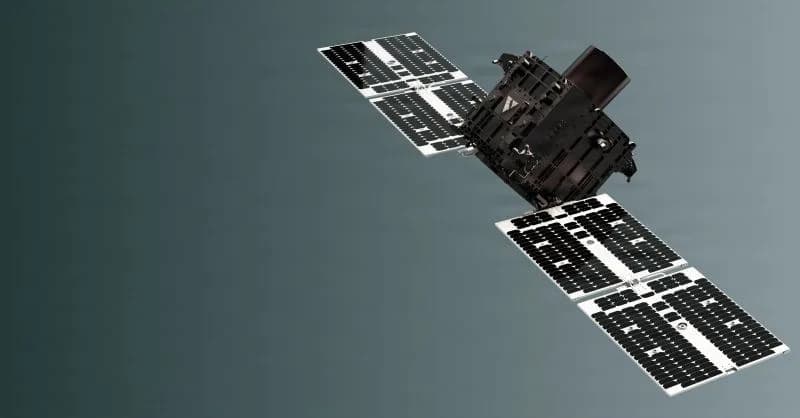
An artist’s rendering depicts the GHOST-R satellite prototype, which is designed to deliver geostationary Earth orbit (GEO) reconnaissance capabilities to the Department of Defense. (True Anomaly)
KYIV, Ukraine — The U.S. Space Force and the Pentagon have contracted Northrop Grumman and True Anomaly to build prototype reconnaissance satellites capable of producing high-resolution "space-to-space" imagery of objects more than 22,000 miles above Earth. The awards were announced Sept. 18 under the Geosynchronous High-Resolution Optical Space-Based Tactical Reconnaissance program (GHOST-R).
What GHOST-R Aims To Do
GHOST-R is part of the larger RG-XX initiative to field a more agile, lower-cost fleet of geosynchronous (GEO) reconnaissance assets by the end of the decade. The program seeks to use commercially developed spacecraft, buses, and electro-optical payloads to characterize resident space objects and improve tracking and targeting in the crowded GEO environment.
Why It Matters
"To be able to negate threats in space, we must be able to find, fix, track, and target those threats," Gen. Stephen Whiting, commander of U.S. Space Command, said Sept. 16 at the AMOS Conference. "Targeting in the space domain is maturing, but it still has a long way to go."
What Each Contractor Will Deliver
Northrop Grumman will build a compact prototype based on its ESPASat-L spacecraft. The company says the prototype is roughly the size of a "small suitcase," will use a commercial optical sensor, and will be developed on an accelerated 24-month timeline.
True Anomaly, a four-year-old space-tech company, will provide its Jackal autonomous orbital vehicle together with the Mosaic command-and-control system and a dynamic operations sensor suite to support on-orbit reconnaissance and operations.
Contract Details and Timeline
Officials have not disclosed contract values or the specific funding source. Space Systems Command told Breaking Defense that the funding did not come from Andromeda, the Space Force’s up-to-$6.2 billion RG-XX contract pool.
Both prototypes are slated to launch directly to geosynchronous orbit by 2028, with government-owned and -operated missions expected to begin in 2029.
Program Context
The awards pair a long-established defense prime with an agile commercial startup, both of which are also under contract for development work on the Pentagon’s Golden Dome missile defense efforts. Space Systems Command and the Defense Innovation Unit (DIU) are collaborating on rapid prototyping to accelerate delivery of commercial capabilities into the RG-XX architecture.
Note: All factual details in this article are based on official releases and reporting available as of the Sept. 18 announcement.
Help us improve.