Nivedita Shyamsundar filmed a rapid nanoparticle reaction with her iPhone and developed a video-analysis program to track color changes that laboratory instruments missed. Her method revealed an unexpected formation route in which clusters of metal atoms coalesce rather than atoms adding one by one. She now applies nanoparticle design to pH-responsive targeted cancer drug delivery and studied lipid nanoparticle formation during an internship at Moderna; she plans to pursue a Ph.D. after graduating in spring 2027.
Student Uses iPhone and Custom Video Analysis to Reveal Surprising Nanoparticle Formation Pathway
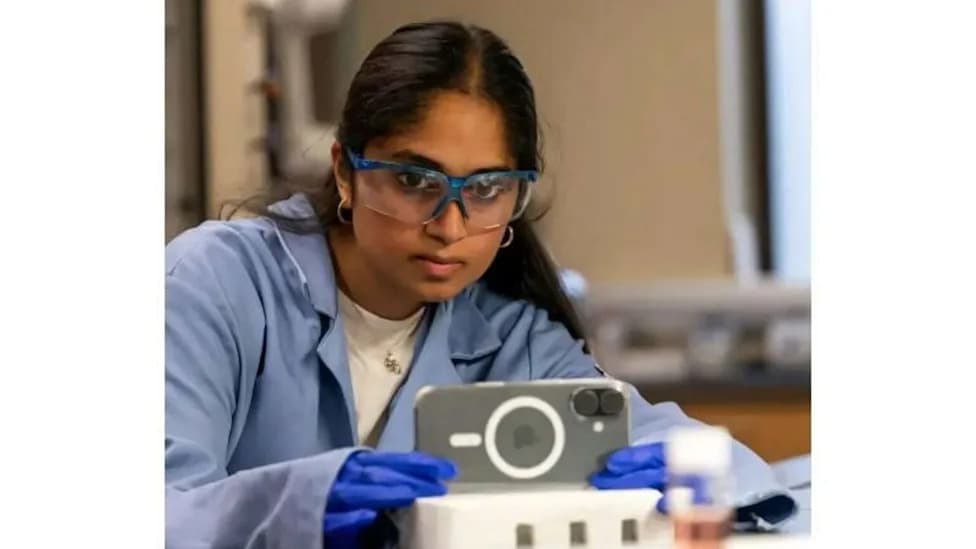
Nivedita Shyamsundar built a program to track nanoparticle formation with everyday cameras. | Image Credit: Phys
A chemistry senior at Carnegie Mellon University, Nivedita Shyamsundar, used an iPhone camera and a custom video-analysis program to capture and analyze a nanoparticle reaction that standard laboratory instruments missed.
Working in Jill Millstone’s lab at the University of Pittsburgh, the team was synthesizing new metal nanoparticles when the crucial early transformation occurred too quickly for conventional methods. Researchers could only observe the reaction endpoints—until they noticed a simple visual clue: the solution changed color as the particles formed.
Shyamsundar filmed a reaction on her iPhone and tracked color changes frame by frame. She then correlated those visual data with the lab’s instrumentation results and converted her approach into a program that enables researchers to monitor fast reactions with readily available cameras.
Unexpected Mechanism: Clusters, Not Single Atoms
Beyond enabling low-cost monitoring, the analysis revealed a surprising formation route. Instead of growing atom by atom, the metal particles appeared to form when small clusters of metal atoms coalesced into larger particles. As Shyamsundar summarized, "It was actually clusters of metal atoms coalescing." This finding challenges the classic single-atom addition picture for these reactions and may prompt researchers to revisit kinetic models for nanoparticle synthesis.
Applications in Targeted Drug Delivery
Shyamsundar now applies her interest in nanoparticle behavior to cancer therapy. She is designing pH-responsive nanoparticles that hide drug payloads near healthy tissue but release them in the acidic environment typical of tumors. The university described the particles' molecular shell as similar to a "pom-pom": it conceals the drug under normal conditions and allows it to spring into action near cancer cells. The goal is improved targeted delivery with reduced side effects compared with conventional chemotherapy.
She also interned at Moderna, where she investigated factors affecting lipid nanoparticle formation relevant to vaccine delivery. After graduating in spring 2027, Shyamsundar plans to pursue a Ph.D. in chemistry.
Source: Phys (reported by Carnegie Mellon University)
Help us improve.