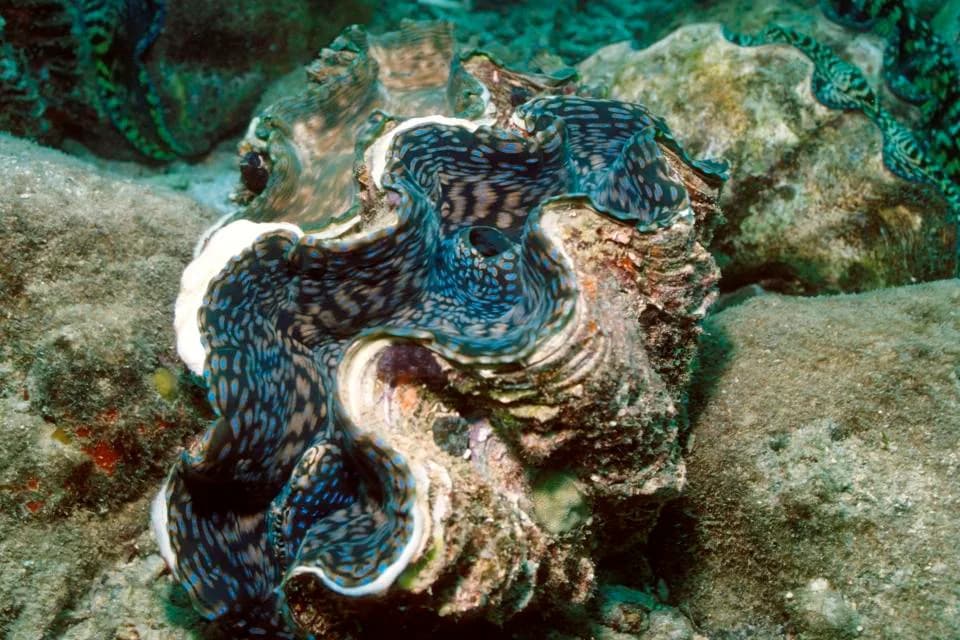
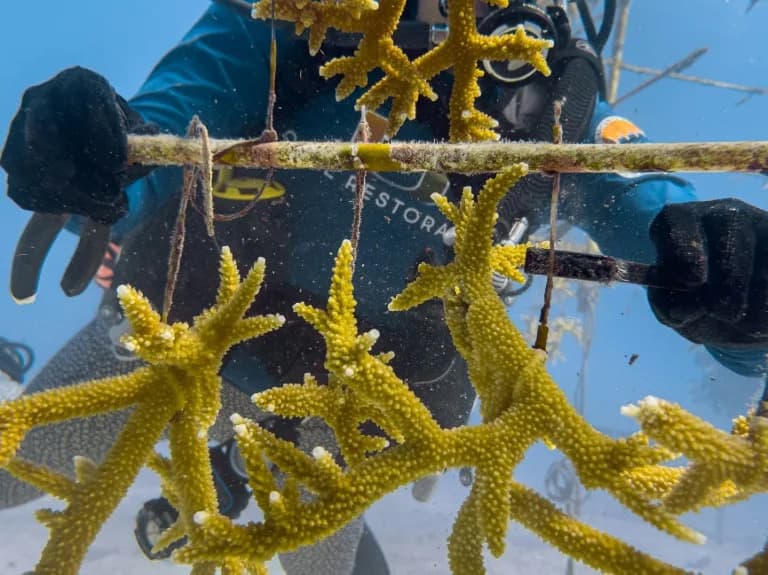
Workers on Kariyachalli island are installing some 8,500 artificial reef modules and transplanting corals and seagrass to rebuild natural coastal defences and slow severe erosion. The island has lost over 80% of its land since 1969 and could disappear without intervention. The $4.79 million programme aims to finish deployment by the end of September and will be monitored for at least four years, though a major 2024 bleaching event highlights climate-driven challenges.
India Restores Reefs and Seagrass to Shield Shrinking Islands from Rising Seas
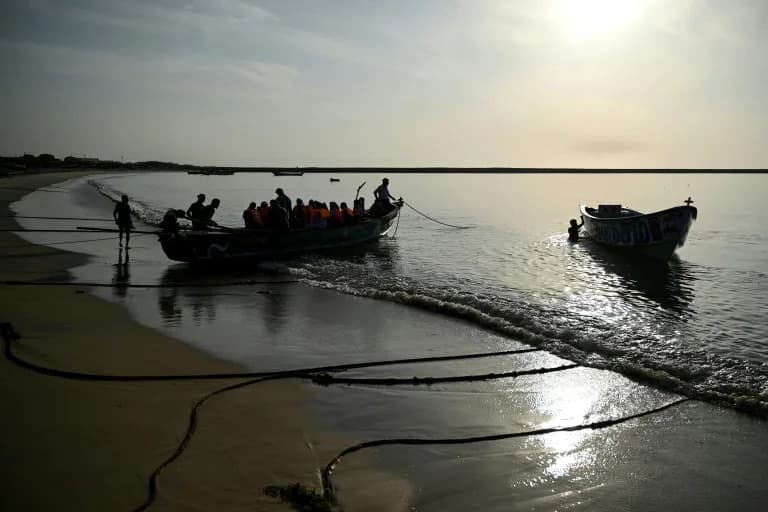
Fishing community members get into a boat to travel to Kariyachalli Island, off the coast of Thoothukudi in India's Tamil Nadu state (R. Satish BABU)
Under a blazing sun on Kariyachalli, a rapidly shrinking island off India’s southern coast, workers crouch at the water’s edge threading vivid green seagrass shoots onto wooden frames before anchoring them to the seabed.
The restoration project aims to rebuild natural coastal defences by installing artificial reef modules and transplanting corals and seagrass meadows to slow erosion and protect the nearby mainland from storm surges and rising seas.
Engineering Nature Back Into Balance
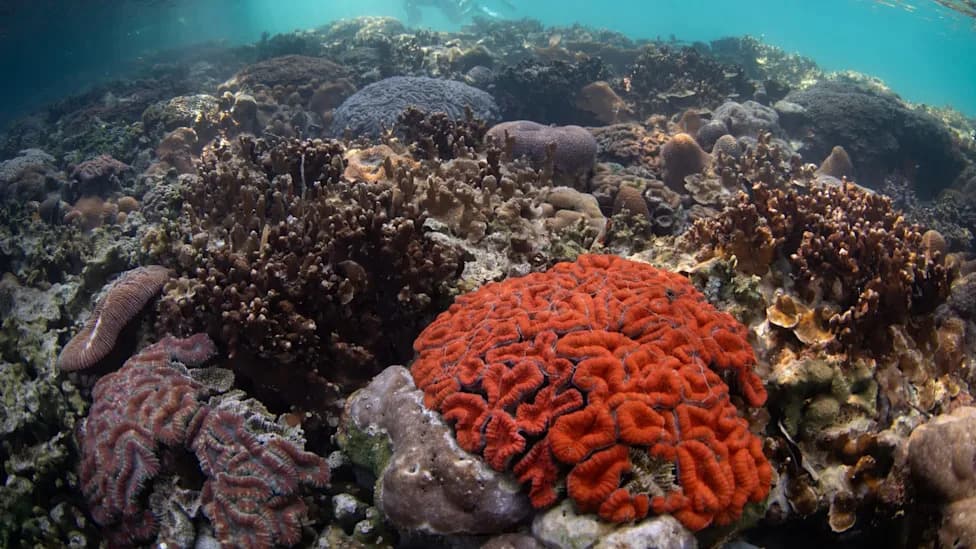
The state conservation programme, budgeted at roughly $4.79 million, will deploy about 8,500 heavy artificial reef modules around Kariyachalli. Designed from seabed surveys, current and wave data, the structures are intended to break wave energy and provide new surfaces for corals to colonise.
Scientists are also transplanting corals and replanting seagrass meadows, which stabilise sediments and serve as nurseries for fish and other marine life. Deployment was scheduled to finish by the end of September, followed by at least four years of monitoring to track ecological recovery and coastal stability.
Why It Matters
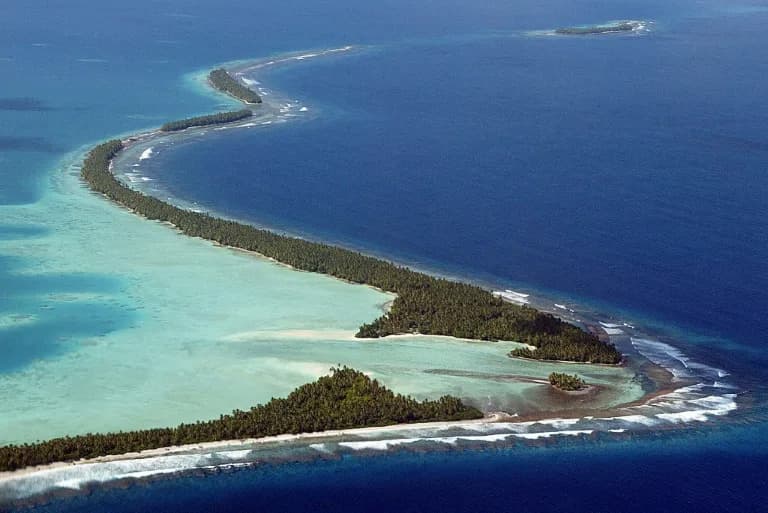
Kariyachalli is one of 21 islands in Tamil Nadu’s Gulf of Mannar. Government estimates show the island shrank from 20.85 hectares in 1969 to just 3.14 hectares last year — an over 80% loss in about 50 years. Reef cover near the island dropped from roughly 500 hectares in 2005 to 197 hectares in 2021.
The Gulf of Mannar is one of Asia’s richest marine environments, home to coral reefs, endangered dugongs and hundreds of fish species. These ecosystems also act as natural buffers — scientists say reefs, seagrass beds and small islands reduced impacts during the 2004 Indian Ocean tsunami.
Challenges And Adaptation
Decades of human pressure — coral mining in the 1960s and 1970s, pollution and overfishing — together with climate-driven warming have weakened the reefs. A major bleaching event in 2024 killed large numbers of corals, underscoring the difficulty of restoring reefs in a warming ocean.
"If you are not able to provide that resilience, you are absolutely at the mercy of vulnerabilities of storm surges, cyclonic storms or sea-level rise and also erosion," said senior state official Supriya Sahu.
Researchers are looking for naturally heat-tolerant coral species and using restoration approaches that prioritise resilience, but they caution that long-term success depends on addressing broader climate and human pressures.
People And Progress
The project also provides local livelihoods. Saltpan worker Devkani, 47, travels 25 minutes by boat to prepare seagrass frames and says the sea-based work helped her avoid high-interest loans during lean months. Seagrass worker Martina, 29, says reef and seagrass recovery increases fish reproduction and supports local incomes.
Earlier restoration on nearby islands provides cautious optimism: work on Vaan Island using about 10,000 reef modules helped recover some lost land, and transplanted corals on Shingle Island fared better in the 2024 bleaching event than older colonies.
While restoration cannot substitute for global climate action, local interventions that rebuild natural defences and revive marine habitats can reduce risks for coastal communities and give ecosystems a better chance to adapt.
Help us improve.