Five caribou—one adult bull and four yearlings—were released into Jasper National Park’s Tonquin Valley after being raised by North America’s first caribou conservation breeding program. The animals were acclimated near Amethyst Lake before release and have since been observed exploring, crossing creeks and joining wild herds. Rangifer tarandus is listed as Vulnerable, with populations down roughly 40% over recent decades. Parks Canada will continue monitoring the group as part of broader recovery efforts.
Five 'Trailblazing' Caribou Released Into Jasper National Park's Tonquin Valley
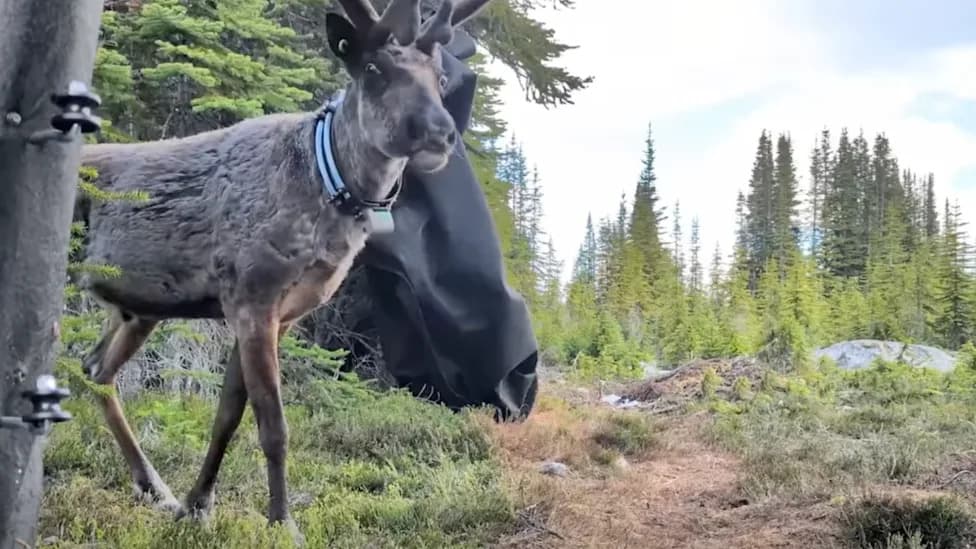
The caribou were released into the Tonquin Valley in June.
Jasper National Park in Alberta has welcomed five notable new residents: one adult bull caribou (Rangifer tarandus) and four yearlings. These animals were raised through the first conservation breeding program for caribou in North America and were released into the park’s Tonquin Valley in June.
Acclimation and Release
The group spent time in a temporary pen near Amethyst Lake to acclimate to natural terrain and diet before being released. Since their release, Parks Canada reports the animals have been exploring the Tonquin Valley—crossing creeks, navigating rugged terrain and joining groups of wild caribou, an encouraging sign of adaptation.
“The four yearlings (calves born last year) and one adult bull are the first animals raised through the program to take this important step,” Parks Canada wrote on social media. “Since returning to the wild, they have been exploring the Tonquin Valley, crossing creeks, navigating new terrain and travelling through their summer range. They have also joined groups of wild caribou, an encouraging sign as they continue adapting to life in the wild.”
About the Species and Conservation Context
Rangifer tarandus includes several subspecies, such as the woodland caribou (Rangifer tarandus caribou) and reindeer forms like the Svalbard reindeer (Rangifer tarandus platyrhynchus). Caribou are native to North America, while reindeer occur in northern Eurasia. The parent species, Rangifer tarandus, is listed as Vulnerable on the IUCN Red List, with global numbers estimated to have declined by roughly 40 percent over the past 10 to 30 years.
Caribou face serious conservation challenges: they have a low reproductive rate and depend on large, continuous habitat ranges, which makes them particularly vulnerable to habitat fragmentation and disturbance. In Alberta and British Columbia, some woodland caribou herds have vanished entirely. Parks Canada captured its first group of wild caribou for the breeding program in 2025, leading to this program’s first release back into the wild.
Next Steps
Parks Canada will continue to monitor the released caribou as they settle into the landscape and integrate with wild herds. The release marks an important milestone for caribou recovery efforts in Jasper National Park and demonstrates how captive-breeding and careful acclimation can contribute to broader conservation strategies.
Note: Continued habitat protection and large-scale conservation planning remain essential to reverse long-term declines in caribou populations.
Help us improve.